Diversity in the United States corporate world reached a major turning point in early 2026. Most companies moved away from old HR protocols and started re-engineering their programs to survive a new legal environment. While the specific label of diversity, equity, and inclusion is fading from corporate websites, the core mechanics of fairness and representation are actually moving deeper into how American businesses operate.
How We Selected Our 7 Best DEI in American Corporations 2026 Facts
Selecting these facts involved a deep look into federal directives, Fortune 500 reports from the first quarter of 2026, and recent labor market data. We focused on three specific filters to ensure these points reflect the current reality of the private sector.
-
Legal Material Risk: We prioritized facts linked to the March 26, 2026, Executive Order on federal contracting.
-
Budgetary Allocation: We looked at where corporations are moving their money, focusing on technical equity audits over awareness seminars.
-
Language Evolution: We tracked the 98% drop in specific branding in favor of neutral and universal terminology.
The following breakdown highlights the primaryfocus and impact of each selected initiative.
| Evaluation Metric | 2021 Peak Status | April 2026 Status |
| Primary Label | High Acronym Usage | Rebranded as FAIR |
| Federal Oversight | Minimal/Supportive | Restrictive Compliance |
| Core Framework | Targeted Groups | Universal Fairness |
| Business Goal | Representation Quotas | AI Fairness and Process Equity |
The 7 Most Critical Facts About DEI in American Corporations 2026
Understanding the corporate landscape requires looking past political headlines to see the actual structural changes happening inside HR departments.
1. The March 26, 2026, Federal Contracting Executive Order
A major Executive Order issued on March 26, 2026, changed the risk profile for every federal contractor in the country. This directive requires any company seeking a government contract to certify they do not engage in discriminatory activities. This includes any program that treats employees differently based on race or ethnicity. The order puts the burden of proof on the company, requiring them to show records that prove their efforts do not constitute disparate treatment.
Best for: Legal counsel and procurement officers at large companies with government contracts.
Why We Chose It:
-
It introduces immediate financial risk including potential loss of federal bidding rights.
-
It formally defines discrimination in federal procurement for the first time.
-
It forced an immediate audit of every mentorship program across the U.S. supply chain.
Things to consider: Companies must ensure all programs are open to everyone regardless of protected traits to avoid non-compliance.
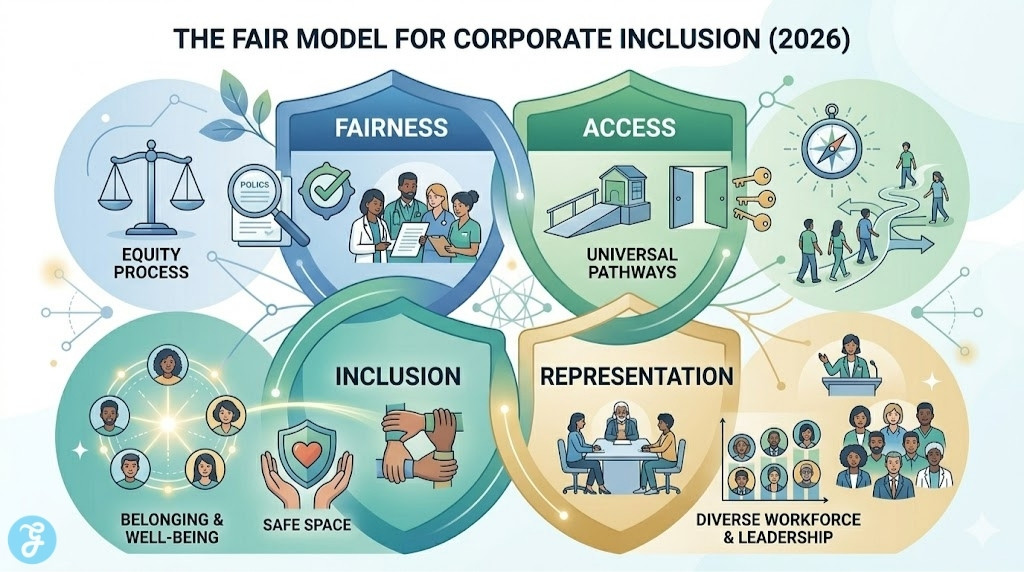
2. The Rise of the FAIR Model (Fairness, Access, Inclusion, Representation)
American corporations responded to legal pressure by scrubbing old terminology from their reports and adopting the FAIR model. This framework focuses on Fairness, Access, Inclusion, and Representation as universal values rather than political targets. By the start of 2026, over 85% of the Fortune 100 updated their annual reports to reflect this process-oriented language.
Best for: Communications teams and brand managers navigating political and reputation risks.
Why We Chose It:
-
It moves companies away from performative activism toward neutral framing.
-
It focuses on removing systemic barriers instead of mandating specific outcomes.
-
It aligns with recent EEOC guidance that non-discrimination standards apply to everyone equally.
Things to consider: The goal of creating a representative workforce remains a core metric even though the labels changed.
3. The Shift to Content-Based Talent Development
Following recent litigation, many businesses moved away from programs that targeted specific races or genders. They now use content-based strategies like leadership training for high-potential staff. These programs are open to every employee but are designed to address the specific obstacles that marginalized groups often face in the workplace.
Best for: HR leaders and talent development specialists redesigning internal promotion pipelines.
Why We Chose It:
-
It reduces legal risk by making programs group-neutral.
-
It prioritizes leveling the field instead of providing targeted ramps for specific groups.
-
It ensures talent development is seen as a benefit for the entire workforce.
Things to consider: Success depends on inclusive outreach to make sure a diverse group of people applies for these neutral programs.
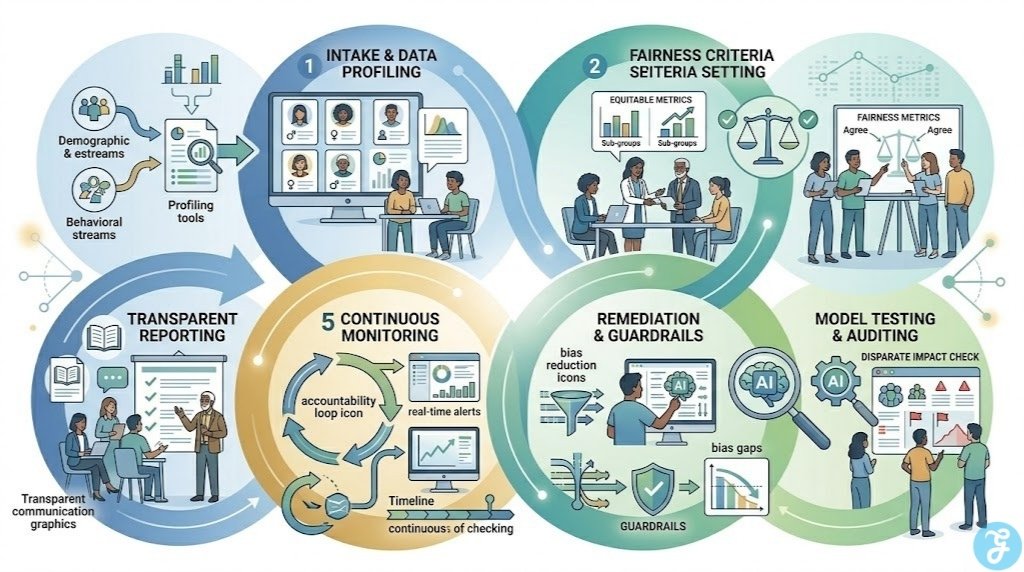
4. AI Equity Audits and Bias Mitigation
The role of the Chief Diversity Officer is changing into a technical position focused on AI governance. Since AI now handles resume screening and performance reviews, companies are investing in equity-centered technology. These specialists sit on governance boards to audit data sets and ensure automated systems do not repeat historical discrimination patterns.
Best for: CTOs and Chief People Officers using automated hiring and management tools.
Why We Chose It:
-
It moves inclusion from a soft cultural goal to a hard technical requirement.
-
It addresses the legal liability for automated discrimination under the EEOC.
-
It focuses on the future where algorithms act as the primary gatekeepers for jobs.
Things to consider: Staff members need high technical literacy to effectively audit complex machine-learning models.
5. The $15.4 Billion Global Market Valuation
Even with political pushback, the market for these services is projected to reach $15.4 billion by the end of 2026. This shows that the business case for inclusion remains strong. Companies continue to spend money on inclusive product design and cross-cultural leadership training to compete in a global market.
Best for: Consultants and business researchers looking at the longevity of the industry.
Why We Chose It:
-
It proves that inclusion is a financial necessity and not just a preference.
-
It shows that the movement shifted how money is spent rather than if it is spent.
-
It reflects the reality that corporations must adapt to a majority-minority consumer base.
Things to consider: Spending is moving toward process audits and technical solutions rather than awareness seminars.
6. The Retreat from Public Diversity Benchmarking
There is a significant move away from public participation in third-party diversity scorecards. Many Fortune 500 companies stopped submitting data to public indices between 2024 and 2026. Businesses now view these public scorecards as targets for lawsuits and prefer to use private internal audits to measure their progress.
Best for: ESG investors and activists who track corporate responsibility through private disclosures.
Why We Chose It:
-
It signals the end of the era where companies prioritized transparency at all costs.
-
It shows a preference for internal culture audits over collecting external badges.
-
It highlights a growing fear of lawsuits triggered by public metrics.
Things to consider: A lack of public disclosure does not mean the activity stopped, but it makes external tracking much harder.
7. Neurodiversity and Holistic Well-being
Workplace mental health and psychological safety are now part of the inclusion framework. Modern organizations view neuro-inclusion as a core part of a fair workplace. This shifts the focus from demographic quotas to an environment where every employee can contribute regardless of their cognitive profile or background.
Best for: Benefits administrators and wellness leads tying programs to retention.
Why We Chose It:
-
It broadens the concept of belonging to include every employee.
-
It is a non-controversial way to address the stressors faced by different groups.
-
It is being used as a key metric to fight burnout and staff turnover.
Things to consider: The most successful models in 2026 design for autonomy rather than just providing therapy perks.
An Overview Of DEI in American Corporations 2026
The corporate approach to diversity is changing differently across various sectors depending on their specific regulations and consumer needs.
Overview Comparison Table
The following comparison shows how different industries are navigating this new environment.
| Industry | Primary Focus | Main Risk Factor |
| Federal Contractors | Compliance Certification | Debarment from Contracts |
| Technology | AI Bias and Technical Equity | Algorithmic Liability |
| Consumer Goods | Inclusive Product Design | Loss of Market Share |
| Finance | Succession Planning | Litigation and Talent Risk |
Our Top 3 Picks and Why?
The 2026 Federal Contracting EO, AI Bias Mitigation, and the Shift to Content-Based Development are the most important trends. The EO represents an immediate threat to revenue for many firms. AI bias mitigation is the only way to protect equity in a world run by automated systems. The shift to content-based programs is the main survival tactic for HR departments. These three points define the state of corporate inclusion this year.
How to Choose the Right DEI in American Corporations 2026 Strategy by Yourself?
Choosing an inclusion strategy today is as much about managing risk as it is about building a company culture.
The Selection Framework:
-
Audit for Disparate Treatment: Review every program to ensure race or gender is not used as an exclusive gatekeeping factor.
-
Pivot to Access and Fairness: Reframe programs around removing universal barriers rather than meeting group quotas.
-
Implement AI Governance: Give your inclusion lead a seat on the technical board for all new hiring tools.
-
De-Identify Success Metrics: Move away from public quotas toward internal audits on pay equity and promotion rates.
Decision Matrix:
The following matrix helps you prioritize your strategy based on your company’s main exposure.
| If your goal is… | Then your 2026 strategy should be… |
| Contract Security | Implement the March 26 Certification immediately. |
| Staff Retention | Focus on Holistic Well-being and Neuro-inclusion. |
| Operational Efficiency | Invest in Equity-Centered AI to remove hiring friction. |
The Final Checklist
-
Does our contract language include the new definitions from the March 26 EO?
-
Did we update our website to replace targeted language with universal access terms?
-
Is our AI resume filter being tested every month for disparate impact?
-
Have we trained managers on conflict resolution for polarized workplaces?
-
Is our budget moving from awareness seminars to technical process audits?
Securing a Fair Future in a Rebranded Era
The changes seen in 2026 represent an evolution of how companies handle fairness rather than the end of it. While specific acronyms are being retired to avoid lawsuits and political fights, the business need to work across differences is stronger than ever. Moving to universal fairness is a sophisticated move that prioritizes legal survival while acknowledging a diverse workforce. Companies that master this balance of compliance and empathy will navigate the rest of the decade with their contracts and their talent pools intact.