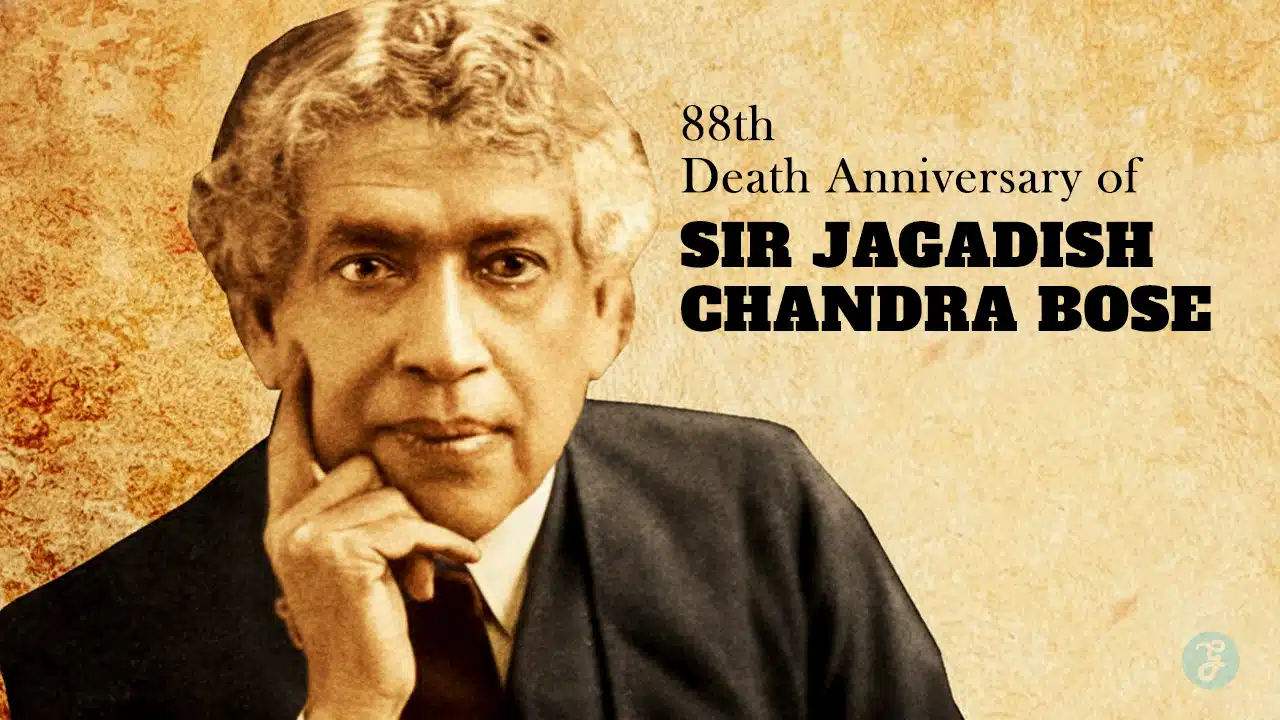
On the 88th death anniversary of Jagadish Chandra Bose, we remember a visionary scientist whose pioneering work shaped the future of wireless communication, biophysics, and modern plant science. Bose’s achievements were so groundbreaking that their full recognition came only decades later.
Today, as we rely on Wi-Fi, remote sensing, wireless networks, and advanced biological research, we stand on the foundation built by geniuses like Bose—yet his name still does not receive the universal credit it deserves. This editorial revisits his life, work, and the technological revolution he ignited.
Early Life and Academic Journey
Born on November 30, 1858, in Mymensingh, Bengal Presidency, Jagadish Chandra Bose grew up in an environment that balanced intellectual curiosity with cultural identity. His father, a deputy magistrate and leading voice for social reform, ensured Bose studied in a Bengali school first, immersing him in local culture before moving to English institutions.
After early schooling in Calcutta, Bose traveled to England and studied medicine, but a health condition forced him to shift his academic path. He later studied natural sciences at Christ’s College, Cambridge, and the University of London—where he absorbed the scientific methods that would later influence his groundbreaking research.
Returning to India, Bose joined Presidency College as a professor of physics. Despite racial discrimination and lack of laboratory facilities, he improvised equipment and slowly built a research ecosystem that would transform science in India.
Breaking Ground in Radio and Wireless Communication
Sir Jagadish Chandra Bose was not just a physicist; he was a visionary who foresaw the future of communication. Decades before wireless technology became a global necessity, Bose was already experimenting with electromagnetic waves that traveled invisibly through the air—laying the groundwork for modern Wi-Fi, radar, and satellite communication.
Early Experiments and Demonstrations
In 1895, Bose achieved a feat that stunned the scientific community. He transmitted electromagnetic waves through walls, across a distance of over a kilometer, and even rang a bell remotely—demonstrating the first instance of wireless signaling. His experiments used millimeter waves (microwaves), which were far ahead of their time; even Western laboratories had not mastered generating or detecting such high frequencies.
Bose’s self-designed apparatus included waveguides, horn antennas, and dielectric lenses—devices that would later become essential components in radar systems and telecommunications. In an era when India lacked advanced laboratories, he crafted many of his instruments by hand, often from simple materials.
The Coherer and the Missed Recognition
Among Bose’s innovations was the mercury-iron coherer, a radio-wave detector that converted electromagnetic energy into electrical signals. He demonstrated its use before the Royal Institution in London in 1897, earning praise from leading scientists.
However, Bose’s belief that knowledge should belong to humanity led him to refuse patenting his invention. Soon after, Guglielmo Marconi used a similar detector in his radio systems and received international credit for “inventing” the radio. Only much later did historians uncover the extent of Bose’s contributions and acknowledge his pioneering role.
The Birth of Modern Wireless Technology
Bose’s research on electromagnetic waves established principles that still govern communication today:
-
Transmission and reflection of microwaves
-
Use of semiconductors to detect signals
-
Design of compact antennas and receivers
His discoveries serve as the scientific basis for technologies such as Bluetooth, Wi-Fi, satellite broadcasting, and radar. In essence, the invisible networks that connect the modern world trace their intellectual lineage to Bose’s Calcutta laboratory more than a century ago.
Revolutionary Work in Plant Physiology
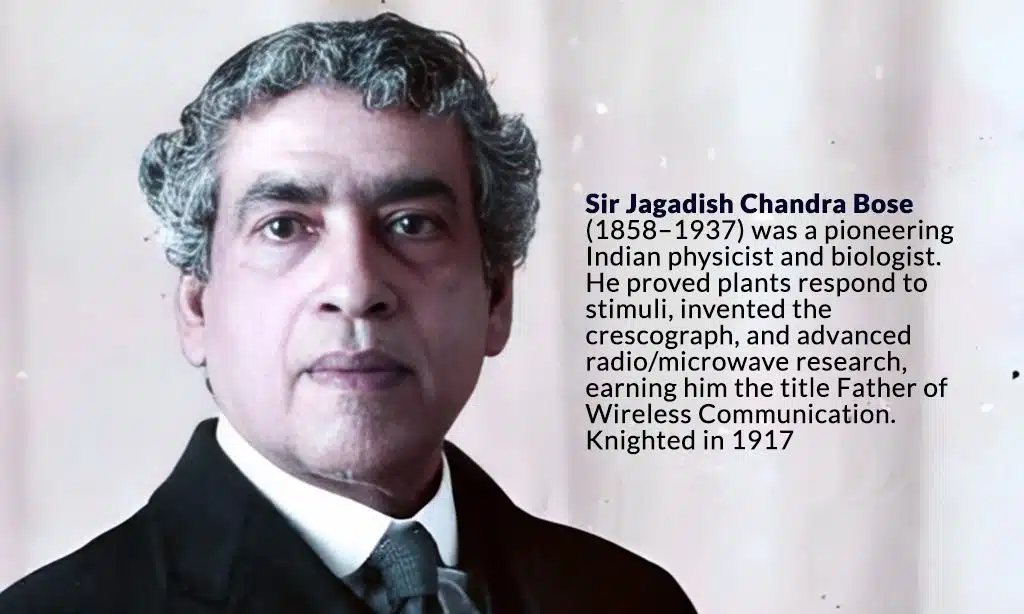
After revolutionizing physics, Jagadish Chandra Bose turned his attention to the mysteries of life itself. While Western science largely dismissed plants as passive beings, Bose believed they possessed sensitivity and responsiveness—ideas that challenged orthodox biology. His subsequent experiments transformed our understanding of plant physiology and laid the foundations for biophysics.
Proving Plants Respond to Stimuli
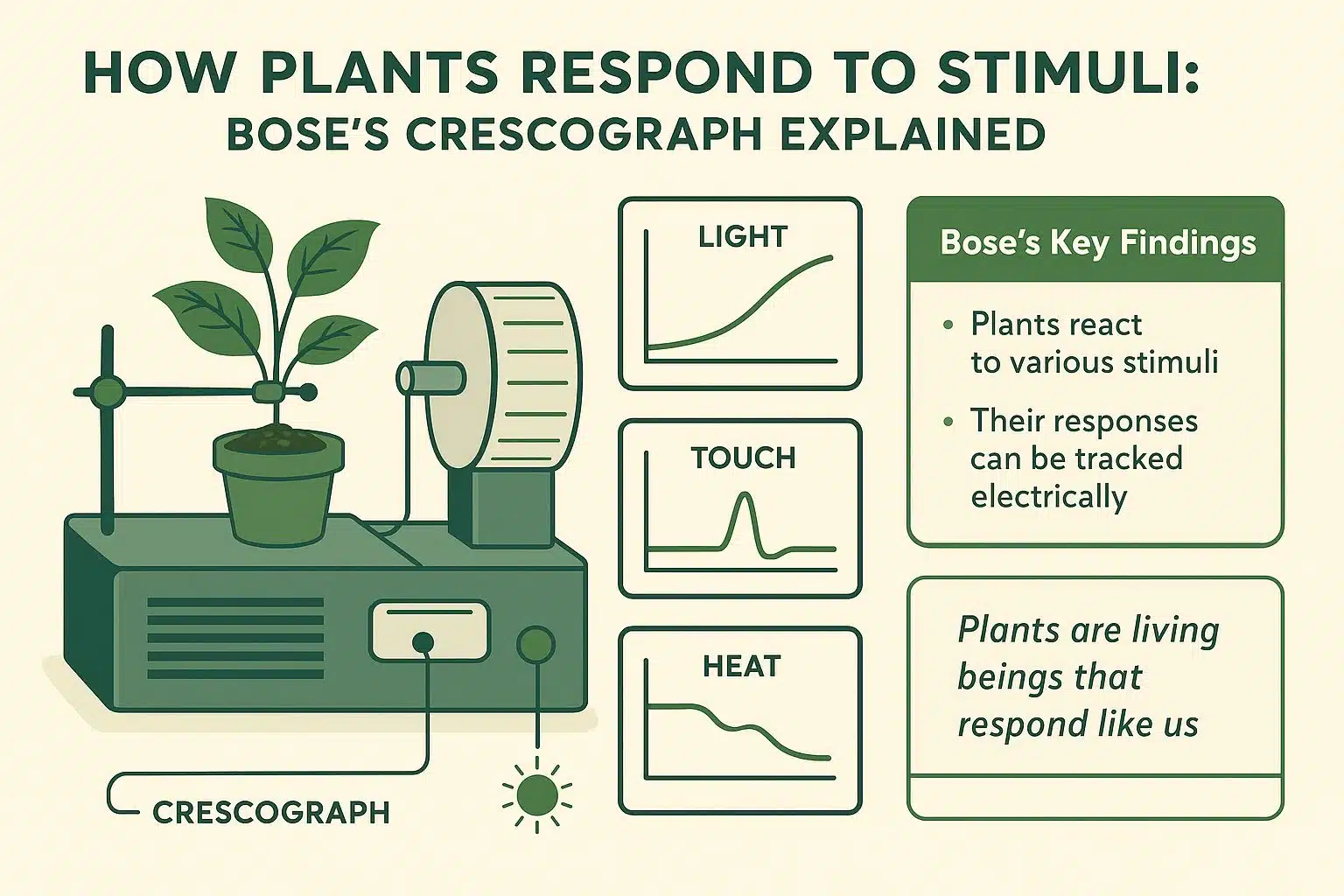
At a time when Western science treated plants as passive organisms, Jagadish Chandra Bose proved that plants respond to external stimuli much like animals. Through painstaking experiments, he demonstrated electrical responses in plants under stimuli such as:
-
Touch
-
Heat and cold
-
Chemical exposure
-
Light and darkness
-
Stress or injury
-
Vibrations and sound
His work showed that plants experience fatigue, excitement, recovery, and stress—concepts that foreshadow modern plant neurobiology.
Invention of the Crescograph
Bose invented the crescograph, a device capable of magnifying microscopic plant movements and measuring growth at extraordinary precision—up to 10,000 times.
The crescograph allowed Bose to record:
-
How plants grow
-
How they react in real time to environmental changes
-
Electrical impulses transmitted across plant tissues
This device was so advanced that even modern scientists admire its precision. It laid the foundation for today’s electrophysiological plant studies.
Legacy in Botanical and Biological Research
Bose’s biological studies challenged the West’s long-held assumptions and expanded scientific understanding of plant life. His work influenced:
-
Modern plant electrophysiology
-
Studies of plant signalling systems
-
Research inFwireless plant intelligence and communication
-
Development of sensitive biophysical instruments
Today, as we explore plant-based computing and biological communication networks, Bose’s research continues to guide scientific thought.
Bose’s Multidisciplinary Genius
Jagadish Chandra Bose was not confined to one field. He was a physicist, plant biologist, biophysicist, archaeologist, writer, and thinker. He even authored one of the earliest works of Bengali science fiction, “Niruddesher Kahini,” weaving scientific imagination with storytelling.
His education, combined with Indian philosophical influences, allowed him to see connections between living and non-living systems—an idea now reflected in fields like systems biology.
Establishing the Bose Institute
In 1917, Bose fulfilled his vision of creating India’s first interdisciplinary research center—the Bose Institute in Kolkata. The institute continues to advance research in plant biology, physics, and environmental sciences.
Bose’s philosophy of open scientific inquiry, ethical experimentation, and collaboration still defines the institute’s mission.
Global Recognition—Long Due but Growing
Though Bose faced neglect during his lifetime, institutions today acknowledge his contributions:
-
IEEE recognized him as a pioneer of radio science.
-
Scientific historians credit him for early semiconductor research.
-
His plant studies are taught in universities worldwide.
-
His instruments are showcased in global science museums.
The world is now rediscovering the brilliance that was always there.
Why Jagadish Chandra Bose Matters Today
Bose’s legacy is more relevant than ever:
-
His wireless experiments underpin global communication systems.
-
His plant studies inform agriculture and ecological research.
-
His interdisciplinary approach reflects modern scientific trends.
-
His ethics remind us that science should serve humanity—not profit.
For young innovators, Bose is a symbol of brilliance, integrity, and perseverance.
Takeaways
On the 88th death anniversary of Jagadish Chandra Bose, we honor a genius whose research reshaped both technology and biology. His legacy lives on every time we send a wireless signal, study plant responses, or marvel at the interconnectedness of the natural world.
Bose was more than a scientist—he was a visionary who looked far beyond the limits of his era. Today, his work continues to inspire, influence, and illuminate the ever-evolving landscape of modern science.