
Hey there, are you a construction investor feeling lost in a sea of numbers and trends? It’s tough to know where to put your money, especially with the fast-changing construction world.
You might worry about missing out on big chances or making a bad call that costs you big time.
Well, here’s a jaw-dropping fact to grab your attention. Did you know global construction spending is set to hit a whopping $15.7 trillion in 2025? That’s a huge sandbox to play in, and with the right info, you can build a solid future.
In this blog, “10 Stats Every Construction Investor Should Know,” we’ll break down key numbers, like those tied to construction technology and sustainability. We’ll help you spot smart moves for your real estate investments.
Stick with us, and let’s build some success!
Key Takeaways
- Global construction spending will hit $15.7 trillion in 2025, showing huge investment potential.
- Construction input prices rose at a 9.7% annualized rate through Q1 2025, pushing project costs up.
- Labor shortages affect 94% of firms, with 54% of contractors facing project delays in 2025.
- Only 16% of firms fully use Integrated Project Management Systems, missing out on efficiency gains.
- Construction robot market growth is set at 18% yearly from 2024 to 2030, boosting job site speed.
Global Construction Market Growth

Let me paint a picture for you, folks, about the massive growth happening in the global construction market. It’s like watching a skyscraper rise from the ground, floor by floor, with no end in sight. Check out the jaw-dropping numbers and trends in the table below, and let’s chat about what this means for investors like you.
| Key Metric | Data Point | Why It Matters |
|---|---|---|
| Global Spending in 2025 | $15.7 trillion | This huge figure shows the sheer scale of opportunity. It’s a gold mine for investors eyeing big returns. |
| Global Gross Output in 2023 | $13 trillion | That’s the baseline we’re building from, folks. It’s already massive, and there’s more to come. |
| Projected Industry Growth by 2040 | 70% | Think of this as a long-term jackpot. Construction isn’t slowing down; it’s sprinting ahead. |
| U.S. Spending in August 2023 | $1.98 trillion (+7.4% YoY) | America’s pouring cash into projects. That yearly jump screams growth, and you can ride this wave. |
| Projected U.S. Spending for April 2025 | $2.152 trillion | Look at that climb in just two years. It’s a clear sign the U.S. market is a hot spot for your capital. |
| Key Concept: Infrastructure Development | Driving global growth | Roads, bridges, and buildings are popping up everywhere. This boom fuels the numbers we’re seeing. |
| Vital Tool: Project Forecasting Software | Tracks market trends | Investors, grab this tech to predict where the cash flows. It’s like having a crystal ball for profits. |
Isn’t it wild how fast this industry is expanding? Picture yourself tossing a pebble into a pond, only the ripples keep getting bigger. That’s the construction market right now, and with tools like project planning apps and a focus on building projects worldwide, the potential is endless. Wanna chat about where to put your money next? I’m all ears!
Rising Construction Costs and Inflation Impact
Hey there, folks, let’s chat about a real pocket-pincher in the construction world right now. Rising costs are hitting hard, and inflation is fanning the flames. Just think about this: construction input prices climbed at a whopping 9.7% annualized rate through the first quarter of 2025.
That’s a steep jump, and it’s making every project pricier than a fancy steak dinner. From nails to concrete, average material prices have surged 40% since 2020. It’s like watching your grocery bill explode overnight.
This spike is squeezing budgets tight for builders and investors alike.
Now, hold onto your hard hats, because there’s more. Construction equipment costs are up too, sitting 30.5% higher in 2025 compared to pre-COVID days. Want a new wheel loader or skid steer for your site? Good luck, that price tag stings.
On top of that, 81% of firms boosted base pay for workers over the past year to keep up with inflation and labor demands. These rising expenses trickle down, impacting real estate investments and project management plans.
It’s a tough game, almost like playing whack-a-mole with your budget, as costs pop up everywhere.
Labor Shortages in the Construction Industry
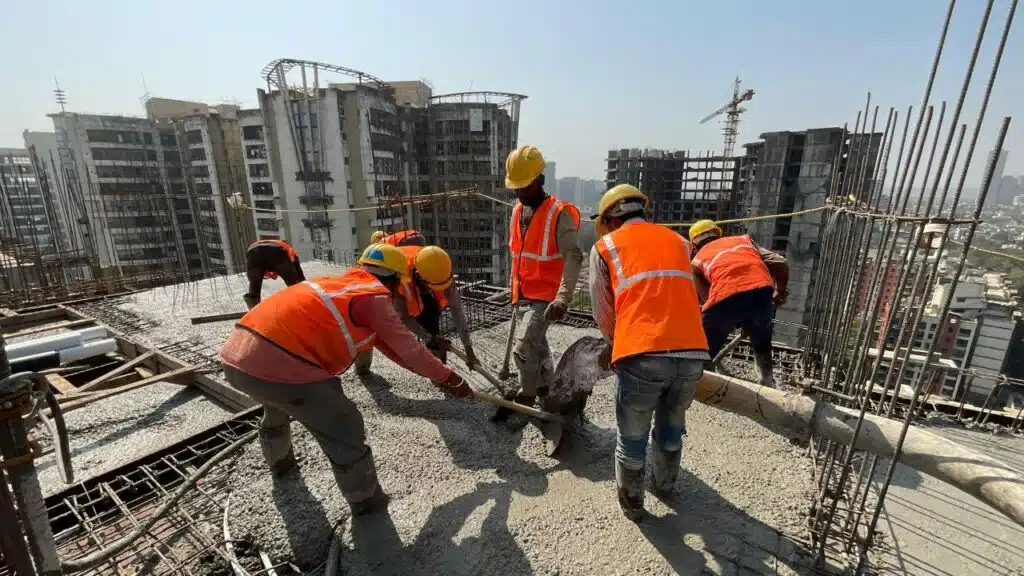
Gosh, folks, the construction industry is in a real pickle right now with labor shortages. A whopping 94% of firms say they’ve got openings for craft workers, and 85% can’t fill salaried spots either.
Even worse, 94% of those craft roles and 92% of salaried positions are tough to snag. It’s like trying to find a needle in a haystack, and it’s slowing everything down.
Now, let’s talk impact, because this hits hard. Over half, that’s 54% of contractors, face delays due to not having enough hands on deck. And get this, 80% of companies have had to cancel, scale back, or postpone projects because of these workforce gaps.
This isn’t just a small bump in the road; it’s a major roadblock for real estate investments and residential construction. Tools like forklifts and skip loaders sit idle, waiting for workers, while risk managers scramble to keep projects on track.
It’s a mess, plain and simple.
Adoption of Integrated Project Management Systems
Hey there, folks, let’s chat about something game-changing in construction. Integrated Project Management Systems are shaking things up, and they’re worth your attention. Picture a tool that ties all your project pieces together, like a puzzle snapping into place.
These systems help teams stay on the same page with clear data and smooth workflows. Yet, here’s the kicker, only 16% of firms have fully jumped on this bandwagon. That means a ton of potential is just sitting there, waiting to be grabbed.
Now, imagine slashing errors and saving time on every job. Firms using Building Information Modeling, or BIM, alongside these systems see real wins. About 61% report fewer project mistakes, and 55% cut down on communication delays.
With construction software leading the charge, it’s like having a trusty sidekick for your investments. So, why not tap into this digital transformation? It’s a smart move for boosting operational efficiency in any project.
Increasing Use of Construction Technology Solutions
Tech is changing the game in construction, folks. Imagine job sites buzzing with robots, not just workers. A whopping 65% of firms now use robotics to get tasks done faster. Plus, 35% roll out autonomous heavy equipment to tackle the big jobs.
It’s like having a tireless crew that never needs a coffee break. This shift isn’t just cool, it’s a smart move for boosting speed.
Now, let’s chat about the future with construction technology. The market for construction robots is set to grow at a speedy 18% yearly from 2024 to 2030. Artificial intelligence, or AI, is also stepping in, promising a massive 71% profit jump by 2035.
That market could hit $13.5 billion by 2030. On top of that, 23% of companies use lean tools like Building Information Modeling, often called BIM, and offsite prefabrication to cut waste.
Drones in construction are soaring high too, helping with surveys and safety checks. It’s clear, embracing these solutions is the way to build smarter.
Rework Costs and Their Effect on Profit Margins

Hey there, let’s chat about a big headache in construction, rework costs. They’re like a sneaky thief, quietly eating away at profit margins. Did you know that 14% of global rework comes from poor data quality? That’s a staggering $88.69 billion lost! Plus, 52% of rework happens because of bad data and miscommunication.
Even worse, design flaws cause 70% of that rework. It’s a mess that hits the bottom line hard.
Ouch, right? Imagine pouring money into a project, only to redo half of it. On top of that, 72% of firms say projects drag on longer than planned, and just 50% finish on time. These delays often tie back to rework, costing more hours and resources.
Using solid construction software can help cut these errors. It’s like having a trusty sidekick to keep data straight and profits safe.
Risk Management Challenges in Construction Projects
Holy cow, managing risks in construction projects can feel like walking a tightrope. One wrong step, and you’re in a heap of trouble. Think about this: a whopping 53% of contractors point to tight deadlines and urgent decisions as their biggest headaches.
That’s more than half the folks in the game sweating over time crunches. Add to that, global construction disputes drag on for an average of 14.4 months in 2024, with a massive price tag of $43 million per clash.
Ouch, that’s a lot of cash and time down the drain.
Now, let’s chat about the heat on project owners. A stunning 87% of them say they’re under tougher scrutiny than ever before. They’re watching every move like hawks, and who can blame them with such high stakes? Toss in tools like construction software and dashboards, and you’ve got a shot at tracking risks better.
But, man, it’s still a rough ride to manage risks when every delay or misstep could blow your budget. Let’s keep an eye on smart risk management tricks to dodge these pitfalls.
Data-Driven Decision Making in Construction Investments
Hey there, folks, let’s chat about making smart choices in construction investments with hard data. Picture yourself holding a treasure map, only this map is made of numbers and facts.
By 2025, global data volume is set to hit a staggering 175 zettabytes, that’s 175 billion terabytes of info. That’s a goldmine for investors using construction software to spot trends and make sharp calls.
Data isn’t just numbers; it’s the key to unlocking better returns.
Now, check this out, data leaders can see profit growth jump from 4.4% to 7.1%. Plus, 97% of firms agree data brings big wins, with 33% pointing to cost cuts as the top perk. Over 61% of North American companies use varied ways to gather and manage info, often with construction technology.
So, grab those stats, mix in some real estate investment savvy, and watch your decisions shine. Dig into data, my friends, and build your future!
Sustainable Construction Practices and Market Trends
Sustainable construction is making waves in 2025, and it’s a big deal for investors like you. Buildings account for a whopping 40% of global CO2 emissions, with embodied carbon from materials like cement and steel adding up to 18% of that total.
That’s a huge chunk, right? Imagine cutting that down with smart choices. Many leaders, about 54% to be exact, are jumping on the Environmental, Social, and Governance bandwagon, chasing benefits that help the planet and people.
It’s like planting seeds for a better future while watching your investments grow.
Over in Europe, circular construction practices are gaining ground, making up 18% of inputs by reusing materials. Think of it as recycling on a massive scale. This trend, paired with construction technology, is slashing waste and boosting return-on-investment.
Plus, with 66% of industry pros feeling upbeat about the market, sustainable moves aren’t just ethical; they’re a solid bet for real estate investments. Keep an eye on tools like eco-friendly software and green building plans to stay ahead in this game.
Productivity Challenges and Workflow Optimization
Hey there, let’s chat about a big hurdle in construction: productivity snags. It’s like trying to run a race with a pebble in your shoe, super frustrating. Large projects often lag behind, with 20% delayed and a whopping 80% going over budget.
Even worse, 98% of mega projects hit snags, and 77% fall behind by 40% or more. That’s a lot of time and money slipping through the cracks. These stats show how vital it is to streamline workflows in this industry.
Now, check this out, design-build projects zip along 102% faster than old-school methods. Plus, 90% of firms using prefabrication see better output, quality, and schedule control. By leaning on construction technology and tools like drones or smart software, investors can dodge these costly delays.
Think of it as giving your project a turbo boost. Tools for automating tasks also cut down on wasted effort. So, why not embrace these fixes to keep things rolling smooth?
Takeaways
Wrapping up, let’s chew on these construction stats for 2025. They paint a clear picture of where the industry is headed, from tech like drones in construction to big bucks in global spending.
Got a hunch about investing? Use these numbers as your trusty roadmap to smarter choices in real estate investments. Stick with us, and watch your portfolio grow stronger than a steel beam!
FAQs
1. What’s the big deal with construction technology in 2025 for investors?
Hey, let me tell you, construction technology is shaking things up big time. From drones in construction to augmented reality, these tools are changing how projects get done, saving time and cash. If you’re into real estate investments, knowing these stats can give you a leg up on the competition.
2. How do construction statistics impact my portfolio management?
Listen up, construction statistics are like a roadmap for smart portfolio management. They show trends in residential construction and help with asset allocation and diversification, so you don’t put all your eggs in one basket.
3. Why should I care about CO2 emissions as a construction investor?
Well, my friend, CO2 emissions are a hot topic with socially responsible investing. Many folks are leaning toward responsible investment, and knowing how construction impacts the environment can align your values investing with market demands, especially in 2025.
4. Are drones in construction really worth the hype for investment vehicles?
Oh, absolutely, drones in construction are flying high as a game-changer. They’re cutting costs and boosting safety with fall protection insights, making them a solid pick for investment vehicles. Keep an eye on these stats to see how they fit into your risk tolerance.
5. How does an economic downturn affect construction software investments?
Buckle up, because an economic downturn, much like after the pandemic, can hit hard. Construction software might seem like a safe bet, but with oil prices swinging and commercial loans tightening, you’ve gotta check the stats to see if outsourcing or automating business processes makes sense.
6. What role do demographics play in construction investments by 2025?
Hey there, demographics, including gender and Asian market preferences, are key to cracking the code. They shape residential construction demands and lending trends, so chatting with financial advisors or a trusted financial advisor can help you match investments to what employees and clients want. It’s like fitting a telehandler into a tight spot, tricky but doable with the right info.