When faced with legal challenges involving fundamental rights or constitutional principles, the importance of choosing the right legal expert cannot be overstated. In such situations, understanding the roles of civil rights vs constitutional lawyers becomes critical. While both specialize in advocating for justice and protecting rights, their areas of expertise, approaches, and the scope of their work are distinctly different.
In this article, we’ll explore the seven key distinctions between civil rights and constitutional lawyers. Whether you’re a law student, someone seeking legal advice, or just curious about the legal system, this detailed guide will provide clarity and practical insights.
What Are Civil Rights Lawyers?
Civil rights lawyers specialize in cases where an individual’s fundamental rights have been violated. These rights are protected under laws like the Civil Rights Act, the Americans with Disabilities Act (ADA), and other federal and state statutes.
Key Responsibilities:
- Advocating for individuals facing discrimination based on race, gender, religion, or disability.
- Handling cases involving police misconduct, wrongful arrests, or excessive force.
- Protecting voting rights, housing rights, and workplace equality.
Common Case Types:
| Case Type | Example |
|---|---|
| Employment Discrimination | Filing against an employer for gender bias. |
| Police Brutality | Representing victims of excessive force. |
| Housing Rights | Challenging discriminatory rental practices. |
Civil rights lawyers often represent individuals or groups, such as advocacy organizations, in both local and federal courts.
Example Case:
A landmark case handled by civil rights lawyers is Brown v. Board of Education, where racial segregation in public schools was deemed unconstitutional.
What Are Constitutional Lawyers?
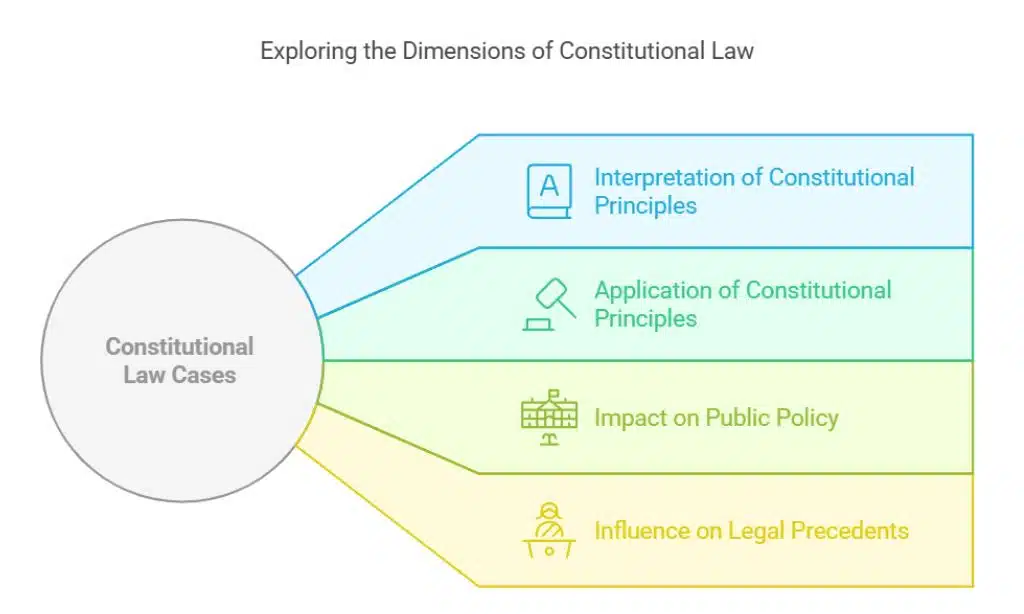
Constitutional lawyers focus on cases that involve interpreting and applying constitutional principles. These legal experts often handle high-profile cases that can shape public policies and legal precedents.
Key Responsibilities:
- Arguing cases involving government overreach or violations of constitutional rights.
- Interpreting constitutional amendments and their application.
- Advising government agencies or large organizations on constitutional compliance.
Common Case Types:
| Case Type | Example |
| Freedom of Speech | Defending individuals’ rights to peaceful protest. |
| Separation of Powers | Challenging executive overreach. |
| Privacy Rights | Arguing against unlawful surveillance practices. |
Constitutional lawyers often work on cases that reach federal courts or the Supreme Court, influencing significant legal decisions.
Example Case:
A notable case involving constitutional law is Roe v. Wade, which addressed a woman’s right to privacy under the 14th Amendment.
Civil Rights vs Constitutional Lawyers: Key Differences Explored
Civil rights vs constitutional lawyers are often compared due to their focus on legal rights and justice. However, their scope and impact diverge in several ways, making them uniquely suited for specific legal challenges. Below, we explore their roles and key distinctions to clarify their importance in the legal system.
1. Area of Focus
Civil Rights Lawyers: These attorneys concentrate on protecting individuals from discrimination and ensuring equal treatment under the law. They address violations based on race, gender, disability, religion, and other protected characteristics.
Constitutional Lawyers: These professionals specialize in interpreting and applying the Constitution to various legal issues. They handle cases involving the constitutionality of laws, government actions, and the balance of powers among governmental entities.
| Aspect | Civil Rights Lawyers | Constitutional Lawyers |
|---|---|---|
| Primary Focus | Individual protections against discrimination | Interpretation and application of constitutional law |
| Key Concerns | Equality, anti-discrimination, personal freedoms | Government powers, constitutional validity of laws |
2. Types of Cases Handled
Civil Rights Lawyers: They manage cases such as employment discrimination, police misconduct, housing discrimination, and violations of voting rights. For instance, they may represent individuals facing workplace bias or victims of excessive force by law enforcement.
Constitutional Lawyers: These lawyers tackle issues like freedom of speech, separation of church and state, and challenges to the constitutionality of statutes. They might argue cases involving First Amendment rights or disputes over executive authority.
| Case Type | Civil Rights Lawyers | Constitutional Lawyers |
| Employment Discrimination | Addressing unfair treatment in the workplace | – |
| Police Misconduct | Representing victims of excessive force | – |
| Freedom of Speech | – | Defending or challenging speech-related issues |
| Constitutional Challenges | – | Contesting laws that may violate constitutional provisions |
3. Legal Forums and Proceedings
Civil Rights Lawyers: Often represent clients in federal or state courts, administrative hearings, and before agencies like the Equal Employment Opportunity Commission (EEOC). They may also engage in settlement negotiations outside of court.
Constitutional Lawyers: Frequently appear before appellate courts, including state supreme courts and the U.S. Supreme Court, to argue cases that may set significant legal precedents.
| Legal Forum | Civil Rights Lawyers | Constitutional Lawyers |
| Trial Courts | Yes | Occasionally |
| Appellate Courts | Occasionally | Yes |
| Administrative Hearings | Yes | Rarely |
4. Clientele
Civil Rights Lawyers: Typically represent individuals or groups who have experienced discrimination or civil liberties violations. This includes marginalized communities seeking justice and equal treatment.
Constitutional Lawyers: May represent a broader range of clients, including individuals, organizations, or government entities, especially in cases questioning the constitutionality of laws or governmental actions.
| Client Type | Civil Rights Lawyers | Constitutional Lawyers |
| Individuals | Yes | Yes |
| Groups/Organizations | Yes | Yes |
| Government Entities | Rarely | Yes |
5. Skill Sets and Expertise

Civil Rights Lawyers: Require strong litigation skills, empathy, and a deep understanding of civil rights statutes and precedents. They must effectively advocate for clients facing personal injustices.
Constitutional Lawyers: Need expertise in legal research, analytical reasoning, and a comprehensive grasp of constitutional law. They often engage in complex legal arguments that can influence or establish legal doctrines.
| Skill Set | Civil Rights Lawyers | Constitutional Lawyers |
| Litigation | High proficiency | High proficiency |
| Legal Research | Essential | Critical |
| Policy Advocacy | Often involved | Occasionally involved |
| Constitutional Analysis | Important | Fundamental |
6. Impact of Cases
Civil Rights Lawyers: Their cases often result in remedies for specific individuals or groups, such as compensation or policy changes within organizations. While impactful, these outcomes may not always lead to widespread legal change.
Constitutional Lawyers: Engage in cases that can lead to landmark decisions, setting legal precedents that affect national or state laws and policies. Their work can reshape legal interpretations and influence future legislation.
| Impact Scope | Civil Rights Lawyers | Constitutional Lawyers |
| Individual Remedies | Common | Less common |
| Policy Changes | Organizational level | Governmental level |
| Legal Precedents | Occasionally | Frequently |
7. Educational Background and Training
Civil Rights Lawyers: Typically hold a Juris Doctor (JD) degree with coursework focusing on civil rights, discrimination law, and related fields. Many gain experience through internships or roles in non-profit organizations dedicated to civil liberties.
Constitutional Lawyers: Also hold a JD degree but with an emphasis on constitutional law and appellate practice. Their training often includes clerkships with appellate or supreme court judges to gain firsthand experience in handling high-stakes legal issues.
| Aspect | Civil Rights Lawyers | Constitutional Lawyers |
| Degree | Juris Doctor (JD) | Juris Doctor (JD) |
| Specialization | Civil rights law, anti-discrimination law | Constitutional law, appellate practice |
| Practical Training | Internships with non-profits, advocacy groups | Clerkships with appellate or supreme courts |
Takeaways
Navigating the legal system can be daunting, especially when your rights are at stake. Choosing between civil rights vs constitutional lawyers depends on the specifics of your case and the expertise required. Civil rights lawyers excel in addressing personal injustices like discrimination or police misconduct, while constitutional lawyers focus on broader issues involving constitutional interpretation and government authority.
Both play indispensable roles in safeguarding justice and ensuring a fair legal process. By understanding their distinctions, you empower yourself to make informed decisions when selecting legal representation.
If you believe your rights have been violated, don’t hesitate to consult an experienced lawyer. Whether you’re seeking redress for personal discrimination or tackling a constitutional dispute, the right legal expert can guide you through the complexities of your case and ensure that justice is served.