You’ve just bought your first electric vehicle, like a Tesla Model 3 or Hyundai Ioniq 5, and now you’re staring at your garage, wondering how to charge it at home without a hassle.
It’s frustrating, right, when public charging stations cost more and eat up your time, especially if you live in Jacksonville or Orange Park. You want a reliable home EV charger that fits your daily driving habits, but with so many options, from Level 1 to Level 2 chargers, it’s easy to feel overwhelmed.
A 2024 Consumer Reports survey shows that 88% of EV owners use dedicated 240-volt Level 2 home chargers for faster charging. This guide breaks it down step by step, covering charging speed, electrical panel capacity, connector types like J1772 or NACS, and smart features like Wi-Fi connectivity.
We’ll help you pick the right one, whether it’s a Charge Point Home Flex or Grizzl-E Duo, and even touch on installation costs and federal tax credits.
Ready to power up your EV life?
Understanding EV Charging Levels
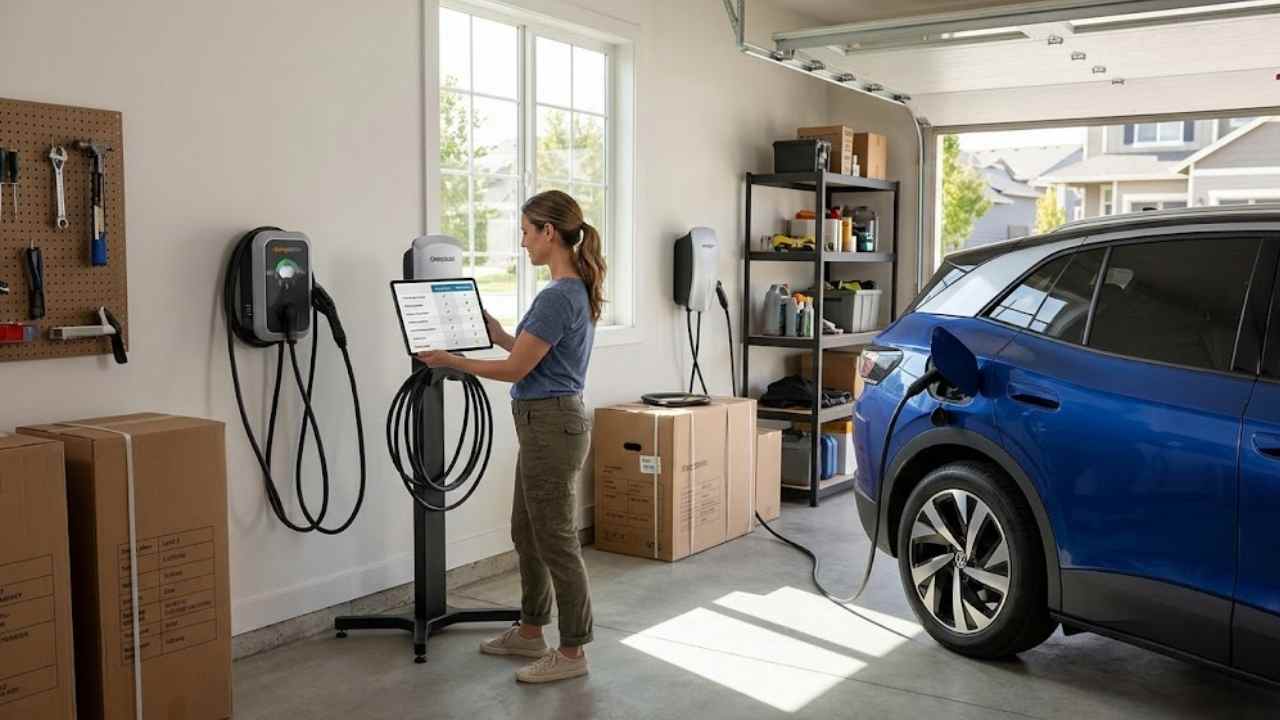
You know how your morning coffee wakes you up slow or fast, depending on the brew? EV charging works the same way, with options that match your daily miles, from a basic plug to speedy stations that keep you rolling without the wait.
Level 1 (120V): Basic charging for low-mileage drivers
Most electric vehicles come with a manufacturer-provided cable for 120-volt outlet charging. This setup plugs right into standard home outlets, no special installation needed. Level 1 charging gives you about 3 to 5 miles of range per hour, perfect for low-mileage EV drivers.
Think of it like a slow sip from a straw, not a big gulp. It suits folks who skip fast charging and drive short distances.
Some plug-in hybrids recharge fully overnight on this voltage. Daily drivers find it inefficient, though, due to the slow speed. Skip it for EVs with big batteries or quick turnaround needs.
This method skips electrical upgrades, keeping things simple in your home charging routine.
Level 2 (240V): Faster charging for most home setups
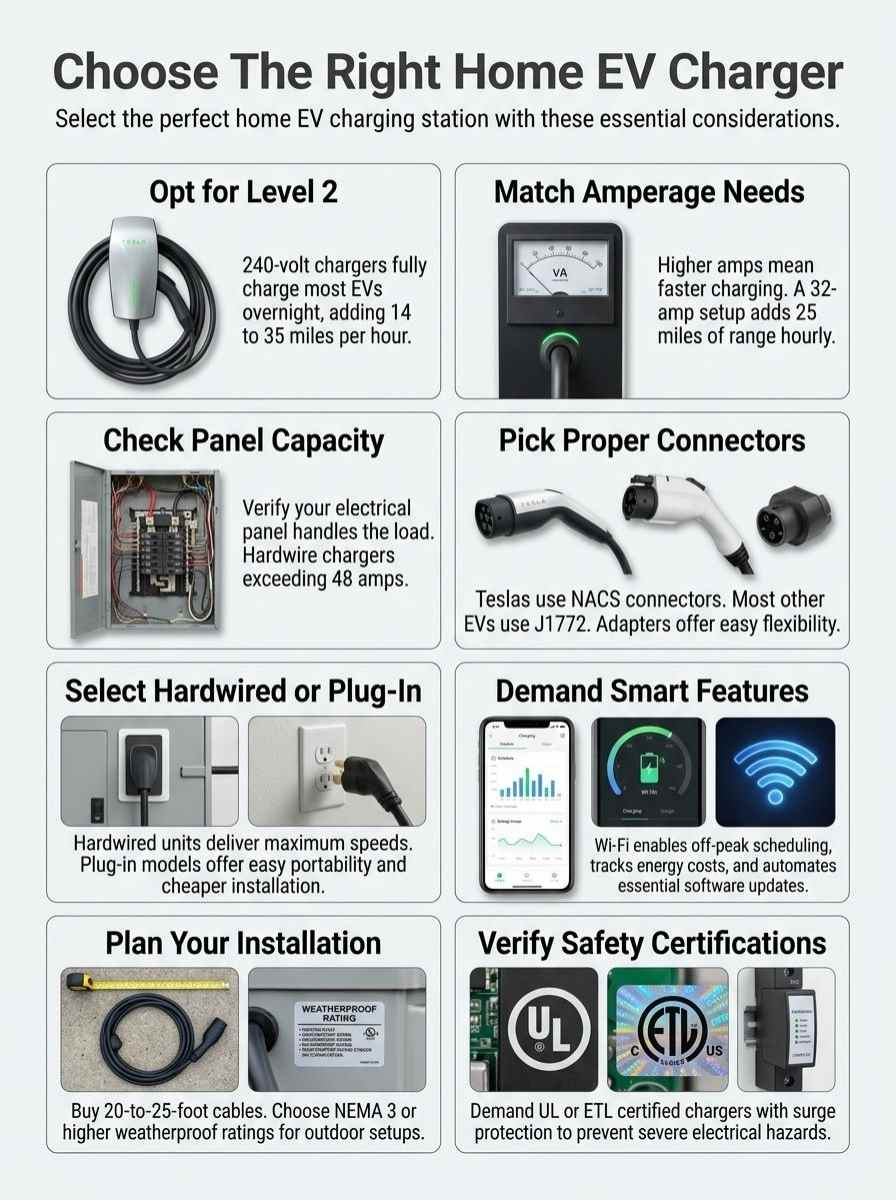
Level 2 chargers run on 240 volts. They deliver faster charging for your electric vehicle (EV) at home. These units add 14 to 35 miles of range per hour. That speed beats Level 1 by 5 to 10 times.
Imagine plugging in after work, and your Rivian R1T or BMW i4 sits ready by morning. Level 2 chargers can fully charge most EVs overnight. A 2024 CR survey shows 88% of EV owners use 240-volt wall chargers.
You need a dedicated 240V circuit for this setup, like a dryer outlet. It pairs with a circuit breaker to keep things safe.
Pick from options like the ChargePoint Home Flex, which hits up to 50 amps, or the Tesla Wall Connector at 48 amps. Installation costs range from $551 to $1,385 across the nation. Hire an electrician for the job; professionals handle it best.
Level 2 charging stations suit most daily EV drivers. They work with J1772 connectors or NACS connectors on cars like the Kia EV9 or Lucid Air Pure. Check your charging habits to match the amperage rating.
Smart chargers let you track energy use, much like a PG&E Energy Action Guide or EV savings calculator.
Level 3 (DC Fast Charging): Primarily for commercial use
People often spot dc fast charging at highway rest stops and commercial spots. This level 3 direct current (dc) or commercial charging station delivers quick power boosts. It uses special connectors and high voltage.
Think of it as a super-speed pit stop for your electric vehicle, far beyond what home setups offer. Most drivers grab this for long trips, not daily routines.
Home EV chargers skip level 3 support. You see, installation demands big electrical changes. Costs soar with those upgrades. Experts call it impractical for houses. Stick to level 1 or 2 for your garage.
Imagine trying to fit a race car engine in a family sedan, it just doesn’t work out.
Key Factors to Consider When Choosing a Home EV Charger
Picking the right home EV charger feels like finding the perfect pair of shoes, you know, comfy and reliable for the long haul. Think about your car’s needs, like how fast you want to charge with models such as the Emporia Pro or Classic, and check if your electrical panel can handle the amperage without tripping breakers, maybe even glance at the National Electrical Code for safe setup.
Charging Speed and Amperage
Level 2 chargers boost your car’s battery with at least 25 miles of range per hour. Pick a 32-amp unit, and you add about 25 miles each hour. Go for a 50-amp model, it delivers around 37 miles per hour.
Check amperage choices first. A 20-amp charger outputs 16 amps and gives 12 miles per hour. Step up to 30 amps with 24-amp output for 18 miles hourly. Try 40 amps at 32-amp output to hit 25 miles per hour.
Opt for 50 amps with 40-amp output, you get 30 miles. Push to 60 amps and 48-amp output for 36 miles per hour. Cars like the Hyundai Ioniq 5 use an 11 kW onboard charger and handle a 48-amp setup.
The Toyota bZ4X sticks to a 6.6 kW charger, capping at 30 amps max. Most electric vehicles take 60 to 80 amps based on the model. Experts suggest at least 32 amps for home use. Follow the national electrical code, it demands circuits rated 25% higher than output.
Take a 40-amp charger; pair it with a 50-amp breaker. Folks in Duval County or near the St. Johns River might chat about this over coffee, like how the Emporia Pro beats the Emporia Classic in speed.
Imagine your car sipping power like a thirsty traveler at the St. Johns, “Hey, fill me up faster!”.
Costs of installation vary, but smart features tie into apps like Smartcar API for tracking. Drivers in Yulee or San Marco often weigh these specs against their daily miles. A level 1 charging station drags along slowly, unlike these speedy options.
Picture your garage in North Florida humming with efficient power, no drama involved.
Electrical Panel Capacity
Homeowners, check the available amperage in your electrical panel first. You might need to upgrade your electrical service if the panel sits full or lacks power for the charger’s demand.
Think of it like fitting a big appliance into a crowded kitchen; sometimes you expand the space. Installation costs climb to thousands of dollars with needed electrical upgrades, or when the site stands far from the main panel.
CR’s Auto Test Center staff shared costs from $500 to $4,000 based on complexity. Keep things simple, folks, opt for hardwired chargers linked to an upgraded panel near your garage.
A federal tax credit offers 30% off, up to $1,000, for qualifying setups until June 30, 2026.
For charging over 48 amps, pick hardwiring instead of plug-in styles. Flexible options, like the ChargePoint Home Flex, adjust to your home’s electrical capacity. Imagine your car and driver zipping along without power worries, much like a smooth ride in a Vue 3 setup.
These choices cut the cost of installation and keep everything running safe. You handle the basics, and the system powers up without a hitch.
Connector Compatibility (J1772 vs. NACS)
Picking the right connector for your EV charger feels like matching socks in the laundry, you want them to fit without any hassle.
| J1772 Connector | NACS Connector |
|---|---|
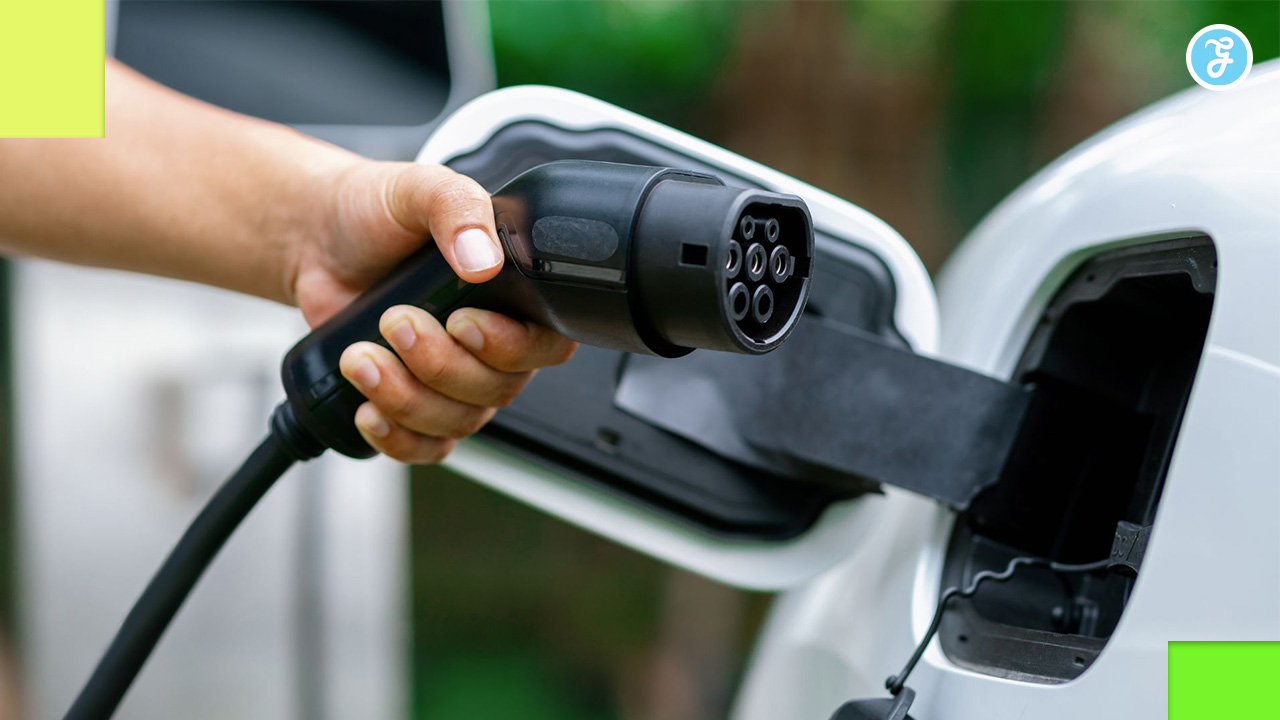
| Non-Tesla EVs made before 2025 typically use the J1772 connector, folks often call it the Type 1 connector, and it powers most American and European EVs and PHEVs except Tesla models. | Tesla vehicles come equipped with the NACS, or North American Charging Standard, connector, and some non-Tesla EVs now include the NACS plug right from the factory. |
| Adapters exist, but you find more choices for changing J1772 to NACS than the other way around; buy adapters from your vehicle maker to dodge warranty problems. | Tesla home chargers connect to most EVs if you add an adapter, and experts predict more EVs will switch to Tesla’s NACS connector in the years ahead. |
Types of Home EV Chargers
4. Types of Home EV Chargers: Hey, picking between fixed chargers that stay put like a loyal guard dog, or movable ones you can shift around as easy as pie, really boils down to your garage setup and how often you tinker, so hang tight for the details that’ll help you decide.
Hardwired Chargers
Hardwired chargers connect right to your home’s electrical panel. They support higher amperage, which means faster charging up to 48 amps or more. Imagine, you plug in your EV after a long day, and it juices up quick, like a reliable old friend who never lets you down.
These units act as permanent fixtures, so they’re less portable than other options. They shine with enhanced weatherproofing and durability, perfect for outdoor spots where rain or snow might hit.
Plus, they give a clean look with less visible wiring, cutting the risk of someone yanking the plug by accident.
One big install at CR’s Auto Test Center cost $4,000, thanks to major work on a 200-year-old house. For speeds above 48 amps, codes often demand this hardwired setup, no ifs or buts.
You might need panel upgrades to make it all work smoothly. Hey, some utility rebates and incentives only kick in if you go with hardwired, smart chargers that hook up to Wi-Fi. That way, you monitor everything from your phone, keeping life simple and charged.
Plug-in Chargers
Plug-in chargers connect to outlets like the NEMA 14-50 or NEMA 6-50, and they let you relocate them easily if you move or rent. You can pack them up and take them along, like a trusty sidekick on your EV journey.
These chargers shine for their portability, making them a smart pick for temporary setups. They often limit to lower amperage, say 32 to 40 amps, which means they might charge your EV a bit slower than some other options.
Folks sometimes plug them into dryer circuits, but hey, a dedicated outlet works best to keep things smooth and safe. Installation costs stay low since you skip the electrical hardwiring, a real bonus if you’re watching your wallet.
These chargers suit you well if you need flexibility or plan a move soon. Not every model handles the higher amperage that certain EVs demand, so check that first to avoid surprises.
Imagine: you plug in, charge up, and unplug without fuss, like grabbing coffee on the go. They offer that easy-breezy vibe for daily drivers who value convenience over speed.
Smart Features to Look For
Picture your EV charger as a helpful sidekick that connects to Wi-Fi, so you can set charge times from your smartphone app and watch everything in real time. Track energy use right there on the screen, it shows you exactly what your electric bill might look like, no guesses needed.
Grab one with automatic software updates too, they fix bugs and add cool tricks without you lifting a finger. Oh, and if it pairs with voice assistants like Alexa, you can just say, “Start charging,” while sipping coffee.
These perks turn daily routines into a breeze, want details on safe setup next? Keep scrolling.
Wi-Fi Connectivity for Scheduling and Monitoring
Wi-Fi-enabled chargers let you schedule charging times. This takes advantage of off-peak electricity rates. You save money that way. Smart chargers connect to apps. They manage charging, handle scheduling, and send reminders.
Many utility companies offer rebates for these Wi-Fi-connected models. Take the ChargePoint Home Flex, for example. It includes smart scheduling capabilities. Picture your charger as a helpful buddy, always keeping you in the loop.
Wi-Fi connectivity allows remote monitoring of charging status. You get notifications about interruptions. Smart chargers provide energy usage data. This helps with cost tracking. Apps from manufacturers like Nissan let users check charging status from afar.
Wi-Fi-connected chargers often qualify for local utility grants and rebates. Imagine checking your EV’s progress while sipping coffee at work, no worries at all.
Energy Usage Tracking
Smart chargers track energy used in each charging session, like a trusty meter keeping tabs on your EV’s thirst. Many apps let you follow charging costs and driving metrics, turning data into your sidekick for smarter decisions.
Imagine you spot high usage patterns and tweak them, just as usage tracking features help EV owners optimize their charging habits. Some chargers offer detailed reports on energy consumption for cost analysis, making it easy to pinch pennies.
Tracking tools maximize savings by adjusting charging schedules, a real game-changer for your wallet.
ENERGY STAR certification shows low energy usage during non-charging periods, so your setup stays efficient even when idle. Usage data proves handy for tax incentives or rebate applications, giving you that extra edge.
Not all chargers include energy tracking, so confirm the feature before you buy. Apps from brands like Charge Point or Tesla provide these insights, helping you stay ahead of the curve with reports and metrics.
Software Updates
Home EV chargers with smart tech grab automatic software updates. These updates add fresh features and boost how the charger works. They enhance utility, toss in new ways to monitor energy, and fix pesky connectivity problems.
Picture your charger getting a quick tune-up overnight, like a car that learns new tricks without a mechanic’s visit. Updates often bring better scheduling options or smoother ties to your phone app.
Some models pull in firmware tweaks via Wi-Fi or Bluetooth, making life easier.
Automatic updates cut down on upkeep and keep performance sharp. They even beef up security to fend off cyber threats, keeping your setup safe. Take the Charge Point Home Flex; it handles these updates with ease.
Plus, staying current with updates might lock in those utility rebates or incentives you want. Imagine chatting with a friend about your EV setup, My charger just got smarter on its own last night.
Installation Considerations
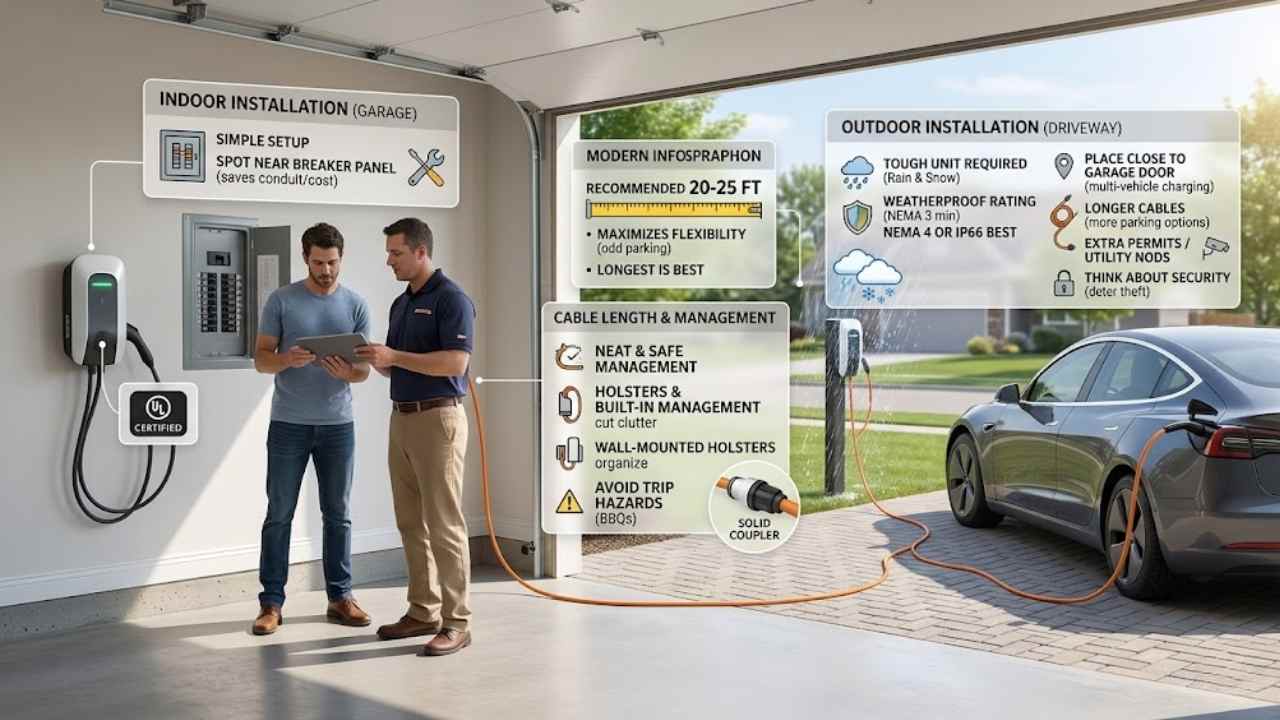
Think about where you’ll park your electric car most often, like in a cozy garage or out in the driveway under the stars, because that spot decides if you need a tough unit that laughs off rain and snow.
Pick a charger with the right cable reach to avoid tangles, and check those weather ratings to keep everything safe and humming along without a hitch.
Indoor vs. Outdoor Installation
You can install your home EV charger inside, like in a garage, or outside based on your home’s setup. Pick a spot near the electrical panel to cut down on conduit and costs. For indoor spots, a garage works great and keeps things simple.
Outdoors, you need a weatherproof charger with at least a NEMA 3 rating to shield against rain and snow. Place it close to the garage door, and you’ll charge multiple vehicles with ease, no sweat.
Outdoor setups often call for longer cables, giving you more flex in parking. They might need extra permits or nods from your utility company too. Think about security when you set it up outside, to deter theft and keep your charger safe.
Weatherproof Ratings and Durability
Pick chargers with a NEMA 3 or higher weatherproof rating for outdoor spots. Grizzl-E models boast a NEMA 4 rating, which boosts their waterproof strength. These setups handle rain, snow, and wild temperature swings like champs.
Chargers with NEMA 4 or IP66 ratings suit outdoor use best. A solid coupler makes outdoor hookups easier and safer, no doubt about it.
Charging cables can turn brittle in cold snaps, so focus on durability to keep things running smooth. Weather ratings boost charger life in tough spots. Opt for a weatherproof charger; it works great indoors or out, giving you total setup freedom.
Cable Length and Management
Home EV chargers need cables long enough to reach your car’s port without strain. Experts recommend 20 to 25 feet for the best flexibility in parking spots. You want that reach to handle different setups, like when friends park oddly in your driveway.
Models such as the Tesla Wall Connector and Grizzl-E often come with 24- to 25-foot cables, perfect for most garages. Short cables cramp your style, they limit charging multiple vehicles or hitting distant spots.
Go for the longest cable you can get, it adapts to life’s little curveballs, like a shifted parking routine.
Good management keeps things safe and neat, no one trips over a loose cord during a family barbecue. Chargers with holsters and built-in cable management cut clutter and hazards. Wall-mounted holsters store cables tidy, they make your space feel organized, almost like a pro setup.
A sturdy coupler boosts usability and locks the connection secure, it feels solid in your hand. Proper storage solutions turn chaos into calm, you avoid tangles that frustrate daily charging.
Safety and Certification
Hey, picking a safe home EV charger feels like choosing a trustworthy sidekick, right? Go for ones with Underwriters Laboratories or Intertek stamps, they prove the gear aced strict checks against fires and shocks, and add surge guards to shield against wild voltage jumps that could fry your system.
UL and ETL Certifications
Chargers with UL and ETL certifications follow strict safety standards, you know, like a seal of approval that keeps things safe. They prevent electrical hazards and boost product reliability, so you avoid nasty surprises down the road.
Insurance companies and utility firms recognize UL Listed status, which can save you headaches with claims or bills. Plus, certified chargers cut the risk of fire or harm to your EV, acting as a trusty shield in your garage setup.
These certifications often qualify you for state or local incentive programs, and they stand as a must for utility rebates plus pro installations. You should always check for certification before you buy, especially online where deals pop up fast.
Skip chargers without proper certification; they spell trouble, like inviting a storm without an umbrella.
Surge Protection Features
Many home EV chargers come with built-in surge protection for electrical safety. This feature guards your vehicle and charger against power spikes. It matters a lot in spots hit by lightning or shaky electrical grids.
Picture a sudden storm frying your setup, ouch, that hurts the wallet. Surge protection extends the life of your charger and the car’s electronics. Utility companies often suggest it for safe EVSE setups.
Talk to a pro electrician about proper surge protection during install. They can add extra protectors at the electrical panel if the charger lacks them. You should check if these features come included or as an add-on.
It’s like giving your EV a shield in a wild electrical world.
Final Thoughts
You’ve learned about EV charging levels, from slow Level 1 plugs to speedy Level 2 stations that add 25 miles of range per hour. These tips make picking a home charger simple and smart, like choosing the right tool for a quick job.
What charger fits your daily drive, and can you grab that 30% tax credit up to $1,000 for installation? Switching to home charging saves high-mileage folks around $4,318 a year on fuel, cuts costs to $0.17 per kilowatt-hour, and beats public stations by 70%.
Check out ChargePoint or Tesla models on Amazon for more options, and get ready to plug in with confidence, because going electric just got a whole lot easier.
Frequently Asked Questions (FAQs) About Home EV Chargers
1. What should I look for in a home EV charger to match my daily drive?
Pick one with the right charging speed for your routine, like a Level 2 for quicker boosts if you zip around town a lot. Think about smart features too, they can save you headaches by scheduling charges during off-peak hours. Compatibility with your electric car is key, so double-check that before you buy.
2. How do I figure out if a charger works with my electric vehicle?
Check the plug type and voltage needs of your ride first. Most modern ones play nice with standard connectors, but it’s like fitting a puzzle piece, make sure it clicks.
3. What’s the big deal between Level 1 and Level 2 home chargers?
Level 1 uses your regular outlet and trickles power slowly, perfect for light users. Level 2 packs more punch with faster charging, but you might need an electrician to set it up right.
4. Will installing a home EV charger break the bank?
Costs vary based on the model and setup, often landing between a few hundred to over a thousand bucks. Shop around for rebates, they can lighten the load like finding money in an old coat pocket; just factor in any wiring upgrades too.