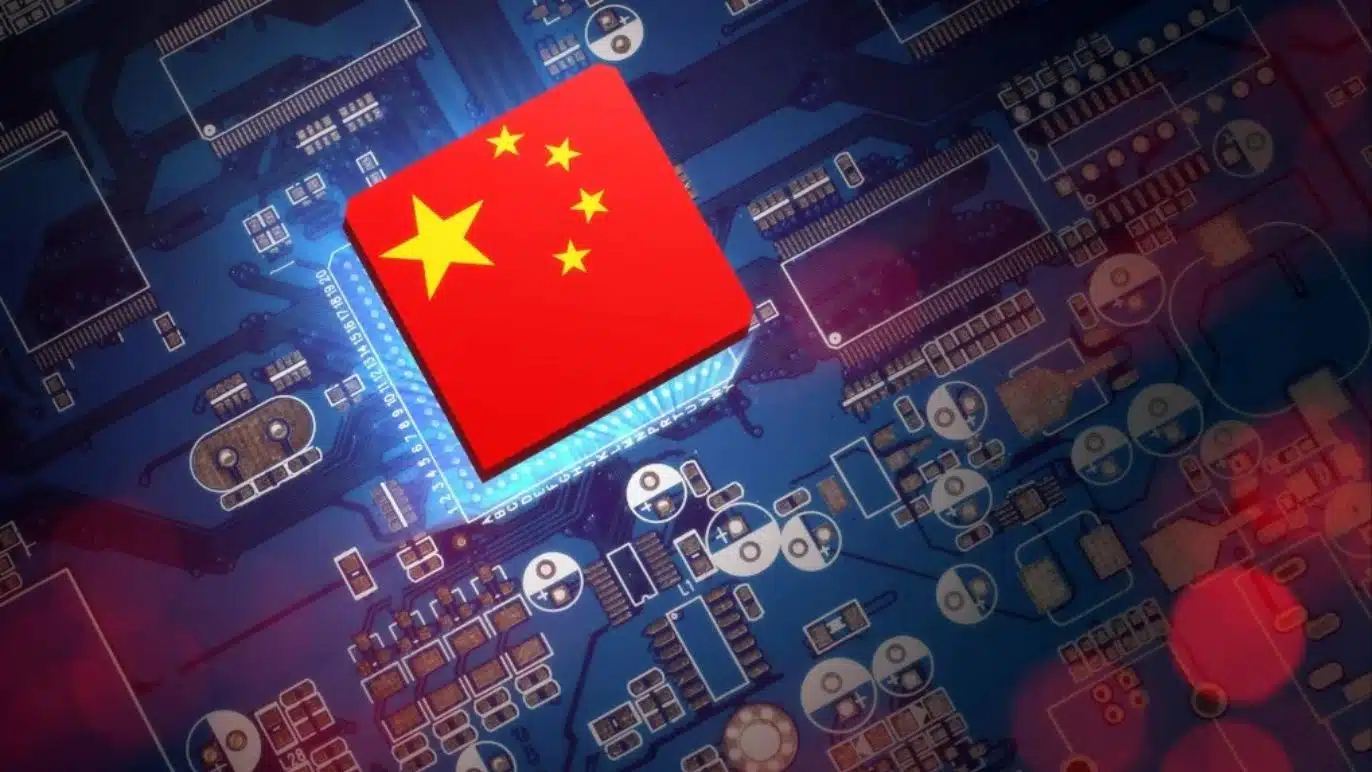
A group of scientists and engineers in China has built a prototype machine designed to produce the extreme ultraviolet (EUV) light used to manufacture the world’s most advanced chips—an achievement that, if it can be industrialized, would mark a major step toward reducing China’s dependence on Western semiconductor equipment. The prototype, reported by Reuters, is still in testing and has not yet produced working chips, but people familiar with the project described it as operational and capable of generating EUV light.
EUV lithography is the crown-jewel technology of modern chip production: it enables the tiny circuit features required for leading-edge processors used in AI servers, high-end smartphones, and advanced defense and aerospace systems. Today, that capability is effectively controlled by a small, tightly regulated ecosystem dominated by Dutch equipment maker ASML and its specialized suppliers—an ecosystem from which China has been largely cut off by export controls.
What China has built, by the accounts in the Reuters report, is not a full commercial rival to ASML’s mass-production scanners—yet. But it is a tangible signal that Beijing’s long-running bet on “self-reliance” in semiconductors is progressing from policy slogans and incremental workarounds into a serious attempt to replicate the most complex manufacturing tool in the modern economy.
Why EUV Matters So Much
Chipmaking is a chain of miracles, but lithography—the process of printing patterns onto silicon wafers—sits at its core. Each generation of chips demands smaller and more precise features, and traditional deep ultraviolet (DUV) lithography eventually hits limits that can only be overcome by either:
-
Printing with shorter-wavelength light, which improves resolution, or
-
Using many repeated patterning steps with DUV, which raises cost and complexity and can harm yields.
EUV takes the first route: it uses 13.5-nanometer light, enabling much finer features than DUV systems can typically achieve in a single exposure. ASML describes EUV systems as essential for mass production of the most advanced microchips, and it notes EUV’s 13.5 nm wavelength as the foundation of that capability.
In practical terms, EUV is how chipmakers like TSMC, Samsung, and Intel push into the most advanced process nodes. It’s also one reason AI has accelerated so quickly: higher transistor density and better efficiency allow data centers to pack more compute into less space and power.
The Prototype: What’s Been Reported
Reuters reported that between 2019 and early 2025, China developed a prototype EUV lithography machine in a Shenzhen lab, in an effort insiders likened to a “Manhattan Project”—a secretive, state-prioritized push with deep resources and tight security.
Key elements in the Reuters account include:
-
A prototype EUV tool completed in early 2025 and undergoing testing, described as large enough to fill nearly an entire factory floor.
-
The system is reportedly generating EUV light, but has not yet produced usable chips.
-
A team including Chinese-born former ASML engineers is said to have played a central role, with recruitment efforts described as aggressive and security-conscious.
-
A target to produce chips using this technology by 2028, with some experts suggesting 2030 is more realistic even if progress continues.
Even taken at face value, this is best understood as a prototype milestone—not a finished product. Turning EUV into high-volume manufacturing is a brutal journey of reliability engineering, supply-chain mastery, and process integration.
EUV Isn’t “One Machine”—It’s an Industrial Ecosystem
EUV lithography is often discussed as if it’s a single device you can build if you’re clever enough. In reality, it’s a high-precision system-of-systems requiring years of refinement and a supply chain that spans optics, lasers, vacuum systems, contamination control, metrology, materials science, and software.
ASML itself emphasizes that EUV is “unique” to the company and built around specialized approaches to generating and using 13.5 nm light.
The Light Source Problem: Tin, Lasers, and Plasma
Generating EUV light at usable power levels is one of the hardest parts. ASML’s description of its EUV source underscores the choreography involved: tiny molten tin droplets are produced at high speed and struck by laser pulses to create the plasma that emits EUV light.
That “source” then has to run stably for long periods at high repetition rates without contaminating the delicate optics—an ongoing fight against debris, heat, and drift.
Optics That Can’t Be “Normal Lenses”
EUV light is absorbed by most materials, so EUV systems rely on reflective mirrors inside vacuum environments rather than refractive lenses in air. Those mirrors must be extraordinarily precise and defect-free, because any imperfection can blur features at nanometer scales.
A Mask and Materials Stack That’s Still a Bottleneck
EUV also depends on a mature ecosystem for:
-
EUV photomasks and inspection,
-
photoresists that respond well to EUV while controlling stochastic defects,
-
pellicles (protective membranes),
-
and metrology tools for measuring features and overlay accuracy.
A prototype that emits EUV light is an important step—but it’s only one mountain in a range.
Export Controls: The Pressure That Shaped the Project
China’s reported EUV push sits directly inside the logic of the U.S.-led technology containment strategy: restrict access to the tools that enable advanced-node manufacturing, and you limit China’s ability to produce cutting-edge chips domestically.
In the lithography category, the bottleneck has been especially severe. Reuters previously reported that ASML is the sole global producer of advanced EUV systems and that China has been forced to rely on older lithography approaches while trying to close the gap.
This pressure has created an unusually direct incentive structure: if you can’t buy the tool, you either (a) accept dependence, (b) pursue workarounds like multi-patterning and advanced packaging, or (c) attempt to build the tool yourself—at enormous cost.
China’s “Workaround Era” Is Already Visible in Commercial Chips
Even without EUV, China has made progress using DUV-based techniques and process optimizations—often at higher cost and complexity.
A recent Reuters report, citing TechInsights’ analysis, said Huawei’s newest Mate 80 series used a Kirin 9030 chip made by SMIC with an upgraded process described as SMIC’s N+3—an incremental advance that still trails the leading-edge nodes used by the top global foundries.
That’s the context in which a prototype EUV effort becomes so strategically valuable: it’s a potential path off the treadmill of ever-more-complicated DUV multi-patterning.
The Broader Buildout: China’s Chip Equipment Push
The EUV prototype story also fits into a wider industrial trend: China expanding its domestic chip equipment industry under policy pressure and market necessity.
Reuters reported in May 2025 that Chinese equipment makers have been gaining share in the domestic wafer-fab equipment market, though lithography remains a major weakness, with EUV still out of reach commercially.
That matters because even if China builds an EUV scanner, it must still surround it with a supporting cast:
-
deposition tools,
-
etchers,
-
track systems (photoresist coating and development),
-
inspection and metrology,
-
chemicals and ultra-pure materials,
-
and factory automation.
Progress in these adjacent areas can shorten the path from a prototype to a production line.
How Big a Deal Is This—Really?
It’s both significant and easy to misunderstand.
Why it’s significant
-
EUV is the gatekeeper for truly competitive leading-edge chip manufacturing at scale. IBM Research
-
A working prototype suggests China may be compressing timelines that many outside observers assumed were decades long. Reuters
-
Even partial EUV capability could strengthen China’s bargaining position and reduce the strategic leverage of export controls over time.
Why it’s not “game over”
-
The Reuters report itself indicates the prototype has not yet produced working chips.
-
EUV requires extreme reliability, uptime, throughput, and process control—areas where ASML has spent years refining production tools and service workflows.
-
The hardest part may not be “making EUV light,” but building a machine that can run in a fab day after day with consistent output, minimal defects, and predictable yields.
In other words: a prototype is proof of direction, not proof of destination.
What This Could Mean for the World in 2026–2030
If China can move from prototype to manufacturing-grade EUV capability by the late 2020s—whether 2028 as an aspiration or 2030 as a more conservative view—it would reshape several parts of the global tech map.
1) A shift in the semiconductor “chokepoint” strategy
Export controls are most powerful when alternatives are distant. A credible domestic EUV path could force Washington and allied governments to reassess where the next chokepoints should be—and whether controls are buying time or accelerating substitution.
2) More pressure on ASML’s China exposure and on allies
Even as EUV is restricted, ASML has historically sold some non-EUV tools and services into China under licensing rules. Any perception that China is nearing EUV parity could tighten policy debates in Europe and the Netherlands about what should be allowed.
3) A faster, more fragmented chip supply chain
Rather than a single global technology ladder, the world could drift toward parallel stacks:
-
A Western stack anchored by ASML/TSMC/Samsung/Intel,
-
And a China-centered stack anchored by domestic tooling and domestic demand.
Fragmentation tends to increase costs—but it can also increase resilience for nations willing to pay the premium.
What to Watch Next
For readers trying to separate hype from hardware, a few milestones will matter more than rumors:
-
First patterned wafers produced using the prototype EUV system (even at low yield).
-
Demonstrated throughput (wafers per hour) and uptime suitable for pilot lines.
-
Mask, resist, and defect-control maturity, because EUV at advanced nodes is as much about controlling randomness and contamination as it is about resolution.
-
Supply chain disclosures (even indirect): optics sources, laser systems, vacuum subsystems, and metrology integration.
-
SMIC or other fabs preparing EUV-compatible infrastructure, which would indicate confidence that EUV isn’t just a lab experiment.
Bottom Line
China’s reported construction of a prototype EUV lithography machine is a serious development in the semiconductor race—especially because EUV has long been treated as the “unclimbable wall” in advanced chip manufacturing.
But the story is still in its middle chapters. A prototype that produces EUV light is a milestone; a production tool that reliably prints chips at scale is a different achievement entirely. The next several years will show whether China’s effort becomes a durable industrial capability—or remains an impressive but incomplete attempt at replicating one of the most difficult machines humanity has ever built.