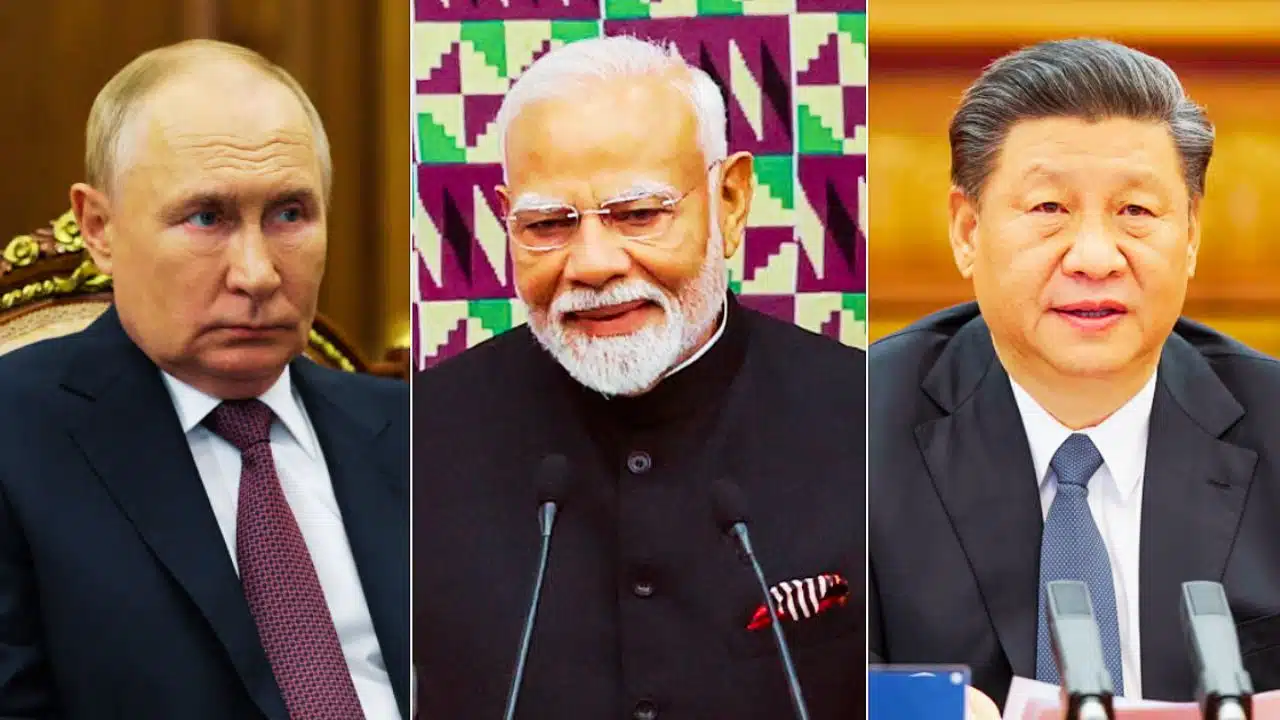
China and India are pivoting toward discounted Middle East crude as new U.S. sanctions hit Russian oil giants Rosneft and Lukoil, reshaping global oil trade flows and intensifying a quiet price war in Asian energy markets.
Sanctions On Russia Upend Asia’s Oil Flows
The latest round of U.S. sanctions targets Rosneft and Lukoil, which together account for roughly half of Russia’s crude exports and a large share of shipments to Asia. These measures include the threat of secondary sanctions on foreign buyers, making banks, insurers and shippers far more cautious about handling Russian cargoes to India and China.
As the November enforcement deadlines approach, refiners in both countries have sharply scaled back seaborne purchases of Russian barrels, triggering a steep drop in prices for Russia’s flagship Urals and ESPO blends and leaving millions of barrels sitting in floating storage.
India Steps Back From Russian Crude
Since 2022, India had emerged as the biggest buyer of discounted seaborne Russian oil, lifting around 1.7 million barrels per day and at one point sourcing nearly 40% of its crude imports from Russia. Ural and other Russian grades were booked at steep discounts after European buyers withdrew, allowing Indian refiners to boost margins while keeping pump prices relatively stable.
Now that calculus is changing. Major Indian refiners, including Reliance Industries and state-run players such as Indian Oil Corp and Bharat Petroleum, are preparing to sharply curtail imports from Russia to avoid falling foul of U.S. financial sanctions. Several have already halted direct purchases from Rosneft and Lukoil, effectively unwinding long-term deals that underpinned Russia–India energy ties after the Ukraine invasion.
Middle East Becomes India’s Safety Valve
To fill the gap, New Delhi is turning back to its traditional suppliers in the Middle East, while also tapping U.S. and West African grades. Before the Ukraine war, India relied primarily on producers such as Saudi Arabia, Iraq, the UAE and Kuwait; that supply matrix is now reasserting itself, albeit at higher price levels than the heavily discounted Russian barrels.
Analysts estimate that replacing Russian crude with Middle Eastern and U.S. cargoes priced closer to global benchmarks will raise India’s annual crude import bill by up to 2%, a modest but politically sensitive increase for a country that imports more than 80% of its oil. Refiners are juggling commercial gains from cheap Russian barrels against the risk of sanctions that could disrupt financing, shipping and access to Western technology.
China’s Quiet Retrenchment From Russian Oil
China, which had become Russia’s top crude customer, sourcing close to 20% of its imports from Moscow, is also recalibrating its exposure. State-owned giants PetroChina, Sinopec and CNOOC have paused or sharply reduced seaborne purchases of Russian grades, especially ESPO, while continuing to receive pipeline flows that are less exposed to maritime insurance and shipping restrictions.
Independent “teapot” refiners in China’s Shandong region have traditionally been more willing to handle sanctioned or discounted barrels, but even they are reassessing legal and financing risks as Washington signals tougher enforcement. This pullback has forced Russian sellers to widen discounts, with ESPO flipping from a premium to a discount versus Brent at Chinese ports for the first time in about a year.
Discounted Middle East Oil: A New Battleground
As both Asian giants trim Russian purchases, demand is shifting toward unsanctioned barrels from the Middle East, driving up premiums for key regional benchmarks. Grades from Saudi Arabia, Iraq and the UAE that were already central to Asian supply are now gaining additional traction as “clean” barrels that carry fewer compliance headaches for refiners and financiers.
At the same time, fears of a global oil glut and uneven demand growth have prompted some Middle Eastern producers and traders to offer selective discounts or flexible terms in Asia to defend market share against distressed Russian cargoes. The result is a tug-of-war in which Russian sellers slash prices to keep flows moving, while Middle Eastern exporters adjust differentials to remain competitive without breaching Western sanctions regimes.
Price Shock For Russia, Margin Squeeze For Buyers
The immediate casualty of this reconfiguration is Moscow’s oil revenue. Discounts on Urals versus Brent have widened sharply, reaching more than 20 dollars per barrel in recent trades, levels last seen during earlier phases of the sanctions regime. JPMorgan and other analysts warn that Russia is facing a “new phase of disruption,” with a growing volume of crude stuck in tankers being used as floating storage and a rising fiscal hit to the Kremlin.
For India and China, the shift means thinner refining margins but more predictable access to finance, insurance and shipping services tied to Western institutions. Refiners must weigh the allure of deeply discounted Russian barrels against the possibility that a single misstep could trigger secondary sanctions, jeopardising broader trade and investment flows with the United States and its allies.
Strategic Balancing: Energy Security Vs. Geopolitics
New Delhi has consistently defended its right to buy oil “wherever it gets the best deal,” arguing that cheap Russian crude helped shield domestic consumers from global price spikes after the Ukraine invasion. Yet officials are equally keen to avoid a direct clash with Washington at a time when India seeks deeper technology, defence and investment ties with the U.S.
Beijing is making a similar calculation, balancing its strategic partnership with Moscow against the systemic risk of U.S. financial sanctions that could ripple through Chinese banks, insurers and shipping firms. By leaning more on Middle Eastern barrels, China can quietly diversify away from Russian supply while maintaining the political narrative that it opposes unilateral sanctions.
What This Means For Global Oil Markets
The combined weight of China and India—now the world’s pivotal incremental buyers—means their pivot toward discounted Middle East crude could reshape pricing dynamics well beyond Asia. Stronger Asian demand for Gulf barrels is already firming differentials for medium and heavy sour grades, while forcing Russia to deepen discounts or reroute flows to smaller, higher-risk buyers willing to face Western scrutiny.
If sanctions enforcement tightens further and Russian exports remain constrained, OPEC and its Gulf members could find themselves with greater pricing power in Asia, even as they manage concerns about a looming supply glut and uneven global demand. For now, China and India are exploiting the moment—using geopolitical shocks to negotiate cheaper barrels, diversify suppliers, and quietly rewrite the map of global energy trade in their favour.