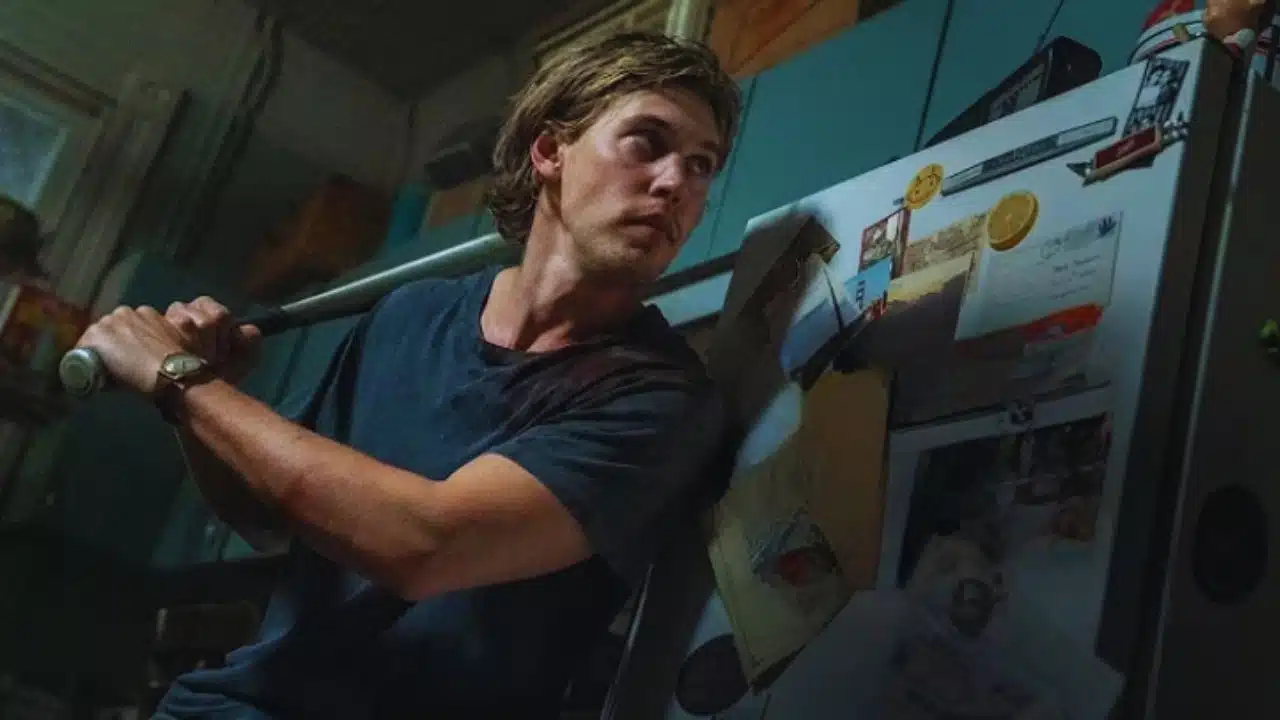
Darren Aronofsky’s crime thriller “Caught Stealing,” starring Austin Butler in a career-defining role as a struggling bartender pulled into New York’s dangerous criminal underworld, experienced a dramatic turnaround on streaming platforms after its disappointing theatrical run earlier this year. The film launched on Netflix on November 29, 2025, and rapidly climbed the platform’s rankings, reaching #4 on the U.S. Top 10 movies list by December 1—a sharp contrast to its underperforming box office numbers.
This Netflix success story demonstrates how the right platform can revitalize a film that initially failed to connect with theater audiences, and marks a significant moment for both the film industry’s shifting release strategies and Aronofsky’s career trajectory as a filmmaker willing to experiment beyond his traditionally dark psychological dramas.
From Box Office Disappointment to Streaming Success
The theatrical release of “Caught Stealing” presented a stark financial reality for Sony Pictures Releasing when it debuted on August 29, 2025. The film earned only $32.7 million worldwide against a production budget estimated between $40 million and $65 million, depending on how total costs are calculated. This gap between budget and box office returns illustrated the challenge facing mid-budget crime thrillers in an increasingly crowded theatrical marketplace. However, the film’s transition to Netflix proved transformative. By streaming on the world’s largest subscription platform, “Caught Stealing” reached millions of viewers simultaneously without the constraints of theatrical distribution windows, competing cinema schedules, or regional release variations. The rapid climb to #4 within just days of its November 29 debut suggests that audiences have been eagerly waiting for exactly this type of intelligent, character-driven crime entertainment—they simply weren’t seeing it in theaters.
This streaming success reflects broader industry trends showing that films underperforming at the box office sometimes find substantially larger audiences through on-demand platforms where subscribers have access to expansive catalogs of content at their fingertips. Netflix’s 270 million global subscribers represent an audience pool vastly exceeding typical theatrical reach for most films, and the film’s rapid rise in the U.S. Top 10 demonstrates that word-of-mouth recommendations and social media engagement can drive viewership on streaming at unprecedented speeds.
Critical Acclaim and Audience Reception
Despite the box office struggles, “Caught Stealing” achieved remarkable critical success that positioned it as a hidden gem awaiting discovery. The film maintains an impressive 84% critics score on Rotten Tomatoes alongside an equally strong 83% audience score, indicating unusual alignment between professional reviewers and regular moviegoers. This dual critical and audience approval is relatively rare and suggests the film transcends typical criticism divides—critics appreciated its artistic merit while audiences connected with its entertainment value. Reviewers consistently highlighted Austin Butler’s charismatic lead performance, cinematographer Matthew Libatique’s vivid visual recreation of 1990s Manhattan, and the film’s successful blend of dark comedy with genuine crime thriller tension.
Critics noted that Aronofsky draws stylistic inspiration from filmmakers like Martin Scorsese and the Safdie brothers (known for films like “Good Time” and “Uncut Gems”), creating a crime narrative that balances weirdness with action-packed sequences. The film’s tonal balance—mixing humor, violence, and character-driven drama without tipping into self-parody—represents exactly the kind of sophisticated entertainment that streaming platforms are increasingly championing as they compete for prestige alongside traditional theatrical releases.
The Film’s Setting and Production Details
Caught Stealing” immerses viewers in 1998 Manhattan, specifically the Lower East Side, creating an authentically detailed portrait of late-1990s New York City during a distinct cultural moment. The film’s production, which began principal photography on September 5, 2024, and wrapped after 51 days of intensive shooting, involved five soundstages at the Broadway Stages facility in Brooklyn. Aronofsky and cinematographer Libatique extensively researched and recreated period-specific details to achieve visual authenticity, including filming in actual Manhattan locations while also constructing detailed sets that captured now-defunct businesses like Kim’s Video and Benny’s Burritos—establishments that no longer exist but hold nostalgic significance for those who remember 1990s downtown Manhattan culture.
The decision to set the story in 1998 proves significant thematically. This was a moment just before the digital revolution fundamentally transformed New York—before smartphones, GPS, and surveillance cameras became ubiquitous. It was the last moment of relative anonymity in the city, and the film captures this transitional period beautifully. The era’s music, fashion, technology, and street culture all factor into the film’s immersive storytelling, with the cast and crew collaborating to ensure every background element reinforced the temporal setting.
A Departure for Director Darren Aronofsky
For director Darren Aronofsky, “Caught Stealing” represents a notable tonal shift in his filmography. Known for psychologically intense, often disturbing dramas like “Requiem for a Dream,” “Black Swan,” and “The Whale,” Aronofsky intentionally aimed for a more commercially accessible, darkly comedic approach while maintaining artistic integrity. The Whale,” his most recent film before “Caught Stealing,” won Brendan Fraser an Academy Award in 2023 for Best Actor, establishing Aronofsky’s credibility in creating character-focused narratives that resonate with both critics and award voters.
With “Caught Stealing,” Aronofsky deliberately pursued what some critics described as his “most commercially appealing work to date”—a polished crime thriller that incorporates the kinetic energy of a heist film, the character development expected from prestige drama, and the dark humor of a black comedy. This evolution demonstrates a filmmaker willing to experiment across genres while maintaining his distinctive visual style and thematic interests in human desperation, moral compromise, and survival against overwhelming odds. The film proves Aronofsky isn’t locked into one particular mode of filmmaking but rather a versatile director exploring different narrative territories.
The Complex Plot and Character Dynamics
The narrative of “Caught Stealing” follows Henry “Hank” Thompson (Austin Butler), a washed-up former baseball player whose career ended tragically after a drunken car crash killed his best friend. Now in his thirties, haunted by guilt and dependent on alcohol, Hank works as a bartender on Manhattan’s Lower East Side, maintaining a daily ritual of calling his mother in Patterson, California to discuss their shared love of the San Francisco Giants. His life exists in a comfortable stasis until his neighbor Russ Miner (Matt Smith), a seemingly ordinary punk-rocker, asks Hank to watch his cat, Bud, for a few days while Russ travels to London to visit his ailing father.
This seemingly innocent favor initiates a cascading series of catastrophic events. Russ, unbeknownst to Hank, is actually a drug dealer connected to the notorious Hasidic Drucker brothers, and he’s been laundering money for multiple criminal factions. The cat care arrangement becomes the central plot device through which Hank becomes entangled with Russian mobsters (Aleksei and Pavel), their Puerto Rican associate Colorado, corrupt narcotics detective Elise Roman (Regina King), and the Drucker brothers themselves. A hidden key in the cat’s litter box, leading to a storage unit containing over $4 million, becomes the fulcrum around which the entire criminal conspiracy revolves.
Throughout the narrative, Hank must navigate an increasingly complex web of competing criminal interests, each faction seeking to use him or eliminate him. His girlfriend Yvonne (Zoë Kravitz) becomes tragically caught in the crossfire, his mother’s life is threatened, and Hank must summon reserves of cunning and desperation he didn’t know he possessed to survive. The film’s brilliance lies in how it uses Hank’s initial passivity and victimhood to set up a transformation where survival demands he become increasingly ruthless and willing to make morally compromised decisions.
An Ensemble Cast Elevating the Material
Caught Stealing” features a remarkably deep ensemble cast, with each actor bringing distinct energy to their role. Beyond Austin Butler’s central performance, the film includes Oscar-winning actress Regina King as Detective Roman, bringing moral ambiguity to a character who appears upstanding but harbors complex allegiances and secrets. Zoë Kravitz (“The Batman”) plays Yvonne, Hank’s girlfriend, whose tragic fate becomes the emotional turning point that transforms Hank from observer to active participant in the violence surrounding him. Matt Smith (“House of the Dragon”) brings unsettling charm to Russ, the neighbor whose casual request sets everything in motion. Veteran actors Liev Schreiber and Vincent D’Onofrio play the Drucker brothers, ruthless criminals whose brand of violence carries biblical weight.
The supporting cast extends further with Carol Kane, Griffin Dunne, Will Brill, and D’Pharaoh Woon-A-Tai filling crucial roles, while rappers Bad Bunny (credited by his birth name Benito Martínez Ocasio) and Action Bronson make notable appearances, blending music industry star power with traditional acting talent. This mixing of established dramatic actors with musicians and character players creates an unpredictable ensemble dynamic where viewers cannot easily predict how the power dynamics might shift.
Music and Sound Design
The film’s score was composed by Rob Simonsen and features an unconventional collaboration with British post-punk band Idles, whose music permeates the soundtrack. According to Idles lead singer Joe Talbot, the collaboration originated from a chance backstage meeting with Aronofsky while both were appearing as guests on “The Tonight Show Starring Jimmy Fallon.” This organic development of the film’s sonic landscape reflects how the movie’s 1990s setting and downtown sensibility demanded music that captured that era’s anti-establishment energy. The score balances instrumental drama with period-appropriate rock and punk selections, reinforcing the film’s cultural authenticity and tonal complexity.
Netflix Availability and Future Distribution
U.S. Netflix premium tier subscribers can currently stream “Caught Stealing,” with the film set to remain on the platform through May 2027. After this exclusivity window expires, the film will transition to Hulu and Disney+ as part of Sony Pictures’ ongoing output deal with the Walt Disney Company. This multi-window distribution strategy reflects modern streaming economics, where Sony maximizes revenue by licensing content across multiple platforms sequentially rather than maintaining exclusive access to a single service indefinitely.
The decision to release “Caught Stealing” on Netflix rather than attempting additional theatrical windows or sending it directly to premium VOD demonstrates Sony’s confidence that the film’s core audience exists among streaming subscribers. This strategy also suggests that theatrical exhibition remains challenging for mid-budget crime thrillers targeting adult audiences, a demographic increasingly comfortable with streaming-first releases for non-blockbuster content.
The film’s rapid ascent to #4 on Netflix’s U.S. Top 10 validates this distribution choice and suggests that numerous viewers were waiting for this exact type of intelligent, character-driven entertainment. As streaming platforms continue competing fiercely for subscriber engagement and retention, films like “Caught Stealing” become increasingly valuable—they attract and retain adult viewers seeking sophisticated crime narratives unavailable in most theatrical multiplexes.