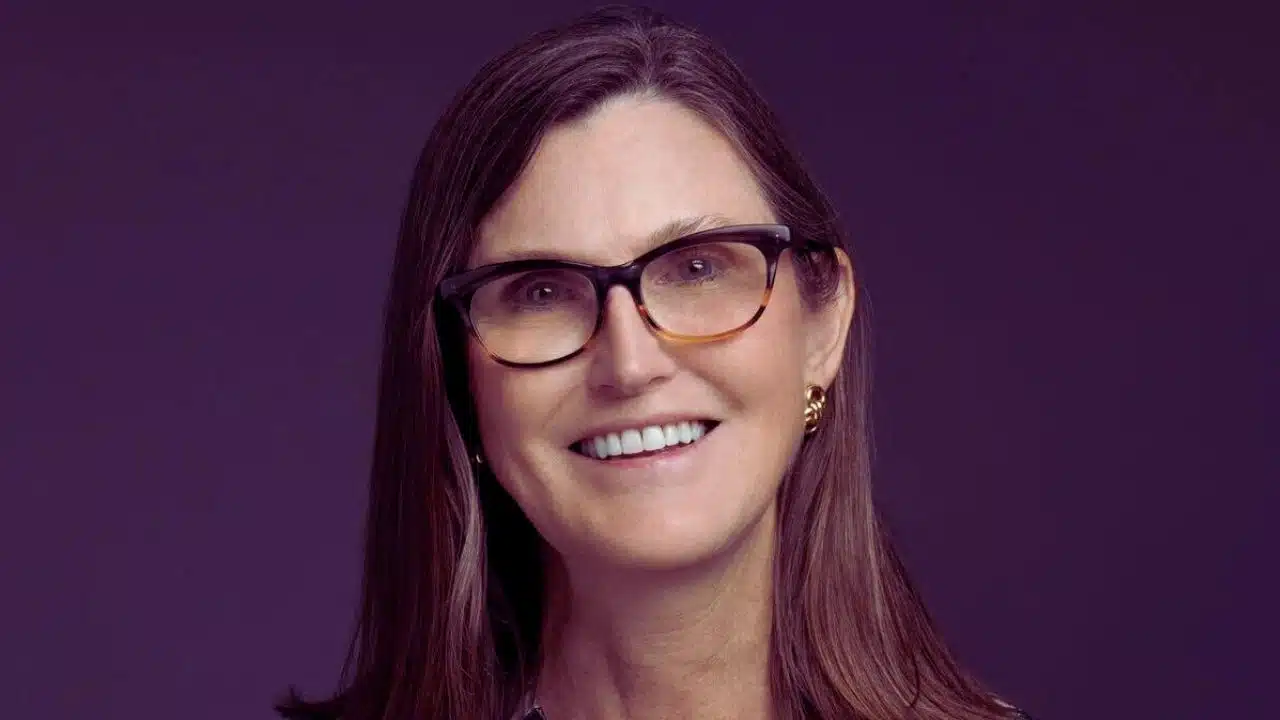
OpenAI, one of the world’s leading artificial intelligence companies, has made headlines once again after raising a staggering $6.6 billion in a new funding round. This fresh injection of capital has skyrocketed OpenAI’s valuation to approximately $157 billion, solidifying its position as a dominant force in the AI industry. One of the firms that has placed significant trust in OpenAI’s potential is Ark Invest, led by its high-profile CEO and Chief Investment Officer, Cathie Wood. Wood has become well-known for her forward-thinking investment strategies, particularly her bullish stance on innovative technologies, and artificial intelligence is no exception.
Cathie Wood’s Growing Confidence in AI
Cathie Wood is not only betting big on OpenAI but also sees a broader revolution happening within the AI space. Ark Invest, under her leadership, has invested heavily in some of the most prominent players in the artificial intelligence ecosystem, such as Anthropic, xAI, Google (GOOG, GOOGL), and Meta Platforms (META). These companies, according to Wood, are “stealing the march” and rapidly outpacing their competition when it comes to AI innovation.
She believes that these companies have an early lead in what could be one of the most significant technological transformations of the 21st century. AI is poised to disrupt almost every industry, from healthcare and education to transportation and finance, and Wood sees these firms, especially OpenAI, as key to shaping that future.
When Will AI Investments Pay Off?
One of the most common concerns among investors in AI is the uncertainty around when these massive investments will begin to yield profits. Building advanced AI systems, especially ones like OpenAI’s flagship product ChatGPT, requires enormous capital, not only for research and development but also for the infrastructure needed to support these systems. This includes the high costs of cloud computing, talent acquisition, and the computational resources necessary to train AI models at scale.
However, Cathie Wood remains optimistic about the long-term profitability of AI investments, despite these challenges. When asked about OpenAI’s journey to profitability, Wood pointed to the development of agentic AI—a type of artificial intelligence designed to perform more complex, decision-making tasks autonomously. This emerging form of AI, she believes, could unlock new revenue streams and significantly boost OpenAI’s earnings potential.
By offering more sophisticated services and solutions, agentic AI would allow companies like OpenAI to charge higher premiums for their technology. Wood sees this as a major catalyst for profitability in the near future. “Agentic AI could be the tipping point,” she remarked, underscoring her belief that this advanced form of AI will likely revolutionize industries in ways we’ve yet to imagine, further justifying OpenAI’s valuation.
OpenAI Leadership: Thriving Amid Growing Pains
As OpenAI continues to grow at an unprecedented rate, the company has faced the typical growing pains of a startup transitioning into a large-scale enterprise. Recently, there have been notable executive departures from the company, which raised some concerns among investors and analysts about OpenAI’s internal stability. However, Cathie Wood remains unfazed and has expressed continued confidence in OpenAI’s leadership team.
She specifically praised the leadership of Sam Altman, OpenAI’s CEO, and Sarah Friar, the company’s Chief Financial Officer (CFO). According to Wood, their leadership has been instrumental in guiding OpenAI through its rapid expansion and scaling. She noted that it’s not unusual for companies experiencing such explosive growth to require shifts in their management teams. “What we witness in companies that are growing very quickly from startup into scaling is you need a different kind of management team,” Wood explained.
This type of transition is common in rapidly evolving tech companies, where the skills needed to lead a small, scrappy startup are not always the same as those required to run a large, highly structured organization. Wood’s confidence in Altman and Friar suggests that she believes OpenAI is on the right track despite any internal restructuring.
The Growing Competitive Landscape in AI
While OpenAI is a dominant player in the AI sector, it is by no means the only company making significant strides in artificial intelligence. The competition in this space is fierce, with major tech companies like Google, Meta, and even newer entrants like Anthropic and xAI, vying for market share and technological leadership. Yet, instead of viewing this as a potential threat to her investments, Cathie Wood welcomes the competition.
“Competition is good,” Wood said. “It’s going to make this space more competitive and more effective, I think, longer term.” In her view, healthy competition will only accelerate innovation in the AI space, driving companies to push the boundaries of what AI can achieve. This competitive pressure, Wood argues, will ultimately result in better products and services, benefiting both businesses and consumers alike.
Moreover, she believes that the intense rivalry between these firms will ensure that no single entity monopolizes the AI market. Instead, it will remain a dynamic, rapidly evolving sector where the best ideas and technologies can thrive. This sentiment reflects her broader investment philosophy of embracing disruptive innovation, regardless of short-term market fluctuations.
OpenAI Going Public: Will It Happen Anytime Soon?
One of the burning questions surrounding OpenAI is whether or not the company will eventually go public. With its eye-popping $157 billion valuation, many investors are eager to know if and when OpenAI will debut on the stock market. However, Cathie Wood isn’t in a rush to see OpenAI take that step. In fact, she believes that many tech companies, including OpenAI, are staying private longer by choice.
According to Wood, there are several reasons for this. First, going public brings a host of regulatory challenges that many private companies would prefer to avoid. The public equity markets are subject to stringent rules and regulations, which can sometimes stifle innovation. Private companies, on the other hand, enjoy more flexibility and can make decisions without the added pressure of quarterly earnings reports and shareholder demands.
Another factor Wood pointed out is the short-term investment horizon that many public market shareholders tend to have. In rapidly evolving industries like AI, where long-term investments are critical, companies like OpenAI may prefer to remain private for as long as possible to focus on growth and innovation without being distracted by short-term market pressures.
That said, Wood does believe that a shift could occur if certain market conditions change. If interest rates were to come down, for example, and if public market investors showed a greater willingness to embrace longer-term investment strategies, the public markets might become more appealing to companies like OpenAI.
In the meantime, Wood is content to see OpenAI continue to grow and innovate without the added scrutiny of being a publicly traded company.
Cathie Wood’s Optimism for the AI Future
Cathie Wood’s deep commitment to AI companies like OpenAI showcases her belief in the transformative power of artificial intelligence. From agentic AI’s potential for profitability to the competitive landscape pushing innovation forward, Wood is convinced that the AI space is just getting started. Her confidence in OpenAI’s leadership, despite recent executive departures, further underscores her long-term vision for the company.
Whether OpenAI eventually goes public or remains private for the foreseeable future, its growth and impact on industries ranging from healthcare to finance are undeniable. As AI continues to evolve, companies like OpenAI, with strong leadership and significant investor backing, are positioned to shape the future of technology in profound ways. With Cathie Wood at the helm of Ark Invest, the firm remains a key player in this unfolding AI revolution.
The next chapter in AI innovation is just beginning, and Cathie Wood’s bold bet on OpenAI may prove to be one of the most visionary investments of our time.
The Information is Collected from MSN and Yahoo.