Have you ever stood by the ocean and worried about its future? Maybe you have seen the headlines about plastic waste or struggling fishing towns. It can feel like these problems are just too big for any one person to fix. But did you know there is a powerful solution that helps both marine life and our local communities? It is called the Blue Economy. This idea focuses on using our seas wisely. It is about making money in ways that protect nature instead of destroying it.
In this post, I am going to walk you through exactly what the Blue Economy is and why it is a total game-changer. You will see how smarter choices can save sea animals, support families near the coast, and even fight climate change. Ready to see how a healthier future starts with better ideas?
Let’s go through it together.
What is the Blue Economy?
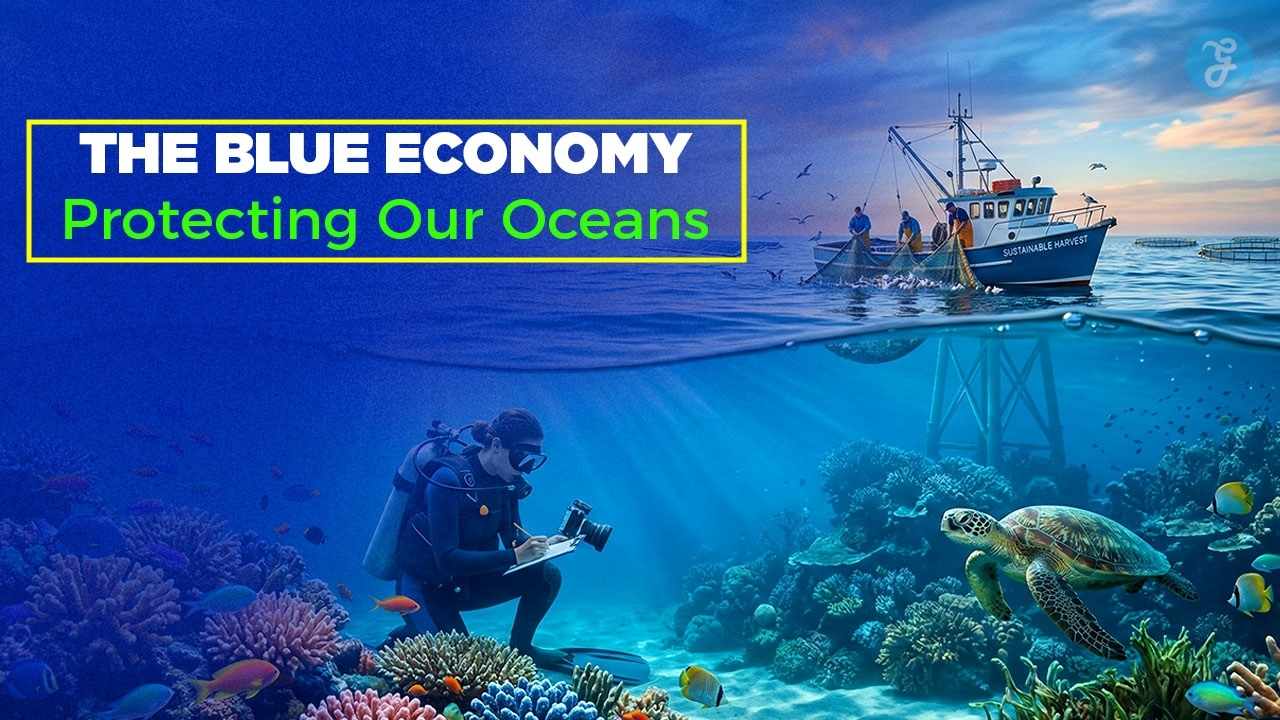
The Blue Economy is about using ocean resources in a smart and careful way. It helps people, sea life, and businesses all thrive together. You might think all ocean business is the same, but there is a big difference between just “using” the ocean and the Blue Economy.
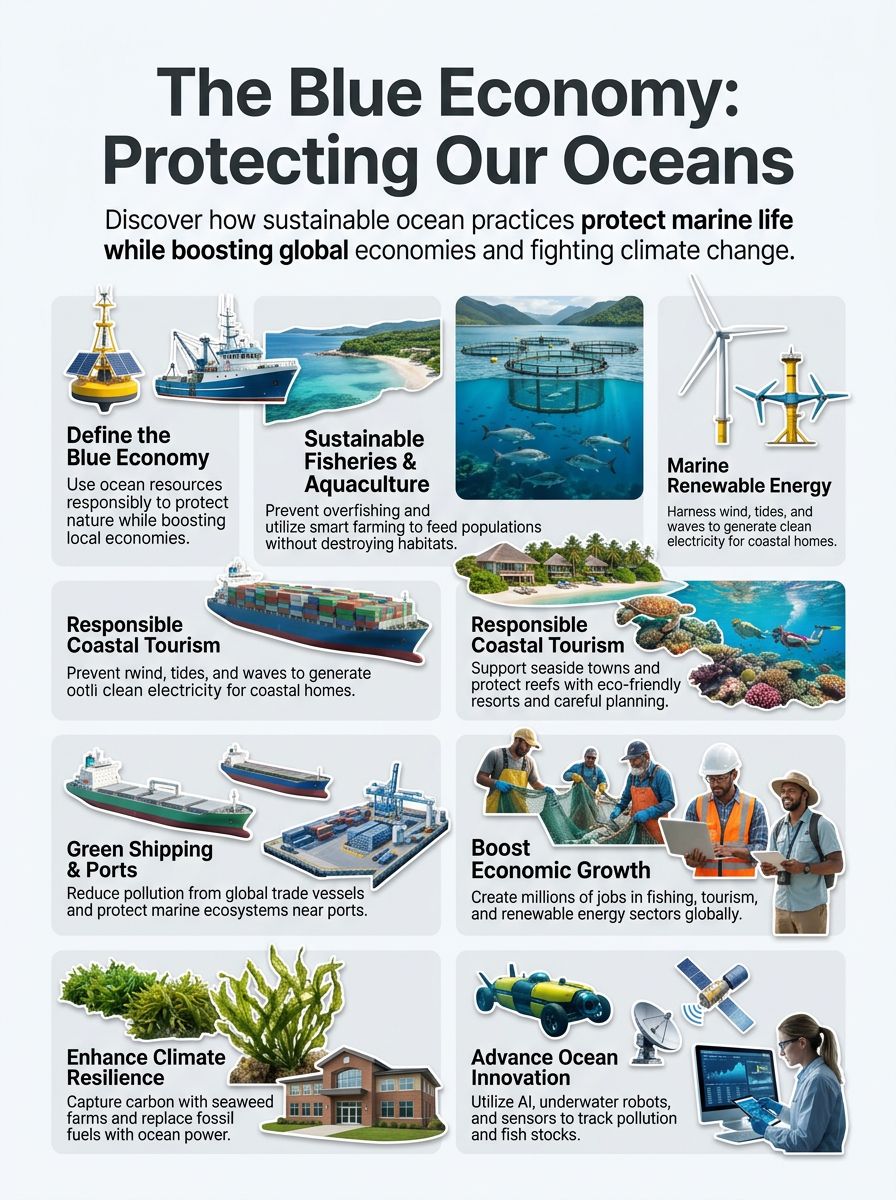
Definition of the Blue Economy
The Blue Economy means using the ocean’s resources responsibly. It covers fishing, renewable energy from waves or wind, tourism near the coast, and even shipping jobs.
According to the World Bank, the goal is specifically “sustainable use of ocean resources for economic growth, improved livelihoods, and jobs while preserving the health of ocean ecosystems.”
It is not just a theory. In the United States alone, the marine economy contributed $476 billion to the nation’s GDP in 2022. That is a massive amount of value relying on healthy waters.
This idea supports ocean sustainability while keeping marine ecosystems healthy. Blue Economy activities must help local coastal communities earn a living, but not ruin fish stocks or pollute water. By focusing on safe fishing limits and clean energy, we keep the sea alive for the future.
Importance of sustainable ocean use
Oceans cover more than 70 percent of Earth. They feed over three billion people, give jobs to millions, and help fight climate change by soaking up about 30 percent of carbon dioxide from the air.
If we use marine resources without care, fish stocks can collapse fast. Overfishing wipes out entire fish populations before they recover or grow back. Pollution and habitat destruction hurt coastal communities that rely on healthy waters. Wildlife like turtles and dolphins vanish from dirty or overused seas.
Sustainable ocean use protects both nature’s beauty and income for future generations. Now let’s see how the Blue Economy differs from a basic ocean economy.
Difference between the ocean economy and the Blue Economy
Sustainable ocean use asks us to rethink how we manage marine resources. The traditional ocean economy often focuses on extraction, such as oil drilling or unlimited fishing. It looks at profit today but often ignores the long-term cost to nature.
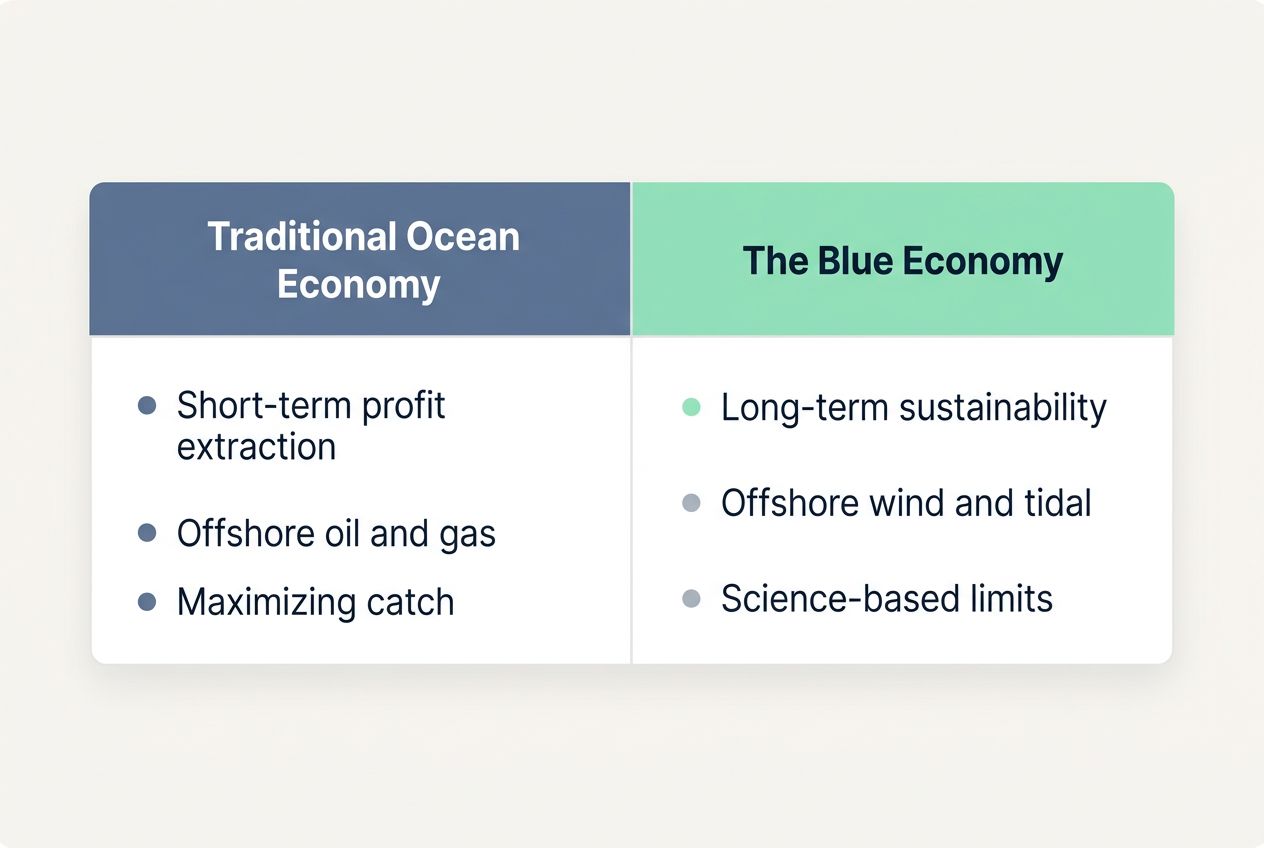
The Blue Economy takes a different path. It prioritizes environmental preservation while growing coastal economies. Here is a quick comparison to show you the difference:
| Traditional Ocean Economy | The Blue Economy |
|---|---|
| Focus: Short-term profit extraction | Focus: Long-term sustainability and value |
| Energy: Offshore oil and gas drilling | Energy: Offshore wind and tidal power |
| Fishing: Maximizing catch regardless of stock | Fishing: Science-based limits (like US catch shares) |
Safeguarding biodiversity and supporting coastal communities come before short-term gains. Blue carbon projects that capture carbon in wetlands also get support under this approach.
In simple words, the Blue Economy cares about both people’s needs and healthy oceans for future generations.
Key Sectors of the Blue Economy
These areas connect people, nature, and work in ways that touch everyone’s lives. They also show how the ocean can fuel both jobs and hope for coastal communities.
Fisheries and Aquaculture
Fisheries bring food and jobs to millions. In the US, we have strict rules like the Magnuson-Stevens Act to prevent overfishing and rebuild stocks. This law is a big reason why US fisheries are some of the most sustainable in the world.
Aquaculture, or fish farming, now matches wild fishing for global supply. But not all farming is equal. Sustainable fisheries use smart tools and strict rules to protect both the catch and the marine ecosystem.
Safe aquaculture helps feed growing populations without destroying habitats. For example, kelp farming is booming in places like Maine and Alaska. These farms grow seaweed that cleans the water by absorbing excess nitrogen and carbon.
“Seaweed farming is a zero-input food source. It requires no fresh water, no fertilizer, and no land.” — A common insight from ocean farmers like GreenWave.
Both help coastal communities earn money year-round. Smart fisheries management protects biodiversity too, letting species recover so oceans stay full of life.
Marine Renewable Energy
Waves, tides, and offshore winds create a steady source of power in our oceans. Marine renewable energy uses these forces. It helps supply clean electricity to homes and businesses along the coast.
Offshore wind is taking off. The Vineyard Wind 1 project off the coast of Massachusetts is a prime example. Once fully operational, it aims to power over 400,000 homes and reduce carbon emissions by over 1.6 million tons per year.
Offshore wind farms pop up like daisies near places such as Block Island in Rhode Island. These giant turbines spin with sea breezes, turning wind into power day and night.
Wave machines and tidal stations work too. They use the constant motion of water to make energy without burning fossil fuels. Clean power from marine resources supports economic growth while protecting ocean health for future generations.
Coastal and Marine Tourism
After discussing marine renewable energy, let’s look at how tourism shapes the Blue Economy. Coastal and marine tourism brings life to seaside towns.
It creates huge value. In the Florida Keys alone, the coral reef ecosystem is estimated to have an asset value of $8.5 billion because it draws so many snorkelers, divers, and fishermen.
Tour boats show dolphins leaping while local guides share secrets of the sea. Careful planning protects natural sites like Florida’s mangroves or Hawaii’s reefs. Eco-friendly resorts now use solar panels and recycle water to protect our ocean resources.
Responsible tourism keeps wildlife safe, helps small businesses grow, and supports strong coastal communities around the globe.
Shipping and Port Activities
Ships carry about 90% of world trade. Ports are hubs for goods, energy, and food. Busy ports help coastal economies thrive and give jobs to thousands in local communities.
But ships can be dirty. That is why major ports like Los Angeles and Long Beach are creating “Green Shipping Corridors.” These are specific routes, like the one to Shanghai, where ships pledge to use low-carbon or zero-carbon fuels.
Marine conservation rules now aim to cut pollution from ships and protect marine resources near ports. Cleaner fuel use cuts air pollution over cities by the water.
Smarter port planning can keep delicate marine ecosystems safe while keeping business strong. Next up is how the Blue Economy brings benefits like jobs and healthy oceans together.
Benefits of the Blue Economy
A healthy Blue Economy sparks fresh opportunities for people and nature, hand in hand. Smart choices on the water help communities thrive while caring for ocean life.
Economic Growth and Job Creation
Fishing, aquaculture, and coastal tourism bring jobs to millions of families. In the United States alone, ocean industries support over 2.3 million jobs each year.
The growth in green sectors is creating entirely new careers. For instance, the demand for wind turbine technicians is expected to grow by 45% over the next decade. These are skilled, well-paying jobs that did not exist a generation ago.
Small towns near the sea can build stronger economies by investing in sustainable fisheries and smart tourism plans. Local businesses gain a steady stream of visitors who care about environmental preservation. Ocean sustainability helps fishing families earn more money while keeping fish stocks healthy for future generations.
Conservation of Marine Ecosystems
Keeping marine ecosystems healthy is vital for ocean sustainability. Healthy coral reefs support over 25% of all sea life, yet threats like plastic pollution and illegal fishing chip away at this balance every day. People use smart practices, such as protected areas and better fisheries management, to help nature bounce back.
Marine conservation creates a ripple effect. It supports local economies that depend on clean water and thriving fish populations. Think about coastal communities in Florida or small islands that count on snorkeling tourism or sustainable aquaculture. Protecting habitats means both nature and people win together.
Climate Resilience and Adaptation
Coastal communities must adapt to stronger storms, rising sea levels, and changes in fish stocks. About 40% of the US population lives in coastal counties.
Blue carbon is a powerful tool here. Salt marshes and seagrass meadows can store carbon up to ten times faster than mature tropical forests. Protecting these areas slows down climate change.
Switching to renewable ocean energy also cuts pollution from fossil fuels. Wind farms at sea can power millions of homes without harming marine life when planned right. Emerging solutions now tackle pollution and overfishing head-on in today’s Blue Economy challenges.
Challenges Facing the Blue Economy
Big waves bring big problems. These setbacks can block progress and demand smart, quick fixes.
Overfishing and Unsustainable Practices
Fishing boats catch too many fish every year. People remove species like tuna, cod, and salmon faster than new fish can be born.
While the US manages its stocks well, the global picture is tough. The Food and Agriculture Organization (FAO) reported that roughly 35 percent of global fish stocks are overfished.
Illegal fishing also hurts ocean health because it ignores rules about size limits or protected times. Unsustainable practices damage marine ecosystems.
Using huge nets sometimes harms dolphins, turtles, and even coral reefs. These problems threaten seafood supplies for coastal communities that depend on fishing to make a living.
Pollution and Habitat Destruction
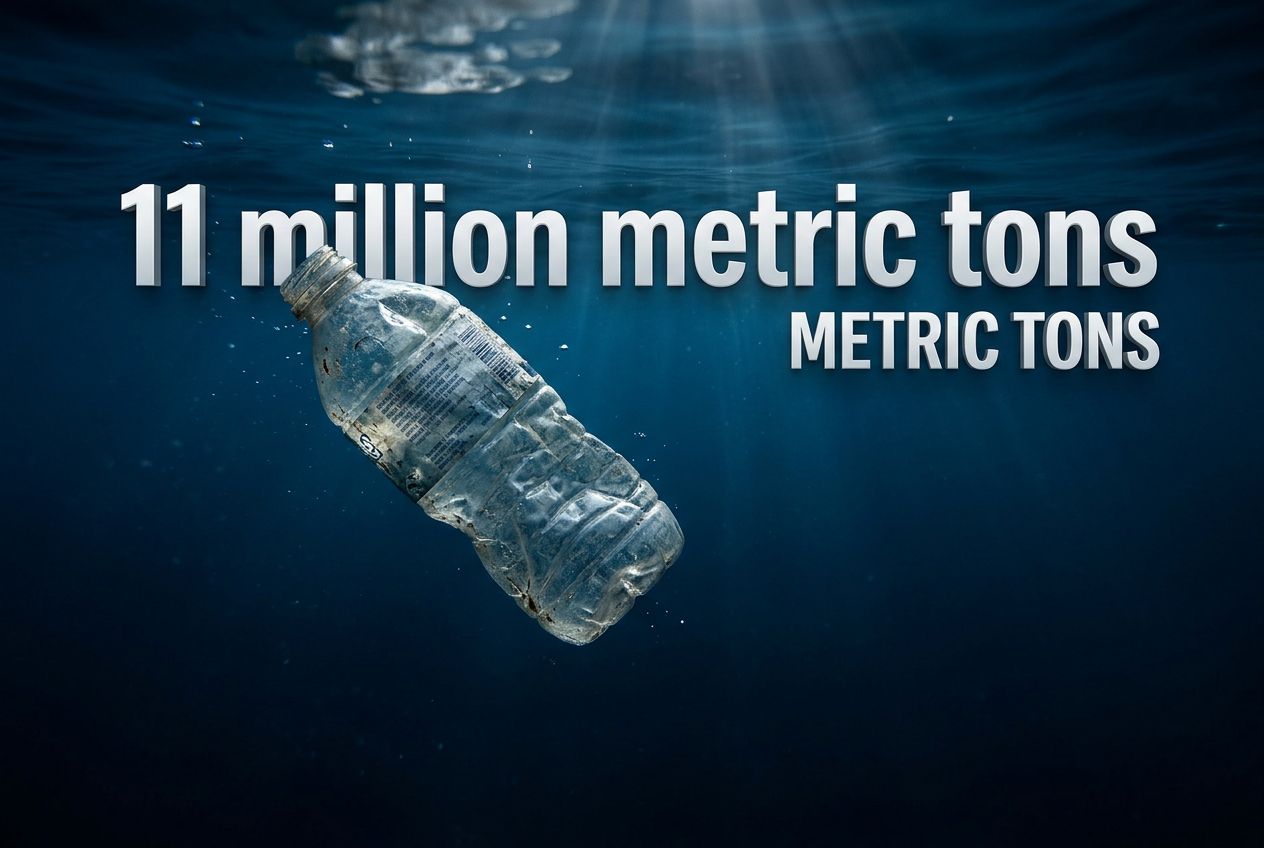
Oil spills cover the ocean’s surface, blocking sunlight and suffocating marine life. But plastic is the most persistent enemy.
“Every year, about 11 million metric tons of plastic waste enters the ocean.” — Ocean Conservancy
Heavy metals from factories settle on sea floors and poison coral reefs. The damage to seagrass beds hurts blue carbon storage and destroys safe spaces for fish.
Coastal development tears down mangroves and wetlands that shield coastal communities from storms. Pollution never stays in one spot; it travels with currents to new places every day. Tackling these threats needs strong governance across sectors like fisheries management and marine conservation.
Governance and Equity Issues
Ocean governance often feels like a tangled net. Many groups, from big companies to small coastal communities, use marine resources. Sometimes, rules are not clear or fair.
Some countries have strong laws for ocean sustainability, while others struggle with enforcement. Local fishers may lose access when big firms take over fishing grounds or start large aquaculture projects.
Inequality grows if benefits from fisheries and renewable ocean energy are skipped over poor regions. People living near the sea might face pollution, but get few rewards from economic growth in the marine sectors.
Stronger policies can help protect both the environment and people’s rights. Next up, let’s look at how new technology and science bring hope to the Blue Economy puzzle.
Innovations for Sustainable Blue Economy
Fresh ideas and smart tech shape the future of ocean care. Stick around, because some of these inventions are truly incredible.
Advancements in Ocean Science and Technology
New tools help scientists study ocean health, track fish, and protect marine ecosystems. Satellites can now map the ocean floor in great detail.
One of the coolest innovations is the use of Uncrewed Surface Vehicles (USVs), like those made by Saildrone. These autonomous orange boats sail across the ocean collecting data on everything from fish counts to hurricane strength, all without a single person on board.
Artificial intelligence sorts through data to spot changes in water quality or animal patterns. Smart sensors measure pollution and track temperature shifts over time.
These high-tech gadgets make it easier to manage fisheries better and support sustainable aquaculture projects that feed coastal communities.
Developing Eco-friendly Aquaculture
Farmers now grow fish, shrimp, and shellfish using fewer antibiotics and less chemical feed. More farms use seaweed or mussels, which clean the water as they grow.
Some companies are moving farming onto land to protect the sea. For example, Atlantic Sapphire in Florida raises salmon in giant tanks on land. This “Bluehouse” method prevents fish escapes and keeps waste out of the ocean.
Fish farming with smart sensors makes it easier to spot diseases early. Clean technologies recycle water, so less ends up polluted in rivers or coasts.
Experts call this type of aquaculture “sustainable fisheries” because it helps feed people while protecting ocean health for future generations.
Expanding Offshore Renewable Energy
Offshore wind turbines now stand tall in many coastal waters. These towers work day and night, catching strong sea winds to make clean power.
In the United States, leaders plan to reach 30 gigawatts of offshore wind capacity by 2030. That is enough energy for more than ten million homes.
Floating solar panels also pop up on calm seas, soaking up sunlight where land space is tight. Wave and tidal devices tap ocean motion for electricity, too. Smart ideas like these help keep marine resources healthy while giving new jobs to people along the coast.
Strategies to Protect Our Oceans
Big ideas and small actions both help save the sea. Curious about clever ways to keep our oceans healthy? Keep reading, you might be surprised!
Advancing Innovation and Technology
Smart sensors track fish stocks and help manage sustainable fisheries. Drones scan marine ecosystems, watching for pollution or illegal fishing.
Floating wind farms near coastal communities create renewable energy from ocean winds. These new tools protect marine resources and boost economic growth.
Marine biologists use robots to study deep-sea life without harming habitats. Solar-powered boats clean up plastic waste, keeping ocean health in check.
Creative tech like this improves ocean sustainability and helps balance the needs of people with environmental preservation goals.
Strengthening Ocean Governance
Clear rules help keep our oceans healthy. Leaders, groups, and local people all play a part. Strong ocean governance means creating fair laws to manage marine resources like fish and blue carbon areas.
A major global goal right now is the “30×30” initiative. This is a commitment by many nations, including the US, to conserve 30% of their lands and waters by the year 2030. Good policies prevent overfishing and protect biodiversity. The United Nations set up the Law of the Sea in 1982, which most countries follow today.
Laws must keep pace with new challenges, such as pollution or climate change impacts on ocean health. Up next, spreading knowledge helps everyone protect these precious places even more.
Promoting Public Awareness and Education
Kids learn fast. Many schools now teach about marine resources and ocean sustainability, so even young students know how their choices affect sea life.
You can make a difference at the grocery store, too. Programs like the Monterey Bay Aquarium Seafood Watch offer simple guides (and an app) to help you choose seafood that is fished or farmed sustainably.
Nonprofit groups host beach cleanups and talks for families on the weekends. Even small posters at fish markets can help people pick seafood that supports sustainable fisheries management.
Public awareness grows with every conversation and shared story. This learning helps everyone make smarter choices about ocean health.
Wrapping Up
Protecting our oceans is everyone’s job. Ocean sustainability helps keep fish stocks healthy and coastal communities strong. Each year, the ocean supports over three billion people who depend on it for food, work, and safety. The Blue Economy gives us a way to grow jobs while keeping marine ecosystems safe.
It makes room for clean energy from wind or waves instead of oil. Change can start close to home or as big as international ocean governance.
Small actions add up. You can choose seafood from sustainable fisheries or learn about biodiversity conservation at your local aquarium. Technology grows fast these days. Solar-powered sensors now track fish health in aquaculture farms across the globe.
Good choices today will protect marine resources tomorrow. Let’s make sure our children see healthy oceans full of life when they wade into the water.