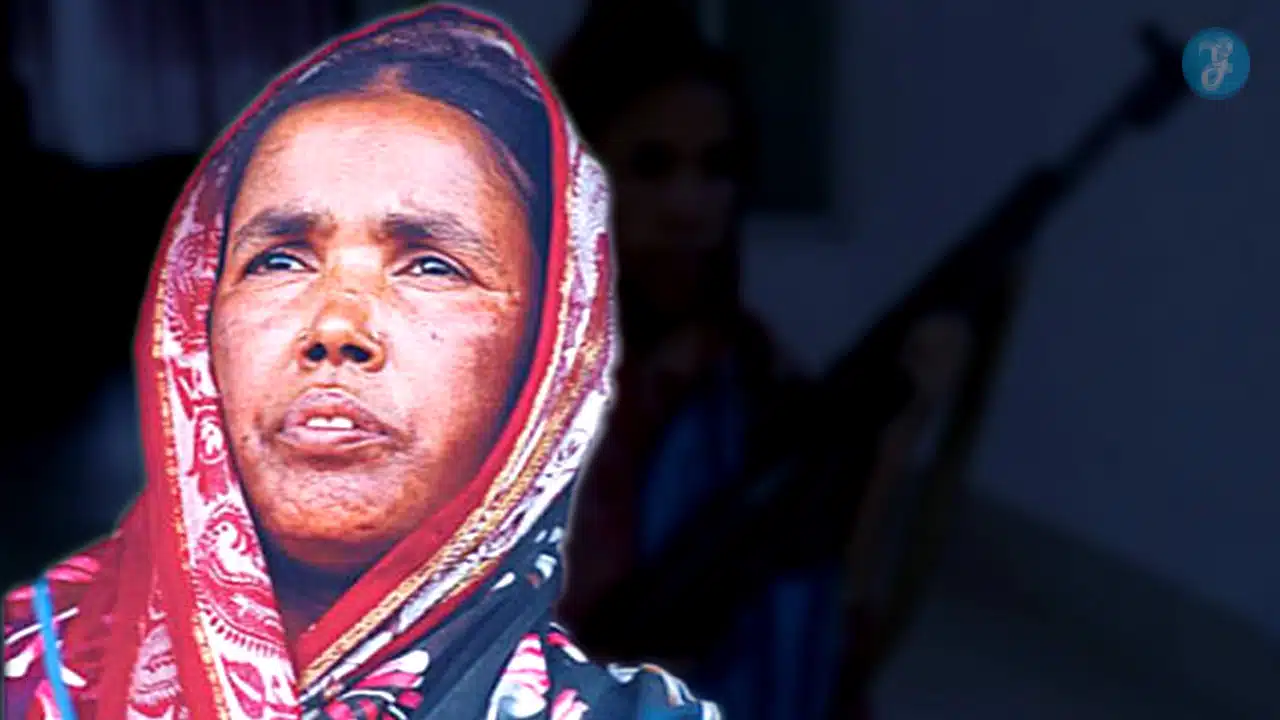
Today we commemorate the death anniversary of Bir Pratik Taraman Bibi, one of the most courageous women who actively fought during the Bangladesh Liberation War of 1971. Her contributions remain a powerful symbol of bravery, patriotism, and sacrifice, especially for women who fearlessly stepped into the frontlines despite overwhelming challenges.
Early Life, Struggles, and Entry into the Liberation War
Taraman Bibi was born in 1957 in Shankar Madhavpur village of Char Rajibpur upazila, located in the riverine Kurigram district of northern Bangladesh. She belonged to a humble rural family. Her father, Abdus Sohban, and her mother, Kulsoom Bibi, worked hard to raise their seven children. As the third among those siblings, Taraman Bibi grew up in a reality shaped by poverty, domestic duties, and survival.
Her family’s financial challenges meant she never had the opportunity to receive formal education. From childhood, she worked in other people’s houses, helping with domestic chores. Yet, despite the struggles at home, she grew up with a bold spirit and strong determination.
This inner strength became evident when the Bangladesh Liberation War broke out in 1971. Taraman Bibi was only 13 or 14 years old, but she was deeply aware of the violence, oppression, and atrocities committed by the Pakistani military forces across the country. The impact of the war touched every household—even remote villages like hers in the Rajibpur region.
Sector 11, which covered Kurigram and surrounding northern regions, was led by Sector Commander Abu Taher. Within this sector, several freedom fighters and local volunteers operated from remote camps. During this turbulent time, freedom fighter Muhib Habildar played a significant role in recognizing the potential of young Taraman Bibi. Seeing her courage and eagerness to support the fight for independence, he brought her to the freedom fighters’ camp.
At first, she served in supportive roles. She cooked for the fighters, carried food to hidden bunkers, and even helped hide weapons from the Pakistani forces and their collaborators. Because women could often move more freely without drawing suspicion, she also gathered valuable intelligence from the surrounding areas. Her involvement gradually deepened as she gained the trust of senior freedom fighters.
Over time, Taraman Bibi observed the fighters closely and, while cooking in the camp, she learned how to handle different weapons. Her dedication impressed those around her. Recognizing her bravery, Muhib Habildar personally trained her in operating rifles and other arms. What began as a role in the kitchen slowly transformed into active participation in frontline operations.
Heroic Role in Battle and Recognition as Bir Pratik
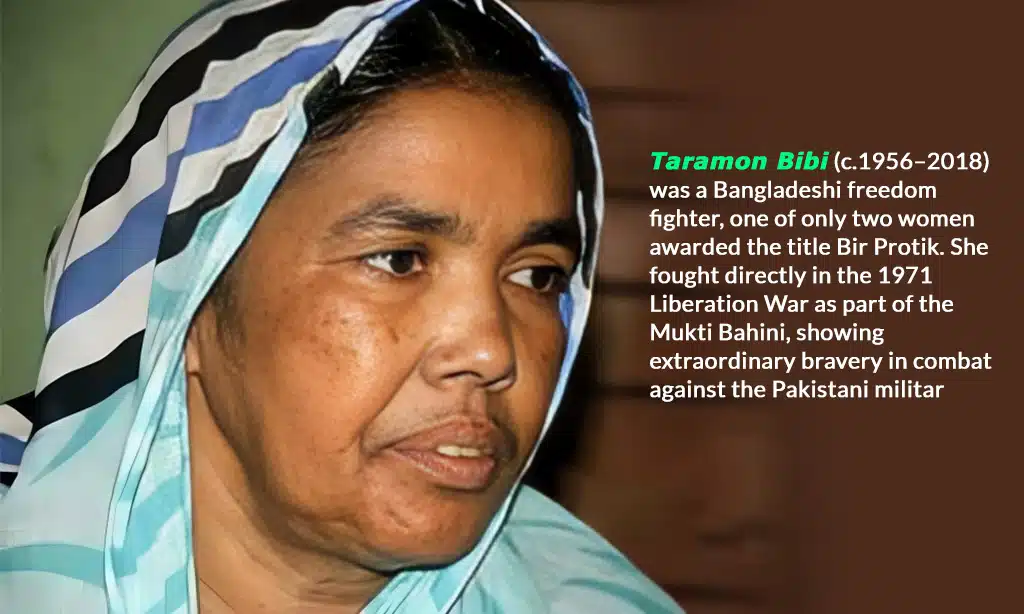
Taraman Bibi’s transition from camp helper to frontline combatant became one of the most remarkable stories of the 1971 war. Her defining moment came on a crucial day when intelligence reached the camp that Pakistani soldiers were advancing on gunboats through the river channels near their position. It was midday, and the freedom fighters were about to eat, but the emergency alert changed everything.
Without hesitation, Taraman Bibi grabbed her rifle and joined the fighters directly on the battlefield. Despite being one of the youngest in the group, she showed extraordinary courage and skill. In the intense exchange of gunfire that followed, the freedom fighters, with Taraman among them, successfully pushed back the Pakistani forces and prevented a deadly attack on the camp.
Her contribution did not end with that battle. Throughout the war, she continued to support operations in Sector 11. Her combat involvement, intelligence contributions, and fearless attitude made her an inspiration to many who witnessed her courage firsthand. Her bravery also challenged traditional social expectations for women at that time, proving that heroism has no gender or age.
In recognition of her outstanding courage, the Government of Bangladesh awarded her the title of Bir Pratik in 1973, only two years after the country achieved independence. This title is one of the highest gallantry awards given to freedom fighters who risked their lives for the nation. Taraman Bibi is one of only two women in the entire country to receive this prestigious honor, making her story even more extraordinary.
Although the award was announced earlier, it was officially handed over to her in a modest ceremony on December 19, 1995. Despite the delay, her contributions remained widely respected, and she continued to be celebrated as a national symbol of youthful bravery and selfless sacrifice.
Passing, State Honors, and the Enduring Legacy of a War Heroine
Taraman Bibi passed away on December 19, 2018, at her home in the Kacharipara area of Rajibpur Upazila Sadar in Kurigram. Her death marked the loss of a truly rare war heroine whose involvement in the Liberation War broke social boundaries and opened new perspectives on the role of women in national resistance movements.
She was buried with full state honors at the Kacharipara Taltala Cemetery, where freedom fighters, local residents, government representatives, and admirers gathered to pay their final respects. Her state funeral reflected the deep gratitude the nation continues to hold for her sacrifice.
Today, on her death anniversary, Bangladesh remembers Taraman Bibi not just as a freedom fighter but as a symbol of resilience, courage, and patriotism. Schools, journalists, historians, and citizens recall her contributions, especially to inspire younger generations. Her life story is often highlighted as an example of how even the most marginalized individuals can rise to defend their country when history demands it.
Taraman Bibi represents the extraordinary strength that ordinary citizens—especially young women—displayed during the Liberation War. Her dedication and fearless participation remain invaluable chapters in the nation’s long struggle for freedom.