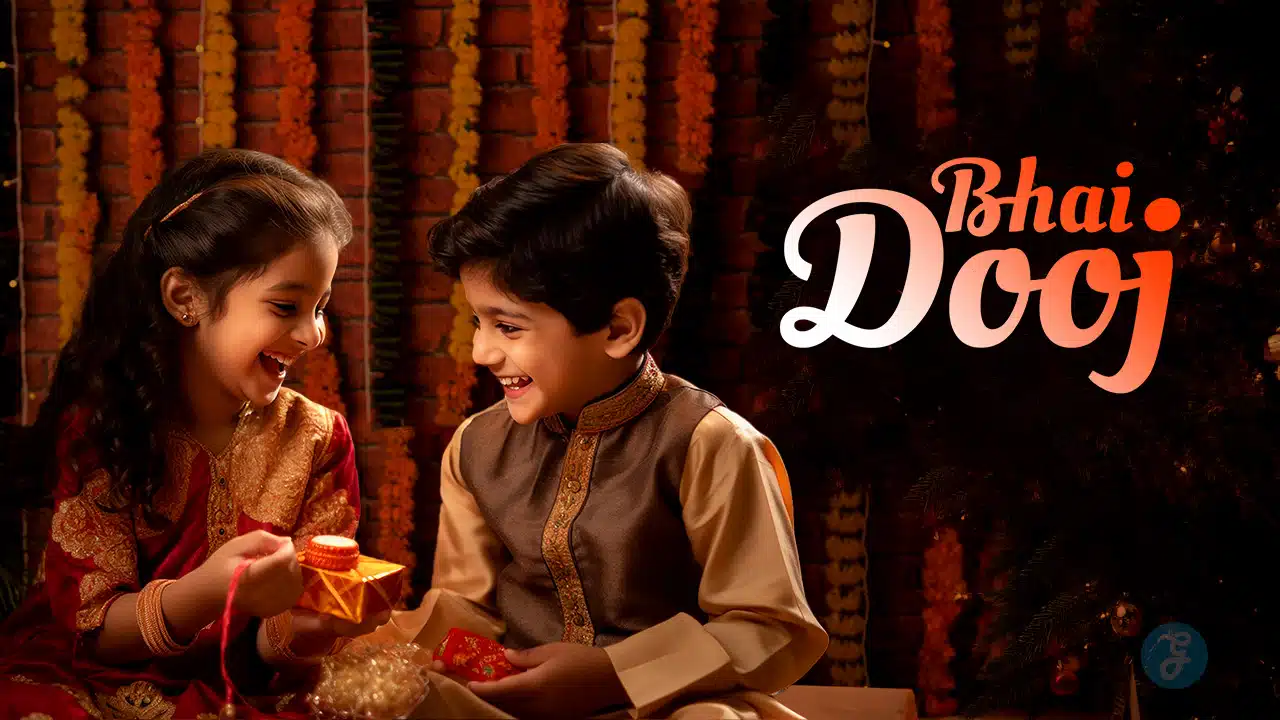
Do you ever feel distant from your siblings, even when you live in the same city? Busy lives can make it hard to connect with the brothers and sisters we care about most.
That’s where special days like Bhai Dooj come in, offering a chance to renew the unique brother-sister bond. In 2025, Bhai Dooj falls on Thursday, October 23, marking the joyful end of the five-day Diwali festival.
This Hindu festival is a beautiful tradition where sisters pray for their brothers’ health and long life through a tilak ceremony. This guide will explore the rich history of Bhai Dooj, its heartfelt rituals, and the colorful ways it’s celebrated across India and Nepal, from West Bengal’s Bhai Phonta to Bhai Tika in Nepal.
You’ll also find creative ideas for making the day special, even if you’re celebrating from afar. Get ready to see how this timeless tradition strengthens sibling love year after year.
Key Takeaways
- Bhai Dooj is a Hindu festival celebrated two days after Diwali in the Kartik month, where sisters pray for their brothers’ longevity, and brothers promise protection.
- The central ritual is the tilak ceremony, where sisters apply a red mark (tika) to their brother’s forehead and offer sweets; in return, brothers give gifts as a sign of love and care.
- The festival has regional names like Bhai Phonta in West Bengal, Bhau Beej in Maharashtra, and Bhai Tika in Nepal, each with unique customs and festive foods.
- Modern celebrations often include virtual ceremonies via video calls on platforms like Zoom or Skype, digital gift cards, and social media posts to connect siblings living far apart.
- The festival’s origins are rooted in Hindu mythology, particularly the stories of Lord Krishna and his sister Subhadra, and Yama (the god of death) and his sister Yamuna.
What Is the Significance of Bhai Dooj?

Bhai Dooj is a cherished Hindu festival that honors the profound brother-sister bond. At its core, the day is about sisters praying for their brothers’ long, happy, and prosperous lives. In turn, brothers give a heartfelt promise to protect and care for their sisters always.
The festival, also known as Yama Dwitiya, is celebrated on the second lunar day of the Shukla Paksha (bright fortnight) in the Kartik month of the Hindu calendar. Its significance is deeply woven into Hindu mythology through two primary legends.
The most famous story is of Yama, the god of death, and his twin sister, Yamuna. Yamuna longed to see her brother, so she invited him to her home. When he finally visited, she welcomed him with an aarti and applied a tilak on his forehead. Moved by her love, Yama declared that any brother who receives a tilak from his sister on this day will be blessed with a long life and protection from untimely death.
Another popular legend involves Lord Krishna and his sister Subhadra. After defeating the demon Narakasura, Lord Krishna visited Subhadra, who greeted him with sweets, flowers, and a ceremonial tilak on his forehead. This loving gesture became a symbol of the festival, representing a sister’s joy and prayers for her brother’s victory and well-being.
Rituals and Traditions of Bhai Dooj

Families gather to honor ancient customs with laughter and joy. During the celebration, sisters perform sacred rituals and chant special prayers for their brothers’ well-being, strengthening the timeless brother-sister bond.
The Tilak Ceremony
The heart of Bhai Dooj is the tilak ceremony. Sisters prepare a decorative puja thali (plate) containing essentials for the ritual: kumkum (red vermilion powder), rice grains, a diya (lamp), sweets, and sometimes a coconut.
The ritual begins as the sister applies a vibrant red tilak, or tika, to her brother’s forehead. This mark symbolizes her prayers for his protection and good fortune. As she applies it, she often chants a simple mantra for her brother’s long life, such as “Om Yamay Namah.” Following the tilak, she performs an aarti, circling the lamp in front of her brother to ward off negative energy.
This ceremony is a beautiful expression of sibling love and is a cornerstone of Bhai Dooj celebrations across India.
Exchange of Gifts
After the tilak ceremony, brothers and sisters exchange gifts as a token of their love and appreciation. Brothers often give their sisters presents, money, or other thoughtful items, reaffirming their promise to protect and care for them.
Gift-giving is a tangible expression of the emotional bond shared between siblings. While traditional gifts are always welcome, many now opt for more personalized presents that reflect a sibling’s unique personality. According to 2025 gifting trends, useful and timeless items are becoming increasingly popular.
- For Brothers: Grooming kits, personalized wallets, gadgets, or a subscription box tailored to their hobbies.
- For Sisters: Custom jewelry, chic backpacks, elegant diaries, or artisanal chocolates are popular choices.
- For a Modern Touch: E-gift cards and experiences like concert tickets or a spa day are excellent options for siblings living far apart.
Special Festive Feasts
Food is a central part of any Indian festival, and Bhai Dooj is no exception. Families come together to share a delicious meal, often featuring the brother’s favorite dishes. The feast marks a joyful conclusion to the Diwali festival celebrations.
Sweets are essential, with classics like Kheer (rice pudding), Gulab Jamun, and Barfi making an appearance. The menu often varies by region, reflecting local culinary traditions.
| Region | Popular Dishes |
|---|---|
| North India | Dum Aloo, Ajwain Puri, and Palak Paneer are often part of the main course. |
| Maharashtra | The celebratory meal often includes Basundi (a sweet, thickened milk dessert) with poori or the classic sweet flatbread, Puran Poli. |
| West Bengal | Bengali feasts are known for their distinctive sweets like Sandesh and Rasgulla, alongside savory dishes. |
Regional Variations of Bhai Dooj

Bhai Dooj is celebrated with unique customs and names across India and Nepal. From the heartfelt prayers of Bhai Phonta to the colorful rituals of Bhai Tika, each region adds its own special charm to this beautiful festival of sibling love.
Bhai Phonta in Bengal
In West Bengal, the festival is known as Bhai Phonta. It occurs on the second day after Kali Puja. Sisters often fast until they have performed the ceremony.
The “phonta” or tilak is uniquely made from a paste of sandalwood, kajal, curd, and honey. While applying it with her left little finger, the sister recites a traditional Bengali mantra for her brother’s immortality.
“Bhaier kopale dilam phonta, Jomer duare porlo kanta. Jamuna deye Jomke phonta, Ami di amar bhaike phonta.” (I put a mark on my brother’s forehead to block the door of the god of death. Just as Yamuna put a mark on Yama, I put one on my brother.)
After the ritual, the elder sibling blesses the younger one by placing paddy seeds and doob grass on their head, followed by a grand feast and gift exchange.
Bhai Bij in Maharashtra and Gujarat
In Maharashtra and Gujarat, the festival is called Bhau Beej, which translates to “brother’s second” (referring to the second day of the lunar fortnight). The rituals are similar to those in North India, but with some unique Maharashtrian touches.
A distinctive tradition involves the sister drawing a square on the floor with rice flour. The brother is asked to sit inside this square while the sister performs the aarti and applies the tilak. This act symbolizes a protective embrace, shielding him from harm. A special sweet dish called Basundi Poori is often prepared for the occasion.
Bhai Tika in Nepal
In Nepal, Bhai Tika is one of the most important days of the Tihar festival. The ceremony here is elaborate and colorful. Sisters apply a “saat rangi tika,” a special tika made of seven different colors, to their brother’s forehead.
This multi-colored mark symbolizes the sister’s wish for her brother to be as powerful and radiant as the sun. The ritual also includes offering a garland of Gomphrena globosa flowers (makhamali), which do not wilt for a long time, symbolizing prayers for the brother’s longevity. Another unique tradition involves the sister drawing a protective boundary of oil and holy water around her brother to ward off death and evil spirits.
The Timeless Bond of Siblings

Bhai Dooj beautifully highlights the enduring brother-sister bond, a relationship that often outlasts distance and time. This Hindu festival serves as a powerful reminder of the love, support, and shared memories that define sibling relationships.
The rituals, from the protective tilak to the exchange of gifts, are more than just traditions. They are meaningful gestures that reaffirm the promise of mutual care. The festival teaches the importance of gratitude and strengthens family ties, reminding everyone of the lifelong commitment shared between brothers and sisters.
In today’s fast-paced world, celebrations like Bhai Dooj provide a vital opportunity for families to reconnect. It’s a day dedicated to honoring one of life’s first and most important friendships, ensuring the special bond between siblings remains cherished across generations.
Modern Ways to Celebrate Bhai Dooj
In an increasingly connected world, families are finding new and creative ways to celebrate Bhai Dooj, especially when siblings live far apart. Technology and modern trends have made it easier than ever to keep the festive spirit alive across any distance.
Virtual Celebrations
For long-distance siblings, technology bridges the gap. A scheduled video call on a platform like Zoom, Skype, or Google Meet can bring the whole family together.
Sisters can perform the tilak ceremony virtually by sending a Bhai Dooj hamper in advance, complete with a tika packet, sweets, and a gift. During the call, you can perform the ritual together, open gifts, and even share a meal. Engaging in online games or watching a favorite childhood movie can make the virtual celebration even more memorable.
Personalized Gifts
Modern gifting has moved beyond traditional items toward more thoughtful and personalized options. A custom photo frame, a piece of jewelry engraved with an initial, or a curated gift hamper with a sibling’s favorite things adds a special touch.
Creating a digital scrapbook, a personalized video message, or even a collaborative music playlist are heartfelt ways to revisit shared memories. These gifts show a deep understanding of your sibling’s personality and make the day feel truly special.
Social Media Tributes
Social media platforms like Instagram and Facebook have become a popular way to share the joy of Bhai Dooj. Posting a cherished childhood photo with a heartfelt caption is a simple yet powerful way to celebrate your bond.
Many use hashtags like #BhaiDooj2025 or #SiblingLove to connect with others celebrating the festival. Creating a fun Instagram Reel or a photo montage set to a favorite song can be a creative and public tribute to the special relationship you share.
Takeaways
Bhai Dooj remains a beautiful and significant festival that honors the unique love between siblings.
Each year, families come together to perform the tilak ceremony, share festive meals, and create lasting memories. From the traditional chants of Bhai Phonta in West Bengal to the colorful customs of Bhai Tika in Nepal, the festival is a vibrant celebration of the brother-sister bond.
Whether you are together or celebrating from miles apart, the spirit of Bhai Dooj continues to strengthen these cherished relationships across generations.
FAQs on Bhai Dooj
1. What is Bhai Dooj and why do people celebrate it?
Bhai Dooj is a Hindu festival that honors the brother-sister bond, based on the legend of Lord Yama, the god of death, visiting his sister, Yamuna. She applied a tilak on his forehead for protection, and in return, Yama blessed any brother receiving the same ritual from his sister with a long life. The tradition is also connected to Lord Krishna visiting his sister Subhadra to celebrate his victory over the demon Narakasura.
2. How does Bhai Dooj connect to other festivals like Diwali and Raksha Bandhan?
Bhai Dooj is celebrated on the second day of the bright fortnight of the Kartik month, marking the conclusion of the five-day Diwali festival. While it shares the theme of sibling love with Raksha Bandhan, its central ritual is the tilak ceremony, not the tying of a rakhi thread.
3. Are there other names for Bhai Dooj in different regions?
Yes, the festival is known as Bhai Phonta in West Bengal, Bhau Beej in Maharashtra and Gujarat, and Yama Dwitiya in southern India. In Nepal, it is a vital part of the Tihar festival called Bhai Tika, where a unique seven-color tilak is sometimes applied.
4. What are some key traditions followed during Bhai Dooj?
Sisters apply a tilak of roli paste and rice grains on their brother’s forehead and perform an aarti with a lamp to protect him from negative energy. They offer sweets and gifts, and in return, brothers give a gift as a promise of their lifelong protection and support.
5. When will people celebrate Bhai Dooj in 2025?
Bhai Dooj will be celebrated on Thursday, October 23, 2025.
6. How does email relate to celebrating festivals like Bhai Dooj today?
While families use email to send wishes, many now prefer to connect through video calls on platforms like Zoom or FaceTime to celebrate together virtually. Brothers and sisters also use online shopping sites to send gifts, ensuring the tradition of sibling love is honored despite geographical distance.