

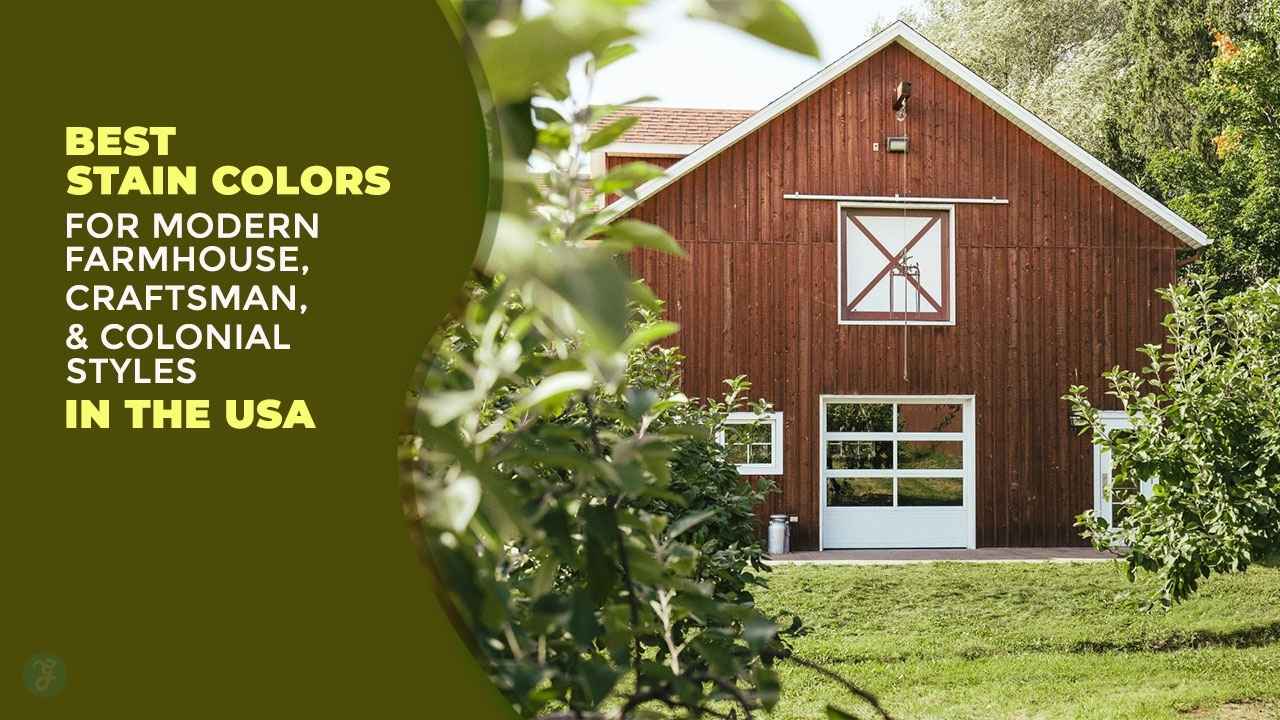
If there is one defining headline for home design in 2026, it is the “Great Gray Exodus.” After nearly a decade of cool, weathered grays dominating the market, we are witnessing a massive pendulum swing back toward warmth, authenticity, and “golden hour” tones. Finding the best wood stain colors is no longer about mimicking a weathered barn; it is about anchoring your home with materials that feel raw, organic, and deeply grounded.
Whether you are refinishing century-old hardwoods or choosing the stain for a new build’s cedar siding, the 2026 palette is rich with “coffee” undertones, honeyed oaks, and moody, near-black browns that scream sophistication. This guide will walk you through the specific stain ecosystems for the three most enduring American home styles: Modern Farmhouse, Craftsman, and Colonial.
Key Takeaways: The 2026 Stain Forecast
-
The Vibe: “Quiet Sophistication.” We are moving away from stark contrasts (like bright white vs. pitch black) toward softer, muddier, and more cohesive palettes.
-
The Finish: Matte and Satin finishes are the undisputed kings for flooring. They hide scratches better and look more “European” than high-gloss polyurethanes.
-
The “Out” List: Cool grays, artificial-looking “barn board” finishes, and orange-heavy shellacs.
-
The “In” List: White Oak (Natural), Warm Walnuts, “Latte” tones, and opaque Charcoal stains for accents.
The “Chameleon Effect”: Why Stains Look Different in Every Home
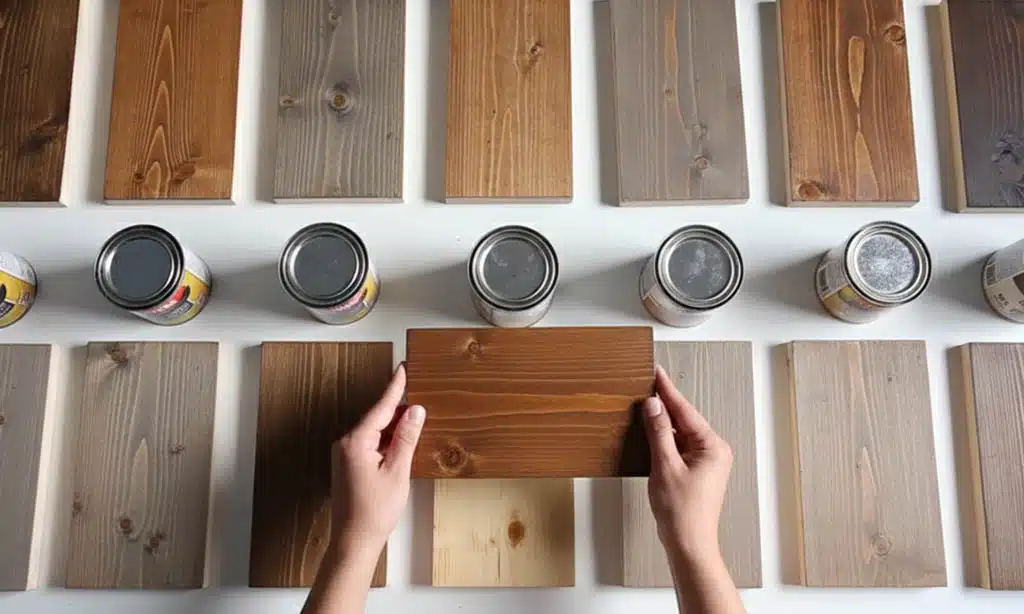
Before you fall in love with a swatch you saw on Pinterest, you must understand the single most important rule of wood finishing: Stain is not paint. Paint sits on top of the surface; stain interacts with the biology of the wood. The exact same can of “Dark Walnut” can look like a rich espresso in a Colonial home and a muddy purple in a Farmhouse, depending on three invisible factors.
1. The Species Dictates the Undertone
Your wood’s natural DNA is the canvas, and it will fight the stain if you don’t account for it. E-E-A-T principles suggest you identify your substrate before buying a drop of product.
-
Red Oak: Has strong pink/salmon undertones. If you put a warm stain on it, it turns red. You need green or ash-based stains to neutralize it.
-
White Oak: The gold standard for 2026. It has neutral, wheat-colored undertones that accept stain aggressively and evenly.
-
Pine/Maple: These are “blotchy” woods with uneven densities. Without a pre-stain conditioner, dark stains will look like camouflage rather than a smooth finish.
2. Lighting Temperature (Kelvin)
The “Golden Hour” trend of 2026 relies heavily on lighting. A stain that looks warm and cozy under 2700K (warm white) bulbs can turn stark and green under 5000K (daylight) bulbs.
Pro Tip: If you have north-facing windows (cool, blue natural light), avoid gray-based stains. They will make the room feel like a concrete box. Opt for warmer “Saddle” or “Fruitwood” tones to counterbalance the blue light.
The 3 Golden Rules of Sampling for 2026
To avoid the “Renovation Regret” that plagues so many DIYers, follow this protocol used by professional flooring contractors:
-
Ignore the Can Label: The photo on the can is usually printed on White Oak or Maple. If you have a 50-year-old Heart Pine, the color on the label is irrelevant.
-
The “Closet Test”: Never test a stain in the middle of the room. Sand a small 1×1 square in a closet or a spot that will be covered by a rug.
-
Water Pop for Depth: If you are aiming for those rich, dark Colonial colors, ask your contractor to “water pop” the floor (wiping it with water to open the grain) before staining. This is the secret to getting that deep, saturated 2026 look without the blotchiness.
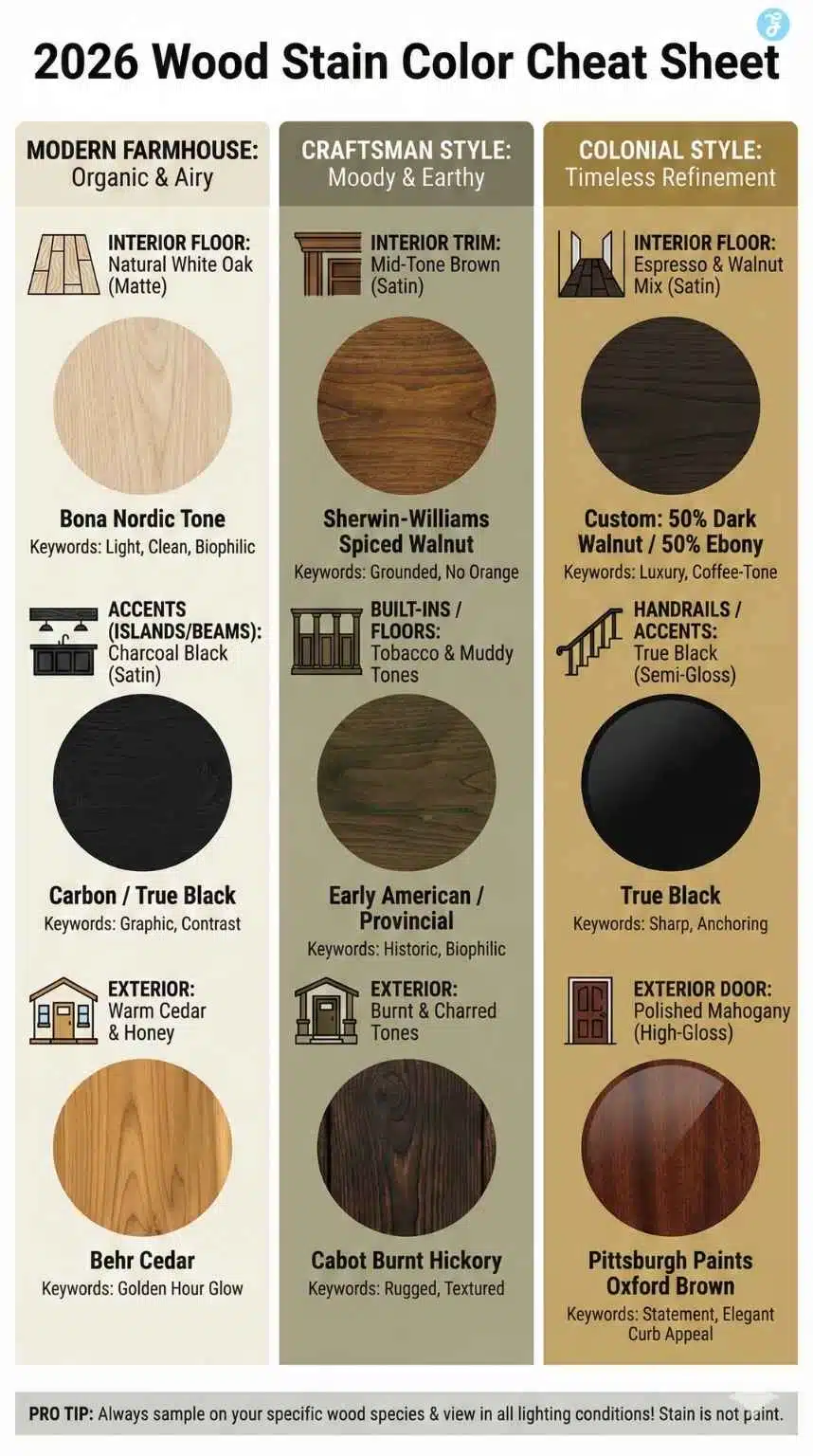
1. Modern Farmhouse: The “Organic” Update
The “Modern Farmhouse” has undergone the most significant evolution of any style. In the early 2020s, this look was defined by high contrast: stark white siding, black window frames, and gray floors. In 2026, the “Organic Farmhouse” takes over. This updated aesthetic softens the contrast, replacing stark blacks with charcoal and replacing gray floors with warm, blonde woods that reflect light.
Interior Floors & Cabinetry: The “Blonde” Ambition
The goal for a Modern Farmhouse interior in 2026 is “Airiness.” You want the floor to feel like a neutral canvas that allows the architectural details (like shiplap or beams) to shine.
The Top Trend: White Oak (Natural)
The best wood stain colors for farmhouse floors aren’t actually “stains” in the traditional sense—they are sealers that preserve the raw look of the wood.
Why it works: It hides dust and pet hair incredibly well (a practical plus for the farmhouse lifestyle) and reflects natural light, making open-concept spaces feel massive.
The Specific Look: You want to neutralize the pink/red tones found in Red Oak and enhance the wheat/gold tones.
| Application | Recommended Stain/Sealer | 2026 Trend Insight |
| Flooring | Minwax “Simply White” or Bona “Nordic Tone” | These add a subtle white pigment that stops the wood from “yellowing” over time, keeping it looking raw and Scandinavian. |
| Kitchen Island | “Carbon” or “True Black” | Instead of a dark brown island, 2026 Farmhouses are using opaque black stains. It allows the wood grain to show through (unlike paint) but provides a graphic anchor. |
| Beams | “Fruitwood” or “Golden Pecan” | Ceiling beams should be slightly darker than the floor to draw the eye upward without feeling heavy. |
Pro Tip: If you have Red Oak floors but want the White Oak look, do not just use a clear coat (it will turn pink). You must use a stain with a slight green or “ash” undertone to cancel out the red.
Exterior Palette: Warming Up the White
Most Farmhouses still utilize white or cream siding. To prevent the home from looking sterile, the wood accents (front door, porch columns, shutters) must bring the heat.
-
The Shift: We are seeing a move away from dark walnut doors toward “Cedar” and “Honey” tones.
-
Top Pick: Behr’s “Cedar”. It creates a welcoming “golden hour” glow that looks stunning against white siding and black hardware.
2. Craftsman Style: Moody & Earthy
The Craftsman (or Arts & Crafts) aesthetic is rooted in a philosophy of “truth to materials.” It respects the wood. In 2026, we are leaning heavily into “Biophilic Design”—a fancy term for connecting the occupant to nature. The best wood stain colors here are deep, muddy, and rich. We are avoiding the “orange gym floor” look of the 90s in favor of browns that contain hints of green or gray (often called “tobacco” tones).
Interior Woodwork: The “Tobacco” Palette
Craftsman homes often feature heavy wood trim, built-ins, and colonnades. If you stain these too dark, the house feels like a cave. If you stain them too light, they lose their historic weight.
The Sweet Spot: Mid-Tone Browns. You want a color that looks like it has aged naturally for 50 years.
Why it works: Mid-tones ground the space but still allow the intricate grain patterns of quarter-sawn oak (a Craftsman staple) to pop.
| Application | Recommended Stain | 2026 Trend Insight |
| Trim/Moldings | Sherwin-Williams “Spiced Walnut” | A rich brown with a hint of red/amber, perfect for highlighting the woodwork without overpowering the room. |
| Built-ins | “Tobacco” or “Early American” | These stains have a “muddy” quality that pairs beautifully with the Morris & Co. wallpapers and olive greens popular in Craftsman interiors. |
| Floors | “Provincial” (Minwax) | The Goldilocks of stains. Not too dark, not too light. It is timeless and historically appropriate. |
Exterior: The “Burnt” Look
Craftsman exteriors in 2026 are embracing darker, moodier siding colors like “Cast Iron,” “Forest Green,” or “Navy.” To stand up to these heavy colors, the wood stain needs to be bold.
-
Top Trend: “Burnt Hickory”. This is a charcoal-infused brown that looks slightly charred. It adds a rustic, rugged texture that is incredibly popular right now.
-
The Front Door: A Craftsman door is usually solid wood with a dentil shelf. Staining this in “Russet” (a brown with strong red undertones) creates a focal point that says “welcome” without clashing with the earthy siding.
3. Colonial Style: Timeless Refinement
Colonial homes (and their cousins, the Georgian and Federal styles) are about symmetry, history, and polish. While Farmhouse goes “raw” and Craftsman goes “rustic,” Colonial goes “luxury.” The best wood stain colors for 2026 Colonials are dark, dramatic, and high-contrast.
Interior Floors: The “Espresso” Elegance
There is nothing more stately than a white-wainscoted hallway with a dark wood floor. However, the “Dark Walnut” of the past often read too red. The 2026 update is the “Coffee” palette.
The Mix: 50% Dark Walnut + 50% Ebony.
Why it works: The Ebony kills the red undertones in the Walnut, resulting in a deep, neutral brown that looks like an expensive cup of black coffee. It anchors tall ceilings and contrasts beautifully with traditional rugs.
| Application | Recommended Stain | 2026 Trend Insight |
| Floors | “Jacobean” or Custom Mix (Walnut/Ebony) | The standard for luxury. Note: Dark floors show dust, so a Satin finish is crucial to minimize maintenance. |
| Handrails | “True Black” | Painting stair risers white and staining the handrail/treads absolute black is a massive trend for 2026 Colonials. |
| Library/Den | “Mahogany” | If you have a wood-paneled room, Mahogany remains the classic choice, but choose a “brown mahogany” rather than a “purple/red mahogany” for a modern update. |
Exterior: The “Estate” Aesthetic
Colonial exteriors are often brick or painted siding. The wood is usually reserved for the entry door and perhaps a deck.
-
Top Trend: “Oxford Brown”. This is a very deep, solid brown that almost looks like paint but retains the texture of wood. It looks incredible with brass hardware (kickplates, knockers) which are also having a major resurgence.
-
The Deck: While many use composite decking, if you use real wood, a semi-transparent “Teak” stain provides a nice mid-tone contrast to a brick facade.
Technical Guide: Sheen, Species, and Sampling
Choosing the color is only half the battle. In 2026, how you apply the stain matters just as much.
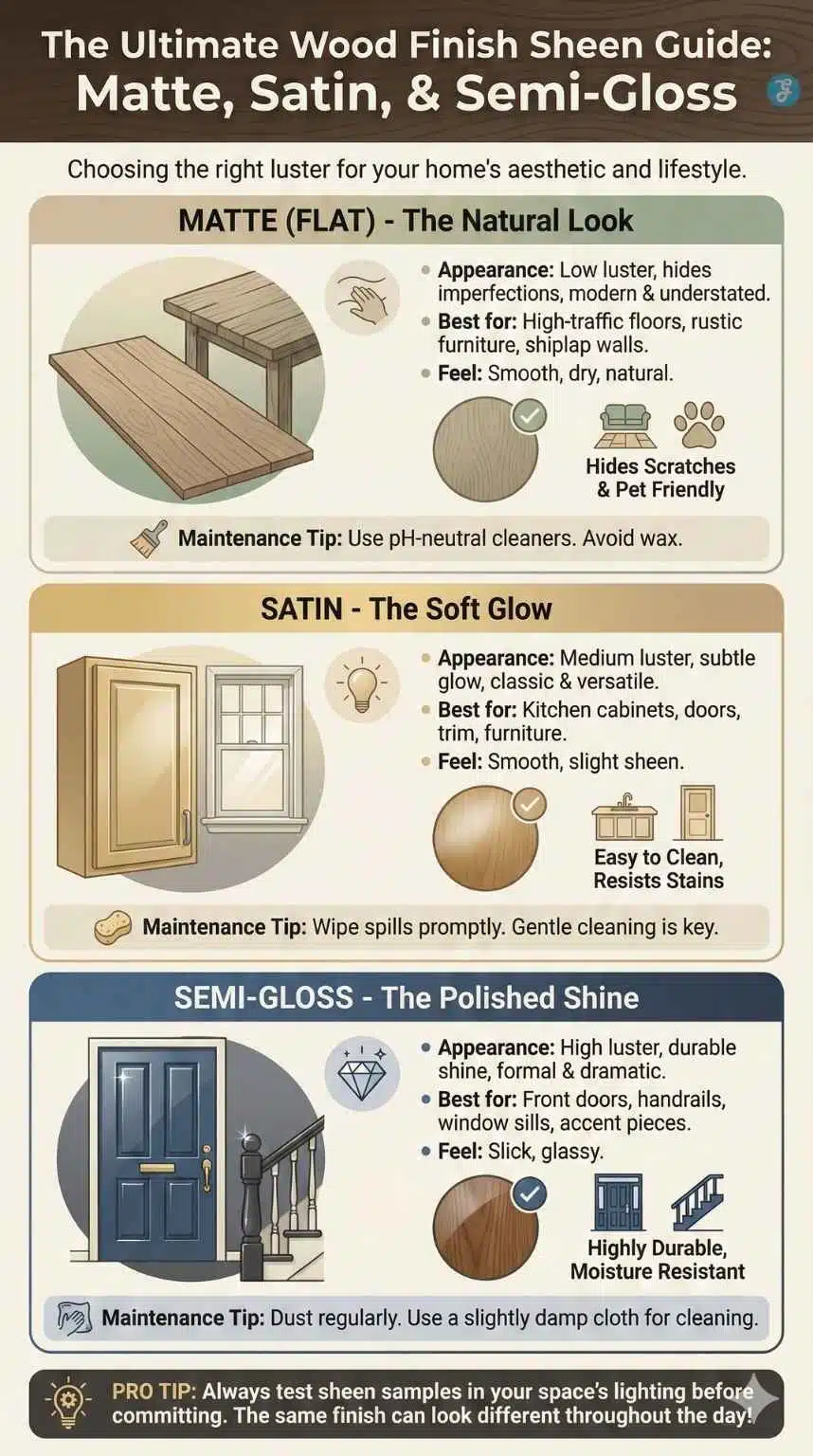
1. The Sheen Wars: Matte vs. Gloss
-
Matte / Flat: The dominant trend for 2026. It looks natural, hides dog scratches, and feels modern. Use this for Farmhouse and Craftsman floors.
-
Satin: The compromise. It has a slight glow but isn’t shiny. Perfect for kitchen cabinets and trim.
-
Semi-Gloss / High-Gloss: largely “out” for floors, but highly recommended for Colonial front doors and handrails. A high-gloss front door in “Oxford Brown” is the ultimate curb appeal power move.
2. The “Pop” Test
Water-popping is a technique where you wipe the raw wood with a wet rag before staining. It opens the grain and allows the wood to absorb more stain, resulting in a deeper, richer color.
Recommendation: Always “water pop” if you are trying to achieve a dark color (like Jacobean) on a hard wood like White Oak or Maple. Without it, the stain might look patchy or too light.
3. The Cardinal Rule of Sampling
Never trust the color on the can. Wood is a natural material; a stain that looks “Honey” on Pine will look “Red” on Oak and “Green” on Poplar.
Action Item: Buy the smallest can available (usually a half-pint). Stain a scrap piece of your flooring or a hidden spot in a closet. Let it dry overnight. Look at it in the morning light, noon light, and evening artificial light.
Living with the Look: Maintenance Rules for 2026 Finishes
The shift to Matte and Satin finishes requires a change in your cleaning habits. While these low-sheen finishes are excellent at hiding dog scratches and dust, they are unforgiving if you use the wrong products.
1. The “No-Go” List:
- Oil Soaps: Never use Murphy’s Oil Soap or wax-based cleaners on a modern matte floor. They leave a sticky residue that turns the matte finish “cloudy” and impossible to fix without sanding.
- Steam Mops: The heat drives moisture into the wood grain, eventually causing the gray/black water stains you see in old farmhouse floors.
2. The “Pro” Protocol:
- Microfiber & pH Neutral: Use a simple microfiber mop with a pH-neutral cleaner (like Bona).
- The “Satin” Haze: If your Satin finish looks streaky, it’s usually because of too much cleaner. Mist the floor, don’t flood it.
ROI Reality Check: Which Colors Sell Homes in 2026?
If you are renovating with resale in mind, your stain choice is a financial decision, not just an artistic one. Real estate data for 2026 suggests that “Polarizing” colors lower offer prices, while “Broad Appeal” colors drive bidding wars.
1. The “Safe Bet” Money Makers:
- Mid-Tone Brown (e.g., Provincial): The safest investment. It offends no one and matches 90% of furniture styles.
- Natural/Blonde Oak: Highly coveted in coastal and urban markets. It signals “modern” and “clean” to buyers under 40.
2. The “Risk” Factors:
- Red/Mahogany Tones: Data shows these sit on the market longer. They are often perceived as “dated” (pre-2000s).
- Gray (The 2020 Ghost): While still acceptable in some flips, a distinct gray floor is increasingly seen as a “fixer-upper” project by trend-savvy buyers who know the trend has passed.
The Verdict: If you plan to sell within 3 years, stick to Provincial or Natural. If this is your “forever home,” go as dark or moody as you like.
Frequently Asked Questions (FAQ)
1. Is gray wood stain totally out of style for 2026?
The “Barn Gray” or “Driftwood” look that dominated 2018-2022 is definitely on the decline. It tends to look dated and artificial now. However, “Greige” (a warm beige-gray) is still very popular. If you want a gray tone, aim for a warm, mushroom-colored stain rather than a cold, blue-gray.
2. What is the most timeless wood stain color?
Provincial or Medium Brown. These mid-tone stains don’t lean too dark (which can feel heavy) or too light (which can feel trendy). They are the “blue jeans” of wood stains—they go with everything and never really go out of style.
3. I have red oak floors but hate the pink. What stain should I use?
This is the most common dilemma! You need to use a stain with green undertones to neutralize the red. “Jacobean” or “Dark Walnut” are great for going dark. If you want to stay light, look for “Special Walnut” or mix a little bit of “Ebony” into a neutral stain to muddy out the pink.
4. Should my wood floor match my kitchen cabinets?
No! In fact, 2026 trends discourage “matchy-matchy” designs. If you have wood floors, paint your cabinets (Green, Cream, or Taupe). If you want wood cabinets, ensure the wood tone is significantly different from the floor (e.g., a dark Walnut island on a light White Oak floor) to create contrast.
5. Oil-based vs. Water-based stain: Which is better for 2026?
Water-based stains are taking over. They have low VOCs (smell better), dry faster, and—crucially—they dry “clear.” Oil-based polys turn yellow/amber over time. If you want that trendy, raw “White Oak” look, you must use a water-based finish. If you want a deep, rich historical look (like in a Colonial), oil-based is still superior for depth.
Final Thought: Anchoring Your Home
The best wood stain colors of 2026 are all about honesty. Whether it’s the honest, raw beauty of a Farmhouse white oak floor, the earthy truth of a Craftsman bungalow, or the refined history of a Colonial estate, the goal is to let the wood speak. Don’t just pick a color because it’s trendy; pick a stain that respects the architecture of your home and the life you live inside it.
Ready to start? Head to your local paint store and pick up samples of “Special Walnut” (the safe bet), “Simply White” (the modern choice), and “Jacobean” (the drama). Your floors are waiting.






























