
Starting a new fitness journey as an adult can be daunting. You might feel “gymtimidation” staring at complex machinery, or worry that you are too far behind to join a local team. But here is the good news: the current fitness landscape has shifted away from “grind culture” toward movement that is genuinely fun and social.
If you are looking for the best sports for beginners, you don’t need to be an ex-athlete or have expensive gear. You just need a willingness to move. This guide curates ten accessible, enjoyable, and low-barrier sports perfect for adults looking to build fitness, meet new people, and actually enjoy their workout.
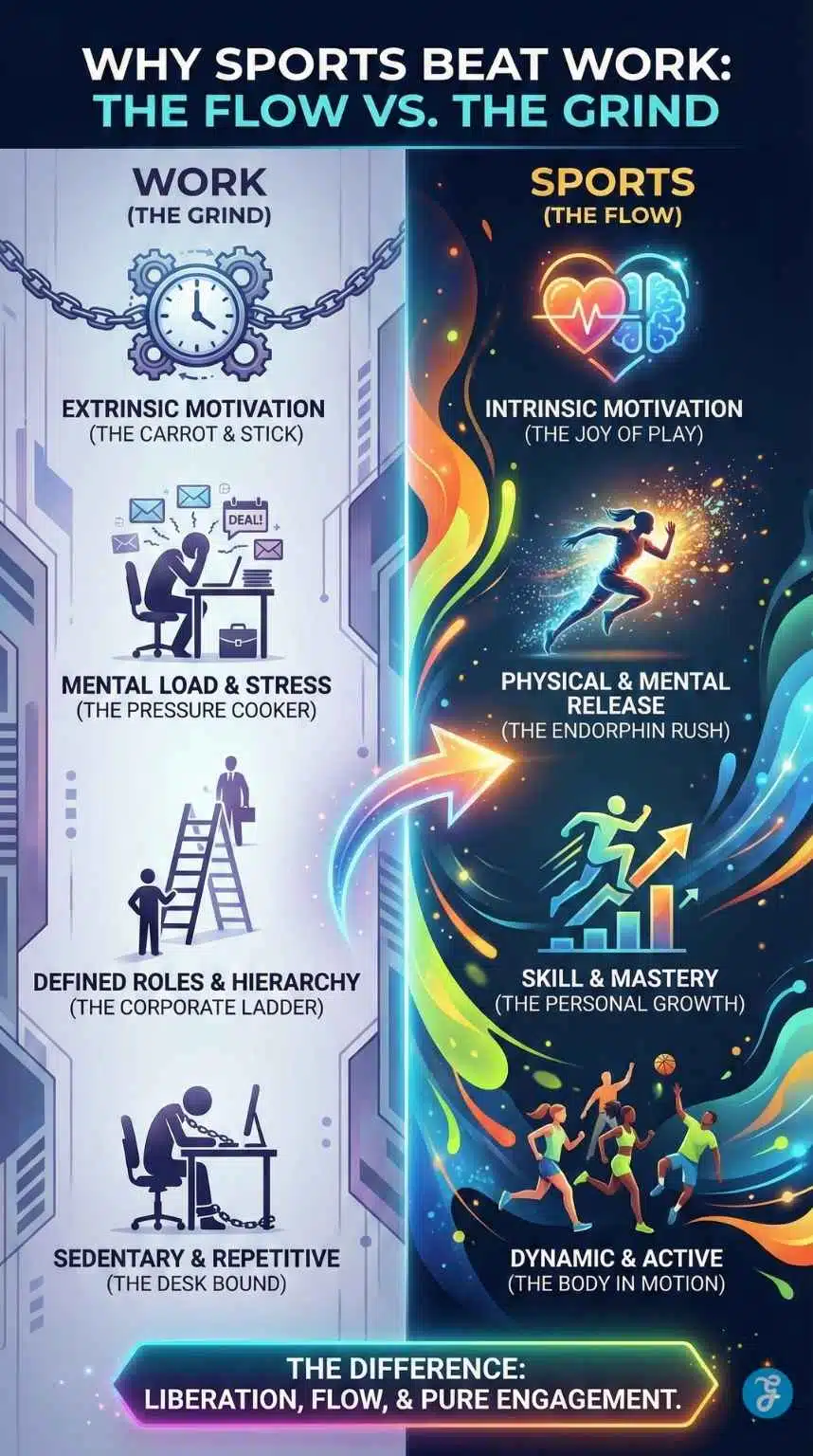
Why “Sports” Beats “Work”
Before diving into the list, it is important to understand why choosing a sport is often more sustainable than a gym membership. When you are on a treadmill, you are hyper-aware of every second ticking by. When you are playing a sport, you enter a “flow state.” Your mind is focused on the game—hitting the ball, solving the climbing route, or coordinating with a teammate—so the physical effort feels secondary.
The best sports for beginners share three key traits:
-
Low Barrier to Entry: You don’t need weeks of coaching to start having fun.
-
Scalable Intensity: You can play at a slow, relaxed pace and ramp up as you get fitter.
-
Welcoming Communities: These sports typically have cultures that embrace newbies rather than exclude them.
The “Trending & Social” Sports
These are currently the fastest-growing activities globally, meaning you will find plenty of other beginners learning alongside you.
1. Pickleball
If you have noticed tennis courts being converted into smaller courts with lower nets, you have seen the rise of pickleball. It is widely considered the king of best sports for beginners because it flattens the learning curve of racquet sports.
-
What It Is: A hybrid of tennis, badminton, and ping-pong played with a solid paddle and a plastic ball with holes (similar to a wiffle ball).
-
Why It’s Perfect for Beginners:
-
Less Running: The court is roughly a quarter the size of a tennis court. You can play a full game without needing the endurance of a marathon runner.
-
Slower Pace: The plastic ball creates drag, meaning it travels more slowly than a tennis ball. This gives you valuable extra seconds to react and get into position.
-
The Underhand Serve: Unlike tennis, which requires a complex overhand serve, pickleball uses a simple underhand motion that most people master in five minutes.
-
-
Health Benefits: An average hour of recreational play can burn significant calories while improving agility and balance. Since it is lower impact than tennis, it is easier on the knees and hips.
-
Barrier to Entry: Very Low. Most public parks now have free courts. You can buy a decent starter paddle set for the price of a nice dinner.
2. Padel
Often described as “tennis with walls” or “squash in the sun,” Padel is exploding in popularity across Europe and the Americas. It is played in doubles on an enclosed court surrounded by glass and mesh.
-
What It Is: A racquet sport played with a solid, stringless bat. The ball can bounce off the glass walls and remain in play, similar to squash.
-
Why It’s Perfect for Beginners:
-
Longer Rallies: In tennis, a beginner might hit the ball out of bounds constantly. In Padel, the walls keep the ball in play. This leads to longer, more exciting rallies even for complete novices.
-
Social by Design: Padel is almost exclusively played as doubles (2 vs 2). The court is small enough that you can chat and laugh with your opponents between points, making it a highly social experience.
-
Control over Power: The racquet is easier to handle than a strung tennis racquet, allowing you to focus on placement rather than raw power.
-
-
Health Benefits: Padel provides a mix of aerobic and anaerobic exercise. The quick changes of direction tone the legs and glutes, while the swinging motion engages the core and upper body.
-
Barrier to Entry: Medium. You will likely need to book a court at a dedicated club, which can have a fee. However, many clubs offer “intro nights” specifically for new players.
The “Low Impact” Sports
Ideal for those recovering from injury, managing joint pain, or looking for a gentle entry into fitness.
3. Rucking (Walking with Weight)
Rucking is the simplest sport on this list, yet one of the most effective for building foundational strength. It takes something you already do—walking—and turns it into a resistance workout.
-
What It Is: Walking while wearing a weighted backpack.
-
Why It’s Perfect for Beginners:
-
Zero Skill Gap: If you can walk, you can ruck. There are no rules to learn and no teams to join.
-
Scalable: You start with what you have. A school backpack with two heavy books is enough to begin. As you get stronger, you add more weight.
-
Outdoor Therapy: It gets you outside, which is proven to lower cortisol (stress) levels.
-
-
Health Benefits: Rucking burns up to 3x the calories of standard walking without the high impact of running. It does wonders for your posture, as the weight of the pack pulls your shoulders back, engaging your core and spinal erectors to keep you upright. It also builds bone density, which is crucial as we age.
-
Barrier to Entry: Zero. You likely have a backpack and heavy household items already. Dedicated “ruck plates” and packs are available, but not necessary to start.
4. Swimming
Swimming is the ultimate non-weight-bearing sport. It removes the harsh effects of gravity, allowing you to move your body in ways that might be painful on land.
-
What It Is: Lap swimming, water walking, or water aerobics.
-
Why It’s Perfect for Beginners:
-
Joint Protection: The water supports about 90% of your body weight. If you have knee pain, back issues, or are carrying extra weight, swimming allows you to exercise hard without pain.
-
Privacy: Once you are in the water, no one can see you. For those who feel self-conscious exercising, the solitude of a swim lane is comforting.
-
Breath Control: It teaches you rhythmic breathing, which can have a meditative, calming effect on the nervous system.
-
-
Health Benefits: Swimming is one of the few sports that is truly “full body.” It builds endurance, muscle strength, and cardiovascular health simultaneously. The cooling effect of water also prevents overheating, which can be a barrier in other cardio sports.
-
Barrier to Entry: Low. You need a swimsuit and access to a pool. Community centers and YMCAs often have affordable day passes or memberships.
5. Disc Golf
If you enjoy hiking but find it a bit monotonous, disc golf adds a layer of gamification that makes the miles fly by.
-
What It Is: Golf played by throwing specialized flying discs (frisbees) into raised metal baskets. The goal is to complete the course in the fewest throws.
-
Why It’s Perfect for Beginners:
-
Relaxed Vibe: Unlike traditional golf, which has strict dress codes and etiquette, disc golf is casual. T-shirts and shorts are the norm.
-
Play at Your Pace: You aren’t rushing to keep up with a ball. You throw, walk to your disc, and throw again. It creates a nice rhythm of focus followed by walking.
-
Nature Immersion: Courses are often woven through forests and parks, offering a “nature bath” alongside your game.
-
-
Health Benefits: You will easily walk 2-4 miles during an 18-hole round. The throwing motion involves a surprising amount of core rotation and arm speed, improving flexibility and coordination.
-
Barrier to Entry: Very Low. Most courses are in public parks and are free to play. You can buy a starter set of three discs (driver, mid-range, putter) for under $30.
The “Brain & Body” Sports
These sports engage your mind as much as your muscles, making them excellent for stress relief and mental sharpness.
6. Bouldering (Indoor Rock Climbing)
Rock climbing has shed its “extreme” reputation and become a mainstream fitness activity, largely thanks to indoor bouldering gyms.
-
What It Is: Climbing shorter walls (usually 10-15 feet high) protected by thick crash pads on the floor. There are no ropes or harnesses involved.
-
Why It’s Perfect for Beginners:
-
Problem Solving: Climbing routes are called “problems” for a reason. You have to figure out where to put your hands and feet to get to the top. It engages your brain completely, making you forget you are working out.
-
Supportive Community: Bouldering gyms are famously social. It is common to sit on the mats between climbs and discuss the route (“beta”) with strangers.
-
Full Autonomy: You don’t need a partner to belay you. You can go alone and climb for 30 minutes or three hours.
-
-
Health Benefits: This is a powerhouse for grip strength and back muscles. It also builds incredible functional flexibility as you reach for holds. Mentally, it builds resilience—you will fall often, and learning to get back on the wall is a great life lesson.
-
Barrier to Entry: Medium. You will need a day pass and climbing shoe rentals. However, you don’t need to buy any gear to try it out.
7. Table Tennis (Ping Pong)
While often seen as a basement game, table tennis is a legitimate sport that is incredibly accessible for beginners.
-
What It Is: A fast-paced reaction sport played on a table with small paddles.
-
Why It’s Perfect for Beginners:
-
Hand-Eye Coordination: It sharpens your reflexes and coordination without requiring high levels of cardiovascular endurance initially.
-
Injury Free: It has one of the lowest injury rates of any sport. There is no contact and very low impact on the joints.
-
Ageless: You can play this sport competitively well into your 70s and 80s.
-
-
Health Benefits: It is often called “high-speed chess” because of the mental focus required. It stimulates the hippocampus (the part of the brain responsible for memory), making it excellent for long-term brain health.
-
Barrier to Entry: Low. Many community centers, bars, and arcades have tables. Paddles are inexpensive.
The “Team Spirit” Sports
For those who need the accountability of a team to show up.
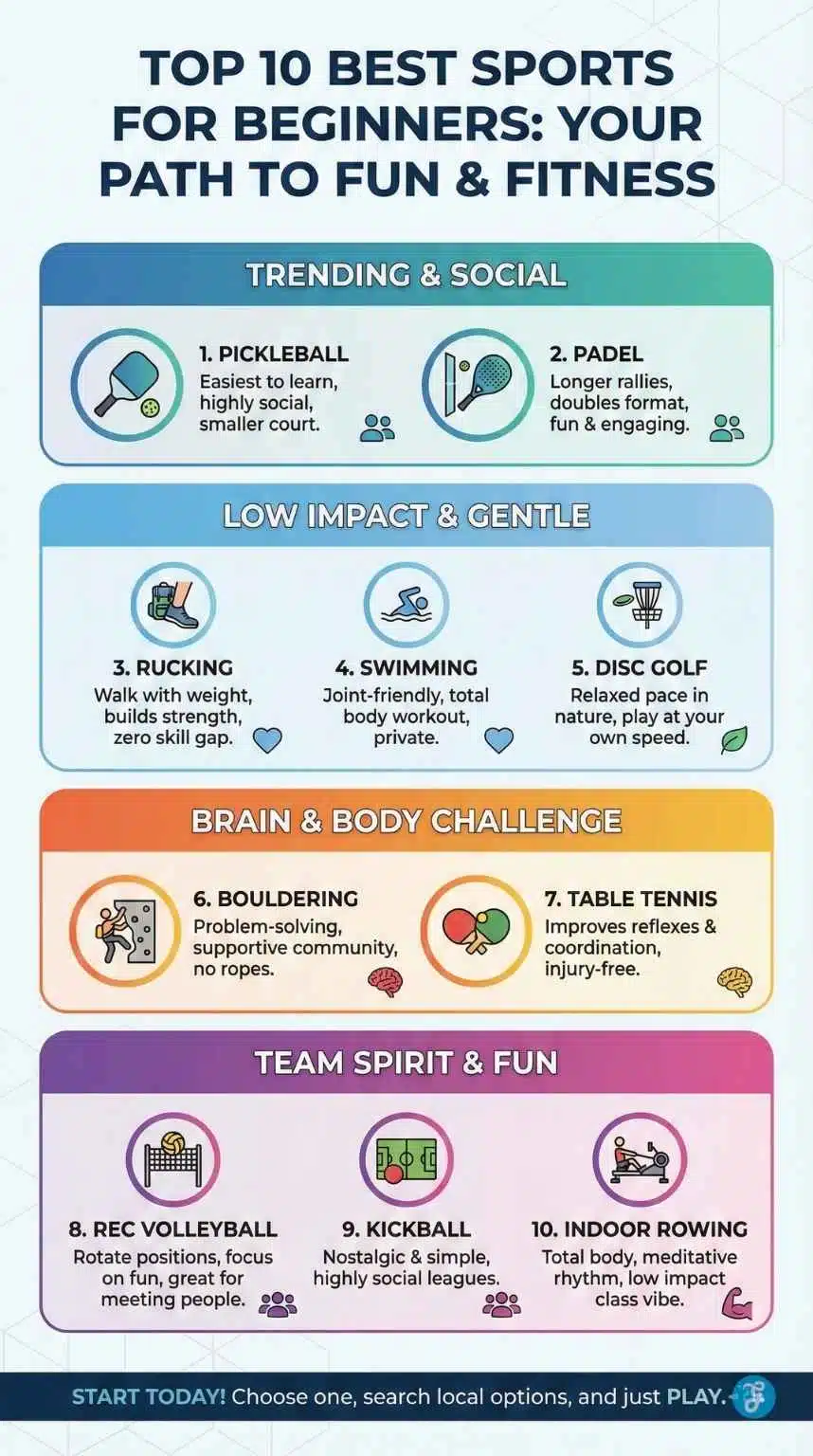
8. Recreational Volleyball
“Rec” volleyball is a staple of adult fitness leagues because it balances fun and effort perfectly.
-
What It Is: Keeping a ball airborne over a net using your hands and arms.
-
Why It’s Perfect for Beginners:
-
Rotational Play: In recreational leagues, players rotate positions. This means you don’t need to be a specialist; you will play up front, in the back, and serve. You learn the whole game.
-
Communication: You must talk to your teammates (“I got it!”, “Mine!”). This breaks the ice instantly and makes it a great way to make friends.
-
Mixed Gender: Many beginner leagues are co-ed, creating a balanced and less aggressive social environment.
-
-
Health Benefits: The constant jumping and squatting (ready position) tone the legs and glutes. It also improves agility and explosive power.
-
Barrier to Entry: Low. A pair of knee pads is highly recommended to save your knees from bruises, but that is the only gear you need.
9. Kickball
Nostalgia is a powerful motivator. Kickball takes you right back to elementary school recess, but often with an adult twist.
-
What It Is: Baseball/Softball rules, but played by kicking a large rubber ball.
-
Why It’s Perfect for Beginners:
-
Simplicity: Everyone knows the rules. You kick the ball and run to the base. There are no complex offside rules or technical fouls to learn.
-
The “Social” Factor: Kickball leagues are famous for being 50% sport and 50% social hour. Post-game drinks or food are often a formal part of the league structure.
-
Inclusive: You don’t need to be fast or strong to be a valuable team member. Being able to kick the ball accurately is often more important than power.
-
-
Health Benefits: It provides “interval” training—short bursts of sprinting while running bases, followed by periods of rest. This is great for heart health without the constant strain of endurance running.
-
Barrier to Entry: Low. Just a pair of sneakers.
10. Rowing (Indoor)
While technically a solo activity, indoor rowing is often done in class environments (like spin classes) that provide a team atmosphere.
-
What It Is: Using an ergometer (rowing machine) to simulate the motion of rowing a boat.
-
Why It’s Perfect for Beginners:
-
Total Body Engagement: Rowing uses 86% of the muscles in your body (legs, core, back, arms). It is arguably the most efficient calorie-burning exercise per minute.
-
Low Impact: Like swimming, you are seated, so there is no impact on your ankles or knees.
-
Meditative Rhythm: Once you master the “catch, drive, finish, recovery” stroke, the repetitive motion becomes very soothing.
-
-
Health Benefits: It builds a rock-solid posterior chain (hamstrings, glutes, back), which combats the negative effects of sitting at a desk all day.
-
Barrier to Entry: Low to Medium. Most gyms have rowing machines that are often underutilized. Alternatively, boutique rowing studios offer beginner classes.
Comparison: Finding Your Match
To help you decide which of these best sports for beginners fits your lifestyle, use this quick comparison guide.
| Sport | Cardio Level | Social Vibe | Estimated Startup Cost | Best For |
| Pickleball | Medium | High | Low ($30-$50) | Meeting people & quick fun |
| Rucking | Medium | Low (Solo) | Free | Weight loss & mental clarity |
| Swimming | High | Low | Low (Pool fees) | Joint pain relief & solitude |
| Bouldering | High (Strength) | High | Medium ($20/visit) | Problem solvers & thrill seekers |
| Disc Golf | Low | Medium | Very Low ($20) | Nature lovers & relaxed play |
| Volleyball | Medium | High | Low (League fees) | Team players & making friends |
| Padel | Medium/High | High | Medium (Court fees) | Racquet sport enthusiasts |
Frequently Asked Questions
What is the easiest sport to learn as an adult?
Walking/Rucking and Pickleball are tied for the easiest. Rucking requires no new skills—just walking with weight. Pickleball is designed specifically to be easier than tennis, with a high success rate for beginners in their very first session.
I am out of shape; will I be judged?
This is a common fear, but in the sports listed above, it is rarely a reality. Communities like Pickleball, Disc Golf, and Bouldering are renowned for being welcoming. Everyone was a beginner once, and experienced players are often eager to share tips.
Which sport is best for losing weight?
If weight loss is the primary goal, Rucking and Indoor Rowing are incredibly effective. Rucking burns high calories over long durations, while rowing provides a high-intensity burn in a shorter time frame. Both engage large muscle groups, which keeps your metabolism elevated after the workout.
Do I need to join a league?
Not necessarily. Sports like Disc Golf, Rucking, Bouldering, and Swimming can be done entirely on your own schedule. However, joining a recreational league for Volleyball or Kickball can provide “accountability,” ensuring you show up even when you feel lazy.
Bottom Line: The Best Sport is the One You Stick With
The search for the “perfect” sport often leads to analysis paralysis. The truth is, the best sports for beginners are simply the ones that you enjoy enough to do twice.
Fitness shouldn’t feel like punishment. It should be a celebration of what your body can do. Whether you choose the strategic puzzle of bouldering, the social buzz of pickleball, or the meditative solitude of swimming, the most important step is the first one.