
We have all seen it: a car covered in cheap plastic vents, loud exhausts that drone on the highway, and wheels that don’t quite fit. It is easy to fall into the trap of modifying a vehicle just for the sake of it, but finding the Best Car Mods Worth The Money requires a strategic approach. Whether you are a dedicated enthusiast or just someone looking to improve your daily commute, the goal should always be to enhance the vehicle’s driving characteristics, reliability, or value without turning it into a money pit.
The automotive aftermarket is a multi-billion-dollar industry flooded with snake oil and “upgrades” that actually degrade your car’s performance. However, hidden amongst the noise are legitimate improvements that transform how a car feels, handles, and stops. “Investment-grade” modifications are those that offer a tangible benefit—be it safety, speed, or daily comfort—that outweighs the cash you hand over for parts and labor.
In this guide, we are cutting through the hype to focus strictly on modifications that deliver real-world results. We will explore ten upgrades that industry experts, mechanics, and seasoned drivers consistently rate as the best use of your budget.
Key Takeaways
-
Tires are King: No other modification offers a better return on investment (ROI) for safety and performance than high-quality tires.
-
Software Over Hardware: An ECU tune often provides the most “horsepower per dollar” compared to expensive engine parts.
-
Protect the Asset: Ceramic coatings and PPF are not just vanity projects; they preserve resale value by preventing environmental damage.
-
Daily Quality of Life: Modernizing an older car with Apple CarPlay or Android Auto can make a 10-year-old vehicle feel brand new.
-
Avoid the “Money Pits”: Modifications like cheap body kits or aggressive lowering springs often ruin ride quality and lower the car’s value.
The Philosophy of “OEM Plus”
Why Modifying Correctly Matters
Before ripping out parts or bolting on accessories, it is vital to adopt an “OEM Plus” mindset. This philosophy focuses on enhancing the vehicle’s natural strengths rather than changing its fundamental identity. Manufacturers often leave performance on the table to meet strict budget constraints, noise regulations, and broad consumer appeal. By targeting these specific compromises, like soft suspension bushings, conservative engine software, or budget-friendly tires, you can unlock a level of performance that feels factory-made, yet significantly sharper.
Defining True “Return on Investment”

Separating Investments from Sunk Costs
In the world of car modification, ROI isn’t just about financial resale value; it is about the “Smile Per Mile” factor and safety dividends. A high-ROI modification is one that you interact with constantly. If you spend $2,000 on a carbon fiber engine cover that you only see when the hood is open, the ROI is low. Conversely, if you spend that same amount on a suspension setup and high-quality tires, you feel the benefit every time you turn a corner or hit the brakes.
The upgrades listed below prioritize functional gains, tangible improvements to safety, speed, and daily comfort, over pure aesthetics.
1. High-Performance Tires: The Ultimate Safety & Performance Upgrade
If you only do one thing to your car, make it this. It is a cliché for a reason: tires are the only four contact points between your 3,000+ pound metal machine and the asphalt. No amount of horsepower or suspension tuning matters if your tires cannot translate that energy into grip.
Why It Is Worth The Money
Many drivers underestimate the difference between a “budget” tire and a “maximum performance” summer or all-season tire. The gap is not just in cornering speed; it is in safety. High-quality tires like the Michelin Pilot Sport 4S or Continental ExtremeContact series can reduce stopping distances by car lengths compared to economy tires. In an emergency braking situation, that difference is quite literally the value of your car (and your safety).
The “Feel” Factor
Beyond safety, good tires transform steering feel. They offer stiffer sidewalls, which means when you turn the steering wheel, the car reacts instantly rather than “wallowing” before changing direction. This creates a sense of confidence and precision that makes even a standard commuter sedan feel sporty and planted.
| Feature | Economy Tire | High-Performance Tire |
| Braking Distance (60-0 mph) | 130+ ft | < 110 ft |
| Wet Grip | Low (High Hydroplane Risk) | Excellent |
| Road Feedback | Numb/Vague | Precise/Communicative |
| Price per Set (Avg) | $400 – $600 | $900 – $1,400 |
Pro Tip: Do not just look at the treadwear rating. A lower treadwear number (e.g., 300) often indicates a softer, stickier compound that provides better grip but wears faster. For a daily driver, aim for a balance—usually a rating between 300 and 500.
2. ECU Tune / Remap: Unlocking Hidden Potential
Modern engines are controlled by computers (ECUs), and factory software is almost always conservative. Manufacturers detune engines to account for bad fuel quality in remote areas, missed maintenance intervals, and strict emissions regulations across various global markets.
The ROI of Software
An ECU tune (or “remap”) optimizes the engine’s fuel and ignition maps to release this reserved power. On turbocharged cars, this is arguably the best “bang for your buck” mod in existence. It is not uncommon to see gains of 30 to 50 horsepower and 50 to 80 lb-ft of torque from a simple software flash that costs $500–$800. To get those same gains with physical parts (exhausts, intakes, cams), you would spend thousands.
Driveability Improvements
It isn’t just about peak numbers. A good tune smooths out the power delivery, removes “rev hang” (where the RPMs stay high after you lift off the throttle), and sharpens throttle response. This makes the car feel eager and awake, rather than lethargic.
-
Stage 1: Usually requires no physical hardware changes. Just software.
-
Stage 2: Typically requires an upgraded downpipe or intercooler to handle increased heat and flow.
Warning: Always use a reputable tuner. A bad tune can cause engine knock or run the engine too lean, leading to catastrophic failure.
3. Suspension: Sway Bars & Coilovers
Factory suspension is a compromise. It has to be soft enough for someone’s grandmother to drive comfortably over potholes but stiff enough to be safe on a highway. If you care about driving dynamics, this compromise often leaves the car feeling “floaty.”
Sway Bars (Anti-Roll Bars)
If you are on a budget, start here. Sway bars connect the left and right sides of your suspension. Upgrading to a thicker, stiffer bar reduces body roll (the leaning of the car) in corners without making the ride harsh over bumps. It keeps the car flat and composed.
-
Cost: Low ($200 – $400).
-
Impact: High.
Coilovers
For those wanting total control, coilovers replace your factory shocks and springs. They allow you to adjust:
-
Ride Height: Lower the car for a better center of gravity and an aggressive look.
-
Damping: Adjust how soft or stiff the ride is with the turn of a knob.
-
Camber: Fine-tune wheel alignment for track use.
A quality set of coilovers (like those from KW, Bilstein, or Öhlins) will ride better than stock while handling significantly sharper. Cheap coilovers (under $800) will often ruin your ride quality, so spend wisely here.
4. Modern Infotainment (CarPlay / Android Auto)
Not all mods are about speed. If you drive a car from 2010–2018, the mechanics might be solid, but the technology inside likely feels ancient. Clunky navigation systems and a lack of Bluetooth streaming can make a great car feel obsolete.
The “New Car” Feeling
Replacing the factory head unit with a system that supports Apple CarPlay or Android Auto is the single most effective way to modernize a vehicle. Suddenly, you have Google Maps, Waze, Spotify, and voice control (Siri/Google Assistant) integrated seamlessly into your dashboard.
Resale Value Booster
When selling a used car, buyers place a huge premium on connectivity. A 10-year-old car with a modern touchscreen feels much newer than one with a monochrome dot-matrix display. It signals to the buyer that the car has been updated and cared for.
Note: For cars where the radio is integrated into the climate controls (common in luxury cars), look for “piggyback” modules that add CarPlay to the factory screen without replacing the dashboard hardware.
5. Performance Brake Pads & High-Temp Fluid
You do not need a $4,000 “Big Brake Kit” with massive red calipers to stop faster on the street. The factory braking system on most cars is powerful enough to lock up the wheels (which engages ABS). The limiting factor is usually heat management and pad bite.
The Upgrade Path
-
Pads: Switch to a “performance street” pad (e.g., EBC Yellowstuff, Hawk HPS, or Ferodo DS2500). These pads have a higher friction coefficient, meaning they bite harder when you press the pedal.
-
Fluid: Flush the old brake fluid with high-temperature racing fluid (like Motul RBF600). This prevents the fluid from boiling during spirited driving, which causes the pedal to go mushy (brake fade).
Why It Pays Off
This mod is entirely about confidence. Knowing your brakes will perform consistently, even after a few hard stops on a canyon road or in an emergency on the highway, allows you to enjoy the car’s performance safely. It is a relatively low-cost upgrade (approx $300–$500) that dramatically changes driving safety.
6. Paint Protection: Ceramic Coating & PPF
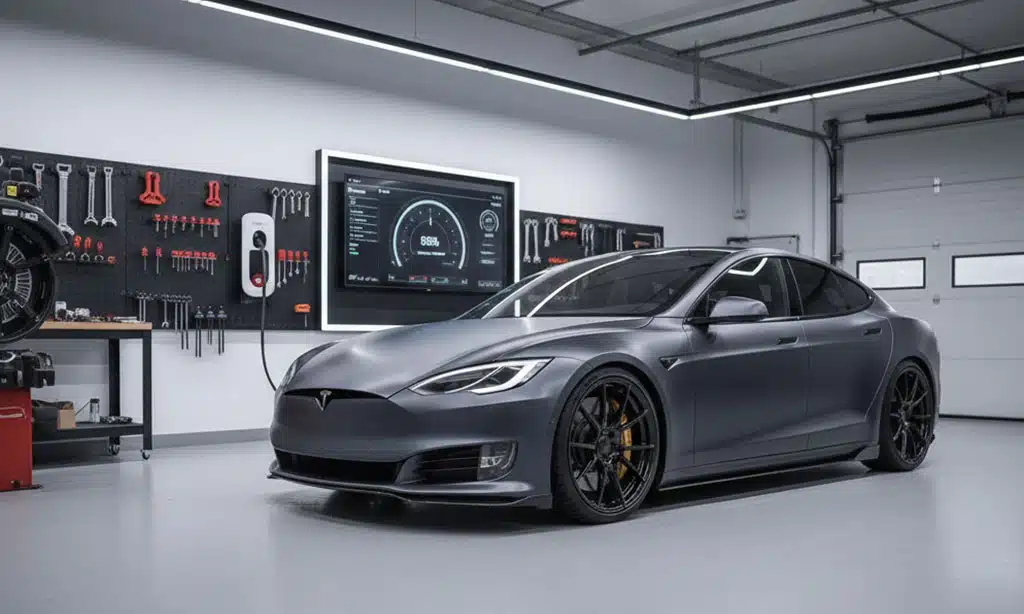
In the world of car ownership, your vehicle’s paint is constantly under attack from UV rays, bird droppings, road salt, and rock chips. Once the clear coat fails, the value of the car plummets.
Ceramic Coating
Think of this as “wax on steroids.” It is a liquid polymer that chemically bonds to the paint, creating a semi-permanent layer of protection.
-
Benefit: It makes the car hydrophobic (water beads off instantly), making washing incredibly easy. It also provides deep gloss and protects against chemical etching from bird lime or tree sap.
-
Longevity: 2 to 5 years.
Paint Protection Film (PPF)
This is a clear, thick urethane film applied to the front of the car (bumper, hood, mirrors).
-
Benefit: It is the only thing that protects against rock chips. Modern PPF is “self-healing,” meaning if you get a light scratch, pouring hot water on it or leaving it in the sun will make the scratch disappear.
- The Financial Argument: While expensive upfront ($1,000+), PPF preserves the factory paint. When you go to sell the car in 5 years, the paint underneath will look brand new, commanding a significantly higher resale price.
7. LED Lighting Upgrades
If your car came with halogen bulbs, they likely emit a dim, yellowish light that makes night driving strained and dates the look of the vehicle.
Visibility is Safety
Swapping to high-quality LED bulbs (or complete projector retrofits) increases the lumen output and throws light further down the road. The crisp, white light (usually 5500K–6000K color temp) mimics daylight, reducing eye fatigue during long night drives.
Aesthetics
Aesthetically, LEDs give the car a premium, sharp look. However, be careful not to put LED bulbs into a reflector housing designed for halogens, as this can scatter light and blind oncoming drivers. The “worth it” mod here is doing it correctly, either by buying bulbs designed for your specific housing or replacing the entire headlight assembly.
8. Cat-Back Exhaust System
Sound is a crucial part of the driving experience. Factory exhausts are designed to be silent and restrictive, often choking the engine’s personality.
Why “Cat-Back”?
A “Cat-Back” system replaces everything from the catalytic converter back to the tailpipes. This keeps the car emissions legal (you aren’t removing the catalytic converter) while altering the muffler and resonator.
The ROI: Smiles Per Gallon
While you might gain a small amount of horsepower (5-10 hp) due to better flow, the real value is emotional. A good exhaust note connects you to the engine. It provides auditory feedback on what the engine is doing, making downshifts and acceleration runs visceral and exciting. Look for systems with “Helmholtz resonators” or “valved” options to avoid the dreaded highway drone.
9. Cold Air Intake (CAI)
Often called the “gateway drug” of car modification, the Cold Air Intake is usually the first mod people do because it is affordable and easy to install yourself.
Induction Noise
The primary benefit of a CAI is sound. It removes the sound-deadening baffles of the stock airbox. When you step on the gas, you hear a deep “growl” or “woosh” of air rushing into the engine. On turbocharged cars, you will hear the turbo spooling up and the diverter valve releasing pressure.
Engine Efficiency
By relocating the filter away from the hot engine block or using a heat shield, a CAI draws in cooler, denser air. Denser air contains more oxygen, which leads to better combustion. While the power gains are modest (unless paired with a Tune), the improvement in throttle response and engine bay aesthetics makes it a worthy upgrade for the price.
10. “Touch Point” Upgrades (Shifter, Steering Wheel)
You interact with two things 100% of the time you are driving: the steering wheel and the gear shifter (or paddles). Upgrading these “touch points” changes your perception of the car’s quality every single second you are inside it.
Short Throw Shifter (Manuals)
A short shifter changes the pivot point of the gear lever, reducing the distance your hand has to move to change gears.
-
The Result: Shifts feel mechanical, precise, and “clicky” rather than like stirring soup. It makes driving significantly more engaging.
Weighted Shift Knob / Re-wrapped Wheel
-
Weighted Knob: Adds momentum to the throw, making it easier to slot into gear.
-
Steering Wheel: Having a steering wheel re-wrapped in high-quality Alcantara or perforated leather, or slightly thickened, improves grip and makes the car feel far more expensive than it is.
Cost vs. Difficulty Breakdown

To help you decide where to start, here is a breakdown of these top mods based on cost and installation difficulty.
| Mod Category | Est. Cost (USD) | DIY Difficulty | Primary Benefit |
| Cold Air Intake | $200 – $500 | Easy (1/5) | Sound & Response |
| Short Shifter | $150 – $400 | Moderate (3/5) | Engagement |
| ECU Tune | $400 – $1,000 | Easy (Pro Required) | Raw Power |
| Sway Bars | $300 – $600 | Moderate (3/5) | Handling Balance |
| High-Perf Tires | $800 – $1,500 | Shop Required | Safety & Grip |
| Cat-Back Exhaust | $700 – $2,000 | Moderate (3/5) | Sound & Emotion |
| Infotainment | $300 – $900 | Hard (4/5) | Daily Comfort |
| Coilovers | $1,000 – $3,000 | Hard (4/5) | Stance & Handling |
| Brake Pads/Fluid | $200 – $500 | Moderate (3/5) | Stopping Confidence |
| Ceramic/PPF | $1,000 – $3,000+ | Shop Required | Asset Protection |
Frequently Asked Questions: Car Modifications
1. Do these modifications void my warranty?
Technically, a dealer cannot void your entire warranty just because you have a mod. Under the Magnuson-Moss Warranty Act (in the US), they must prove that your modification caused the failure. However, an ECU tune is the riskiest mod for warranties; if your engine blows up and the ECU has been flashed, the dealer will likely deny the claim. Tires, exhausts, and cosmetic mods generally do not affect the powertrain warranty.
2. Which mod adds the most horsepower?
The ECU Tune. No other standalone modification comes close. An intake might add 5hp, and an exhaust might add 8hp, but a tune can add 40hp+, depending on the engine (especially turbocharged ones).
3. Are these mods street legal?
Most of the mods listed here are street-legal, with caveats.
-
Exhausts: Must meet local noise decibel limits and retain catalytic converters.
-
Tints/Lighting: Must adhere to state laws regarding darkness and color.
-
Intakes: In states like California, you need a CARB-legal sticker for the intake to pass emissions.
4. Will modifying my car lower its resale value?
It depends. “Tasteful” mods like high-end tires, CarPlay upgrades, and ceramic coating often help or maintain value. However, irreversible mods (cutting fenders), cheap parts, or extremely loud exhausts generally lower the value because they limit the pool of potential buyers. The general rule is: keep your stock parts. If you sell the car, put it back to stock, and sell the mods separately.
5. Should I upgrade my suspension or tires first?
Always tires first. Upgrading your suspension to be stiffer will not help if your tires cannot grip the road. In fact, stiff suspension on cheap tires can make the car handle worse (skittish). Tires are the foundation of all vehicle performance.
The Smart Build Philosophy: Quality Over Quantity
Finding the Best Car Mods Worth the Money is about balance. It is easy to get caught up in the excitement of building a project car, but the most satisfying builds are the ones that acknowledge how the car is actually used. If you drive your car to work every day, a rock-hard suspension and a drone-heavy exhaust will become annoying within a month.
Focus on the “User Experience”—how the car steers, stops, connects to your phone, and sounds. By prioritizing high-quality tires, intelligent software tuning, and tactile interior upgrades, you can build a vehicle that is faster, safer, and more enjoyable than it ever was from the factory, all while keeping your bank account relatively intact. Start with the rubber on the road, and work your way up from there.