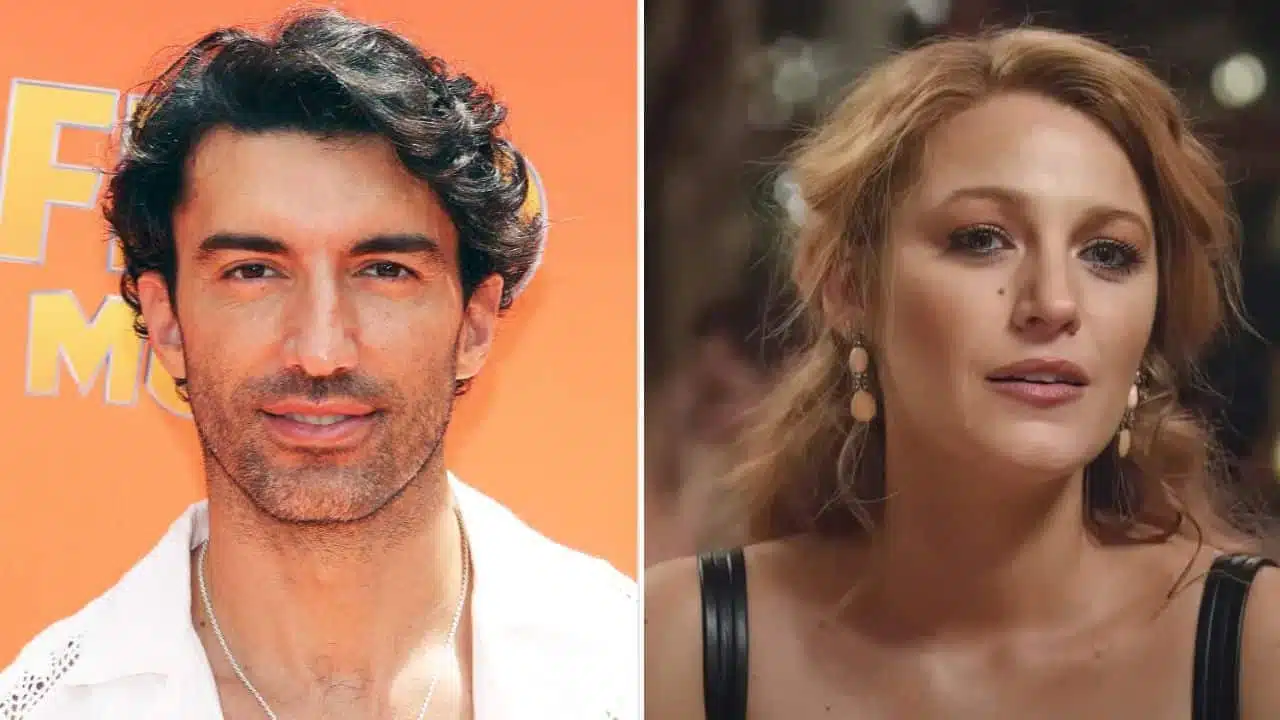
A federal judge in New York has formally dismissed the $400 million counterclaim filed by Justin Baldoni against his co-star in It Ends With Us, Blake Lively, effectively bringing an end to a long-running and contentious legal battle between the two actors. The judge’s decision, issued on October 31, follows an earlier June 2025 ruling in which the judge dismissed Baldoni’s lawsuit, marking a significant legal victory for Lively.
The lawsuit filed by Baldoni had accused Lively of engaging in a smear campaign against him and his production company, Wayfarer Studios, claiming defamation and extortion. However, Judge Lewis Liman ruled that Baldoni’s claims were not sufficient under California law to constitute actionable extortion or defamation. While this ruling is final for now, Baldoni still has the right to appeal.
Background of the Dispute
The legal conflict between Baldoni and Lively began in December 2024, when Lively filed a complaint with the California Civil Rights Department accusing Baldoni of sexual harassment on the set of their film It Ends With Us, which Baldoni directed. This complaint was just the start of a larger and more complicated legal entanglement.
On December 31, 2024, Lively filed a lawsuit in which she reiterated the claims of sexual harassment she had made in her earlier complaint. In addition to the harassment allegations, Lively’s lawsuit also accused Baldoni and Wayfarer Studios of retaliating against her by waging a smear campaign aimed at damaging her reputation and spreading false narratives about her. The lawsuit included serious accusations against Baldoni and the studio, with Lively alleging that the public relations efforts of Baldoni’s team were designed to destroy her career and discredit her in the press.
As a response to Lively’s lawsuit, Baldoni filed his own legal action against Lively, her husband Ryan Reynolds, and Leslie Sloane, Lively’s publicist. Baldoni accused the trio of civil extortion, defamation, and invasion of privacy in an attempt to discredit him and his company. Baldoni and Wayfarer Studios filed a countersuit, which brought these new claims to light. The countersuit argued that Lively’s alleged actions, along with those of her publicist and husband, had engaged in unlawful extortion by forcing Baldoni and his company into damaging agreements or risk having their reputations destroyed.
This series of legal actions, filed in quick succession, resulted in a complicated web of lawsuits, countersuits, and allegations that garnered significant media attention throughout 2024 and 2025. The involvement of high-profile Hollywood figures like Lively, Baldoni, Reynolds, and Sloane added fuel to the fire, bringing public scrutiny to the matter.
Judge’s Ruling on the Lawsuit
In June of this year, Judge Lewis Liman ruled to dismiss Lively’s motion to have Baldoni’s counterclaim and lawsuit against her thrown out. The ruling was a major blow to Baldoni’s legal strategy, as it effectively ended his attempts to seek damages from Lively and her team. Additionally, the judge dismissed Baldoni’s defamation lawsuit against The New York Times, which had published a report outlining the allegations made by Lively.
The crux of Baldoni’s lawsuit rested on claims that Lively had “stolen the film” from Baldoni and Wayfarer Studios, threatening to refuse to promote the film and publicly attack Baldoni unless she and her team were given control over the movie’s narrative and credits. Baldoni’s suit also accused Lively, her publicist Sloane, and her husband Reynolds of spreading a false narrative about Baldoni’s conduct, claiming that they fabricated the allegations of sexual misconduct to harm him personally and professionally. However, Judge Liman concluded that these actions did not rise to the level of civil extortion under California law.
In his ruling, the judge stated that while Baldoni’s accusations may suggest that Lively’s actions were improper, they were not illegal extortion. Liman explained that the Wayfarer Studios team had failed to demonstrate that Lively’s actions amounted to coercive or illegal demands, and noted that Lively’s actions could be interpreted as attempts at renegotiating the terms of the film’s promotion and working conditions rather than engaging in extortion. Furthermore, the judge found that the allegations made by Baldoni about the damage caused by Lively’s actions were not strong enough to substantiate a claim of extortion.
Baldoni’s Reaction to the Ruling
Despite the setback, Baldoni and his legal team made it clear that they were not ready to abandon the fight. Bryan Freedman, Baldoni’s lawyer, issued a statement following the dismissal in which he indicated that instead of amending the existing claims as per the court’s suggestion, Baldoni’s team would pursue additional legal options. The decision to not amend their claims suggested that Baldoni’s legal team was preparing for further action.
Freedman reiterated that while the judge had dismissed the lawsuit, this ruling did not affect Baldoni’s stance on the issue. Baldoni and his team maintained that the allegations against him were unfounded and insisted that Lively’s claims were baseless. Freedman emphasized that the court’s decision would not deter them from continuing their defense.
Lively’s Victory and Response
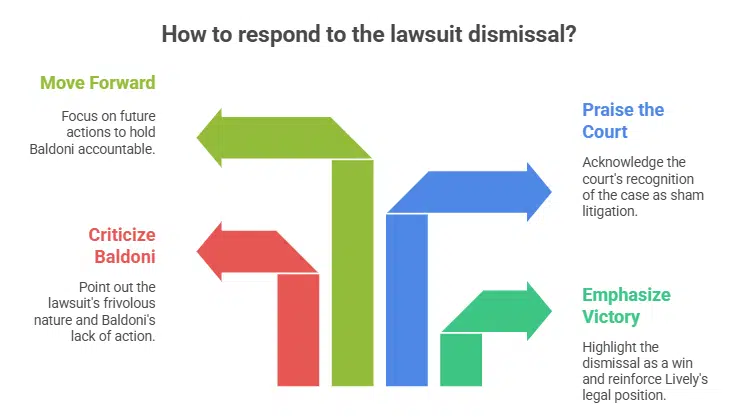
Blake Lively’s legal team responded quickly to the ruling, calling the dismissal of Baldoni’s $400 million lawsuit a victory for their client. They pointed out that the lawsuit had been “frivolous” and “without merit” from the outset, and Lively’s spokesperson emphasized that the court’s decision was a significant step forward in clearing Lively’s name. The spokesperson also referenced Baldoni’s earlier statement that the court’s dismissal was not a big deal and emphasized that Baldoni’s decision not to amend or refile his claims only proved the strength of Lively’s legal position.
Lively’s team praised the court for recognizing the case as “sham litigation” and dismissed the $400 million counterclaim as an attempt to harass and intimidate Lively. The spokesperson noted that this victory would help Lively move forward and continue her efforts to hold Baldoni accountable for his actions.
The New York Times Weighs In
In addition to Lively’s team, The New York Times also issued a statement following the dismissal of Baldoni’s defamation suit. The Times had been named as a defendant in Baldoni’s lawsuit because of its publication of the report detailing Lively’s sexual harassment claims. The paper’s spokesperson described the court’s ruling as a “win for honest journalism”, thanking the judge for recognizing the lawsuit as a meritless attempt to silence reporters.
The spokesperson emphasized that the Times had acted in the public interest by reporting on the allegations, and the dismissal of the defamation case reinforced the importance of protecting journalists when they report on issues of public importance. The statement further expressed the paper’s commitment to continuing its work in the face of legal challenges, asserting that the law exists to protect responsible journalism from attempts to suppress it.
What’s Next for Lively and Baldoni
Though Baldoni’s countersuit has been dismissed, Lively’s lawsuit against him and Wayfarer Studios is still very much active. Lively’s case will go to trial in March 2026, where she will continue to pursue claims of sexual harassment against Baldoni. The trial will likely be a key moment in the ongoing legal battle, and the outcome could have long-lasting effects on the reputations and careers of both Lively and Baldoni.
This trial will be closely watched, as it will address the allegations of sexual harassment and whether Baldoni and his company’s actions toward Lively were retaliatory or legally justified. The legal stakes remain high for both parties, and it is unclear at this stage how the trial will unfold.
The dismissal of Justin Baldoni’s $400 million lawsuit marks a significant development in an ongoing legal dispute that has captured the public’s attention. While this decision represents a victory for Blake Lively, the larger case—Lively’s own lawsuit against Baldoni and Wayfarer Studios—is still set to go to trial next year. The outcome of the trial will likely determine whether Lively’s claims of sexual harassment and retaliation will hold up in court.
This legal saga serves as a reminder of the complexity and severity of issues surrounding workplace harassment and defamation in the entertainment industry. With both parties standing firm in their positions, the upcoming trial will likely be the next pivotal chapter in this high-profile conflict.
The Information is Collected from MSN and Yahoo.