For years, the word “blockchain” felt like a flashy label stuck onto speculative tech startups. But walk into any boardroom in Sydney or Melbourne today, and you will find the conversation has matured significantly. We are no longer talking about “magic internet money” or overnight crypto millionaires.
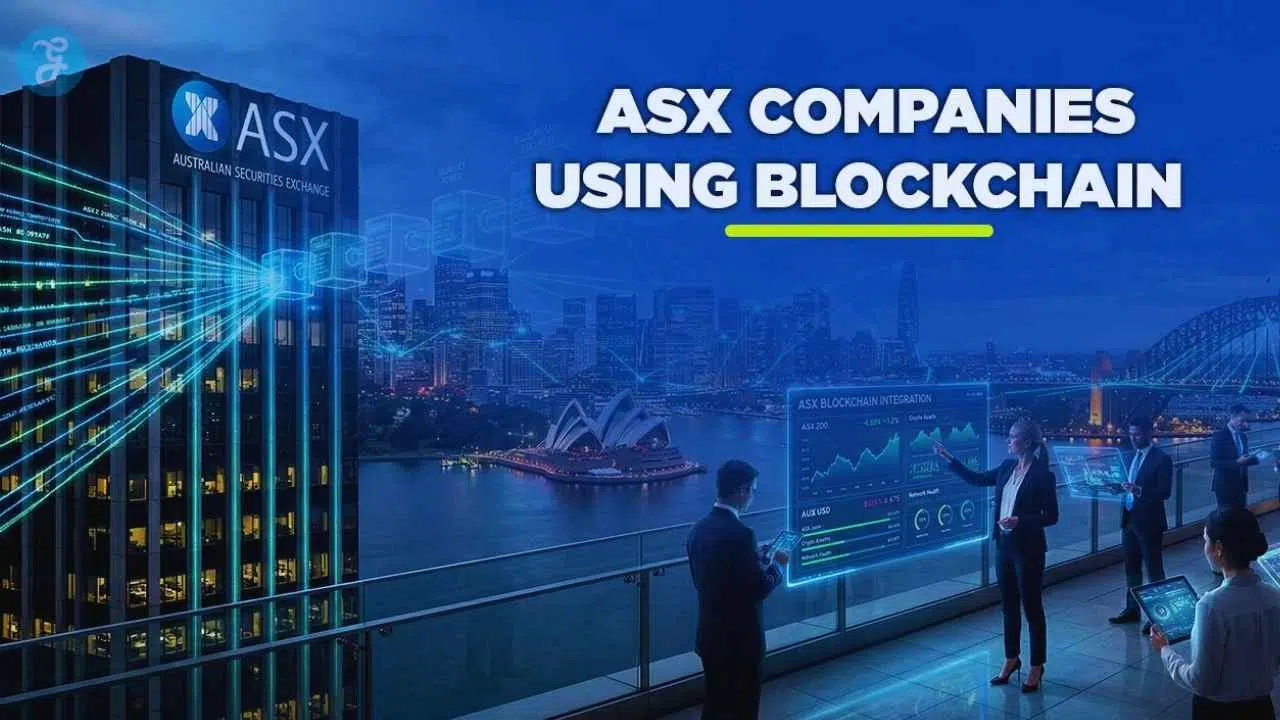
Instead, the focus has shifted to the heavy lifting: settlement speeds, cost reduction, and operational transparency. ASX blockchain companies 2025 are currently leading a quiet but massive overhaul of how the Australian economy functions. Whether you are an institutional investor or a retail trader, understanding this shift is no longer optional. The technology is being woven into the very fabric of our stock exchange, our resource sector, and even our central bank’s digital strategy. This isn’t just about the “next big thing”; it is about fixing old systems that have been clunky for decades. In this deep dive, we will explore the 12 pivotal facts that define the current landscape and what they mean for your portfolio.
| Aspect | Old Era (2017-2022) | New Era (2025+) |
| Primary Goal | Speculation and Hype | Efficiency and Utility |
| Regulation | Unregulated “Wild West” | Digital Assets Framework Bill 2025 |
| Key Users | Crypto Startups | ASX 200 Giants & Government |
| Focus | NFTs and Altcoins | RWAs, Settlements, & Supply Chain |
The Regulatory Backbone: Digital Assets Framework Bill 2025
One of the biggest hurdles for any emerging tech is a “wild west” reputation. For a long time, ASX-listed firms were hesitant to dive deep into blockchain because the rules of the game weren’t clear. That changed with the introduction of the Digital Assets Framework Bill 2025. This legislation finally brought digital asset platforms and tokenized custody under the Australian Financial Services Licence (AFSL) regime. By providing a clear legal definition of what a digital token is and who is responsible for its safety, the government has essentially given a green light to conservative boards.
Listed companies now have a “safe harbor” to operate in, knowing exactly what their compliance obligations are. This regulatory clarity is the primary reason we have seen a surge in institutional interest this year. It turns blockchain from a risky experiment into a regulated financial tool that can be audited and insured just like any other asset class.
| Feature | Description | Impact on Listed Companies |
| AFSL Integration | Platforms must hold a traditional license. | Higher trust and lower risk for partners. |
| Custody Standards | Strict rules on digital asset storage. | Prevents “lost key” scenarios and fraud. |
| Disclosure Rules | Mandatory reporting of digital holdings. | Better transparency for shareholders. |
| Consumer Rights | Legal recourse for asset recovery. | Increases retail confidence in tech stocks. |
CHESS Replacement 2.0: The April 2026 Milestone
You can’t talk about ASX blockchain companies 2025 without mentioning the Clearing House Electronic Subregister System (CHESS). The ASX’s attempt to replace this aging settlement system with blockchain has been a saga of its own. After a “reboot” in late 2022, the project is now back on track with a much more pragmatic, staged approach. Release 1, focusing on clearing services, is locked in for an April 2026 go-live. As of early 2026, the industry is in the thick of testing.
This isn’t just a technical upgrade; it is a structural shift that will eventually allow for “T+0” or near-instant settlement. For companies listed on the exchange, this means capital isn’t tied up in the “settlement gap,” leading to much better liquidity across the board. The efficiency gains here are expected to save the Australian financial sector hundreds of millions of dollars in reconciliation costs over the next decade.
| Phase | Targeted Date | Primary Focus |
| Industry Testing | Q1 2026 | Clearing Regression and Parallel Testing. |
| Release 1 Go-Live | April 2026 | Transition of clearing to new architecture. |
| Release 2 Planning | 2027 – 2028 | Settlement and sub-register development. |
| Full Decommission | 2029 | Complete removal of the legacy system. |
12 Must-Know Facts About How ASX-Listed Companies Are Exploring Blockchain in 2025
1. Atomic Settlement is the New Gold Standard
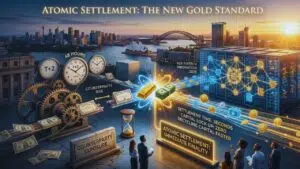
In the old world, when you sold a stock, it took two days (T+2) for the money to actually clear. Blockchain enables “atomic settlement,” where the asset and the cash swap hands simultaneously. Several ASX fintechs are already using private ledgers to offer this to wholesale clients, proving that the tech can eliminate billions in “counterparty risk” annually. By removing the time delay, the risk that one party fails to deliver their end of the bargain is virtually wiped out.
This allows capital to be recycled back into the market much faster, which is a massive win for high-frequency traders and institutional funds. As more ASX blockchain companies 2025 adopt this standard, we expect to see a ripple effect across the entire Australian economy, making our markets some of the most efficient in the world.
| Benefit | Old System (T+2) | Blockchain (Atomic) |
| Settlement Time | 48 Hours | Seconds |
| Capital Lock-up | High | Zero |
| Risk Profile | Counterparty Exposure | Immediate Finality |
2. The Rise of “Smart” Dividends
Imagine a dividend that pays out automatically the second a company’s quarterly results are verified. Some mid-cap tech firms are experimenting with smart contracts to automate their shareholder distributions. This removes the need for manual bank transfers and the associated administrative costs, directly improving the bottom line. Smart dividends can also be programmed to handle complex tax withholdings or multi-currency conversions on the fly.
This level of automation ensures that shareholders receive their funds exactly when promised, without the usual “processing” delays from registry providers. It is a cleaner, faster way to reward investors and reduces the overhead that usually eats into a company’s distributable profits.
| Efficiency Metric | Manual Payout | Smart Contract Payout |
| Admin Cost | High (Registry Fees) | Low (Gas Fees) |
| Speed | 3-7 Days | Instantaneous |
| Accuracy | Prone to human error | Code-enforced precision |
3. Mining Logistics are Going Immutable
Australia’s mining giants like BHP and Rio Tinto are no longer just “looking” at blockchain. They are using it to track the provenance of iron ore and lithium from the pit to the port. This provides a “digital passport” that proves to international buyers that the minerals were sourced ethically and sustainably. In a world where car manufacturers like Tesla and BMW are under pressure to verify their supply chains, this data is worth a premium.
Every step of the journey is recorded on an unchangeable ledger, meaning no one can forge the origin or the carbon footprint of the materials. This transparency has become a competitive advantage for Australian miners on the global stage.
| Logistical Step | Data Recorded | Value Added |
| Extraction | Time, Location, ESG Data | Ethical Verification |
| Transport | IoT Weight/Quality Logs | Prevents Tampering |
| Port Export | Customs/Trade Certificates | Faster Border Clearance |
4. Tokenization of “Stranded” Assets
There are millions of dollars in illiquid assets—like small real estate developments or niche mineral deposits—that are too small for a traditional IPO but perfect for tokenization. ASX companies are now using blockchain to fractionalize these assets, allowing investors to buy a “piece” of a project that was previously inaccessible. This creates a new revenue stream for companies that were sitting on assets they couldn’t easily sell.
For the investor, it means you can diversify into specific projects rather than just buying shares in a massive conglomerate. This democratization of finance is a hallmark of the ASX blockchain companies 2025 movement. It bridges the gap between private equity and public markets in a way that was never before possible.
| Asset Class | Tokenization Benefit | Target Audience |
| Commercial Property | Fractional Ownership | Retail Investors |
| Gold Reserves | 24/7 Digital Trading | Global Hedgers |
| Rare Earths | Verified Provenance | Tech Manufacturers |
5. Bitcoin Treasury Strategies are No Longer Taboo
Inspired by US giants, companies like DigitalX and other forward-thinking explorers have started holding Bitcoin on their balance sheets. These ASX blockchain companies 2025 view BTC as a “digital gold” hedge against currency debasement. The ASX has even released specific disclosure guidelines to ensure these holdings are reported clearly to the market.
This isn’t just about price speculation; it is about capital preservation in an inflationary environment. While it does add a layer of volatility to the company’s financial statements, many boards now view it as a necessary diversification tool. It signals to the market that the company is tech-literate and prepared for a digital-first global economy.
| Holding Type | Strategic Goal | Risk Mitigation |
| BTC Reserve | Inflation Hedge | Multi-sig Cold Storage |
| Stablecoin Cash | Fast B2B Payments | AUD-Pegged Audits |
| ETH/Web3 Assets | Ecosystem Participation | Insurance Coverage |
6. ESG Data is Finally Verifiable
Greenwashing has been a major concern for investors in the Australian market. Blockchain provides an unchangeable audit trail for ESG (Environmental, Social, and Governance) metrics. Energy companies on the ASX are using decentralized ledgers to record their carbon emissions in real-time, making their sustainability reports actually worth the paper they’re printed on.
Instead of vague annual promises, these firms can provide a live dashboard of their environmental impact. This level of honesty is rewarded by ESG-focused funds, which manage trillions of dollars globally. It turns sustainability from a marketing slogan into a hard, verifiable data point that influences stock valuation.
| ESG Metric | Blockchain Proof | Impact on Valuation |
| Carbon Output | Real-time Sensor Logs | Higher “Green” Rating |
| Renewable Mix | Smart Meter Verification | Lower Cost of Capital |
| Water Usage | Immutable Ledger Entries | Reduced Regulatory Risk |
7. Stablecoins are Replacing International SWIFT
For an ASX-listed company with global operations, waiting three days for a SWIFT transfer is a relic of the past. AUD-backed stablecoins are now being used for B2B cross-border settlements. These tokens are pegged 1:1 with the Australian dollar and allow for 24/7 transfers without the high fees of traditional banking. This is particularly useful for companies operating in the Asia-Pacific region, where traditional banking corridors can be slow and expensive.
By using stablecoins, businesses can keep their capital moving and avoid the “toll booths” of correspondent banks. It is a practical application that is saving companies millions in transaction fees every single year.
| Payment Method | Avg. Time | Cost Comparison |
| Traditional SWIFT | 2-5 Days | 1-3% in Fees |
| AUD Stablecoin | 10 Minutes | <0.1% in Fees |
| CBDC (Pilot) | Instant | Negligible |
8. The RBA’s “Project Acacia” is Bridging the Gap
The Reserve Bank of Australia is currently in Phase 3 of its wholesale CBDC (Central Bank Digital Currency) pilot, known as Project Acacia. This project is exploring how a “digital AUD” can interact with tokenized assets on the ASX. If successful, it would provide the “finality of payment” needed for a fully blockchain-based financial system.
This is essentially the “high-speed rail” for money. When the central bank issues its own digital currency, the risk associated with private stablecoins vanishes. This project is the key to unlocking mass adoption among the biggest banks and institutions on the ASX. It represents the final bridge between the old world of banking and the new world of digital finance.
| Pilot Focus | Participants | Strategic Goal |
| Tokenized Cash | RBA & Big 4 Banks | Settlement Finality |
| Asset Swaps | ASX & Tech Partners | Atomic Trading |
| Cross-Border | International CBs | Efficient Remittance |
9. Proxy Voting is Getting a Makeover

Shareholder meetings are often plagued by low participation and complex voting procedures. Blockchain-based voting systems are being trialed by several listed entities to ensure that every vote is counted accurately and cannot be tampered with. This strengthens corporate governance and gives retail investors a louder voice.
In a blockchain system, you can verify that your vote was cast exactly as you intended without needing to trust a third-party registrar. This transparency encourages more shareholders to get involved in company decisions. It is a significant step forward for “shareholder democracy” and ensures that boards are held accountable to their true owners.
| Voting Method | Security | Transparency |
| Paper/Email | Low (Centralized) | Opaque |
| Blockchain | High (Cryptographic) | Verifiable |
| Digital Platform | Medium (Vendor-led) | Limited |
10. Quantum-Secure Chains are the Priority
With the rise of quantum computing, there were fears that blockchain encryption could be cracked. Australian cybersecurity firms listed on the ASX are leading the world in developing “post-quantum” blockchain protocols. They are ensuring that the financial infrastructure built today is safe from the threats of tomorrow. By using advanced mathematical formulas that even quantum computers can’t solve, these firms are protecting the integrity of our financial ledgers.
This foresight is critical because the data we put on a blockchain today needs to be secure for decades to come. These ASX blockchain companies 2025 are not just building for the present; they are building for the next century of finance.
| Threat | Solution | Status |
| Quantum Brute-Force | Lattice-based Crypto | In Testing |
| Decryption Attacks | Quantum Key Distribution | Live Pilots |
| Ledger Alteration | Multi-chain Sharding | Development |
11. Energy Trading is Going Peer-to-Peer
Utility companies are exploring blockchain to allow households with solar panels to sell their excess energy directly to their neighbors. By cutting out the middleman, these ASX blockchain companies 2025 are creating a more efficient, decentralized energy grid that rewards “prosumers.” This technology turns every home into a micro-power plant and a trading hub.
It reduces the strain on the national grid and ensures that renewable energy is used as close to its source as possible. For the utility companies, this provides a way to manage a complex, decentralized network without massive manual intervention. It is a win-win for the environment and the consumer’s wallet.
| Market Type | Centralized Grid | P2P Blockchain |
| Price Control | Utility Set | Market Driven |
| Efficiency | High Transmission Loss | Localized Usage |
| Participation | Passive Consumer | Active Prosumer |
12. “Blockchain-as-a-Service” (BaaS) for SMEs
You don’t need a hundred developers to use blockchain anymore. Companies like AWS and local tech providers are offering “plug-and-play” blockchain solutions. This has lowered the entry barrier so much that even small-cap ASX companies can now implement sophisticated supply chain tracking or digital identity systems for a fraction of the previous cost.
It allows smaller firms to compete with the giants on an equal footing when it comes to technology. By renting the infrastructure rather than building it from scratch, these companies can stay lean and agile. This “democratization of tech” is fueling a wave of innovation across the mid-market sector of the ASX.
| Service Model | Initial Investment | Best For |
| Custom Build | $1M+ | Major Banks |
| BaaS (Subscription) | $5k/month | Mid-cap Firms |
| SaaS Apps | $500/month | Small Businesses |
Real-World Asset (RWA) Tokenization in Mining and Energy
In 2025, “Tokenization” is the word you will hear most in investor briefings. It is the process of converting the ownership rights of a physical asset into a digital token on a blockchain. For Australia, this is a massive opportunity. We have trillions of dollars in “dirt”—minerals and land—that are often difficult to trade or finance quickly. ASX-listed resource companies are now creating digital tokens that represent specific quantities of gold, copper, or even carbon credits.
These tokens can be traded 24/7 on global markets, providing much-needed liquidity to the sector. This isn’t just about making trading easier; it is about changing the cost of capital. When an asset is easier to trade, it is often more valuable. For investors, this opens up a whole new world of “fractional” mining opportunities where you can own a piece of a commodity shipment without needing millions of dollars.
| Asset Type | Current Application | Main Benefit |
| Commodity Tokens | Fractional Gold/Lithium | High Liquidity |
| Carbon Credits | Verified ESG Offsets | Auditable Impact |
| Equity Tokens | Private Raise Access | Lower Entry Barrier |
| Real Estate | Commercial REIT Units | Fast Transfers |
Why This Matters for the Average Investor?
So, why should you care? If you own an ASX 200 ETF or individual stocks in the mining, banking, or tech sectors, you are already “in the game.” The efficiency gains from blockchain adoption eventually flow down to the shareholder in the form of higher margins, lower fees, and better transparency. Investors who understand which ASX blockchain companies 2025 are leading the charge can position themselves ahead of the curve.
We are moving from a world of “blind trust” in paper reports to a world of “cryptographic proof.” Companies that embrace this first will likely be the ones that win the trust of the next generation of digital-native investors. It is no longer about the “hype” of crypto prices; it is about the “hope” of a more efficient and honest financial system for everyone.
| Investor Benefit | Impact on Portfolio | Significance |
| Cost Reduction | Higher Profit Margins | More Dividend Potential |
| Transparency | Verified ESG/Supply Chain | Lower Fraud Risk |
| Speed | Instant Fund Access | Better Capital Flow |
| Innovation | New Revenue Streams | Long-term Growth |
Final Thoughts
The narrative of ASX blockchain companies 2025 is no longer about “disrupting” the system from the outside; it is about upgrading the system from the inside. We have moved past the era of wild speculation and entered an era of boring, but incredibly valuable, utility. From the way our copper is tracked across the ocean to the way our stock trades are cleared in Sydney, the ledger is becoming the new source of truth.
For the savvy investor, the goal is to look past the buzzwords and find the firms using this tech to solve real problems. The future of the ASX isn’t just digital; it is decentralized, transparent, and faster than ever before. As we move into 2026, those who pay attention to these structural shifts will be the ones who truly understand where the next decade of growth is coming from.