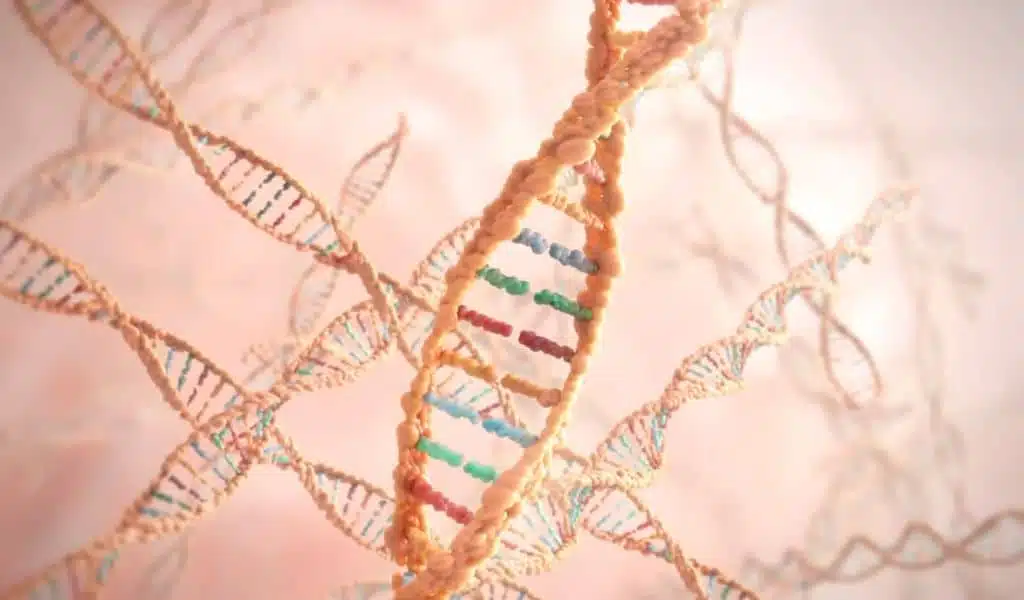
Japanese scientists have found a novel way to combat cancer, and it involves something quite unexpected: artificial DNA.
So, what’s the story behind this discovery? The study was carried out by a talented team of researchers, led by professors Kunihiko Morihiro and Akimitsu Okamoto from the Graduate School of Engineering at the University of Tokyo. They’ve been working with synthesized DNA shaped like a hairpin, and the results have been promising.
Published in the Journal of the American Chemical Society in December 2022, the study shares the exciting news of successful laboratory tests. Believe it or not, this artificial DNA targeted and destroyed human cervical and breast cancer cells. And that’s not all; it also worked on malignant melanoma cells in mice.
This innovative approach to fighting one of humanity’s most dreaded diseases is a glimpse into the potential future of cancer treatment. The use of synthetic DNA could open up new avenues and hope for those battling cancer.
It’s certainly an exciting time in the field of medical research, with groundbreaking discoveries like this one showing the amazing strides science is making. Here’s to hoping we hear more good news from the team in Tokyo soon!
On cancer: Cancer is something that’s touched many lives, especially in the U.S., where the numbers are staggering. In 2022 alone, we saw about 609,360 cancer deaths and a whopping 1.9 million new cases diagnosed. It’s a major health crisis, and we all know someone who’s been affected.
So, what are we doing about it? Current treatment methods are limited, and that’s putting it lightly. That’s why a team of researchers got to thinking: What if they could create something entirely new using artificial DNA?
Professor Akimitsu Okamoto, one of the leading minds behind this project, explained their innovative approach. “We thought that if we can create new drugs that work by a different mechanism of action from that of conventional drugs, they may be effective against cancers that have been untreatable up to now,” he said in a statement.
Imagine that – a whole new way to fight cancers that have been untreatable until now. This isn’t just about creating another treatment option; it’s about hope and a fresh perspective on tackling one of the world’s most relentless diseases.
It’s a bright idea in a field that desperately needs them, and who knows? This groundbreaking approach using artificial DNA might just change the way we approach cancer treatment in the future.
The Process: Cancer is undeniably one of the most pressing health concerns around the world. Just in the U.S. alone, there were an estimated 609,360 cancer-related deaths and 1.9 million new cases diagnosed in 2022.
Sounds overwhelming, doesn’t it? Especially when you consider that current treatment methods aren’t always up to the mark.
Enter a group of Japanese scientists, including professors Kunihiko Morihiro and Akimitsu Okamoto from the University of Tokyo. They’re trying something entirely different – fighting cancer with artificial DNA.
Let’s take a closer look at what they’ve been up to.
Traditionally, DNA and RNA, known as nucleic acid drugs, haven’t been commonly used to treat cancer. Why? Well, distinguishing between cancer cells and healthy ones is really tough, and there’s always the risk of messing with the patient’s immune system.
But these researchers had a different idea. They’ve been working with hairpin-shaped DNA that they synthesized themselves. Their groundbreaking study, published in the Journal of the American Chemical Society in December 2022, shares how they successfully destroyed human cervical and breast cancer cells and malignant melanoma cells in mice.
Exciting, right?
Okamoto said, “We thought that if we can create new drugs that work by a different mechanism of action from that of conventional drugs, they may be effective against cancers that have been untreatable up to now.”
So, how exactly does it work? Cancer cells often produce too much of certain substances, and this can cause them to grow uncontrollably. The team responded by creating artificial DNA pairs that react to a microRNA found in certain cancers.
It’s a promising approach that could pave the way for treating previously untreatable cancers.
This isn’t just about new science; it’s about hope and the possibility of a future where cancer might not be the terrifying diagnosis it often is today. With more discoveries like this, who knows what could be possible?
Cancer-killing DNA: Once the chemically made DNA strands are put into cancer cells, they link themselves to microRNA molecules. Then, longer DNA chains are made, which sets off a strong immune reaction. This reaction from the immune system not only kills the cancer cells but also stops more cancer cells from growing.
The study team did warn, though, that even though early results look good, the research is still in its early stages and it will be a while before a treatment can be given to patients.
Okamoto said, “The results of this study are good news for doctors, researchers who find new drugs, and cancer patients because we think it will give them new options for drug development and medication policies.” “Next, based on the results of this research, we will try to find new drugs and look closely at how well they work, how dangerous they are, and how they might be given.”