Many travelers want more than just great wine. They crave fresh places, better prices, and memorable moments in each glass. Maybe you have tried Spain’s famous vineyards and left wanting something different.
Or maybe you found the crowds and costs there a bit much.
Here is one fact that may surprise you: Argentina is now the fifth-largest wine producer on Earth. Its cool climate, high mountains, and world-class Malbec are winning fans every year.
This blog will show how Argentina’s wineries are beating Spain at their own game—offering adventure, beauty, and great value for money. Ready to see why Argentina is stealing the spotlight? Keep reading!
Argentina’s Unique Wine Tourism Appeal
Argentina’s wine tourism has a special charm. Mendoza steals the show, but regions like Patagonia and La Rioja also shine with their own flavors.
Mendoza as the Heart of Wine Tourism
Mendoza sits proudly at the center of Argentina’s wine tourism. Its vineyards stretch over large valleys and hills, rooted in soil rich with stories. Once covering 629,850 acres back in 1980, today Mendoza’s vineyard area has shrunk to 360,972 acres.
This did not slow its charm; instead, it added character like a scar adds depth to an old friend.
Luján de Cuyo stands out here as the first controlled appellation since 1993. Vineyards grow at dizzying heights between 2,000 and 3,600 feet above sea level. Every March brings the Fiesta Nacional de la Vendimia harvest festival—a true grape-lover’s celebration filled with music and joy beneath Andean skies.
The region’s altitude shapes bold wines and crisp grapes that dance on your tongue like children playing hopscotch after rain. People flock from all corners for these flavors and views you can taste as well as see; no fancy words needed—just sunlit vines under blue mountain shadows calling your name.
Diverse Wine Regions: Patagonia, San Juan, and La Rioja
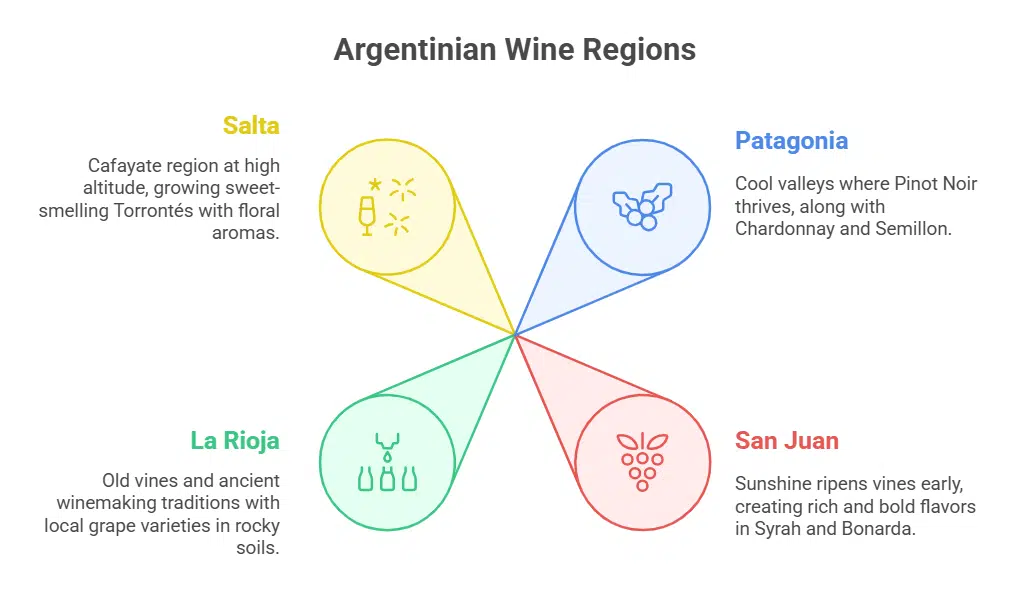
After leaving Mendoza’s lively vineyards, you hit the road for something fresh. Patagonia stretches out in long, cool valleys. Here, Pinot Noir steals the show. Chardonnay and Semillon also thrive in the crisp Patagonian climate.
The wind shapes every cluster of grapes like an artist at work on a canvas.
San Juan heats things up fast. Sunshine blazes down almost year-round here. Vines ripen early under this bright sky; flavors get rich and bold in no time flat. Syrah leads with power-packed reds that dance on your tongue, while Bonarda brings deep color to your glass.
La Rioja sits north of both regions, offering old vines and ancient winemaking traditions handed down since colonial times—think grandma’s secret recipe but for wine instead of cookies! Local grape varieties love these rocky soils and dry air.
Salta’s Cafayate region lies farther north still at 5,450 feet above sea level. Torrontés grows sweet-smelling fruit here—flowers jump out of each glass as if saying “hello!”.
Signature Grape Varieties like Malbec
Malbec steals the spotlight in Argentina. Over 20,000 hectares of Malbec covered vineyards back in 2003. Today, it grows in 18 out of the country’s 23 provinces. The grape’s bold flavor and deep color charm both beginners and sommeliers alike.
Every April, fans around the world raise a glass for Malbec World Day, an event started by Argentina’s Consulate General and Promotion Center in New York.
Vineyards here enjoy sunny days and cool nights; this lets grapes ripen slowly on the vine, locking in rich taste. The harvest season feels like a celebration. Winemakers show how terroir makes each bottle special.
Tastings often turn into stories about soil, sunshine, and tradition passed down through generations—sometimes with happy dogs running between rows of vines!
Factors Driving Argentina’s Wine Tourism
Argentina offers great value for wine tourists. You can enjoy high-quality wines without breaking the bank. Visitors savor delicious food paired with local wines, making each meal special and memorable.
Stunning views of vineyards against the Andes add to the charm, drawing travelers from around the world.
Affordable Pricing and Value for Money
Wine tours and tastings in Mendoza cost much less than those in Spain or Napa Valley. Foreign visitors enjoy a great deal due to the devaluation of the Argentine peso. This boosts their purchasing power.
People can sip fine Malbecs, explore scenic vineyards, and enjoy local cuisine without breaking the bank.
Tourists appreciate this affordability. It makes for an unforgettable travel experience that blends wine tasting with culinary tourism. The value for money is hard to beat, making Argentina a top choice for wine lovers everywhere.
Integration of Wine with Culinary Experiences
Over 50% of wineries in Mendoza offer more than just wine. They provide tasty food options that pair well with their wines. This makes visiting these wineries a special treat for your taste buds.
Guests enjoy cooking classes, gourmet meals, and food festivals. The experience goes beyond just sipping wine; it becomes about tasting flavors together.
Culinary tourism is growing fast in Argentina’s wine regions. Visitors can explore regional cuisine while sipping on perfect Malbecs or crisp whites. Imagine enjoying a meal made from local ingredients while looking at stunning vineyards and mountains.
Such experiences please the palate and create lasting memories for every guest who visits the beautiful landscapes of Argentina’s wine country.
Scenic Vineyards and Andean Backdrops
Mendoza’s vineyards are a sight to see. They sit at the foot of the Andes mountains, creating stunning views. Wine tourists appreciate this mix of nature and agriculture. The scenery attracts people, making it a perfect place for wine tasting.
The blend of green vines and rocky peaks offers beauty at every turn. Visitors can stroll through rows of grapes while enjoying fresh air and sunshine. This landscape is not just pretty; it’s calming too.
It enhances the experience of wine tourism in Argentina, making it stand out from other places like Spain.
Why Spain’s Wine Tourism Struggles to Keep Pace
Spain’s wine tourism faces big hurdles. High prices keep many visitors away. Limited marketing doesn’t help, either. Popular regions get crowded, making it hard to enjoy the wines.
Want to learn more about how Argentina shines?
High Costs of Wine Tourism in Spain
Wine tourism in Spain is expensive. Many visitors find it hard to enjoy the experience without spending a lot of money. High costs can turn people away from exploring vineyards and tasting wines.
In 2020, Spain’s wine tourism saw a huge drop. Visitors fell by 73.53%. The economic impact was severe, too, with a decline of 74.7% in revenue from this sector. These numbers show how high prices make it tough for Spain’s wine regions to attract tourists and compete with places like Argentina.
Limited Focus on International Marketing
Spain has the largest vineyard area in the world. Yet, it does not use this fact in its international marketing. This lack of focus hurts Spain’s wine tourism. Other countries promote their wines better than Spain does.
Spanish wine tourism lacks global branding and visibility. Many travelers do not even know about Spain’s rich wine regions or vineyards. Without strong marketing, fewer tourists visit Spanish wineries compared to those in Argentina.
A vibrant international presence could help Spain attract more visitors and boost its wine industry tenfold.
Overcrowding in Popular Wine Regions
In popular wine regions, overcrowding is a real issue. Spain faces high visitor numbers in these areas. This makes it hard for tourists to enjoy their experience. Wineries get packed and service slows down.
The charm of the landscape fades under too many feet.
Effective planning can help manage this problem. By controlling tourist flow, regions can maintain a good balance between visitors and local needs. Sustainable tourism practices are key here; they support the economy without overloading resources.
Investing in infrastructure development can also enhance visitor experiences while protecting these treasured spots from becoming overcrowded attractions.
Innovations in Argentina’s Wine Tourism

Argentina’s wine tourism is all about fresh ideas. Wineries now offer personal tours and unique tastings that make each visit special.
Boutique Wineries Offering Personalized Tours
Boutique wineries in Argentina offer personalized tours that make each visit special. These tours happen in key spots like Mendoza, Salta, Buenos Aires, and San Juan. Visitors enjoy unique wine experiences customized just for them.
Guests often meet the winemakers and learn about oenology directly. They can taste boutique wines while exploring beautiful vineyards. This focus on personal service boosts engagement and leaves lasting memories for guests.
Sustainable and Eco-Friendly Vineyard Practices
Boutique wineries set the stage for new trends. Sustainable and eco-friendly vineyard practices are rising in popularity. Argentina’s high-altitude vineyards produce wines with greater acidity and balance.
The cool air up high helps grapes grow better.
Farmers use drip irrigation to save water and support healthy vines. This method is smart because it prevents wasteful usage of resources. Organic farming adds to this success, promoting biodiversity in the soil.
These practices help create strong terroir, which means the unique taste from a specific place shines through in Argentine wines.
Climate resilience is crucial as weather patterns change. By adopting agricultural innovation, vineyards can adapt and thrive despite challenges from Mother Nature. Wine producers focus on these sustainable techniques to protect their land while making great wine for everyone to enjoy!
Wine and Adventure Tourism Packages
Argentina is a top choice for wine and adventure tourism. Visitors can enjoy both wine tasting and exciting outdoor activities.
- Wine tours offer much more than tastings. They include trips through stunning vineyards that showcase the beauty of nature.
- Culinary experiences are part of the package. Travelers can taste local foods paired with Argentine wines, making meals truly special.
- Many packages combine adventure with relaxation. Tourists can hike in the Andes after sipping on Malbec, creating lasting memories.
- Ecotourism shines in Argentina’s wine regions. Eco-lodges provide unique stays that connect guests to nature and local culture.
- Outdoor activities add enjoyment to every trip. Whether it’s biking through vineyards or horseback riding, there’s something for everyone.
- Tours often focus on sustainable tourism practices. Wineries use eco-friendly methods, which attract visitors who care about the environment.
- Packages highlight Argentine lifestyle and culture. Guests learn about Andean cuisine and regional delicacies while enjoying their favorite wines.
- Personalized winery visits enhance the experience. Smaller wineries often give special tours for a more intimate feel.
- Adventure options are endless in Mendoza and beyond. From rafting to zip-lining, tourists find thrills alongside their wine experiences.
Awards and Global Recognition
Argentina’s wines are making waves around the globe. Many of them have snagged big awards, proving their quality and taste.
Argentine Wines Winning Prestigious Awards
Argentine wines shine brightly on the global stage. Many, especially Malbec, have earned top awards from respected organizations. Mendoza leads this success, producing over 60% of Argentina’s wine and a large share of its honors.
High-altitude vineyards play a key role in creating these award-winning flavors. They help grapes thrive with ideal sunlight and cooler temperatures.
This focus on premium production has paid off handsomely for winemakers. Quality techniques enhance their competitiveness too. Sustainability efforts boost appeal worldwide as well.
Organic practices draw attention to both the wines and the land they come from. With international acclaim growing, Argentine wines are driving wine tourism forward, leaving Spain trailing behind.
Increasing Presence in International Markets
Argentina’s wine exports have taken off in recent years. By the late 1990s, the country was already sending over 3.3 million gallons of wine to the U.S. Today, even during an economic crisis, its wine sales are at their best ever.
This growth shows how Argentine wines gain recognition worldwide.
Awards play a big role too. Many Argentine wines win prestigious awards each year. With more global visibility and success, Argentina is changing its place in the international market for wine.
Tourists want to try these award-winning wines while visiting beautiful vineyards nestled against stunning landscapes.
The Role of Social Media in Attracting Tourists
Social media plays a big part in drawing tourists to Argentina’s wine regions. Stunning photos of vineyards and lively winery events flood platforms like Instagram, capturing the eye of travelers everywhere.
Instagram-Worthy Landscapes and Experiences
Argentina’s wine tourism shines with stunning landscapes. Mendoza stands out for its high-altitude vineyards. These spots grow amazing grapes and offer breathtaking views. Visitors love sharing these scenes on Instagram and TikTok.
Unique geographical features, like the foothills of the Andes, enhance the visual appeal. Festivals such as Fiesta Nacional de la Vendimia showcase vibrant events that attract attention online.
The bright colors of Argentinian wines make great photos too. These elements help Argentina draw more tourists compared to Spain by providing shareable and eye-catching content.
Engaging Digital Campaigns by Argentine Wineries
Social media shines a light on the experiences at Argentine wineries. Many vineyards create engaging digital campaigns. They use platforms like Instagram and Facebook to showcase stunning landscapes and wine adventures.
This approach attracts tourists eager for unique experiences.
Wineries often share captivating stories, eye-catching photos, and fun videos. These tactics boost online engagement and draw in visitors from around the world. Wine lovers can’t help but be inspired by these vibrant promotions.
Exciting wine tourism packages are just a click away too, leading right into amazing adventures across Argentina’s scenic wine regions.
Future of Wine Tourism in Argentina and Spain
Argentina’s wine tourism will surely keep growing. With more opportunities, it can attract even more visitors. Spain must tackle its challenges to stay relevant in this game. It needs fresh ideas and better marketing to grab the tourists’ attention.
Opportunities for Argentina to Expand Further
Argentina can grow its wine tourism. One way is by enhancing marketing strategies to bring in more international visitors. Promoting unique regions like Mendoza and Patagonia will catch the eye of travelers.
Partnering with local businesses can create exciting travel packages that combine vineyard tours, culinary experiences, and cultural tourism.
Wine festivals present another chance for expansion. These events attract tourists looking to taste different wines while enjoying Argentine culture. Investing in wine education programs will also draw those eager to learn about winemaking techniques and traditions.
With such efforts, Argentina’s wine tourism could flourish even more in the coming years.
Challenges Spain Must Address to Stay Competitive
Spain faces tough challenges in its wine tourism. High costs make it hard to attract visitors. Many travelers find better deals in Argentina and Chile, where prices are lower. Spain’s wine reputation does not match its high production capacity.
This gap hinders its competitiveness in the global market.
The impact of economic factors also worries the industry. Events like Brexit have put pressure on Spain’s wine exports. As a result, investment is lacking, which affects quality and innovation.
Spain must shift focus to international marketing. Crowding in popular regions makes it harder for lesser-known areas to gain attention too. Addressing these issues could help Spain keep up with competitors like Argentina.
Takeaways
Argentina is winning in wine tourism. Mendoza shines as a top spot, with stunning vineyards and tasty wines like Malbec. Tourists love the value they find there, especially when paired with good food.
Spain faces challenges like high prices and busy regions that turn visitors away. Argentina also embraces fresh ideas, from personalized tours to eco-friendly practices. As more people share their experiences online, interest will only grow.
So why not plan your next adventure? Taste the difference for yourself!