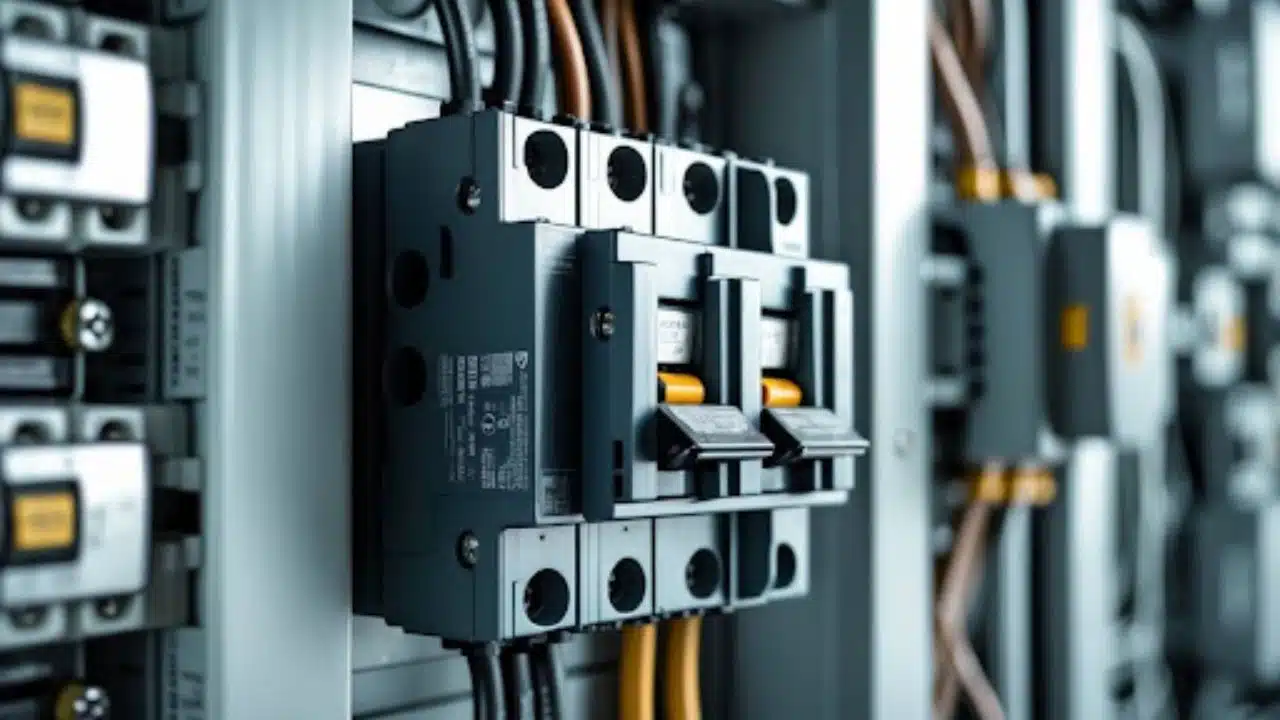
Air circuit breakers (ACBs) are essential devices in electrical systems, providing crucial protection against overloads and short circuits. These breakers use air as an arc-extinguishing medium, making them reliable and safe for various applications. An air circuit breaker not only prevents damage to electrical circuits but also ensures safe operation in both industrial and commercial environments.
The operation of ACBs is straightforward yet effective. When excessive current flows through a circuit, the ACB interrupts the current by increasing the arc voltage. This helps extinguish the arc created during a fault, allowing for quick restoration of the circuit. By employing methods like cooling the arc and increasing the arc path, ACBs maintain system stability and safety.
Understanding air circuit breakers is vital for anyone involved in electrical distribution and management. They have largely replaced older oil-filled circuit breakers due to their enhanced safety features and lower maintenance needs. Readers will find insights into the various types, construction, and applications of ACBs throughout this article.
Fundamentals of Air Circuit Breakers
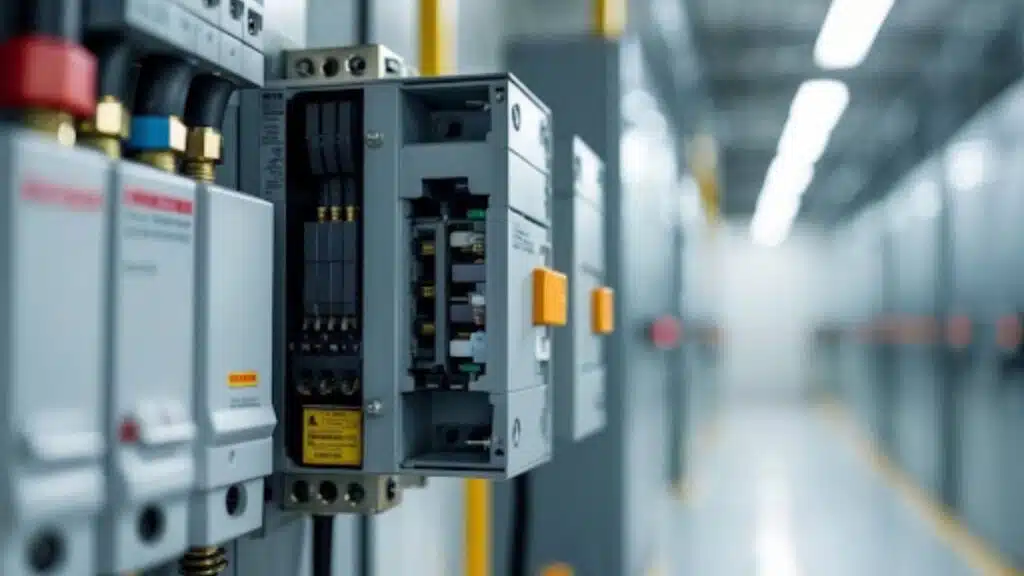
Air circuit breakers (ACBs) are vital devices in electrical systems that protect circuits from overloads and short circuits. They use air as an arc-extinguishing medium, making them reliable and environmentally friendly. Understanding their definition, working principles, and key features is essential for effective use and maintenance.
Definition and Core Functions
An air circuit breaker (ACB) is an automatic electrical switch that protects circuits from damage caused by overloads, short circuits, and ground faults. Unlike oil-filled circuit breakers, ACBs utilize ambient air for arc extinction.
The primary functions of ACBs include:
- Protection against electrical faults: ACBs quickly interrupt current flow during faults, reducing the risk of equipment damage.
- Current regulation: They maintain current within safe limits to prevent overheating or fire hazards.
- Safety features: ACBs enhance safety in electrical systems by automatically disconnecting power and minimizing hazards.
Working Principle
Air circuit breakers operate based on the principles of arc extinction and electromagnetism. When a fault occurs, the ACB opens its contacts, leading to an electrical arc. The arc movement is crucial as the design facilitates the cooling and extinguishing of the arc using surrounding air.
The arc-quenching medium is effective due to the following mechanisms:
- High Resistance Principle: As the contacts separate, the resistance increases, helping to extinguish the arc.
- Electromagnetic Forces: These forces can assist in moving the arc away from the contacts, enhancing arc resistance and ensuring rapid disconnection.
- Thermal Action: The heat generated during arcing influences the movement of the arc, further helping to dissipate energy.
Key Features
Air circuit breakers are designed with several important features that enhance their performance and reliability:
- Renewability: Damaged components can be repaired or replaced, making ACBs highly cost-effective.
- Draw-out Design: Many ACBs allow for quick removal for maintenance, providing ease of access.
- Versatile Ratings: ACBs cater to various applications, with current ratings from hundreds to thousands of amperes.
- Safety Mechanisms: ACBs are equipped with mechanisms to prevent restrike, enhancing overall safety during operation.
In summary, air circuit breakers offer reliable protection and safety in electrical systems, making them essential in industrial and commercial applications.
Construction and Main Components
Air circuit breakers (ACBs) have several essential components that work together to ensure safety and reliability in electrical systems. Understanding these components can help in grasping their function and performance in different applications.
Main Contacts and Arcing Contacts
The main contacts are crucial as they handle the normal load current when the circuit breaker is closed. These contacts open quickly when a fault is detected, which interrupts the current flow.
Arcing contacts are specifically designed to manage the arc that forms during this interruption. Unlike main contacts, arcing contacts can withstand more heat and electrical stress. When the main contacts separate, the arcing contacts also open, allowing an arc to form between them.
This arc is then directed away from the main contacts to prevent damage. The combination of these contacts allows ACBs to effectively isolate and protect circuits during faults.
Arc Chute and Arc Chutes
Arc chutes are specially designed chambers that aid in extinguishing the arc created when the circuit is interrupted. They contain arc splitter plates that increase the arc’s length and resistance, helping to cool it down quickly.
As the arc passes through these chutes, it is lengthened and split into smaller arcs. This action lowers the overall temperature and energy of the arc, facilitating its safe extinction.
Each arc chute is carefully constructed to optimize these functions, ensuring effective arc management. They play a vital role in the breaker’s ability to handle electrical faults without causing safety hazards.
Blowout Coil and Blowout Coils
Blowout coils are used in certain types of ACBs to control the arc more efficiently. These coils generate a magnetic field that helps shift the arc into the arc chutes.
When a fault occurs, the blowout coil activates and helps to move the arc upward. This upward movement increases the arc’s length and allows it to cool before it can cause damage.
The effective use of blowout coils enhances the rupture capacity of the circuit breaker. They are particularly valuable in configurations where higher current handling is necessary.
Auxiliary Contacts and Trip Unit
Auxiliary contacts play a supporting role in ACB operations. They are used for signaling and help with interlocking systems that ensure safety during maintenance or operation.
The trip unit is equally important as it detects abnormal conditions like overloads or short circuits. When such conditions are sensed, the trip unit signals the main contacts to open, disconnecting the load.
Together, auxiliary contacts and the trip unit work on ensuring the breaker responds appropriately to faults, thereby protecting the entire electrical system from potential damage.
Types of Air Circuit Breakers
Air Circuit Breakers (ACBs) come in various types, each designed to meet specific operational needs and applications. The four main types include Plain Break Type, Magnetic Blow-Out Type, Air Chute Type, and Specialized DC Circuit Breaker. Each of these types functions differently and has unique features suited for specific electrical systems.
Plain Break Type
The Plain Break Type ACB is a straightforward and reliable design. It operates using arcing contacts that break the circuit when an overload or short circuit occurs.
- Working Principle: When a fault is detected, the contacts separate, producing an arc. This arc is extinguished in the surrounding air, allowing for safe circuit interruption.
- Components: This type consists of basic parts like arc runners and arc splitter plates for effective arc management.
- Applications: Plain Break Type ACBs are commonly found in low to medium voltage applications, making them suitable for industrial settings.
Magnetic Blow-Out Type
The Magnetic Blow-Out Type ACB enhances the arc extinction process through electromagnetic forces.
- Operation: When the arc forms, magnetic fields generated by the fault current help stretch and extinguish the arc more rapidly than in plain break designs.
- Benefits: This type is favored for its ability to handle high short-circuit currents effectively, providing better protection in critical applications.
- Usage: Typically, it is employed in environments with significant electrical loads where quick fault clearance is essential.
Air Chute Type
The Air Chute Type ACB includes features designed to control and direct the arc in a specific manner.
- Design Features: It uses an air chute or duct to enhance the cooling and extinguishing of the arc. This structure helps to manage the arc path effectively.
- Advantages: By directing the arc within a closed space, this type allows for efficient cooling and arc resistance, leading to improved safety.
- Suitability: This type of ACB is recommended for situations where space is at a premium, as it can be mounted in compact electrical systems.
Specialized DC Circuit Breaker
The Specialized DC Circuit Breaker is designed specifically for direct current applications, which require unique handling compared to AC circuits.
- Functionality: It employs techniques like forced air cooling and magnetic field generation to interrupt the current flow safely.
- Importance: Due to the continuous nature of DC, these breakers must extinguish arcs quickly to maintain system safety.
- Applications: They are widely used in renewable energy systems, such as solar power installations, where DC circuits are prevalent.
These various types of ACBs each provide essential functions tailored to different electrical needs, ensuring reliable operation and safety across diverse applications.
Operation and Protection Mechanisms
Air Circuit Breakers (ACBs) use advanced mechanisms to ensure safety and efficiency in electrical systems. Key techniques involve rapid interruption of current flow and effective management of electrical arcs that may form during faults. Their trip units offer various protections, ensuring reliable operation in diverse conditions.
High-Speed Interruption Techniques
High-speed interruption is crucial for ACBs. When excessive current flows, the breaker must act quickly to minimize damage. ACBs utilize the high resistance principle to interrupt current flow almost instantly.
They achieve this by employing arc chutes, which guide the arc formed during interruption. By increasing the arc path and reducing energy, these chutes enhance the breaker’s ability to isolate faults promptly, improving system safety significantly.
Arc Handling and Quenching
Effective arc handling is essential for ACB performance. When a fault occurs, an electrical arc can form between the contacts. ACBs extinguish this arc using air as the quenching medium.
The design includes features that control arc movement, directing it into the arc chute. The arc chute then cools and extinguishes the arc, preventing further current flow. This method ensures that any arcing does not damage the breaker or other electrical components.
LSIG Trip Functions and Coordination
ACBs are equipped with LSIG trip functions, which provide different levels of protection.
- L (Long-time): Adjusts for continuous overload incidents.
- S (Short-time): Activates during mildly excessive currents to protect systems.
- I (Instantaneous): Trips quickly during severe faults to prevent damage.
- G (Ground Fault): Detects ground faults to protect against electrocution and fire.
These trip units enable precise coordination with the overall electrical system. This ensures that the protective response is timely and minimizes the effects of faults effectively.
Applications and Industry Standards
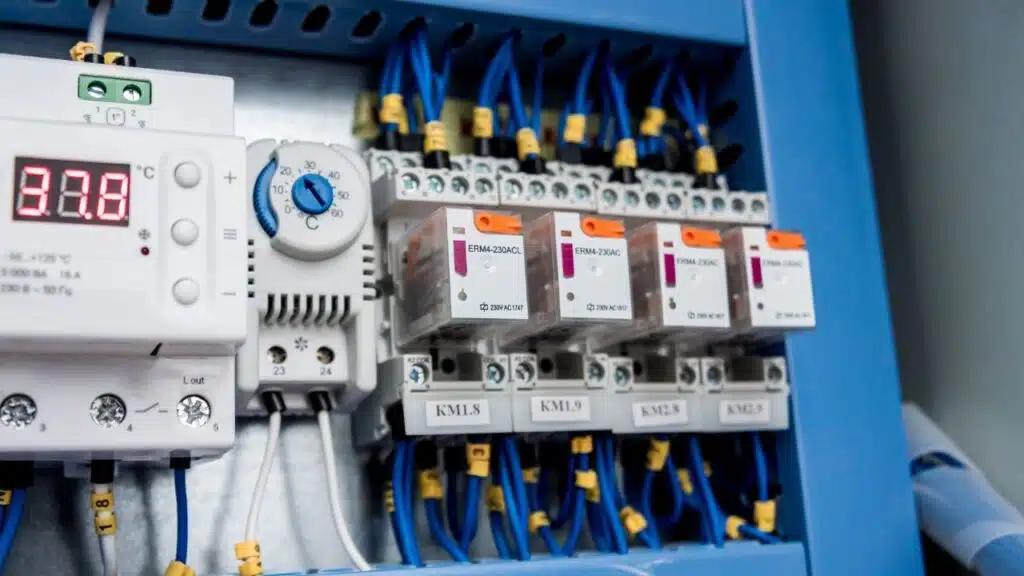
Air Circuit Breakers (ACBs) play a vital role in various electrical systems, particularly in industrial and commercial settings. They ensure reliable power distribution and protection from overloads, short circuits, and other electrical faults. Understanding their applications and the standards governing their use is essential for effective power management.
Integration in Electrical Systems
ACBs are crucial components in electrical distribution networks. They serve as the main protective devices for low and medium voltage systems. ACBs are typically installed in:
- Main incoming circuits to safeguard against faults.
- Generator outputs to manage energy supply.
- Bus-coupler configurations to maintain system stability.
Their ability to interrupt fault currents and provide selective tripping enhances system reliability. Modern ACBs often integrate advanced monitoring and control features, making them suitable for both conventional and smart electric grids.
Role in Power Station Auxiliaries
In power stations, ACBs provide essential protection for auxiliary systems. These include controls, lighting, and cooling systems that support main generation units. ACBs ensure continuous operation during fault conditions and help maintain safety standards within the facility.
They are often designed to handle significant fault levels and are adaptable for remote monitoring. With ACBs, operators can achieve effective fault detection and isolation, minimizing downtime and maintaining operational integrity in power generation.
Ratings and Settings
ACBs have specific ratings that dictate their capacity and operational parameters. Key ratings include:
- Inm (Frame Rating): Defines the maximum continuous current a breaker can handle (e.g., 1600A to 6300A).
- Ir (Long-time Protection): Adjustable setting typically between 40% to 100% of Inm.
- Isd (Short-time Delay Protection): Value often set at 2 to 10 times Ir for enhanced fault response.
Properly setting these ratings is critical for optimizing performance and ensuring safety. Operators must consider the specific application and coordination studies when determining these values.
Compliance with IEC 60947-2
ACBs are required to comply with IEC 60947-2, which outlines standards for low-voltage switchgear and control gear. This standard ensures that ACBs meet essential safety and performance requirements.
Key clauses from IEC 60947-2 include:
- Icu: Ultimate breaking capacity, indicating the maximum fault current the device can safely interrupt.
- Ics: Service breaking capacity, which shows the device’s ability to resume normal operation after a fault.
- Dielectric Strength: Ensures the insulation properties can withstand electrical stress.
Adherence to these standards is crucial for the safe and efficient operation of electrical systems, making them vital for regulatory compliance in various industries.
Benefits, Drawbacks, and Maintenance
Air Circuit Breakers (ACBs) offer unique advantages and some limitations compared to other circuit breakers. Their maintenance practices are essential for ensuring longer operational life and reliability. The following sections outline these aspects in detail.
Advantages over Other Circuit Breakers
Air Circuit Breakers have several advantages compared to oil-filled or vacuum circuit breakers.
- Environmental Impact: ACBs use air as the insulating medium, making them more eco-friendly. There are no hazardous materials involved, unlike oil-filled breakers.
- Maintenance Needs: ACBs typically require less maintenance because there is no oil to change or manage. Regular inspections can often suffice.
- Cost-Effectiveness: Initial costs can be moderate, and ongoing maintenance expenses tend to be lower.
- Performance: ACBs offer reliable arc extinction methods using air. They can handle high currents and operate efficiently in various conditions.
- Reliability: These breakers are suitable for frequent operations and are better at rapid reclosure, which enhances system reliability.
Limitations and Common Issues
While ACBs are advantageous, they also come with some limitations and potential issues.
- Size and Weight: ACBs are generally bulkier compared to vacuum or SF6 circuit breakers. This may require more installation space.
- Limited Voltage Range: They are typically used for low to medium voltage applications. For very high voltages, other types of breakers may be necessary.
- Operating Temperature: ACBs can have a restricted operating temperature range, typically between -5°C to 40°C.
- Arc Stability: In very high-fault current situations, ACBs might struggle with arc stability.
- Frequent Operation Risks: Frequent opening and closing can lead to wear and tear, potentially reducing their life span.
Maintenance Practices for Longevity
Regular maintenance is critical for ACBs to function effectively.
- Routine Inspections: Inspect the contacts for wear and corrosion. Cleaning is essential to remove any dust or debris that may accumulate.
- Contact Pressure Checks: Ensure that the correct contact pressure is maintained. Improper pressure can affect performance.
- Testing Functionality: Periodically test the trip mechanisms to confirm they operate correctly. This includes checking any electronic trip units.
- Lubrication: Proper lubrication of mechanical parts helps prevent wear and keeps the operating mechanism smooth.
- End-of-Life Considerations: Be aware of the breaker’s operational limits. Replacement should be planned as performance declines.
These practices help extend the life of ACBs and ensure their reliable function in electrical systems.
Premium electrical and automation equipment
Premium electrical and automation equipment plays a crucial role in enhancing reliability and efficiency in various applications. Air circuit breakers (ACBs) are a key component in these systems, providing essential overload and short-circuit protection.
Leading brands focus on innovation, producing equipment that not only meets industry standards but also offers advanced features. For example, modern ACBs include thermal and magnetic trip actions that ensure prompt response to faults. This minimizes potential damage to electrical systems.
The benefits of high-quality electrical equipment include:
- Durability: Built to withstand harsh conditions.
- Efficiency: Optimized performance for energy savings.
- Flexibility: Suitable for various industrial and commercial applications.
Companies like Schneider Electric and Eaton are recognized for their robust solutions, which protect electrical systems effectively. Their products feature compact designs and high ratings, making them suitable for different environments.
For those in search of reliable automation and electrical components, platforms like Gabby Electric provide fast delivery and competitive prices. These resources simplify the purchasing process, ensuring access to top brands and the latest technology.
Investing in premium equipment is essential for maintaining system integrity and operational continuity. As the industry evolves, advanced features in circuit breakers will remain important for managing electrical distribution.