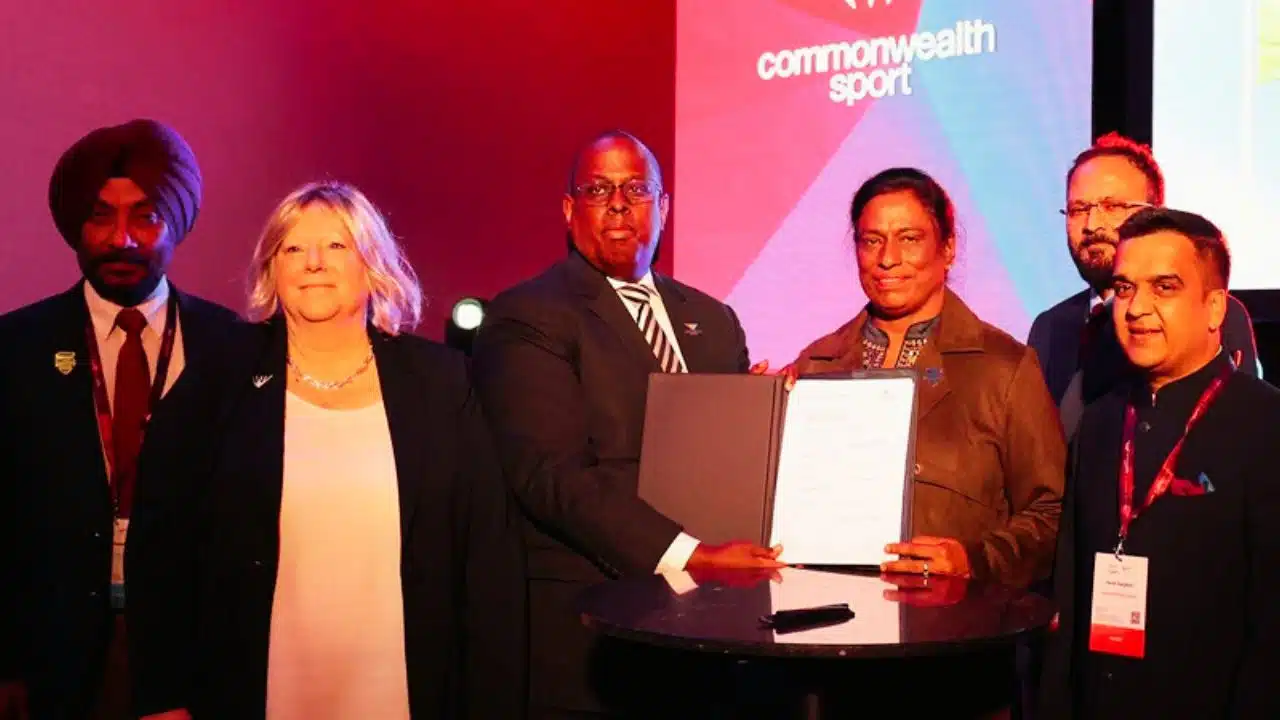
Ahmedabad has been officially confirmed as the host city for the 2030 Commonwealth Games, marking a historic moment for India and the sporting world. The decision was formally ratified by delegates representing all 74 Commonwealth member nations and territories during the Commonwealth Sport General Assembly held in Glasgow on November 26, 2025. This prestigious honor brings the centenary edition of the Games back to India for the second time, following the 2010 Delhi Games, and establishes Ahmedabad as only the third Asian city to host this multi-sport event.
A Historic Centenary Edition
The 2030 Commonwealth Games represent a landmark centenary celebration for the entire Commonwealth Games movement. Scheduled to take place in October 2030, this edition comes at a time when the Games have undergone significant transformation to ensure financial viability and long-term sustainability. Dr. Rukare, President of Commonwealth Sport, emphasized that “this is the start of a new golden era,” highlighting India’s strategic importance in the future of the Games franchise.
The selection of Ahmedabad over Nigeria’s capital, Abuja, underscores India’s strong infrastructure, youth population, and sporting ambitions. India views this opportunity as a stepping stone aligned with Prime Minister Narendra Modi’s vision to transform India into a developed nation by 2047, coinciding with the century anniversary of India’s independence.
The Venue and Infrastructure Plan
Ahmedabad boasts world-class infrastructure to host the Games, with the iconic Narendra Modi Stadium at its core. The stadium, the world’s largest with a seating capacity of 132,000, will serve as the venue for both the opening and closing ceremonies and previously hosted cricket’s World Cup in 2023. The city’s strategic advantage lies in its centralized venues—all facilities will be situated within a 30-45 minute travel radius, ensuring seamless accessibility and logistical efficiency.
Two primary Games hubs have been earmarked for development. The Sardar Vallabhbhai Patel (SVP) Sports Enclave, spanning 355 acres adjacent to the Narendra Modi Stadium, and the Karai Sports Hub, covering 143 acres and augmented by reclaimed riverfront in Gandhinagar, are expected to be ready by late 2028 or early 2029. Complimentary transport will be provided to all ticket holders, facilitating smooth movement across venues and enhancing the spectator experience.
Sports Program: Confirmed and Under Consideration
Between 15 and 17 sports will feature at the Ahmedabad 2030 Games, representing a careful balance between the reduced format in Glasgow 2026 and the expanded program of Birmingham 2022. The core sports program includes eight confirmed disciplines: athletics and para athletics, swimming and para swimming, table tennis and para table tennis, bowls and para bowls, weightlifting and para powerlifting, artistic gymnastics, netball, and boxing.
The remaining sports will be finalized through a rigorous selection process beginning in December 2025, with the full lineup expected to be announced in 2026. Among the sports under serious consideration are archery, badminton, 3×3 basketball and wheelchair basketball, beach volleyball, cricket T20, cycling, diving, hockey, judo, rhythmic gymnastics, rugby sevens, shooting, squash, triathlon, and wrestling.
Notably, India has signaled its intention to advocate for yoga as a medal sport—a proposal that would reflect India’s cultural heritage and global influence in wellness and fitness. Additionally, Ahmedabad has the opportunity to propose up to two new or traditional sports, offering flexibility to showcase locally relevant disciplines while maintaining global competitive standards.
India’s Vision: Sustainability and Excellence
Indian officials have expressed their commitment to delivering a controversy-free, world-class Games experience. Dr. PT Usha, President of the Commonwealth Games Association of India, assured international delegates that India would deliver a “robust, inclusive, and future-oriented Commonwealth Games” centered on sustainability, technological advancements, and enhanced athlete experiences.
The presentation to Commonwealth Sport emphasized India’s capabilities and preparedness, concluding with a vibrant cultural performance featuring 20 Garba dancers and 30 Indian drummers—a symbolic celebration of Ahmedabad’s rich cultural heritage and readiness to welcome the global sporting community. This cultural showcase signaled India’s determination to deliver a transformative edition that honors the Commonwealth Games legacy while propelling the movement into its next century.