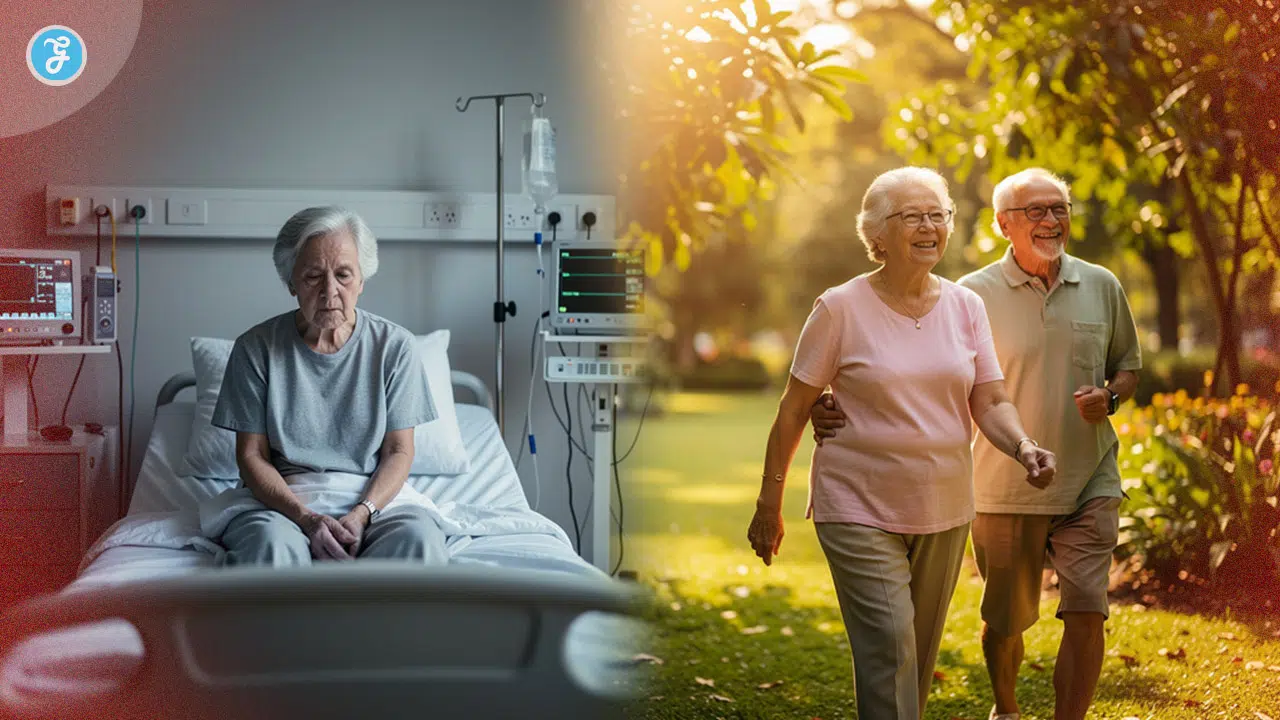
The world is currently obsessed with a number. We track our steps, monitor our deep sleep cycles, and swallow handfuls of supplements, all in the hope of pushing the finish line just a little bit further. We have turned aging into a competitive sport. Tech billionaires are spending fortunes on blood protocols and cellular rejuvenation, while the rest of us settle for organic kale and expensive wearable tech. But in this frantic race to hit one hundred, we have forgotten to ask a fundamental question. In the debate of Living Long vs. Living Well, is the goal simply to survive, or is it to thrive?
This is no longer just a philosophical dinner party topic. It is a critical health crisis. Science has done a remarkable job of keeping us alive.
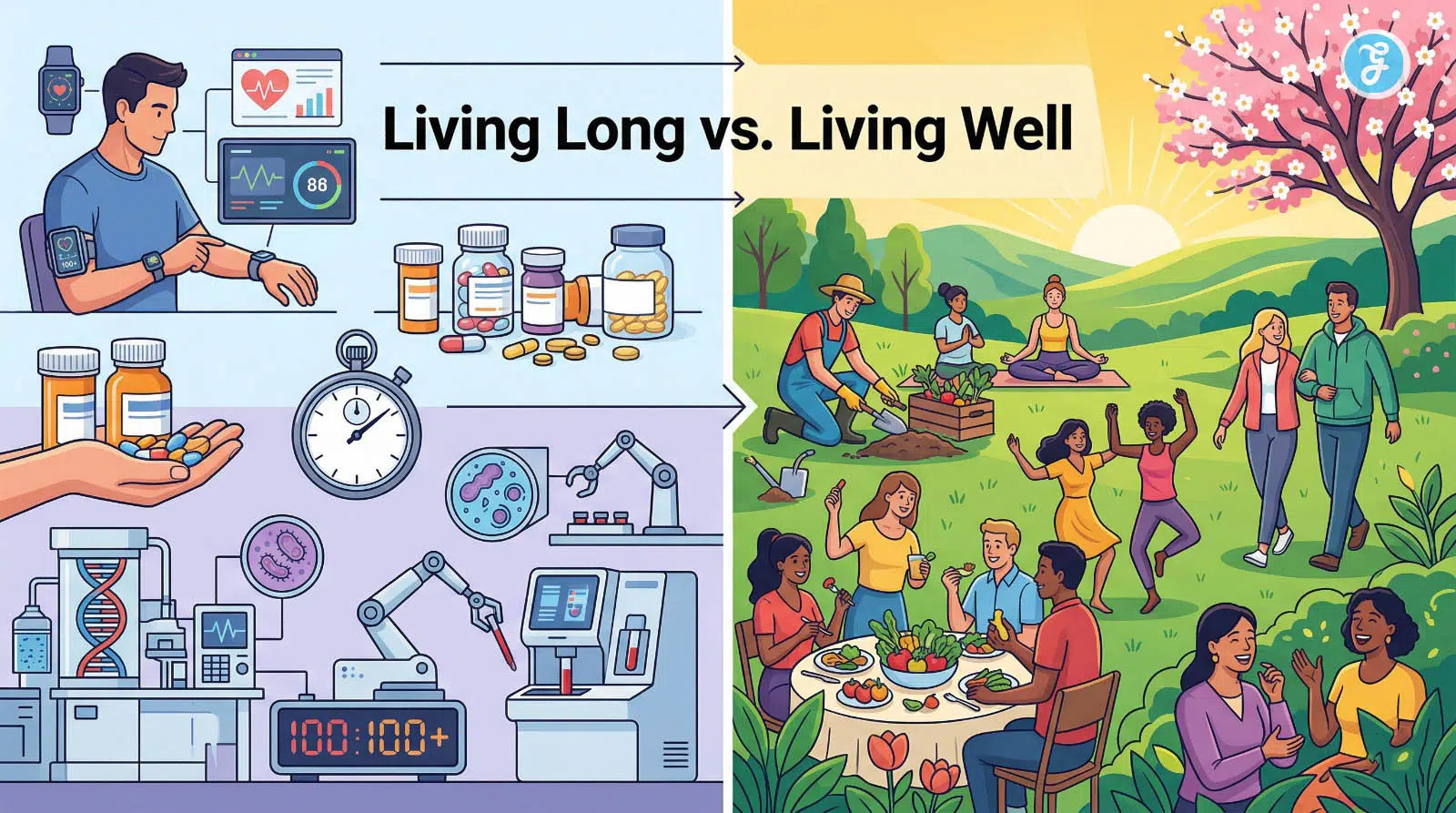
We have conquered many infectious diseases and turned once-fatal conditions into manageable chronic ones. Yet, we are seeing a strange phenomenon. People are living longer than ever before, but they are often doing so in a state of prolonged decay. We have added years to our lives, but we have failed to ensure those years are worth living.
The Modern Obsession with the Centenarian Goal
Walk into any bookstore or scroll through a social media feed, and you will see the “Centenarian Goal” in full swing. The narrative is clear. If you do not make it to one hundred, you have somehow failed the health game. We see stories of elderly marathon runners and mountain climbers, and we hold them up as the standard. This has created a culture of longevity anxiety. We are so focused on the horizon that we miss the view right in front of us.
This obsession often ignores the reality of biology. Longevity is not just about avoiding death. It is about maintaining the spark that makes life meaningful. When we focus purely on the calendar, we risk falling into the trap of fragile longevity. This is a state where the body is technically alive, perhaps even for a very long time, but the mind and spirit have retreated.
The Longevity Paradox: Lifespan vs. Healthspan
To truly grasp the tension between Living Long vs. Living Well, we must strip away the marketing jargon and look at clinical definitions. While these concepts sound similar, they represent entirely different experiences of the human condition. One is a measure of time. The other is a measure of capacity.
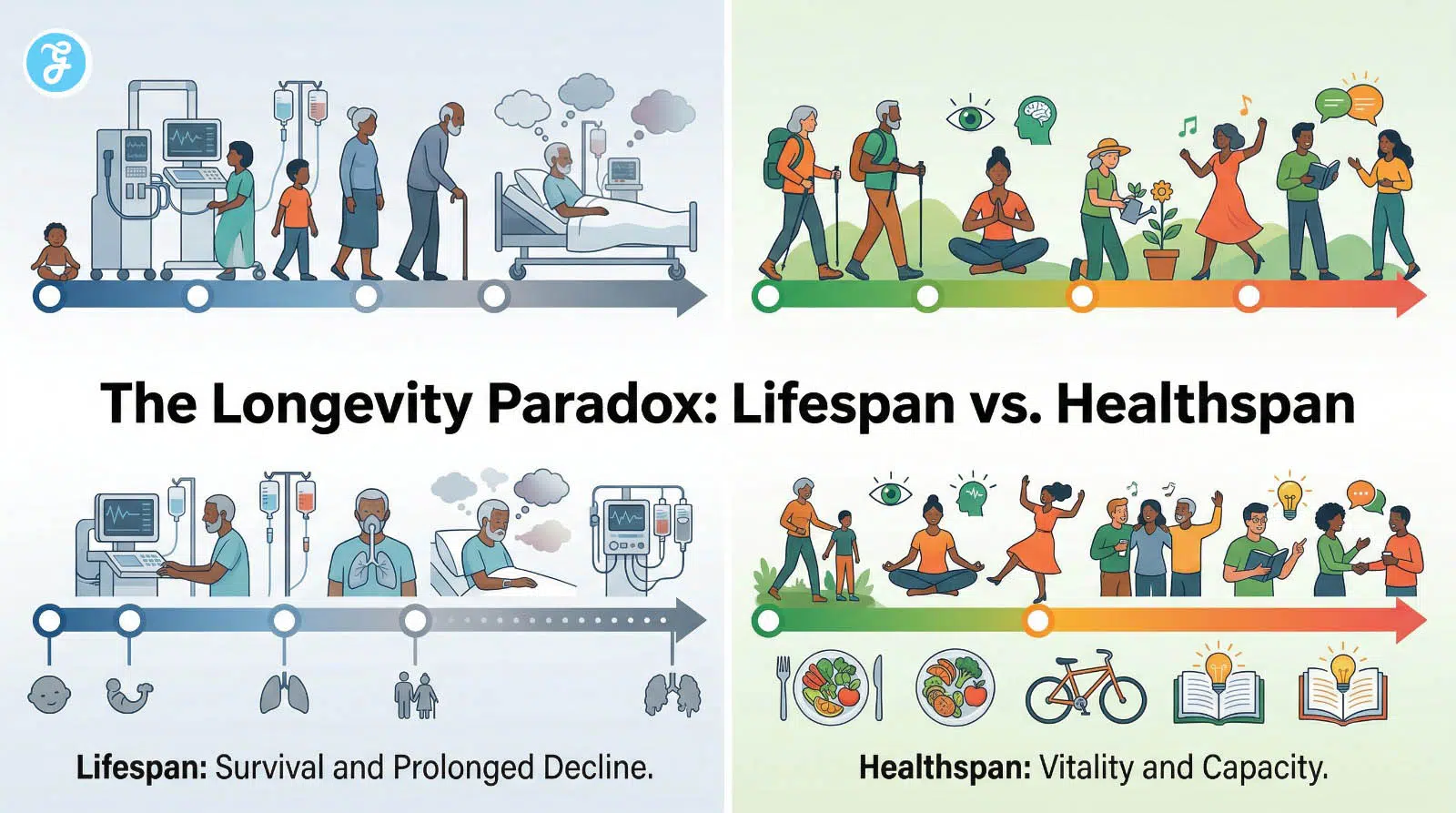
Global statistics tell a confusing story. Average life expectancy has skyrocketed over the last century. Survival into the late eighties is now an expectation rather than an exception. However, a massive gap exists that headlines often skip over. This is the distance between lifespan and healthspan.
Lifespan: The Quantity of the Story
Lifespan is the simplest metric we have. It is the total number of years between your first breath and your last. In the eyes of a statistician, it is a binary. You are either alive or you are not.
Modern medicine has mastered the art of survival. We can keep a heart pumping and lungs inflating even when the body has lost its ability to function independently. While this is a triumph of engineering, it creates a new dilemma. Just because we have the technology to prolong life does not mean we have addressed the quality of that life. Lifespan is the quantity of the story, but it says nothing about the plot.
Healthspan: The Number of Readable Pages
Healthspan is a much more nuanced concept. It refers to the period of life spent in good health. This means being free from the burden of chronic disease and functional disability. This is the version of life most of us actually want. It is the ability to walk in the park, stay curious, and maintain a sharp mind well into our later years.
If lifespan is the length of the book, healthspan is the number of pages that are actually readable. Currently, this is the missing link in our modern wellness trends. Our medical system is designed to be reactive. We are excellent at rescuing people from the brink of death. However, we are not nearly as effective at preserving the baseline of health. We are essentially stretching the period of old age rather than extending the vigor of midlife.
Closing the Gap of Fragile Longevity
The uncomfortable truth is that for many people, healthspan ends long before lifespan does. Many now spend their final two decades battling chronic illness and cognitive decline. This is the heart of the paradox. We have mastered biological survival but are struggling with human vitality.
This fragile longevity creates an emotional and financial burden on individuals, families, and healthcare systems alike. There is a specific grief in watching a loved one exist in a state where they can no longer recognize family or enjoy a meal. Medicine can keep the heart beating, but it cannot always keep the personality intact.
When we prioritize Living Long vs. Living Well, we are deciding where to place our focus. Do we want to spend our energy pushing the death date further into the future? Or do we want to invest in the habits that keep us vibrant? The goal of modern health should not be finding a fountain of youth. Instead, we must ensure our healthspan matches our lifespan as closely as possible. True success is not just reaching the finish line. It is arriving there with your spirit and strength still intact.
The Pillars of Living Well: Beyond the Biological Clock
Closing the gap between lifespan and vitality requires looking past the bathroom scale and calorie tracker. True quality of life is supported by specific pillars that sustain our independence and our humanity. These are the essential components that keep us vibrant regardless of the date on a birth certificate.
Movement as a Language of Freedom
We often view exercise through the lens of aesthetics, but for those focused on Living Long vs. Living Well, movement is truly about freedom. It is the ability to tie your own shoes, carry groceries, and move without assistance. This functional mobility is the primary currency of a high-quality life.
Maintaining muscle mass is a critical part of this insurance policy. As we age, natural muscle loss can lead to frailty and a total loss of independence. Strength training is not just for athletes. It is a biological necessity. When you have the physical strength to navigate your environment, the world remains open to you. Movement ensures that your later years are spent participating in the world rather than watching from the sidelines.
Cognitive Wealth and Mental Agility
The brain is the command center for your entire experience. Protecting its health is as vital as protecting your heart. Cognitive wealth is not about the volume of information you store, but your ability to adapt, learn, and stay curious.
Lifelong learning acts as a workout for the mind. Challenging ourselves with new skills or hobbies builds neural resilience, which helps protect against the symptoms of cognitive decline. Curiosity is a powerful tool for longevity because it keeps the brain engaged. A mind reaching for new understanding stays young regardless of the body’s age, allowing us to maintain our personality and our connection to our own story.
The Social Fabric of Health
The most overlooked factor in the debate of Living Long vs. Living Well is our connection to others. Research shows that social isolation is as damaging to health as smoking fifteen cigarettes a day. It is more dangerous than a poor diet or a lack of exercise. We are social creatures by design, and we wither when we are alone.
This is the “Village Effect” in action. Having a community, whether family, friends, or a local club, provides a safety net for mental and physical health. Knowing that someone is looking out for you creates a powerful sense of belonging and a reason to stay healthy. Community provides the laughter and shared experiences that make a long life worth having. Ultimately, the quality of our relationships is the best predictor of the quality of our lives.
The Psychology of a Well-Lived Life
The difference between surviving and thriving often comes down to what happens inside our heads. While we focus on physical health, the mental and emotional framework we build is what actually sustains us. You can have a perfect heart rate and pristine blood work, but without a reason to use that health, the calendar becomes a burden. The psychology of Living Long vs. Living Well is about the internal engine that drives us forward.
Purpose as a Vital Sign
One of the most powerful predictors of a high-quality life is a sense of purpose. In Japan, this is known as Ikigai. It is the reason you get out of bed in the morning, representing the intersection of what you love, what you are good at, and what the world needs. Purpose is not a fluffy concept. It is a biological necessity.
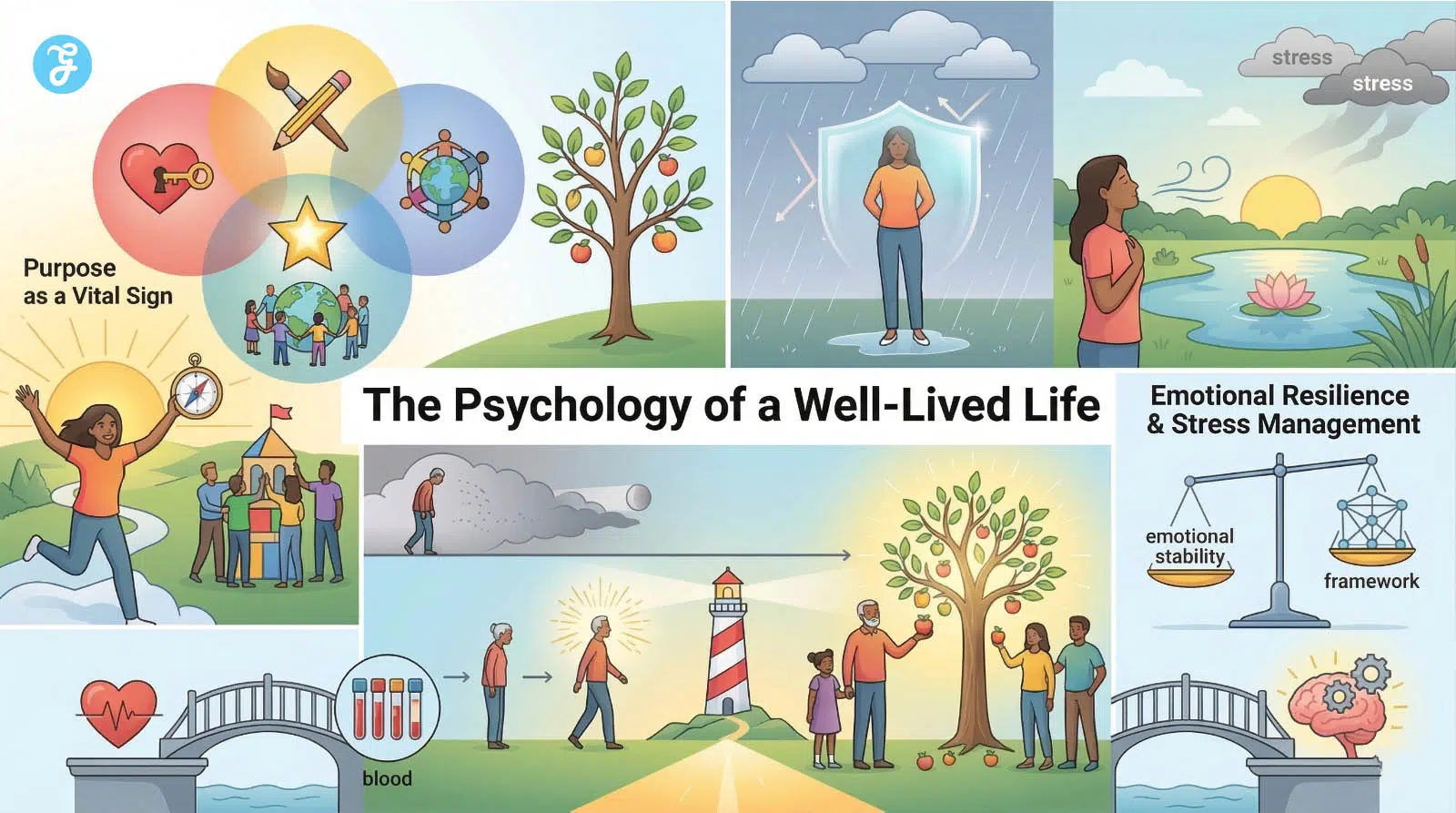
Research consistently shows that people with a clear sense of mission stay healthier for longer. Retirees who remain active in their communities often outlive those who simply stop. When you have a reason to wake up, your body responds by maintaining its drive and resilience. Purpose acts as a vital sign, indicating that an individual is still a participant in the world rather than just an observer.
Emotional Resilience and Stress Management
Living well requires mastering our emotional landscape. As we move into the second act of life, we face transitions such as loss, physical changes, and shifting social roles. Navigating these with grace requires emotional resilience, which is the ability to bounce back from setbacks and find meaning in the face of adversity.
Chronic stress is a primary enemy of vitality, as it wears down the body and accelerates the aging process. Managing this stress is not about avoiding problems, but about how we perceive them. If we view aging as a slow decline, we feel defeated. However, if we reframe aging as an evolution, it becomes a period of growth and new possibilities.
This shift in perspective is essential for quality of life. When we see later years as an opportunity to share wisdom, we maintain our vitality. Emotional health is the foundation that allows us to experience the joy and connection that make a long life worth the effort. It is the invisible force that turns a long lifespan into a truly great healthspan.
Modern Barriers to Quality Longevity
Despite advanced medicine, living a high-quality life feels increasingly complex. The obstacles to Living Long vs. Living Well often stem from the systems built to protect us. Understanding these barriers is the first step toward reclaiming vitality from a world that treats us like machines.
The Wellness Anxiety Trap
Constant monitoring through wearable tech has birthed “wellness anxiety.” We are so obsessed with metrics that we have lost the feeling of being healthy. When a sleep score becomes a source of stress, the technology is no longer serving you. This low level panic triggers chronic inflammation, accelerating the very aging we seek to pause. True quality of life requires listening to internal signals over wrist notifications.
The Disconnect Between Intervention and Joy
Our healthcare systems prioritize the absence of disease over the presence of vitality. We see this in the elderly, where strict medical regimens often prioritize physical stability over the activities that provide meaning. If a treatment plan prevents you from walking in nature or sharing a meal, it has failed the human test. Success must be measured by the preservation of joy, not just the stability of vital signs.
Workplace Culture and the Biological Debt
Modern professional culture demands we sacrifice current health for future security. This “always-on” digital economy forces us to borrow from our future selves at a high interest rate. You cannot store up health for later. Long hours and sedentary desk work lead to “sitting disease” and social erosion. A life of quality requires protecting your time today, ensuring you arrive at your later years with a mind still capable of wonder.
The Urban Vitality Gap
Our environments often work against our biology. Many live in “concrete jungles” with limited access to green spaces and natural light. This disconnect from nature disrupts our circadian rhythms and heightens psychological fatigue. To bridge the gap in Living Long vs. Living Well, we must reclaim our connection to the physical world. True longevity is not found in a laboratory but in the air, the light, and the movement of a life lived outside the screen.
Practical Shifts: How to Prioritize Quality Today
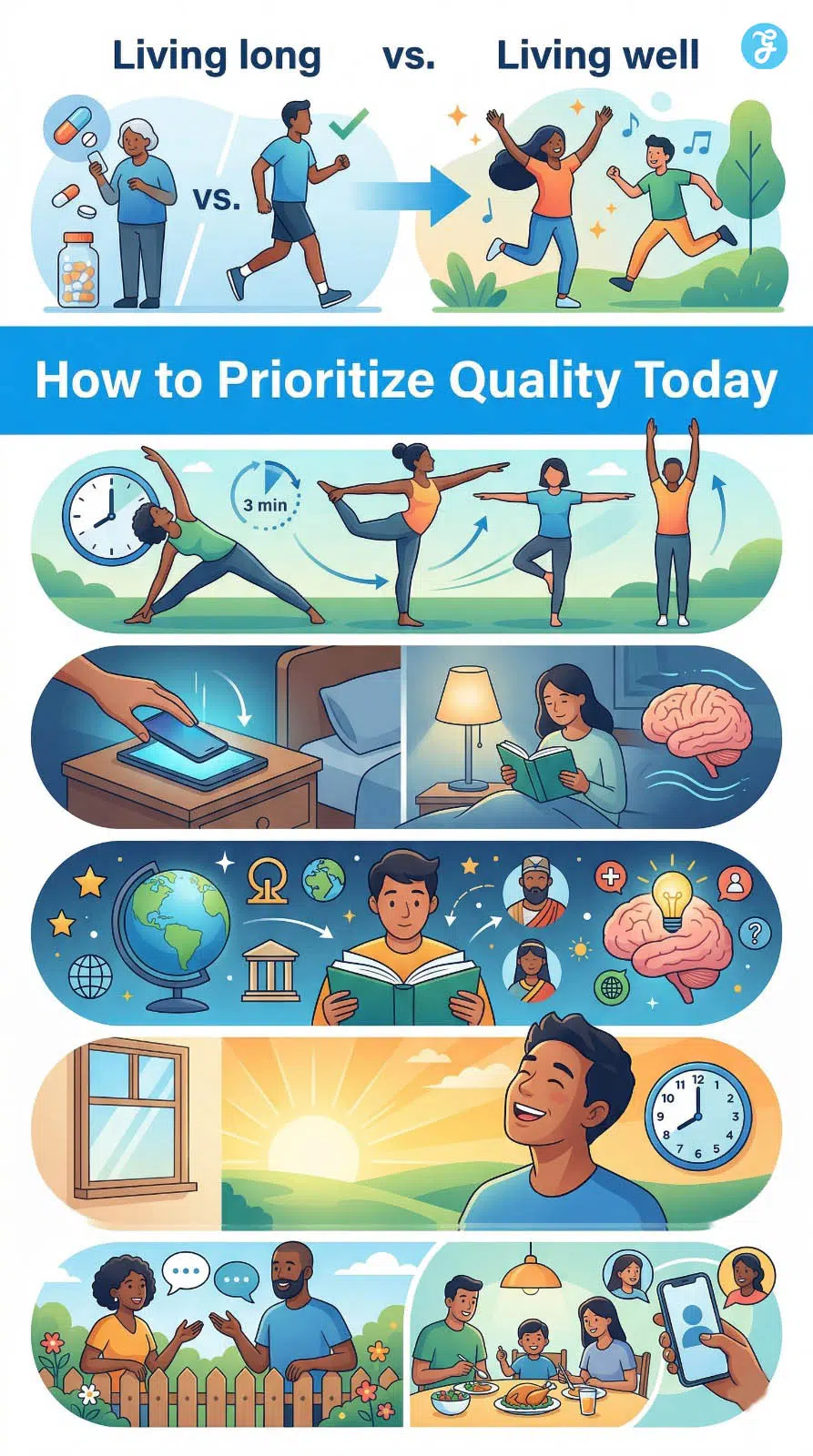
Shining a light on the flaws in our modern approach to longevity is only the first step. To truly change the narrative of Living Long vs. Living Well, we need to move toward practical, daily actions. These shifts are not about radical life overhauls or expensive biohacking. Instead, they are about returning to the basics of human biology and psychology. By making small, intentional changes today, we ensure that our future selves have the health and energy to actually enjoy the years ahead.
Nutritional Wisdom Over Diet Trends
We are constantly bombarded with conflicting advice about what to eat. One year it is low-carb, the next it is plant-based, followed by intermittent fasting. This obsession with diet trends often obscures the simple truth that food is fuel and information for our cells. To prioritize quality, we should focus on nutritional wisdom rather than rigid rules.
This means eating for sustained energy and inflammation control. Chronic inflammation is the silent driver of almost every age-related disease. By choosing whole, unprocessed foods that nourish the gut and stabilize blood sugar, we protect our physical foundation. But nutrition is about more than just nutrients. The social aspect of dining is equally vital. Sharing a meal with friends or family nourishes our need for connection. When we slow down and enjoy food in the company of others, we reduce stress and improve our digestion. It turns a biological necessity into a source of daily joy.
Restorative Sleep and Recovery
In our hustle culture, sleep is often the first thing we sacrifice. We treat it as a luxury rather than a necessity. However, sleep is the absolute foundation of both living long and living well. It is the time when the body repairs tissues, clears metabolic waste from the brain, and consolidates memories. Without restorative sleep, every other health effort, from exercise to diet, is severely compromised.
Prioritizing recovery means respecting our natural circadian rhythms. It is about creating a sleep environment that allows for deep, uninterrupted rest. When we are well-rested, we have the emotional resilience to handle stress and the physical energy to stay active. Good sleep does not just add years to your life. It adds a sense of clarity and presence to your waking hours that is essential for a high-quality existence.
Daily Habits for an Evergreen Mindset
Building a life of vitality is a daily practice. Here are five simple shifts you can implement to keep your mind and body evergreen:
- Prioritize Functional Movement: Spend ten minutes a day on mobility or balance exercises to ensure your body stays capable and independent.
- Practice Digital Disconnect: Set aside at least one hour before bed to step away from screens. This reduces wellness anxiety and prepares your brain for rest.
- Engage in Micro-Learning: Spend a few minutes each day learning something new, whether it is a single word in a new language or a fact about history. This keeps the brain curious and resilient.
- Seek Sunlight Early: Getting natural light in your eyes shortly after waking helps regulate your internal clock and improves your mood.
- Perform an Act of Connection: Make it a point to have one meaningful interaction every day. A quick call to a friend or a brief chat with a neighbor reinforces your social fabric.
These habits are small, but their cumulative effect is massive. They move the focus away from a distant goal of longevity and place it firmly on the quality of the present moment. By investing in these daily rituals, we ensure that we are not just lasting, but truly living.
The Role of Science and Technology
As we navigate the middle of this decade, the landscape of longevity has shifted. We are no longer relying on guesswork or generic advice. The tools at our disposal have become incredibly sophisticated, offering a glimpse into our biological future with startling clarity. However, the true challenge of Living Long vs. Living Well is learning how to use these advancements without losing our human essence. Technology should be the wind in our sails, not the captain of our ship.
The Shift Toward Preventive Diagnostics
The most significant change we have seen is the move from reactive medicine to preventive diagnostics. In the past, we waited for symptoms to appear before seeking help. Today, we have access to screenings that can detect issues years before they become problems. We can look at our genetic predispositions and our biological age with a simple test.
This shift is a game changer for quality of life. By identifying potential risks early, we can make informed adjustments to our lifestyle. It allows us to intervene when the “cost” of change is low. We are no longer just fighting fires. We are fireproofing the building. This proactive approach ensures that our healthspan remains robust, allowing us to avoid the long periods of decline that characterized the aging experience for previous generations.
Personalized Nutrition and Health Monitoring
We have also moved into the era of hyper-personalization. AI driven platforms can now analyze our unique biochemistry to suggest the exact foods and habits that will optimize our energy levels. Personalized nutrition has moved beyond the fringe and into the mainstream. We can see how specific meals affect our blood sugar or our focus in real time.
Health monitoring has become more integrated and less intrusive. Wearable tech can now provide a holistic view of our recovery, stress, and cardiovascular health. These tools offer a level of self-knowledge that was previously impossible. When used correctly, they help us understand the direct link between our daily choices and our physical vitality. They empower us to be the primary architects of our own well-being.
A Cautionary Note: Tool vs. Master
While these advancements are exciting, they come with a significant caveat. It is easy to become addicted to the data. When we start living our lives for the sake of a high “readiness score” or a perfect nutritional log, we have crossed a dangerous line. We risk turning our existence into a series of technical tasks to be managed rather than a life to be experienced.
Technology is a tool, not a master. It should provide insights that lead to better living, but it should never replace our intuition. If your watch tells you to rest but your spirit is calling for a long walk with a friend, you must have the confidence to choose the walk. True quality of life is found in the moments that cannot be measured by a sensor. We must use science to support our health, but we must use our humanity to define what that health is actually for. In the quest for a long and meaningful life, the most important sensor will always be your own sense of joy and connection.
Making the Choice for Depth
As we navigate the noise of the longevity industry, we must eventually come back to the center of the debate. The quest for Living Long vs. Living Well is not about choosing between two different paths. It is about recognizing which one is the foundation. A long life is a biological achievement, but a well-lived life is a human masterpiece. Without the depth of health, connection, and purpose, the breadth of years becomes an empty corridor. We should not be aiming to simply accumulate time like a currency we cannot spend.
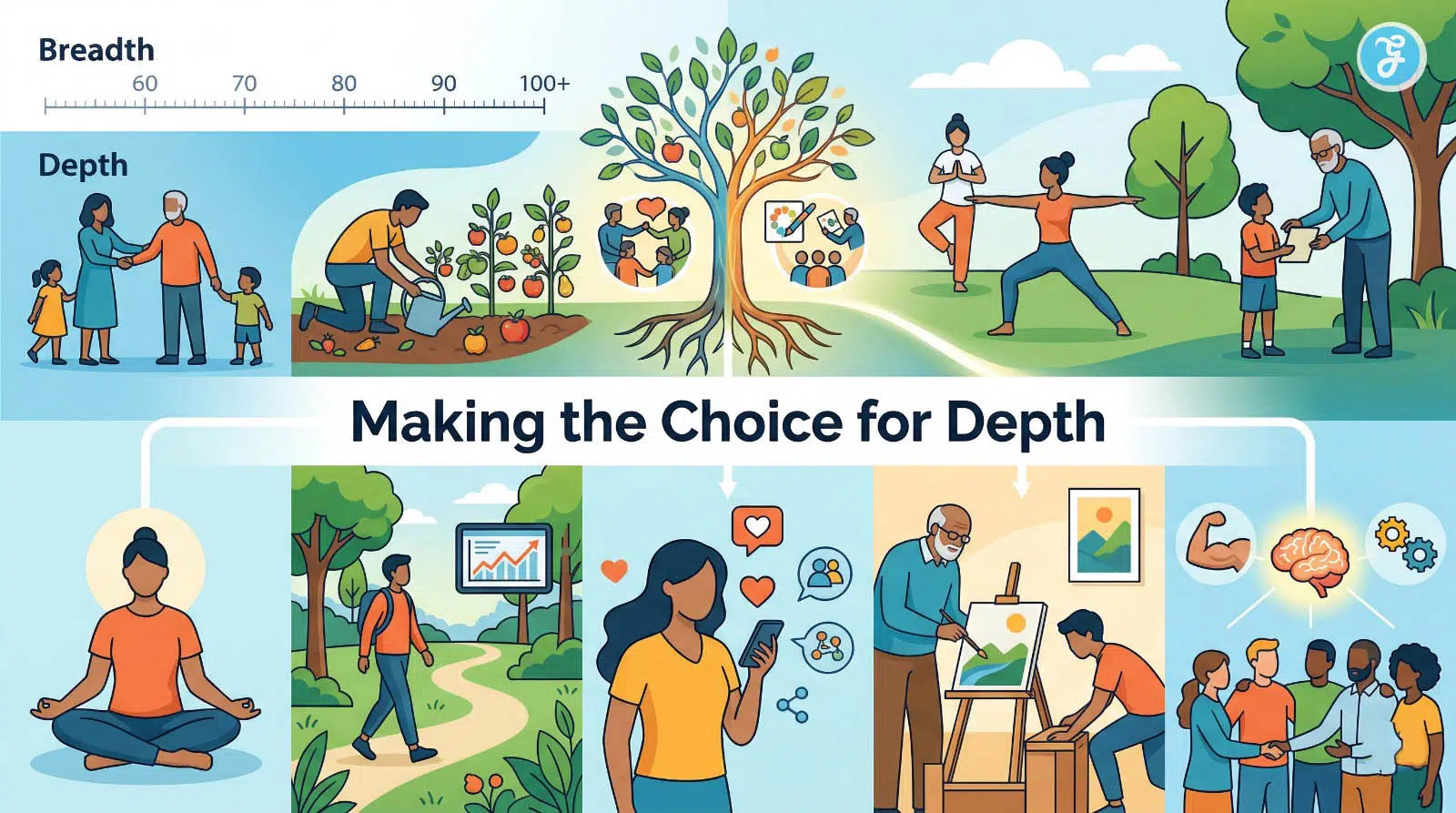
True vitality is the prerequisite for a meaningful existence. It is the energy that allows us to contribute to our communities, mentor the next generation, and stay curious about the world. When we prioritize our health span, we are doing more than just avoiding illness. We are protecting our ability to be ourselves for as long as possible. We are ensuring that our final chapters are not a slow fade, but a vibrant continuation of the story we have been writing all along.
A Legacy of Vitality
We often think of a legacy as something we leave behind in a will or a museum. But the greatest legacy we can leave is the example of a life lived with intensity and grace. When we choose to live well, we inspire those around us to do the same. We show our children and our peers that aging does not have to be a synonym for decline. It can be a period of profound growth and refined perspective.
This shift in focus requires courage. It means saying no to the frantic pace of a world that demands our constant output and saying yes to the slow, steady work of self-care and connection. It means investing in our physical strength, our mental agility, and our social circles with the same rigor we apply to our careers. By doing so, we turn the act of aging into an act of defiance. We prove that the quality of our spirit is not dictated by the passing of the years.
The Tuesday Test
As you look forward at the decades ahead, it is helpful to step away from the abstract theories and bring the focus back to the present. We often save our best energy for “one day” or “someday,” assuming that a long life gives us an infinite runway. But the reality is that life only ever happens in the immediate moment.
If you knew with absolute certainty that you had one hundred years ahead of you, how would you change your Tuesday? Would you still spend it stressed over a screen, or would you take that walk you have been putting off? Would you finally call that friend, start that hobby, or simply sit in silence for twenty minutes? The irony of the Living Long vs. Living Well debate is that the best way to ensure a long life is to live each individual day as if its quality were the only thing that mattered. The calendar will take care of itself. Your job is to make sure the life within those years is deep, meaningful, and undeniably yours.
Frequently Asked Questions (FAQs) on Living Long vs. Living Well
What is the “compression of morbidity”?
It is the scientific goal of delaying chronic illness until the very end of life. Instead of enduring decades of decline, the aim is to remain vibrant and healthy until the final months or weeks. This ensures that the period of illness is as short as possible.
How does biological age differ from chronological age?
Chronological age is your total number of birthdays. Biological age measures how well your cells and systems are functioning relative to your peers. Epigenetic clocks and blood tests can reveal if your body is “younger” or “older” than your calendar age, helping you adjust habits in real time.
Is there a critical age to start focusing on quality?
The decade between ages forty and fifty is the “power decade.” This is when the cumulative effects of lifestyle choices begin to surface. Prioritizing muscle mass, metabolic health, and stress management during this window sets the trajectory for your later decades.
Does living well require expensive biohacking?
No. The most effective drivers of healthspan are low cost or free. Walking, strength training, whole foods, restorative sleep, and deep social connections form a foundation that no expensive supplement can replace.
What can we learn from “Blue Zones”?
Blue Zones show that longevity is a byproduct of the environment, not just effort. These regions prioritize natural movement, plant forward diets, and a strong sense of community. They prove that a well-lived life is often the simplest one.
Can “wellness anxiety” shorten my lifespan?
Yes. Constant stress over health metrics triggers cortisol and systemic inflammation. If tracking your data causes more panic than peace, it is better for your healthspan to focus on how you feel rather than what a screen says.
Is it possible to live too long?
This is a personal reflection on the fear of existing without independence or cognitive health. The goal of Living Long vs. Living Well is to ensure our “well” years match our total years as closely as possible, avoiding a prolonged state of fragile longevity.