There is a certain point where small choices start to stack up. Not in a dramatic, life-altering way, but in the quiet accumulation of less waste, fewer chemicals, and a home that feels a little more intentional. Most people do not overhaul everything at once, and they do not need to. The shift tends to come from habits that hold up over time, not from a weekend purge or a shopping spree labeled sustainable.
Rethink Laundry Inputs
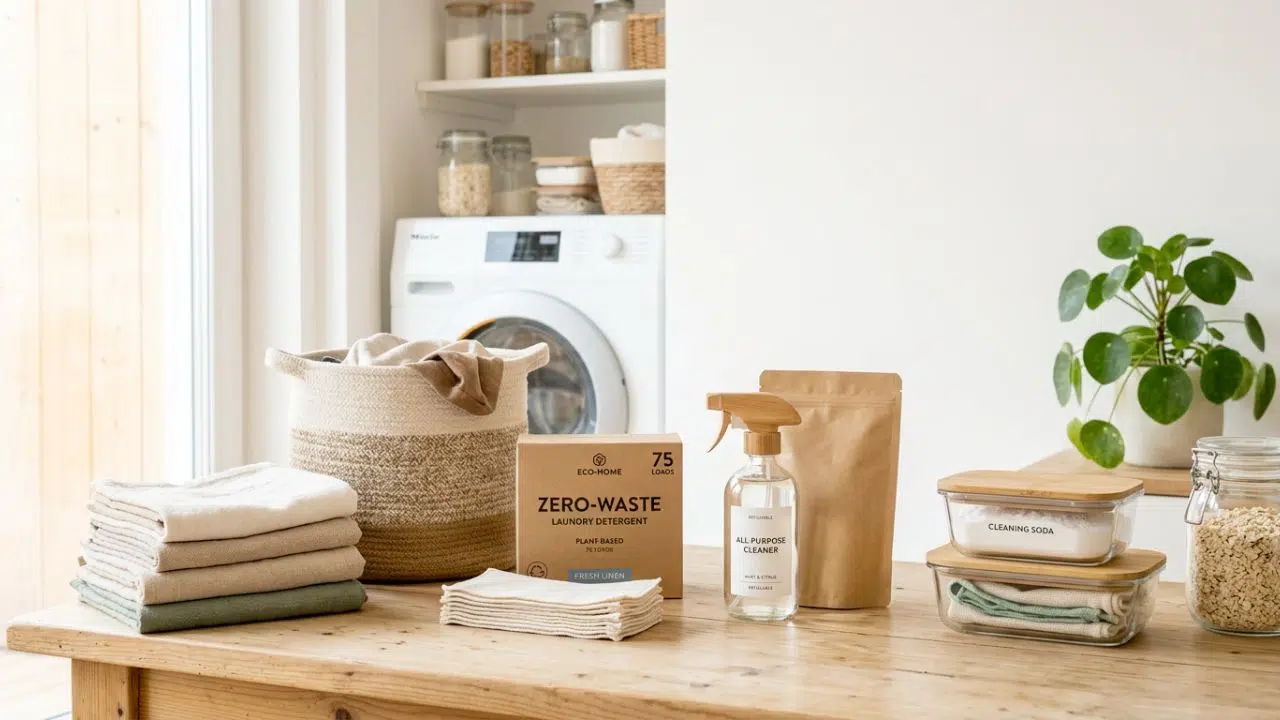
Laundry is one of those routines that runs on autopilot, which makes it easy to overlook. Detergent, dryer sheets, packaging, it adds up faster than most people think. Swapping to plastic-free laundry products changes the equation without requiring much adjustment to the routine itself. Powders in cardboard, refillable concentrates, and dissolvable strips all remove the steady stream of plastic bottles without changing how the machine runs.
There is also a performance angle here. Many of the newer formulations rinse cleaner, which matters if fabrics feel coated over time. Towels regain absorbency, and clothes lose that slightly stiff finish that comes from buildup. It is not a dramatic transformation, just a noticeable correction. The habit sticks because it works, not because it is labeled eco-friendly.
Cut Down On Food Waste
Food waste is less about big mistakes and more about small patterns that repeat. Buying too much, forgetting what is in the back of the fridge, or cooking without a plan for leftovers. Fixing it does not require strict systems, just a little awareness of how food moves through the kitchen.
Start with visibility. Clear containers, a quick check before grocery runs, and a loose idea of what gets used first. It sounds basic, but most waste comes from things that were simply overlooked. Freezing is another lever that gets underused. Not everything freezes well, but more than people assume it does.
There are a few habits that tend to reduce waste quickly:
- Cook with a second meal in mind, not just the first
- Keep a running list of what needs to be used soon
- Use the freezer as a buffer, not a last resort
None of this is complicated, but it shifts the baseline. Less food ends up in the trash, and grocery runs become more efficient without much effort.
Choose Durable Over Disposable
Disposable products often win on convenience, but they lose over time. Paper towels, single-use wipes, plastic wrap, they all require constant replacement. Durable alternatives ask for a small adjustment upfront, then fade into the background.
Cloth towels replace paper without much friction once they are in rotation. Reusable containers handle leftovers better than flimsy wraps that never quite seal. Even small changes, like switching to refillable cleaning bottles, reduce the steady churn of packaging.
The key is not to replace everything at once. That tends to backfire. Instead, swap items as they run out. It keeps the process grounded and avoids turning a simple shift into a project.
Simplify Cleaning Products
Cleaning aisles are crowded for a reason. There is a product for every surface, every finish, every scenario. Most homes do not need that level of specialization. A smaller set of effective cleaners covers more ground than expected, and it reduces both cost and clutter.
Multi-use formulas handle most surfaces without compromising results. Concentrates cut down on packaging and shipping weight. Over time, the cabinet under the sink starts to look less like a collection and more like a system.
The result is not just environmental. It is practical. Fewer products mean fewer decisions, and the routine becomes easier to maintain. A clean and beautiful home does not depend on having the right bottle for every surface, it depends on consistency and a setup that does not get in the way.
Adjust Energy Use At Home
Energy use is one of those areas where small adjustments compound quietly. Lowering thermostat swings, turning off lights that do not need to be on, and using appliances more efficiently all contribute without requiring much thought once they become routine.
It is less about strict rules and more about awareness. Running full loads in the dishwasher and washing machine, using cold water when it makes sense, and letting air do some of the work, whether that is drying clothes or ventilating a room.
There are a few habits that tend to stick because they are easy to maintain:
- Set a consistent temperature range instead of adjusting constantly
- Use natural light during the day where possible
- Turn off power strips for electronics that sit idle
None of this feels like a sacrifice. It just tightens up how energy is used across the day.
Buy Less, Choose Better
Consumption is where most of the impact sits, and it is also where habits tend to drift. It is easy to justify small purchases, especially when they are framed as upgrades or improvements. Over time, those add up to more than most people expect.
Buying less does not mean going without. It means pausing long enough to decide whether something is actually needed. When purchases do happen, choosing items that last changes the long-term equation. Fewer replacements, fewer discarded items, less friction overall.
This habit does not show immediate results, which is why it gets overlooked. But over a year, the difference is clear. Fewer items come in, fewer items go out, and the home starts to feel more settled.
Eco-friendly living, in practice, looks a lot like refinement. Not a dramatic shift, not a rigid set of rules, just a steady move toward habits that hold up under daily use. The goal is not perfection, it is consistency. When the choices are easy to repeat, they tend to last, and that is where the real impact shows up.