Have you ever searched for your brand on Google, only to find a confusing mess of links or worse, nothing special popping up? You are not alone. It can be frustrating to see competitors show up with neat profiles and handy info boxes while your business stays invisible.
Imagine this: nearly 60% of all Google searches in the US now end without a single click to a website. Why? Because users get their answers directly from the search results page.
Google’s Knowledge Graph is the engine behind this shift. It holds over 54 billion entities—facts about people, places, brands, and things. It is like a giant web that helps search engines spot real businesses and share important details fast.
Here are the exact steps to put a brand on this map. You will learn easy actions that help boost your online presence and earn more attention from AI-powered searches. So, grab a cup of coffee and get ready to dive into everything you need to know.
What Is a Knowledge Graph?
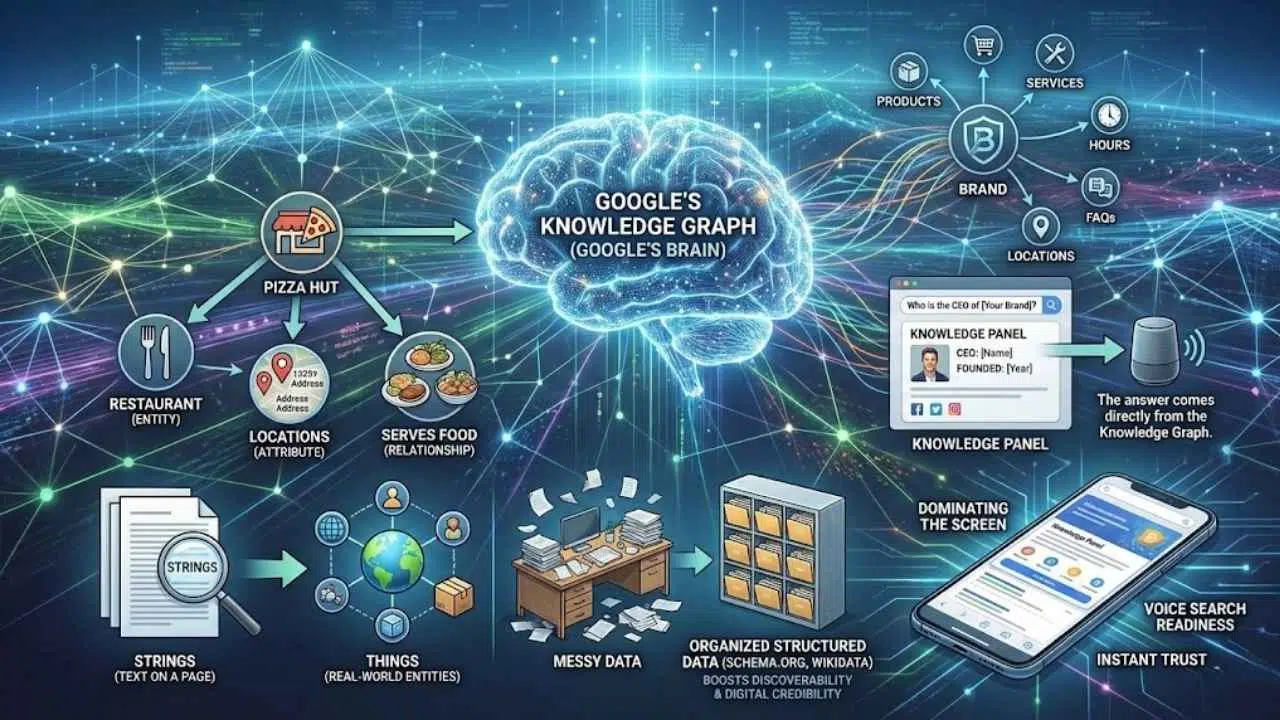
Think of the Knowledge Graph as Google’s brain. It is not just a database; it is a giant map that understands the real world. Instead of just matching keywords like “best pizza,” it understands that “Pizza Hut” is a Restaurant (entity) that has Locations (attribute) and serves Food (relationship).
Since its launch, this system has grown to hold over 1,600 billion facts. It weaves together people, brands, places, and things into a structure that machines can read.
“Google’s goal is to move from ‘strings’ (text on a page) to ‘things’ (real-world entities).”
Imagine your brand not as a single dot in this web but as part of many threads. You connect products, services, hours, locations, and even FAQs with other entities all across the digital landscape. This mapping builds a stronger identity for you online.
Search engines use these graphs to figure out what each entity means and how they relate. Enterprise AI explores more than just making lists; it connects every attribute so machines can understand relationships faster than humans ever could.
This helps boost discoverability and digital credibility. Search algorithms surface brands recognized as real entities with verified attributes. The process sounds complex on the surface, yet keeping business info simple stops data from getting messy or lost. Think of it as organizing neat rows of files instead of letting papers pile up wildly on your desk.
Why Does the Knowledge Graph Matter for Your Brand?
Getting into the Knowledge Graph is the difference between being a “website” and being a “recognized brand.” When you secure a spot inside this web, you stand out as a verified entity.
For example, once your brand shows up in the Knowledge Panel (that shiny box on the right side of search results), searchers see key info like store hours, services, and social links without even clicking. Talk about curb appeal for your digital storefront.
Here is why this visibility is critical for your bottom line:
- Dominating the Screen: A Knowledge Panel takes up huge real estate on desktop and mobile, pushing competitors down the page.
- Voice Search Readiness: When someone asks Siri or Google Assistant, “Who is the CEO of [Your Brand]?”, the answer comes directly from the Knowledge Graph.
- Instant Trust: Users view brands with a Knowledge Panel as more established and credible.
Search algorithms lean heavily on structured data markup from sites like Schema.org and Wikidata to understand how brands relate to topics or products. Integrating these elements helps build digital credibility while boosting discoverability across platforms like Google Search and AI-powered devices in 2026 and beyond.
High-quality mentions fuel stronger relationships between your brand and trusted sources online. It is almost like getting handshakes from important friends at a big party. Each connection makes you easier to find for customers who need exactly what you offer.
Steps to Get Your Brand Into the Knowledge Graph
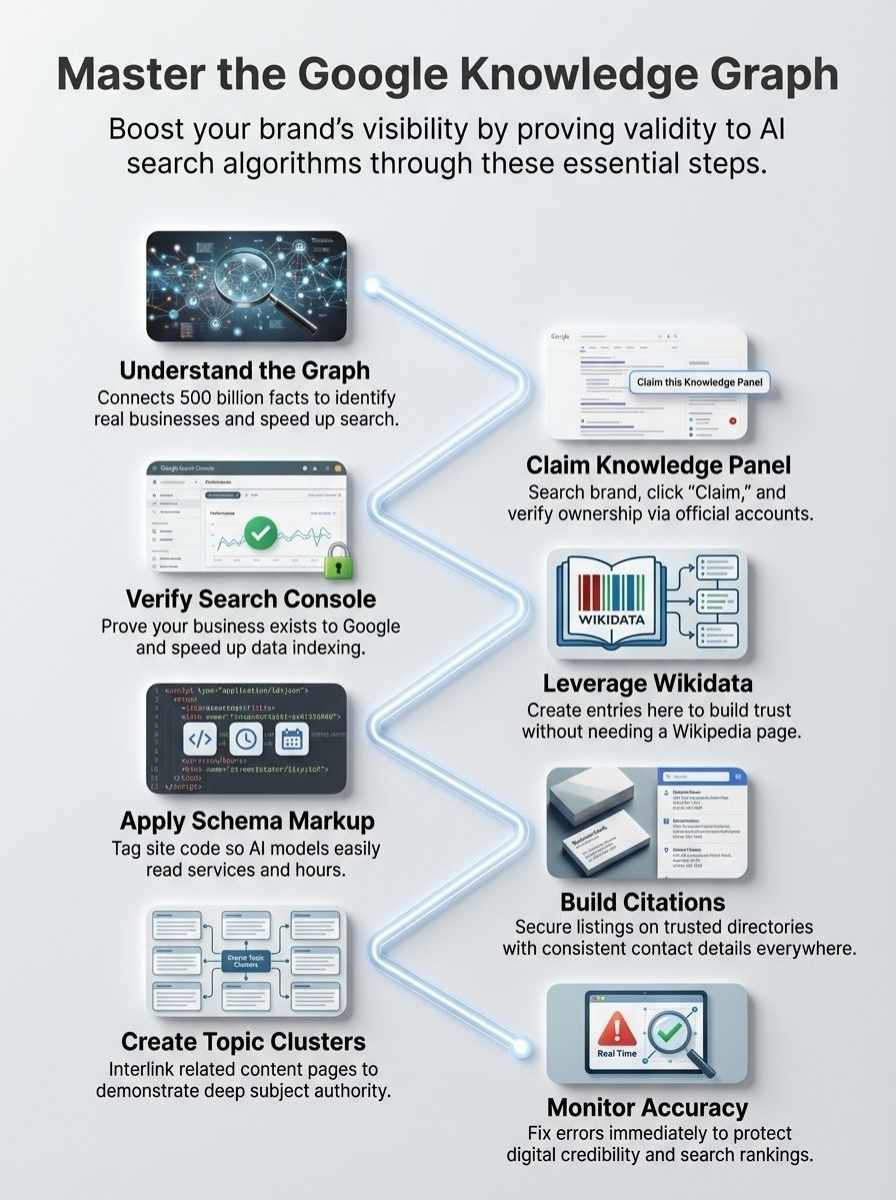
Ready to see your brand shine in search results? This process relies on proving to Google that you are notable and trustworthy.
1. Establish Your “Entity Home”
Before you claim anything, you need a home base. In the world of Entity SEO, an Entity Home is the single URL that you want Google to treat as the ultimate source of truth about your brand.
Most experts, like those at Kalicube, recommend using your About Us page rather than your homepage. Your homepage often changes with promotions and news, but your About page stays consistent.
Make sure this page clearly lists:
- Your official legal company name.
- A clear description of what you do.
- Links to all your active social media profiles.
- Founding date and key personnel.
2. Claim and Optimize Your Google Knowledge Panel
Securing a Google Knowledge Panel can set your brand apart. This digital card is like your brand’s handshake with AI search.
First, search for your brand name on Google. If a panel appears, look for the small “Claim this knowledge panel” button at the bottom. You will need to sign in with an official Google account linked to your business website to verify you are the owner.
Once you are in, treat this like a digital storefront that never sleeps:
- Upload High-Res Visuals: Add a crisp, transparent PNG logo and high-quality office or team photos. Consistency here reduces the risk of misinformation.
- Update Key Facts: Ensure your customer service number, CEO name, and social profiles are accurate.
- Monitor for Changes: Facts change. If you move offices, update it here immediately. Digital credibility depends on accuracy at every moment.
3. Verify Your Brand Through Google Search Console
Google Search Console acts as your digital proof of ownership. By verifying your brand, you tell Google’s Knowledge Graph that your business is a real entity. This step puts you straight in front of search algorithms looking for trusted sources to show users.
Over 54 billion entities fill Google’s database, so clear verification helps separate accurate details from the noise.
Submit your business site through Google Search Console early on. Use an official email tied to your domain for this process. Avoid shortcuts or tricks here if you want credibility and long-term SEO results.
Once approved, updates you make about store hours, products, or FAQs get linked across AI-powered searches faster than a squirrel after an acorn. Every detail counts toward building digital credibility and discoverability for your brand attributes in the Knowledge Panel.
4. Use Wikidata to Establish Global Authority
Wikidata acts as a trusted source for search engines such as Google. Unlike Wikipedia, which requires significant media coverage and “notability” to get a page, Wikidata is a structured database that is slightly easier to enter—though it still has strict rules.
To succeed with Wikidata:
- Cite Independent Sources: You cannot just link to your own website. You must provide references from third-party sources like newspapers, books, or reputable industry journals.
- Fill Out Every Attribute: Include your official website, headquarters location, and social media identifiers.
- Link Back: Ensure your Wikidata entry links to your “Entity Home” (your About page).
Brands with strong Wikidata profiles show up more often in search results and Knowledge Panels. Major brands like Nike or IBM use it to validate their presence worldwide. Consistent data across all listings helps boost discoverability in semantic search and ties your business into those important online relationships that modern algorithms look for each day.
5. Implement Structured Data Markup (Schema.org)
Structured data is the language you use to talk directly to Google’s bots. It tags your content so machines know exactly what it is. Schema.org gives a simple way to tag this information for AI models.
| Schema Type | Best Use Case | Key Benefit |
|---|---|---|
| Organization | General company info (Logo, URL, Contacts) | Helps Google identify your brand logo and official site. |
| LocalBusiness | Physical stores or offices with hours | Crucial for showing up in Google Maps and “Near Me” searches. |
| SameAs | Linking social profiles | Tells Google, “That Facebook profile definitely belongs to us.” |
Add Schema.org tags to your website’s code using JSON-LD format. This allows Google to quickly spot hours, contacts, reviews, services, products, and FAQs. Use the Same As property specifically to list your social media profiles and Wikidata page.
Test all schema with tools like Google’s Rich Results Test before deploying live changes to check for errors. Fixing mistakes early saves headaches later.
Strengthening Your Brand’s Entity Presence
Building a strong identity takes more than luck and wishful thinking. With the right focus, your brand can shine like a lighthouse in a crowded sea of search results.
Build High-Quality Citations and Mentions
To stand out in Google’s Knowledge Graph, you need other trusted sites to vouch for you. Get your brand listed on business directories and platforms like Crunch base, Bloomberg, or the Better Business Bureau. Every credible citation helps search engines see your business as a reliable entity.
Think of each mention from respected sources as another thread weaving your brand into the web of digital credibility. Even a single mention on a high-authority site can boost visibility and help secure that all-important Knowledge Panel.
Pro Tip: Keep your Name, Address, and Phone Number (NAP) identical everywhere. If you are “The Coffee Shop, LLC” on one site and “Coffee Shop Inc” on another, you confuse the bots. Simple consistency lays solid groundwork for stronger SEO.
Associate Your Brand With Relevant Topics
Brands catch Google’s eye by linking themselves to topics and keywords people actually search. You want Google to understand your “Entity-Query-Result” relationship.
For example, a bakery should connect its name with terms like “fresh bread,” “gluten-free pastries,” or “local bakery near me.” Mapping your brand this way helps AI engines pick you out in the busy crowd of over 54 billion entities.
Tie your business attributes, services, and FAQs directly to these high-demand subjects using structured data markup. Use semantically related words like online branding and knowledge representation in your content to reinforce these connections.
Leverage Topic Clusters to Establish Authority
Topic clusters help Google’s Knowledge Graph spot true experts. Instead of writing one giant guide, create a network of content.
Start with a core “Pillar Page” about a broad subject, like “SEO Search Engine Optimization.” Then, write supporting articles about related topics: structured data, Schema.org markup, and digital credibility. Link all these supporting articles back to the pillar page.
This creates a web, not just a list. Clear topic groups give search algorithms better information retrieval power. For example, if you build posts on knowledge panel tips or Wikidata verification steps along with main SEO themes, AI platforms see your site as the hub for those subjects in 2026 and beyond.
Tools and Techniques to Boost Knowledge Graph Presence
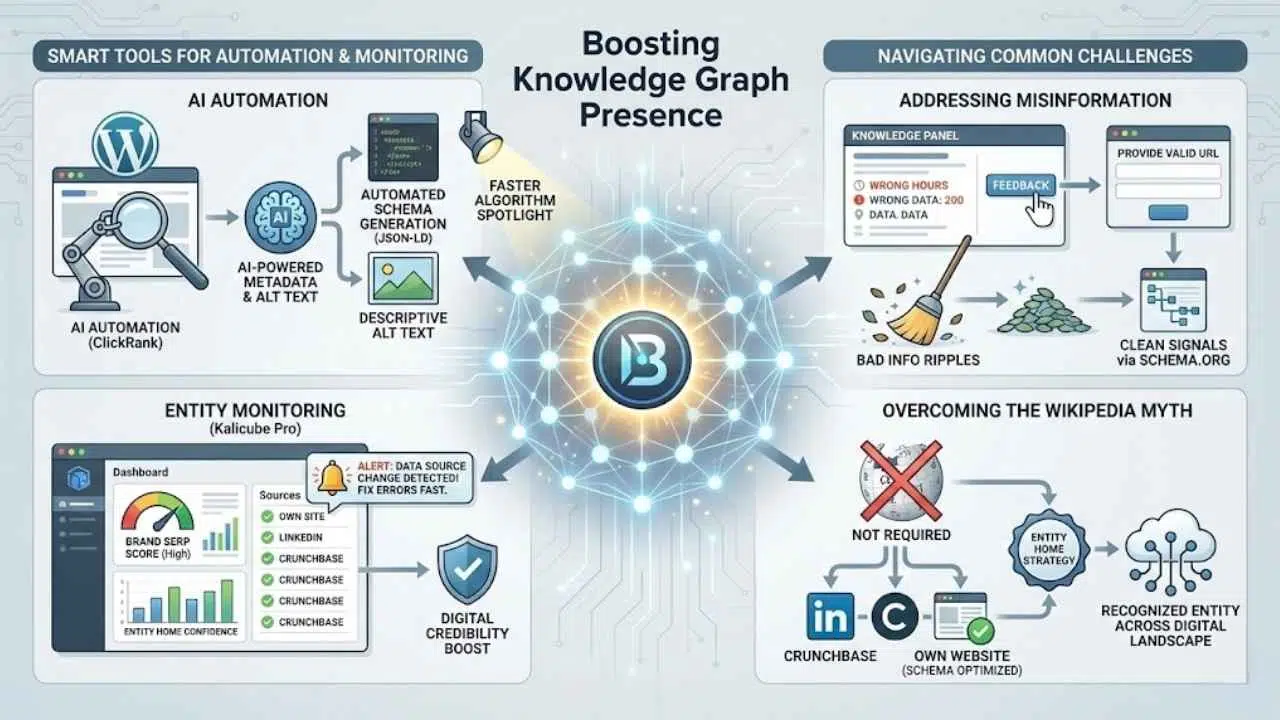
Smart tools and fresh techniques can help your brand shine brighter in the Knowledge Graph. Here are a few that really work.
Use AI Models Like ClickRank for Automation
AI automation has changed the game for metadata. Tools like ClickRank shine at reading through your brand’s digital details. This WordPress plugin scans your content and uses AI to generate optimized schema markup and metadata automatically.
Its “1-Click Schema Generation” feature analyzes your page and applies the correct JSON-LD code without you needing to touch the backend. It also uses a vision model to look at your images and write descriptive, SEO-friendly alt text.
Think of it like training for a big game. ClickRank highlights which stats matter most so search algorithms spot you faster. It helps polish attributes such as product names and services offered, ensuring AI-powered platforms pick up accurate signals about your business relationships.
Monitor Your Entity with Kalicube Pro
If you are serious about this, you need to track how Google “feels” about your brand. Kalicube Pro is the industry standard for this.
It gives you a “Brand SERP Score” and tracks your “Entity Home” confidence. You can see exactly which sources Google is using to verify your facts. If Google suddenly decides your competitor’s website is a better source of information about you than your own site, Kalicube Pro will alert you.
Set alerts for changes to your digital profile. Fix errors fast, before they spread across search engines. A small slip-up, such as a wrong phone number or service hours, could impact discoverability and digital credibility almost overnight.
Common Challenges in Knowledge Graph Recognition
Brands can face a real pickle with mix-ups in data, so stick around to pick up some handy tips for smoothing out the wrinkles.
Addressing Misinformation
Wrong details in your Knowledge Panel can sink trust fast. If you see an error, use the “Feedback” button usually located at the bottom right of the panel. Be prepared to provide a URL that proves the correction is valid.
Search engines pull from huge databases. If one source has bad info, it can ripple through AI search results everywhere. Add structured data using Schema.org markup on your site so you send clean signals right from the source.
Think of this step like sweeping leaves off a porch after every storm; if you do not catch them early, they pile up fast!
Overcoming the Need for a Wikipedia Page
Many brands think they must have a Wikipedia page to get a Knowledge Panel. That is simply not true anymore.
Google grabs data from many sources, including LinkedIn, Crunch base, and your own website (if the schema is right). Brands can build digital credibility by claiming their Knowledge Panel and verifying through Google Search Console.
Focus on your Entity Home strategy. If your About page is perfect and your schema is tight, you can get recognized as an entity without ever dealing with Wikipedia’s strict editors. Think of it as building strong relationships across different sites so your brand pops up everywhere people look online.
The Future of Knowledge Graphs and Entity SEO
AI-powered Knowledge Graphs now shape how brands show up in search. As we move through 2026, search engines are getting smarter at recognizing relationships between entities, attributes, and topics.
This means your store hours or FAQs can surface faster for users searching on AI tools like Google’s AI Overviews. Enterprise AI no longer just stores lists of data; it maps out every connection among services, products, or business details so nothing gets lost in a sea of keywords.
Soon, structured data using Schema.org will be the primary way to boost digital credibility. Keeping it simple stays key, even as connections multiply. Brands that build clear digital identities using strong topic clusters and verified profiles will lead both traditional SEO and voice-activated discovery.
Final Thoughts
You started with the basics of the Knowledge Graph, learned why it matters, and saw steps to claim your space in Google’s digital map. Simple moves like verifying through Search Console, using Schema.org data, and linking with Wikidata make your brand easier for smart search tools to find.
Each tip is straightforward enough for any business owner or marketer who wants results. No rocket science needed. Have you tried tweaking your online details yet, or do you still rely on luck over proven digital strategy?
Make these small changes count, watch your visibility climb, and keep learning from trusted guides as you grow. Every giant leap starts with a single step, and maybe a clever schema tag or two!