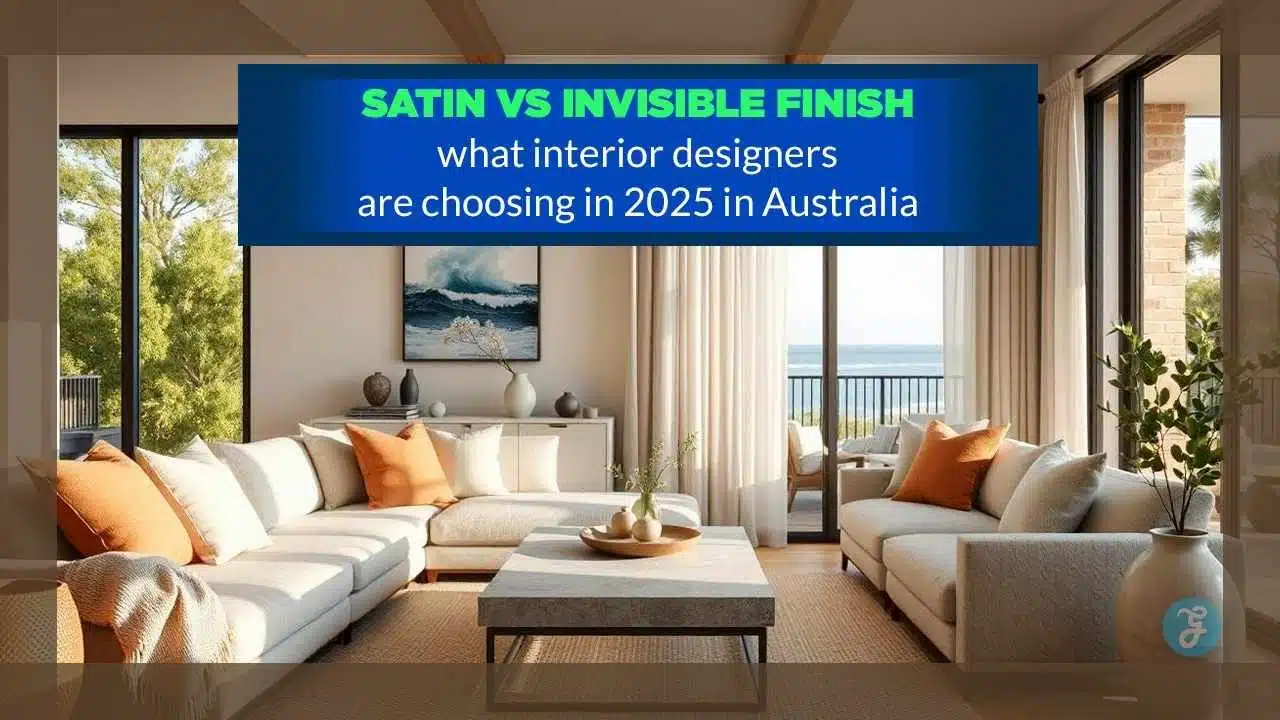
If you are renovating a home or building new in 2026, the conversation around flooring has shifted dramatically. The debate of Satin vs Invisible Floor Finish Australia is no longer just about durability; it is about a fundamental change in design philosophy. For decades, Australian homeowners equated a “finished” floor with a shiny floor. If it didn’t gleam under the downlights, was it really protected? But as we move deeper into this decade, that mindset has been upended.
The current interior design landscape is dominated by Biophilic Design, a desire to bring the organic, imperfect texture of nature indoors. This shift has propelled the “Invisible” (or Raw) finish from a niche architect’s request to the mainstream standard for high-end Australian homes. However, the classic Satin finish refuses to disappear, holding its ground as the reliable, easy-to-clean workhorse for families and investment properties.
So, which one is right for your project? Whether you are sanding back heritage Jarrah in Melbourne or laying new engineered Blackbutt in a coastal Queensland build, this guide will break down every technical, aesthetic, and practical difference between these two contenders.
Key Takeaways
-
The Trend: The “Invisible” (Raw) finish is the dominant trend for 2026, driven by Biophilic design and a desire for natural, low-glare interiors.
-
The Function: Invisible finishes hide scratches better than Satin, making them ideal for pets, but they have more “drag” when mopping.
-
The Colour: Use Invisible finishes for pale timbers (Blackbutt, Oak) to prevent them from turning orange. Use Satin for dark timbers (Jarrah) if you want to enhance depth.
-
The Product: Ensure your contractor uses a 2-Component (2K) Water-Based Polyurethane. Do not accept single-pack cheap finishes for high-traffic areas.
The Rise of the “Raw” Aesthetic: Why Shinier Isn’t Better Anymore
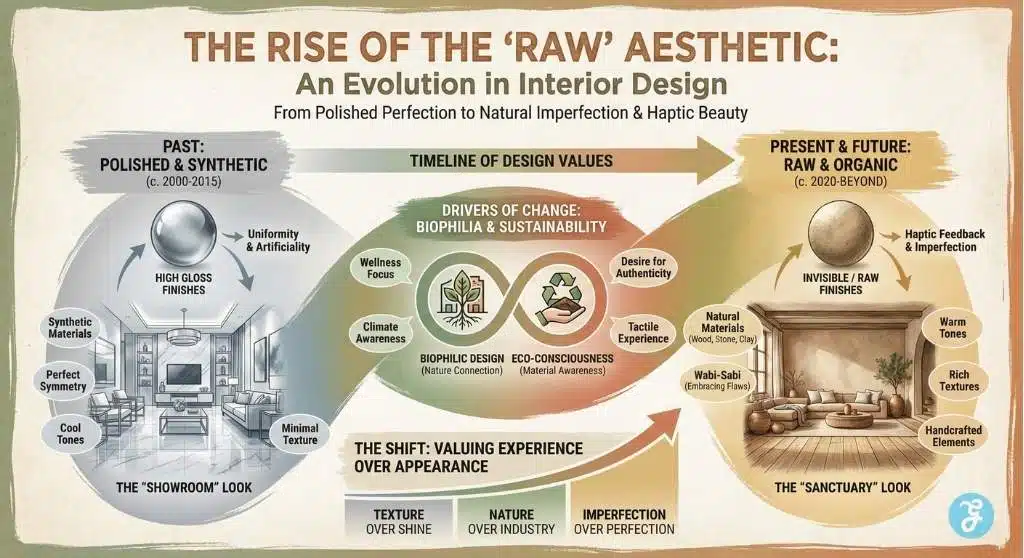
To understand why the market is moving away from sheen, we have to look at the broader trends in Australian architecture. Modern homes are utilizing vast amounts of glass—floor-to-ceiling windows and large sliding doors that flood open-plan living areas with natural light.
In this environment, a traditional Gloss or even Semi-Gloss finish acts like a mirror. It creates harsh glare, reflects every LED downlight as a bright white spot, and, crucially, highlights every speck of dust and pet hair on the floor.
The Invisible Finish emerged as the solution. By using advanced water-based nanotechnology, manufacturers like Bona and Loba created coatings that protect the wood without wetting the grain. The result is a floor that looks like bare, sanded timber but has the durability of a commercial-grade seal. It absorbs light rather than reflecting it, creating a soft, calming atmosphere that feels “dry” and organic to the touch—a quality designers call “haptic feedback.”
Deep Dive: The Invisible (Raw) Finish
Also known as: Ultra-Matte, Naked, Raw, Extra-Matte.
What is it?
An invisible finish is typically a two-component (2K) water-based polyurethane with a sheen level of less than 10% (often as low as 4-6%). Unlike oil-modified coatings that turn timber amber or yellow, invisible finishes are designed to be chemically “clear” or slightly whitened to preserve the freshly sanded colour of the wood.
The Aesthetic
-
Pale and Sandy: It stops the “wheat” or orange tones from developing in species like Tasmanian Oak and Blackbutt.
-
Texture: It feels slightly rougher, like real wood, rather than a plastic sheet.
-
No Glare: You can look across a large room with sunlight pouring in and see the grain of the wood, not a sheet of white reflected light.
The Pros
-
Scratch Camouflage: This is the biggest selling point. Because there is no reflection, micro-scratches (the white lines you usually see when a dog runs around) do not “break” the light. They are there, but you can’t see them.
-
Modern Value: It instantly updates a home. A 1990s Spotted Gum floor refinished in invisible coating looks like a contemporary architectural feature.
-
Slip Resistance: Most invisible finishes (like Bona Traffic HD Raw) naturally achieve a P3 slip rating, making them safer for stairs and elderly residents.
The Cons
-
The “Dirty” Perception: Because it doesn’t shine, some traditional homeowners feel it looks “dry” or “unfinished.”
-
Cleaning Friction: This is the most cited complaint. Because the finish has a micro-texture to disperse light, it has a higher coefficient of friction. Mops don’t “glide” as easily; they can feel like they are dragging.
-
Holding Dirt: That same texture can grab onto dirt more stubbornly than a slick Satin surface, requiring more frequent vacuuming or a microfibre mop with a little more elbow grease.
Deep Dive: The Satin Finish
Also known as: Silk-Matte, Low-Sheen.
What is it?
Satin is the middle ground. It is not a mirror-like Gloss, but it has a definitive luster, typically sitting between 30% and 45% sheen. It has been the standard choice in Australia for the last 20 years.
The Aesthetic
-
Warmth: Satin reflects enough light to give the floor a “glow.” This effectively darkens the timber slightly, bringing out the rich reds and browns in species like Jarrah, Sydney Blue Gum, and Merbau.
-
Smoothness: It feels slick and sealed underfoot.
The Pros
-
Easy Maintenance: The surface is smooth and sealed flat. A damp mop glides over it effortlessly, making it the preferred choice for cleaners and rental providers.
-
Depth of Grain: If you have a timber with complex, beautiful grain patterns (like Fiddleback Spotted Gum), the slight refraction of light in Satin highlights this depth better than a flat matte.
-
Familiarity: For resale in conservative markets, Satin is safe. Buyers walk in and unconsciously register the floor as “polished” and “clean.”
The Cons
-
Scratch Visibility: The Achilles heel of Satin. As soon as you scratch the surface, the scratch appears white. Because the rest of the floor is reflecting light, that white scratch stands out like a beacon.
-
The “Plastic” Look: In modern, minimal homes, Satin can look synthetic. It puts a barrier between you and the wood that feels artificial.
-
Dated Appearance: In 2026, a Satin finish on a light-coloured timber (like Oak) can make the home feel like a renovation from 2010.
Head-to-Head Comparison: The 2026 Verdict
To make the Satin vs Invisible Floor Finish Australia decision easier, we have compiled a direct comparison of how these finishes perform in Australian conditions.
| Feature | Invisible / Raw Finish | Satin Finish |
| Sheen Level | < 10% (Ultra-Matte) | 30% – 45% (Soft Luster) |
| Visual Effect | Dry, natural, “bare wood” look. | Warm, glowing, “coated” look. |
| Scratch Visibility | Excellent. Hides scratches by absorbing light. | Poor to Moderate. Light reflection highlights scratches. |
| Yellowing (Ambering) | None. Formulated to keep wood pale. | High. Enhances golden/yellow tones over time. |
| Cleaning Ease | Moderate. High friction; mops can drag. | High. Smooth surface; mops glide easily. |
| Slip Rating (Typical) | P3 (High slip resistance). | P2 or P3 (Varies by product). |
| Best Wood Species | Blackbutt, Tas Oak, Engineered Oak. | Jarrah, Spotted Gum, Brushbox. |
| Ideal Setting | Coastal, Scandi, Architect-designed homes. | Heritage, Traditional, Investment/Rentals. |
Impact on Australian Timber Species
One of the most critical factors in your decision should be the species of timber you are coating. Australian hardwoods interact differently with these finishes than European Oaks do.
1. Blackbutt & Tasmanian Oak (The Pale Timbers)
These are the darlings of modern Australian design.
-
Recommendation: Invisible/Raw.
-
Why: Satin finishes (especially oil-modified ones, but even some water-based) tend to turn these timbers a deep golden-orange (the “honey” look) over time. If you want that bleached, scandi, “driftwood” aesthetic, you must use an Invisible finish. It locks in the straw colour and prevents the orange shift.
2. Spotted Gum (The Variation King)
Spotted Gum varies from pale greys to deep chocolates.
-
Recommendation: Split Decision.
-
Go Invisible: If you want to modernize the home and suppress the red tones, making the floor look cooler and greyer.
-
Go Satin: If you want to celebrate the variation and make the darker features “pop.” Satin adds richness to Spotted Gum that flat finishes sometimes mute.
3. Jarrah & Red Ironbark (The Reds)
-
Recommendation: Satin.
-
Why: An Invisible finish on dark red timber can sometimes look “milky” or cloudy, like a film of dust is sitting on top of the deep colour. Satin allows the light to penetrate the clear coat and bounce off the grain, giving these majestic timbers their signature depth. However, “Extra Matte” (around 15-20% sheen) is a growing compromise here.
Design Compatibility: Matching Your Furniture
Your floor finish dictates which furniture styles will work in your space. The wrong finish can make expensive furniture look out of place.
Best for “Japandi” & Minimalist Styles: Invisible Finish.
If you have matte black cabinetry, stone benchtops (like Caesarstone pure white), or linen sofas, a shiny floor will clash. The Invisible finish provides the organic, matte foundation that anchors these natural materials.
Best for Heritage & Traditional Styles: Satin Finish.
If you have antique mahogany furniture, velvet drapes, or ornate cornices, a Satin finish complements these textures. Traditional design relies on light reflection to add grandeur and “sparkle” to a room, particularly in darker Victorian terraces.
Best for Coastal / Hamptons: Invisible Finish.
The goal here is a “driftwood” look. Shiny floors look too suburban for a coastal aesthetic. An invisible finish on Blackbutt or Oak mimics the dry, sandy look of the beach.
Repairability & “The Black Scuff”
Living with these floors reveals quirks that brochures don’t mention.
-
The “Black Scuff” Phenomenon (Invisible):
-
Because Invisible finishes have a micro-texture (to scatter light), they can act like very fine sandpaper against rubber. If a guest drags a cheap rubber-soled shoe or a heavy chair leg across the floor, it may leave a black scuff mark.
-
The Fix: The floor isn’t damaged; the rubber has just rubbed off onto the floor. It wipes away easily with a magic eraser or a finger, but it happens more frequently than on slick Satin floors.
-
-
Patch Repairs:
-
Satin: Impossible to spot-repair. If you scratch the middle of a hallway, you cannot just patch that spot; the new patch will have a different sheen and leave a “halo.” You must re-sand the whole room.
-
Invisible: Slightly more forgiving. Because there is no light reflection, professional restorers can sometimes blend a matte repair coat into a scratch without it catching the eye.
-
Health & Safety: The VOC Reality
In 2026, the focus on “Healthy Homes” has never been sharper. The choice of finish dramatically affects your indoor air quality during and after the renovation.
1. The Solvent Trap (Often Satin): Many traditional floor sanders still prefer solvent-based Satin polyurethanes. While durable, these contain high levels of Volatile Organic Compounds (VOCs)—often exceeding 500g/L.
- Risk: They off-gas strong fumes (isocyanates) that can trigger asthma and headaches. You typically need to vacate your home for 5–7 days.
- Yellowing: These solvents are the primary reason floors turn orange/yellow over time.
2. The Water-Based Standard (Invisible/Raw): Almost all “Invisible” finishes are Water-Based.
- Safety: They generally have Low VOCs (<50g/L) and are non-toxic. Brands like Bona and Loba often carry GreenGuard Gold certification, making them safe for nurseries and allergy sufferers.
- Convenience: There is barely any odour. You can often sleep in the bedrooms while the living areas are being coated.
Expert Tip: If you choose Satin, you must specify “Water-Based Satin.” If you don’t, many contractors will default to the cheaper, smellier solvent options.
The Technical Reality: Maintenance & Durability
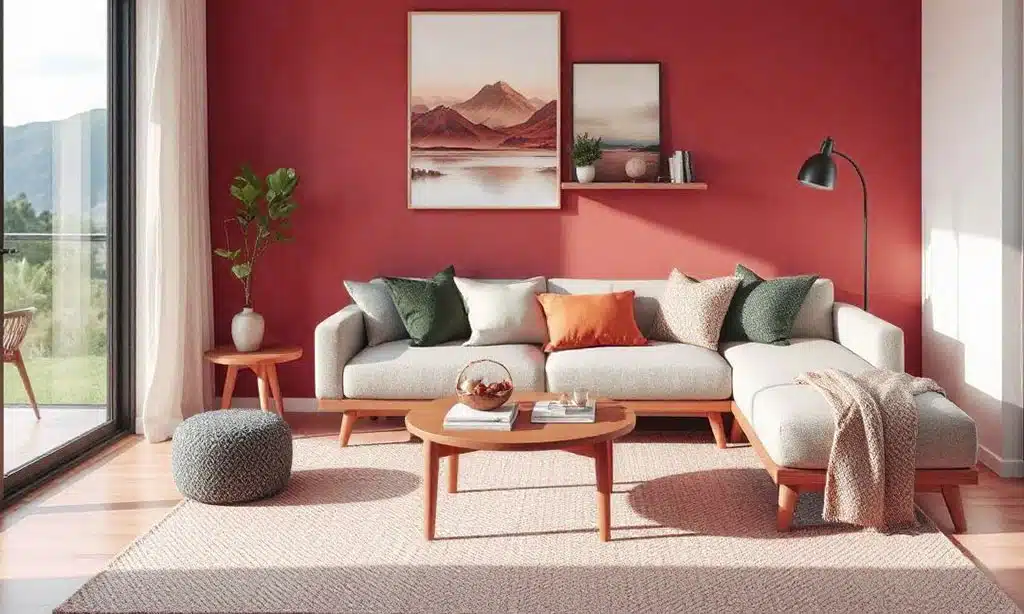
A common myth in the Satin vs Invisible Floor Finish Australia debate is that one is “harder” than the other.
The Truth:
If you use a premium 2-component product (like Bona Traffic HD or Loba 2K Supra), the hardness and chemical resistance are identical regardless of the sheen. A matte floor is not softer than a satin floor.
However, “Perceived” Durability differs:
-
Invisible finishes look new for longer. Because they don’t reflect light, you don’t see the “traffic trails” (dull patches in high-traffic hallways) that usually appear on Satin floors after 3-4 years.
-
Satin finishes are easier to clean day-to-day. If you have a dog that drools or kids that spill juice, a quick wipe on Satin is effortless. On a raw/invisible finish, that liquid might settle into the micro-texture, requiring a slightly more vigorous wipe to remove the residue.
The “Boot Polish” Issue:
One specific issue with Invisible finishes is scuff marks from black rubber soles or furniture legs. Because the surface is textured (to scatter light), it acts like very fine sandpaper against rubber, grabbing it and leaving a black scuff mark. These rub off easily with a finger or a magic eraser, but they happen more frequently than on slick Satin floors.
The “Hip Pocket” Impact: Cost Analysis
One of the first questions Australian homeowners ask is, “Does the designer look cost more?” In the Satin vs Invisible Floor Finish Australia debate, there is a distinct price difference driven by the technology used.
The Cost of “Invisible”: Achieving a true “raw” look requires advanced two-component (2K) water-based technology. These formulas use expensive matting agents (ceramic or silica) to scatter light without clouding the grain.
- Material Cost: Premium products like Bona Traffic HD Raw or Loba 2K Invisible Protect typically cost $260 – $320 per 5L bottle.
- Labour Cost: Expect to pay a premium for labour. Because there is no glare to distract the eye, the sanding preparation must be flawless. Any swirl mark or scratch from the sanding machine is visible through the clear matte coat, so sanders often charge an extra $5–$10 per square metre for the additional care required.
The Cost of Satin: Standard Satin finishes (especially single-pack polyurethanes) are cheaper to manufacture and more forgiving to apply.
- Material Cost: Standard water-based or solvent-based Satin finishes range from $120 – $180 per 5L bottle.
- Total Project Savings: On an average 80m² home, choosing a standard Satin over a premium Invisible system could save you approximately. $800 – $1,200.
Verdict: If budget is your primary constraint, Satin wins. If value-adding and modernizing the property is the goal, the extra investment in Invisible is recoverable at resale.
Brand Authority: What are the Pros Using?
In 2026, you shouldn’t just ask for “Satin” or “Matte.” You should specify the product technology. The Australian market is dominated by two European giants who set the standard for non-toxic, water-based coatings.
1. Bona (Sweden)
-
Hero Product: Bona Traffic HD Raw.
-
The Scoop: This is widely considered the benchmark. It has a high slip resistance (P3) and an incredibly natural look. It uses a hardener (2-part mix) which makes it bulletproof for busy families.
-
Sheen: Ultra-matte (approx 4%).
2. Loba (Germany)
-
Hero Product: Loba 2K Invisible Protect.
-
The Scoop: Loba has a cult following among floor sanders because it doesn’t require a primer coat—it’s self-sealing. It is famous for retaining the “untreated” look better than almost anything else. It feels slightly smoother than the Bona Raw, which some homeowners prefer for cleaning.
-
Sheen: Extremely low (approx 5-9%).
3. Intergrain (Australia)
-
Hero Product: Enviropro.
-
The Scoop: A solid, locally engineered choice. Their “Matte” is slightly shinier than the European “Raw/Invisible” counterparts (closer to 15-20%), which can be a good middle ground if you are scared of the “dead flat” look.
Frequently Asked Questions (FAQs)
1. Does an invisible finish make the floor harder to clean?
Technically, yes, but only slightly. Because the finish has a microscopic texture to disperse light, it creates friction. You might find your microfiber mop “grabs” the floor rather than sliding over it. However, most homeowners find this a worthy trade-off for not seeing footprints and dust as easily as they would on a shiny floor.
2. Can I change my existing Satin floor to an Invisible finish?
Yes, but it requires a full resand. You cannot just coat over the top. The old Satin finish must be sanded back to bare timber to apply the new Invisible coating system (like Loba Invisible Protect) directly to the raw wood. This is the perfect time to modernize a home’s entire look.
3. Will an invisible finish look like my floor has no protection?
To the naked eye, yes—that is the point! It will look like bare, scrubbed wood. However, if you spill red wine on it, the liquid will bead on the surface just like it would on a gloss floor. It offers full chemical and water resistance; it just doesn’t look like a plastic layer.
4. Is Satin finish better for rental properties?
Generally, yes. Satin is universally understood. Tenants know it looks “clean” when it shines. It is also more forgiving of “lazy” mopping techniques. Invisible finishes can sometimes develop shiny spots if tenants use incorrect supermarket cleaners (like wax-based polishes), which ruins the raw effect.
5. I have pets. Which finish is best?
Invisible/Raw is the clear winner for pets. While Satin is physically durable, it shows the scratches your dog makes. Every claw mark reflects light and appears white. On an invisible floor, those same claw marks do not reflect light, rendering them nearly imperceptible to the human eye from a standing position.
The Final Verdict: Embracing the Authentic
As we settle into 2026, the shift in Australian interiors is clear: we are trading artificial perfection for authentic texture. Choosing an Invisible finish isn’t merely following a trend; it is a lifestyle choice that prioritizes a connection to nature over the “showroom shine” of the past.
While Satin remains a reliable guardian for heritage homes and investment properties, the modern design ethos has moved on. The future belongs to floors that feel as organic as they look. If you want a space that feels like a sanctuary rather than a museum, have the confidence to let your timber speak for itself. Trust the raw aesthetic—it is the breath of fresh air your home deserves.