Confidence is not magic, and it is not a fixed personality trait. It is a skill that grows the more you use it. Many people believe that some are simply born confident and others are not, but in reality, self-assurance develops over time through choices, habits, and experiences. The encouraging part is that it is always possible to boost your confidence naturally, no matter your age, background, or starting point.
When you boost your confidence naturally, you are not pretending to be someone you are not. You are learning to trust yourself, respect your own abilities, and handle challenges with a calmer mind. Confidence affects how you speak, how you make decisions, how you walk into a room, and even how you handle failure. It influences relationships, career growth, public speaking, and everyday happiness.
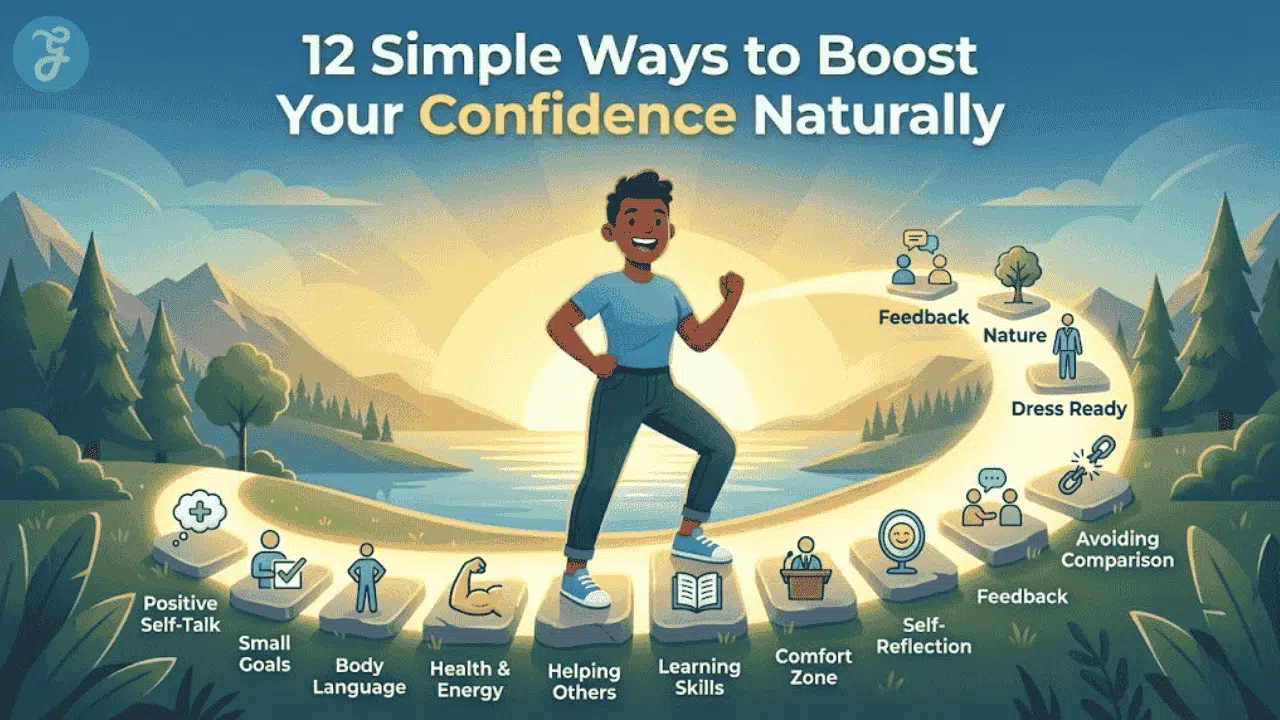
This guide will walk through 12 simple ways to boost your confidence naturally. These are practical steps that you can apply in real life without extreme routines or fake positivity. They focus on inner growth, daily habits, and small shifts that eventually transform how you see yourself.
Before diving into specific methods, it helps to understand what confidence really is and how it works in everyday life.
What Is Confidence and Why Does It Matter?
Confidence is the belief that you can handle situations, learn what you do not know yet, and recover when things go wrong. It is not about being perfect. Instead, it is about trusting that you can figure things out as you go.
People with healthy confidence:
-
Try new things even when you feel unsure
-
Speak up even if others may disagree
-
Accept mistakes as part of learning
-
Respect themselves even when they fail
People with low confidence often:
-
Hold back from opportunities
-
Constantly second-guess their decisions
-
Fear judgment or rejection
-
Compare themselves harshly to others
Confidence matters because it directly shapes your choices. When you feel capable, you are more likely to take action, stay consistent, and keep going. When you feel small or powerless, you may freeze, avoid, or give up quickly.
Pro Tip: Think of confidence as a muscle. Every time you challenge yourself and complete a task, you add a small amount of strength. Over time, those small efforts create a powerful change.
12 Simple Ways to Boost Your Confidence Naturally
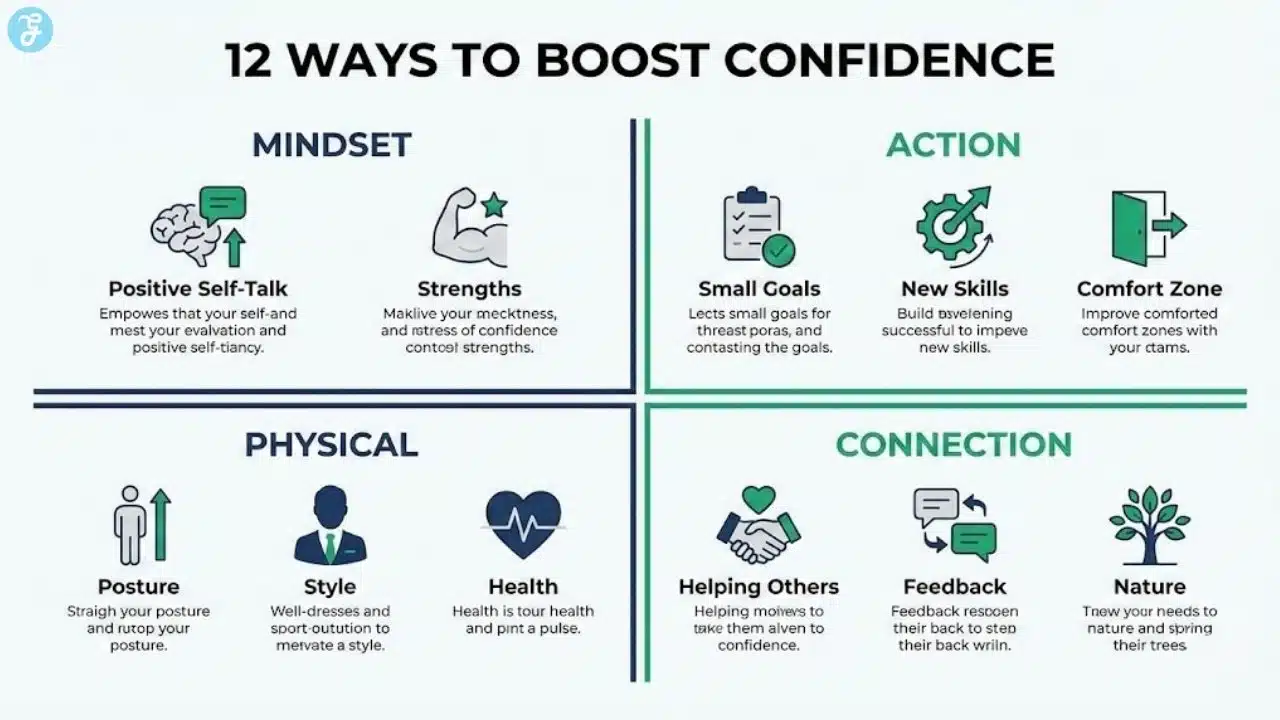
This is the core of our guide. In this section, we explore twelve practical strategies that help you boost your confidence naturally without forcing a fake personality. Each one is simple on its own, but together they form a strong foundation for lasting self-assurance.
1. Practice Positive and Realistic Self-Talk
The way you speak to yourself shapes your inner world. If your internal voice constantly says things like “I am useless” or “I always fail,” your confidence shrinks. Positive self-talk does not mean lying to yourself. It means choosing thoughts that are both supportive and realistic.
Instead of:
-
“I cannot do this.”
Try:
-
“This is hard, but I can learn how to do it.”
Instead of:
-
“I always mess things up.”
Try:
-
“I have made mistakes, but I also have succeeded many times/”
One useful technique is to talk to yourself the way you would speak to a close friend. You would not attack them constantly, so try not to attack yourself either.
2. Set Small, Clear Goals and Finish Them
Big goals are inspiring, but they can also feel overwhelming. Small goals are easier to start and easier to finish, and each success adds a small brick to your confidence.
Examples of small goals:
-
Reading 5 to 10 pages of a book each day
-
Doing 15 minutes of exercise three times a week
-
Cleaning one drawer or shelf in your room
-
Sending one email you have been avoiding
When you complete small tasks, you prove to yourself that you can take action and follow through. Over time, this builds strong self-respect and trust in your own discipline.
Pro Tip: Write down three small tasks each morning that you know you can complete by the end of the day. Crossing them off provides a very real sense of progress.
3. Focus on Your Strengths, Not Only Your Weaknesses
Most people are very aware of their weaknesses. They can list all the things they think they are bad at. The problem is that they rarely give equal attention to their strengths.
To boost your confidence naturally, make a habit of noticing what you do well. This does not mean ignoring areas for improvement. It means balancing your self-knowledge.
You can try:
-
Listing five skills you are proud of
-
Ask a trusted friend what they think your strengths are
-
Remembering times you helped someone or solved a problem
When you see yourself more completely, including your strengths, it becomes much easier to feel naturally confident.
4. Improve Your Posture and Body Language
Your body language affects how you feel inside and how others see you. When you slouch, avoid eye contact, or fold your arms tightly, you often feel smaller and less sure of yourself. When you stand tall, keep your shoulders relaxed but open, and maintain gentle eye contact, your brain picks up a different message.
Simple body language habits that support confidence:
-
Stand with feet grounded and shoulders relaxed
-
Keep your head upright rather than constantly looking down
-
Use open gestures instead of closed, defensive ones
-
Walk at a steady, calm pace
These may seem like small changes, but they influence your emotional state. Over time, your body language and inner confidence begin to support each other.
5. Dress in a Way That Makes You Feel Ready
Clothing will not magically fix deep insecurities, but it can affect your mood, energy, and presence. Dressing “for success” is not about brand names. It is about wearing clean, comfortable, well-fitted clothes that match the impression you want to create.
You can ask:
-
Does this outfit make me feel prepared for the day
-
Would I feel comfortable meeting someone important wearing this
-
Do I feel like myself in these clothes
Even small touches, such as neat grooming, simple accessories, or clothes in colors you like, can influence how you see yourself.
6. Learn and Master New Skills
Human beings build confidence by mastering challenges. When you learn something new and improve at it, you send yourself a clear message: “I am capable of growth.”
Skills you can build:
-
A technical skill like coding, video editing, or design
-
A creative skill like drawing, music, or writing
-
A practical skill like cooking, budgeting, or fixing simple things at home
-
A communication skill, like public speaking or negotiation
The goal is not to become the best in the world. The goal is to see proof that you can move from “I do not know how” to “I can do this now.”
7. Step Outside Your Comfort Zone in Small Steps
A comfort zone feels safe, but it also limits growth. If you stay inside it forever, your confidence cannot expand. You do not need to take huge, extreme risks to stretch your comfort zone. Small, regular pushes are more effective and sustainable.
Examples:
-
Speaking once in a meeting when you usually stay silent
-
Ordering food in a language you are learning
-
Sharing an opinion on social media when you would usually stay quiet
-
Trying a new class or activity
Each time you survive a mildly uncomfortable situation, your brain learns that you can handle more than you thought. Over time, this becomes a powerful way to boost your confidence naturally.
Pro Tip: Think of discomfort as a sign that you are growing, not failing. Mild nervousness often shows that you are doing something meaningful.
8. Take Care of Your Health and Energy
Low energy and poor health drain confidence. When you are exhausted, undernourished, or constantly stressed, your brain has less capacity to handle challenges. Taking care of your body is not separate from confidence-building; it is part of it.
Key areas to focus on:
-
Sleep: Aim for consistent, quality sleep so that you feel rested
-
Nutrition: Eat regular meals with a mix of protein, healthy fats, and complex carbohydrates
-
Movement: Include some physical activity most days, even walking
-
Relaxation: Build in moments where you can unplug and decompress
When your body feels stronger and more balanced, it becomes easier to think clearly and feel capable.
9. Help Others and Be of Service
Helping others is a powerful, often underrated way to build self-assurance. When you support someone, share knowledge, or offer your time, you see tangible proof that you can have a positive impact on the world.
Ways to help:
-
Tutoring or mentoring someone less experienced
-
Volunteering in your community
-
Listening to a friend who is going through a hard time
-
Sharing useful resources or tools with colleagues
This kind of contribution deepens your sense of purpose and value, which naturally supports confidence.
10. Reduce Comparisons
Comparing yourself to others is almost automatic, especially online. When you constantly measure your life against filtered images and highlight reels, it becomes very difficult to feel confident. You may always find someone who looks more successful, attractive, or talented.
To reduce the damage of comparison:
-
Remind yourself that social media is a curated display, not reality
-
Limit time spent on platforms that trigger insecurity
-
Focus on your own progress over time, not on someone else’s timeline
-
Surround yourself with people who celebrate your growth instead of constantly competing
Your life is not a race with one winner. Confidence grows when you respect your own path instead of constantly grading yourself against others.
11. Seek Constructive Feedback and Use It
Confidence does not mean ignoring feedback. In fact, confident people are often more open to learning what they can improve. The key is to seek feedback from people who are honest, respectful, and knowledgeable, not from random critics.
Constructive feedback can:
-
Highlight the blind spots you did not see
-
Confirm strengths you underestimate
-
Offer clear steps for improvement
When you respond to feedback with curiosity instead of defensiveness, you build strong inner security. You are no longer afraid of criticism, because you see it as information rather than an attack.
12. Spend Time in Nature and Reflect
Modern life is often loud, fast, and crowded. It can be hard to hear your own thoughts. Spending time in nature, even in a small park or a quiet garden, gives your mind space to rest and reset.
You can:
-
Take short walks without your phone
-
Sit by a tree, lake, or river and breathe deeply
-
Reflect on what truly matters to you, beyond other people’s opinions
These moments of quiet help you reconnect with yourself. When you are more grounded, your confidence becomes less dependent on external noise and more rooted in inner clarity.
Common Confidence Killers to Avoid
While building new habits, it is also important to notice patterns that quietly destroy confidence. Some of these are easy to overlook, but they have a strong cumulative effect.
Major confidence killers include:
-
Chronic self-criticism and harsh inner dialogue
-
Saying yes to everything and burning out
-
Spending time with people who constantly belittle you
-
Never allowing yourself to make mistakes
-
Avoiding all discomfort or new challenges
Simply becoming aware of these habits is the first step. Once you see them, you can start making different choices.
Pro Tip: If you notice a confidence killer in your life, do not attack yourself for it. Instead, treat it as a signal that something needs attention and gently adjust your behavior.
Overcoming the “Imposter Syndrome” Trap
Even after practicing these habits, you might still experience a nagging feeling that you are a “fraud” or that your achievements are just luck. This is called imposter syndrome, and it is a major roadblock to natural confidence. It affects high achievers, creatives, and professionals alike, making them feel like they don’t belong in the room.
To stop Imposter Syndrome from eroding your confidence:
-
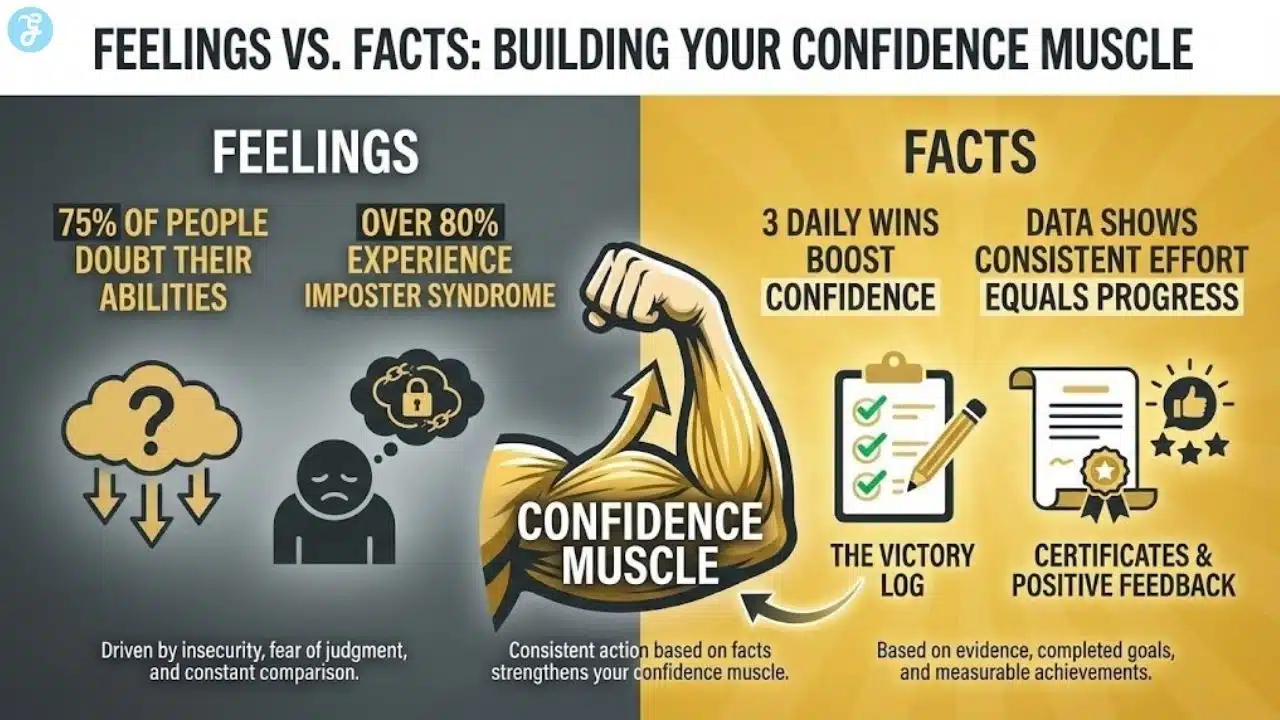
Separate Feelings from Facts: You may feel unqualified, but the facts (your degree, your experience, your completed projects) likely say otherwise. When the feeling arises, look at the data.
-
Keep a “Victory Log”: Our brains are wired to remember failures and forget successes. Keep a physical or digital folder where you save praise, completed goals, and positive feedback. Review it whenever you feel like a fake to remind yourself of your track record.
-
Reframe “I Don’t Know”: Instead of panicking when you don’t know an answer, view it as an opportunity to use your learning skills. True confidence is comfortable with saying, “I don’t know the answer yet, but I can find out.”
How to Make Confidence Habits Stick?
Reading about confidence is easy. The real challenge is turning ideas into daily habits that actually change how you feel and act.
Some practical ways to make these habits stick:
-
Start small and focus on one or two methods at a time
-
Use reminders, such as phone alerts or notes, to practice positive self-talk or posture
-
Track progress in a simple journal, writing down small wins or moments when you acted more confidently
-
Be patient with yourself, since confidence grows gradually, not overnight
Consistency is more important than intensity. A small daily habit that you follow for months is more effective than an intense effort that you abandon after a week.
Final Thoughts About Boosting Your Confidence Naturally
Confidence is not built in a day. It is built in daily actions, small decisions, and quiet moments where you choose to support yourself instead of tearing yourself down. When you boost your confidence naturally, you invest in your long-term emotional health. You are not chasing quick tricks or fake bravado. You are learning to stand on your own side.
If you start applying even a few of these 12 methods, you will likely notice subtle changes in how you think, speak, and act. Over time, those subtle changes grow into a more stable sense of self-assurance. You begin to trust yourself more, handle challenges with less panic, and see opportunities instead of only obstacles.
Confidence is not about being perfect. It is about knowing that, whatever happens, you are capable of learning, adapting, and continuing. That is the kind of confidence that lasts.