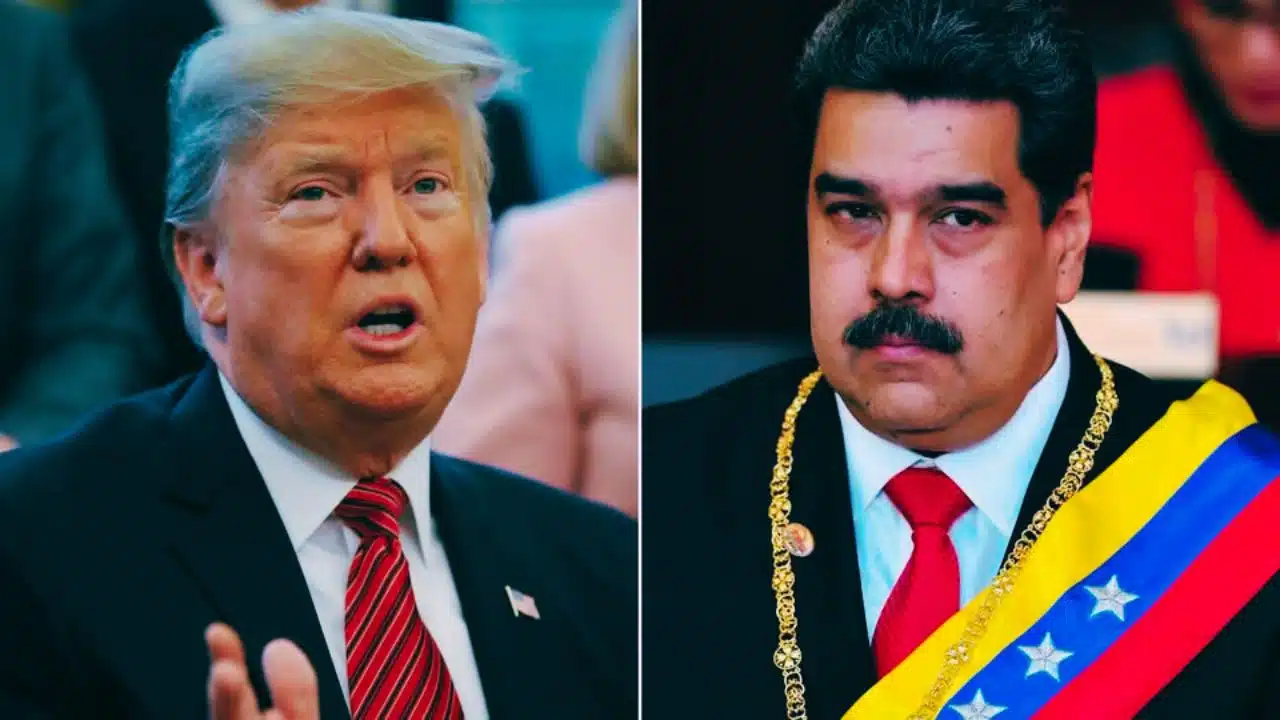
President Donald Trump has reportedly delivered a stark ultimatum to Venezuelan President Nicolás Maduro, urging him to step down and leave the country in exchange for safe passage for himself and his family or face the risk of U.S. military action. The reported demand marks the sharpest escalation yet in Washington’s pressure campaign and raises fears of a direct confrontation between the United States and Venezuela.
Reported ultimatum on private call
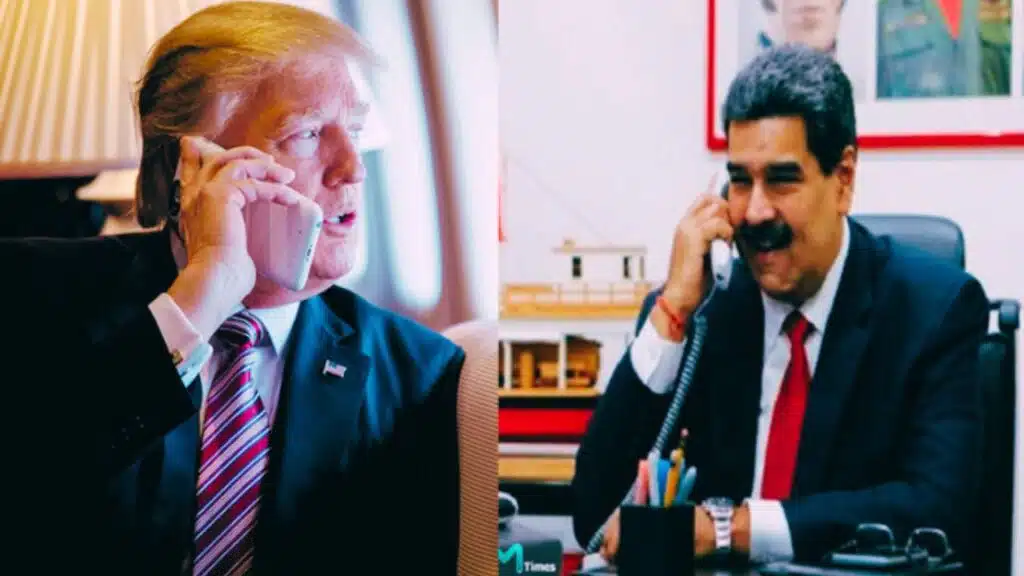
According to multiple media reports citing U.S. and regional officials, Trump and Maduro spoke by phone in late November in what was described as a last-ditch attempt to avert a potential military clash. During that call, Trump’s message was portrayed as a clear demand that Maduro resign immediately and depart Venezuela if he wished to secure guarantees for his personal safety and that of his closest relatives.
Sources quoted in U.S. outlets say Washington floated an offer of safe passage for Maduro, his wife Cilia Flores, their son and several top allies, but only on the condition that he quickly cede power and leave Venezuelan territory. The White House has confirmed that the call took place but has not publicly endorsed the specific descriptions of the ultimatum, with Trump characterizing it only as “a phone call” while declining to say whether it went well.
Maduro’s rejection and counterdemands
Reports indicate that Maduro refused the terms laid out by Washington and instead proposed his own conditions, which U.S. officials swiftly rejected. According to accounts relayed by the Miami Herald and other outlets, Maduro sought sweeping legal immunity for himself and his inner circle, as well as a guarantee that his camp would retain command of the armed forces even if he agreed to allow new elections.
Those demands reportedly caused the talks to collapse, with U.S. officials unwilling to accept a deal that would leave Maduro’s security apparatus intact while shielding him from future prosecution. Venezuelan officials are said to have tried to secure a second call after the breakdown, but Washington has so far not responded, deepening the diplomatic freeze.
Military buildup and airspace tensions
The reported ultimatum comes against the backdrop of a significant U.S. military deployment around Venezuela, which Caracas portrays as preparation for regime change. The United States has sent more than a dozen warships and thousands of troops to the Caribbean region in recent months, while also stepping up naval and aerial activity near Venezuelan territory.
Trump has publicly warned airlines and pilots to consider Venezuelan airspace effectively closed amid what U.S. authorities describe as “heightened military activity,” prompting major carriers to reroute flights and avoid the country. U.S. media have also reported that Trump convened urgent meetings with national security and defense officials to discuss “next steps” on Venezuela, including the possibility of land operations if diplomatic efforts fail.
Maduro rallies supporters at home
Inside Venezuela, Maduro has used the reports of an ultimatum and potential intervention to rally his base and claim that the United States is seeking to seize the country’s vast oil reserves. Addressing supporters in Caracas after days out of public view, he condemned Washington’s pressure campaign, insisting that Venezuela would not accept a settlement that stripped it of sovereignty or treated it as a subordinate state.
His government has framed the U.S. military buildup and sanctions as part of a long-running effort to topple him and replace his administration with a more compliant leadership in Caracas. At the same time, analysts note that Maduro faces intense internal strains — from economic collapse to allegations of corruption and links to criminal networks — which could shape how long he can continue to defy Washington’s demands.
High stakes for region and diplomacy
Regional governments and international observers are closely watching the standoff, wary that a miscalculation could tip a political crisis into an open conflict with major humanitarian consequences. Neighboring countries already grappling with large numbers of Venezuelan migrants fear that a sudden escalation — whether through strikes or an attempted invasion — could push even more people to flee.
Diplomats and experts argue that, despite the dramatic rhetoric, both sides still have incentives to avoid a full-scale war, though the reported ultimatum narrows the space for compromise. For now, Maduro’s refusal to accept Trump’s terms and Washington’s silence on further talks leave Venezuela on edge, with the balance between negotiation and confrontation growing increasingly fragile.