

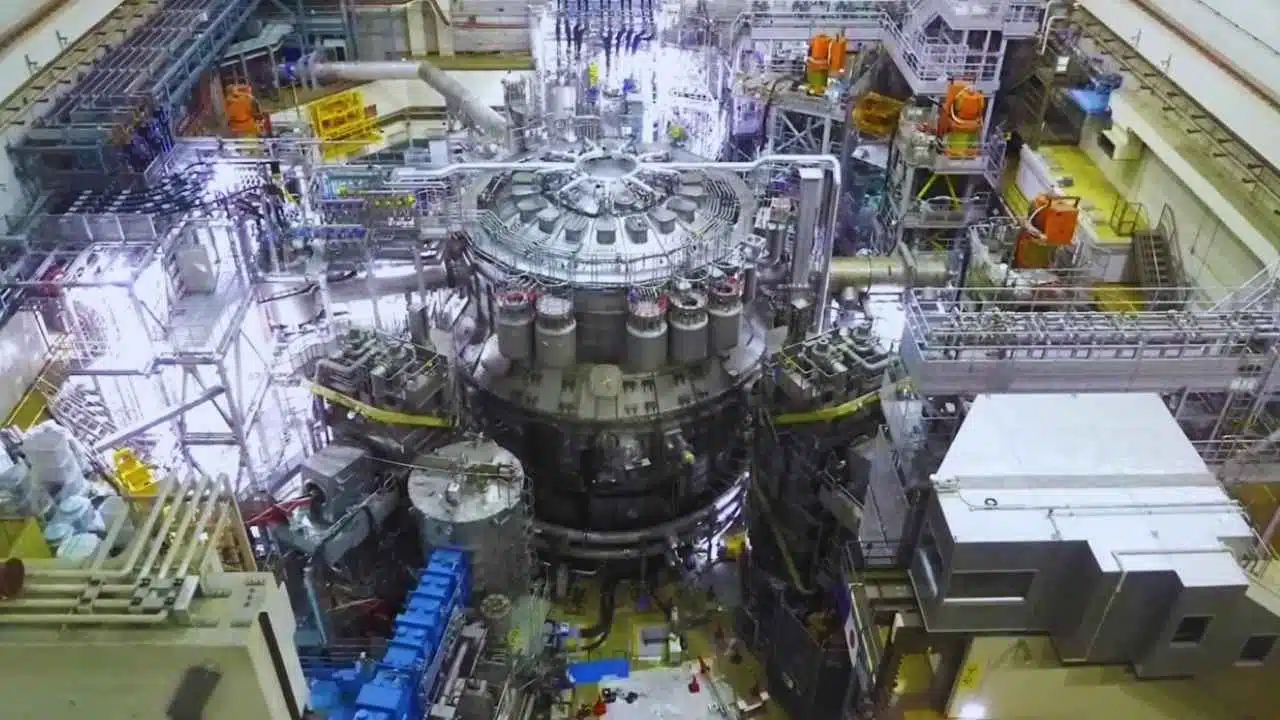
Japan’s ambitious FAST fusion demonstration project has successfully completed its conceptual design phase, just one year after its official launch in November 2024. This privately driven initiative, led by Starlight Engine Ltd. and Kyoto Fusioneering Ltd., represents a pivotal advancement in the quest for practical fusion energy, aiming to showcase power generation from fusion reactions by the end of the 2030s. By leveraging Japan’s extensive history in fusion research—spanning decades of contributions to international efforts like ITER and the JT-60SA tokamak—the project has produced the nation’s first Conceptual Design Report (CDR) for a private-sector fusion power demonstration, aligning closely with the government’s Fusion Energy Innovation Strategy.
The FAST project, which stands for Fusion by Advanced Superconducting Tokamak, brings together a diverse coalition of experts, including researchers from leading Japanese universities such as Osaka University, the University of Tokyo, and Nagoya University, as well as public institutions and a network of supporting companies. This collaborative effort has not only accelerated the timeline but also ensured that the design incorporates cutting-edge technologies tailored to Japan’s manufacturing strengths, from precision engineering to advanced materials science. The completion of this phase signals a shift from theoretical planning to hands-on engineering, positioning Japan as a key player in the global race toward commercial fusion power.
Core Objectives and Technological Approach of the FAST Project
At its heart, the FAST project seeks to bridge the gap between current experimental fusion devices and future commercial power plants by demonstrating an integrated fusion energy system. The device will generate and sustain a high-temperature plasma using deuterium-tritium (D-T) fusion reactions, where atomic nuclei collide to release vast amounts of energy in the form of heat. This heat would then drive electricity generation through conventional turbines, while the system simultaneously manages fuel breeding, recycling, and maintenance—all within a single, compact facility. Unlike broader international projects that focus primarily on plasma confinement, FAST emphasizes the full energy pathway, from fusion ignition to usable power output, without yet claiming net energy gain where electricity produced exceeds that consumed.
The project adopts a tokamak configuration, a proven magnetic confinement design shaped like a doughnut that uses powerful electromagnets to contain and shape the plasma. Specifically, FAST employs a low-aspect-ratio tokamak—a more compact variant that allows for higher plasma densities and stronger magnetic fields in a smaller space. This choice draws on the extensive database from Japan’s JT-60SA, the world’s largest operational tokamak, and incorporates high-temperature superconducting (HTS) magnets made from materials like rare-earth barium copper oxide (REBCO). These magnets operate at temperatures around 20 Kelvin, enabling efficient cooling with liquid helium and reducing the overall size and cost of the reactor compared to traditional low-temperature superconductors.
Targeting a fusion power output of 50 to 100 megawatts with discharge durations up to 1,000 seconds, FAST will operate for a cumulative 1,000 hours at full power, exposing components to real fusion conditions like intense neutron fluxes and thermal loads. This setup allows testing of multifunctional blankets—layers surrounding the plasma that not only breed tritium fuel from lithium but also capture heat and neutrons for potential applications beyond electricity, such as hydrogen production or materials testing. By addressing these integrated challenges, FAST aims to validate technologies essential for scalable fusion plants, fostering a domestic supply chain that could export expertise worldwide.
In-Depth Details of the Conceptual Design Report
The Conceptual Design Report, compiled over the past year, serves as the foundational blueprint for the FAST facility, detailing everything from plasma physics parameters to plant-wide engineering specifications. Developed through intensive workshops and simulations, the CDR evaluates the technical feasibility of key systems, including the vacuum vessel, divertors for heat exhaust, and remote maintenance robots designed to handle radioactive components without human intervention. It also conducts preliminary safety analyses, economic modeling, and environmental impact assessments, ensuring compliance with Japan’s stringent nuclear regulations while optimizing for cost-effectiveness—estimated at a fraction of larger projects like ITER due to the compact design.
A standout feature of the CDR is the integration of innovative components tailored for commercial viability. For instance, the liquid breeding blanket system uses molten salts or lead-lithium mixtures to produce tritium in situ, minimizing external fuel needs and recycling efficiency losses to below 1%. The high-efficiency tritium fuel cycle incorporates advanced permeation barriers and isotope separation techniques, drawing on Japan’s expertise in chemical engineering from the semiconductor industry. Additionally, the design incorporates gyrotrons and neutral beam injectors—high-power microwave and particle systems—for plasma heating and current drive, refined through lessons from JT-60SA operations.
Safety remains a core pillar, with the CDR outlining principles like passive cooling systems to prevent meltdowns and modular construction for easier inspections. Economic evaluations project construction costs in the billions of yen, offset by potential government subsidies and private investments, while clarifying site requirements such as seismic stability, access to cooling water, and proximity to industrial hubs. This comprehensive document not only clarifies the project’s direction but also builds confidence among stakeholders by demonstrating how FAST can contribute to Japan’s carbon-neutral goals by providing a baseload, low-waste energy source.
Transition to Engineering Design and Future Roadmap
With the conceptual phase behind it, the FAST project now enters the engineering design stage, scheduled for completion by 2028, which will refine the CDR into detailed blueprints ready for procurement and construction. This period will intensify research and development on long-lead items, such as custom HTS coils from partners like Furukawa Electric and Fujikura, and accelerate testing of blanket prototypes at facilities like the National Institutes for Quantum Science and Technology (QST). Site selection, already underway, involves evaluating candidate locations based on geological surveys, community consultations, and regulatory dialogues with the Nuclear Regulation Authority (NRA), aiming to finalize choices by mid-2026.
The broader roadmap outlines a clear path forward after engineering design, construction is targeted to begin post-2028, followed by assembly and commissioning leading to first plasma ignition around 2035. The power generation demonstration phase in the late 2030s will verify the entire system’s performance under extended operations, providing data to inform pilot plants and commercial reactors. Funding for 2026 and beyond is in active discussion, blending public grants from the Cabinet Office with private capital, potentially totaling hundreds of billions of yen, to sustain momentum amid global competition from U.S. and UK fusion startups.
Regulatory approvals will run in parallel, with early engagement ensuring the design meets standards for fusion-specific risks like tritium handling and neutron activation. Procurement strategies emphasize domestic sourcing to bolster Japan’s economy, while international collaborations—such as with UK firms on magnet tech or U.S. labs on plasma diagnostics—will import best practices. This phased approach minimizes risks, allowing iterative improvements based on real-world data from ongoing experiments.
Insights from Project Leaders and Collaborators
Kiyoshi Seko, CEO of Starlight Engine Ltd. and President and COO of Kyoto Fusioneering Ltd., attributes the rapid progress to Japan’s accumulated fusion knowledge. Finishing the conceptual design in one year showcases our research legacy; now, we’ll tap into our world-class manufacturing to drive the engineering phase with real urgency,” Seko stated, underscoring the project’s reliance on precision industries like automotive and electronics for scalable production.
Satoshi Konishi, co-founder and CEO of Kyoto Fusioneering, highlighted the innovative elements born from expert collaboration. Achieving this within the planned timeframe is a triumph—we’ve integrated vital commercial tech like HTS magnets, liquid blankets, and optimized tritium cycles by rallying top domestic talent. As we move to engineering, our plant engineering expertise and cross-industry networks, including finance and construction, will propel us forward, with safety designs and site prep advancing smoothly,” Konishi explained.
Kenzo Ibano, Assistant Professor at Osaka University, emphasized the rewards of interdisciplinary teamwork. Through industry-academia synergy, we’ve delivered Japan’s inaugural CDR for a private power demo—collaborating with veteran researchers and private partners is invigorating and instills a profound sense of purpose in advancing fusion for society,” Ibano remarked, noting how university simulations validated plasma stability under FAST’s compact conditions.
Miki Nishimura, the project’s manager, added context on its global positioning in a recent interview. FAST uniquely blends domestic partnerships with international allies from the UK, U.S., and Canada, building on JT-60SA and ITER supply chains to accelerate toward 2030s power generation,” Nishimura said, stressing the initiative’s role in creating a fusion ecosystem.
Extensive Network of Supporters and Academic Contributors
The FAST project’s success stems from a robust ecosystem of participants, blending academic rigor with industrial muscle. Key academic figures include Professor Akira Ejiri from the University of Tokyo, whose plasma physics expertise informs confinement strategies, and Professor Takaaki Fujita from Nagoya University, contributing to magnet design and stability modeling. Other institutions like Kyushu University and Keio University have signed joint research agreements for advanced component development, such as diagnostics and control systems.
On the industry side, supporters span finance, energy, and construction: Sumitomo Mitsui Banking Corporation and Marubeni Corporation provide financial structuring, while Electric Power Development (J-Power) offers grid integration insights. Engineering giants like JGC Japan Corporation, Hitachi, and Mitsubishi Corporation handle plant layout and automation, with material specialists Kyocera, Mitsui & Co., Mitsui Fudosan, and Kajima Corporation focusing on blankets, buildings, and seismic resilience. This network, part of the broader J-Fusion industry group, ensures holistic support from concept to operation.
International ties further strengthen the project, with partnerships leveraging U.S. innovations in neutral beams and Canadian advances in tritium tech, creating a model for global fusion collaboration.
Upcoming Presentation and Global Implications
The Conceptual Design Report will make its public debut at the 42nd Annual Meeting of the Japan Society of Plasma Science and Nuclear Fusion Research, kicking off on December 1, 2025, in Tokyo. This prestigious event, attended by hundreds of global experts, will feature sessions on FAST’s innovations, inviting feedback to refine the engineering phase and highlighting Japan’s leadership in compact tokamaks.
Looking ahead, FAST’s completion could catalyze Japan’s fusion sector, aligning with the updated 2025 Fusion Energy Innovation Strategy that emphasizes private-sector agility. By demonstrating integrated systems, it addresses commercialization barriers like supply chain maturity and regulatory clarity, potentially inspiring similar demos worldwide and contributing to net-zero emissions by providing a safe, abundant energy alternative to fossils fuels.





















