Canadian First Nations actor Graham Greene, who achieved worldwide recognition for his Oscar-nominated performance in Dances With Wolves (1990), has passed away at the age of 73. Greene died on September 1, 2025, at a hospital in Stratford, Ontario, after a long illness. His passing was confirmed by his longtime agent, Michael Greene, who emphasized that although they shared a surname, they were not related.
The news has deeply saddened colleagues, fans, and members of the Indigenous community, many of whom regarded Greene as a trailblazer in representing Native voices on screen.
Early Life and Roots
Born on June 22, 1952, on the Six Nations of the Grand River Reserve in Ontario, Canada, Greene grew up connected to his Oneida heritage. Before finding his way to acting, he worked in several jobs, including as a sound engineer for a Canadian rock band. His exposure to music and performance eventually led him to pursue a career in the arts, where he found his calling on stage and screen.
Greene studied at the Centre for Indigenous Theatre in Toronto. From the beginning, his motivation was not only to succeed as an actor but also to ensure that Indigenous characters were portrayed with dignity, humor, and authenticity—values that defined his career.
Breakthrough Role in Dances With Wolves
Graham Greene’s big breakthrough came in 1990 with Dances With Wolves, the historical epic directed by and starring Kevin Costner. Greene played Kicking Bird, a wise and peace-loving Lakota Sioux medicine man. His nuanced and heartfelt performance earned him an Academy Award nomination for Best Supporting Actor, making him one of the first Indigenous actors to achieve such recognition.
Greene’s preparation for the role was extraordinary. He immersed himself in learning the Lakota language and culture, ensuring his portrayal carried authenticity. The film’s global success not only elevated his career but also opened doors for Indigenous representation in mainstream Hollywood.
An Expansive Career in Film, Television, and Theatre
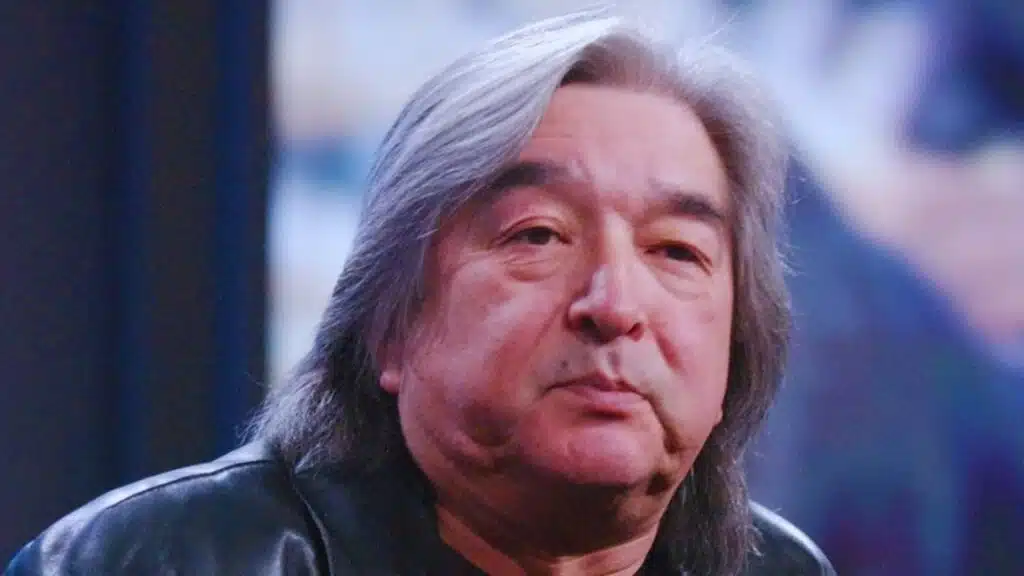
After Dances With Wolves, Greene went on to build an exceptionally versatile career that spanned over five decades. His film credits include:
- Thunderheart (1992), where he played FBI agent Walter Crow Horse.
- Maverick (1994), a comedy western alongside Mel Gibson and Jodie Foster.
- Die Hard with a Vengeance (1995), starring Bruce Willis and Samuel L. Jackson.
- The Green Mile (1999), where he appeared alongside Tom Hanks in the Stephen King adaptation
- Skins (2002) and Transamerica (2005), films that further showcased his dramatic range.
- Wind River (2017), a gripping crime drama set on a Native American reservation.
On television, Greene worked in acclaimed series such as Northern Exposure, Longmire, Defiance, Wolf Lake, and more recently, Reservation Dogs and HBO’s The Last of Us.
He also brought his distinctive voice to video games and animation, notably lending his talents to Red Dead Redemption 2. On stage, Greene continued to perform in theatre productions, further broadening his artistic presence.
Awards and Recognition
Graham Greene’s talent earned him numerous awards across genres. His achievements include:
- Academy Award nomination for Dances With Wolves (1990).
- Grammy Award for Best Spoken Word Album for Children for Listen to the Storyteller (2000).
- Gemini Award and Dora Mavor Moore Award for his work in Canadian television and theatre.
- Canadian Screen Award for Best Supporting Role in the 2024 comedy Seeds.
- Governor General’s Performing Arts Award for Lifetime Artistic Achievement in 2025.
In addition, Greene was named a Member of the Order of Canada, one of the nation’s highest civilian honors, recognizing his contributions to Canadian arts and Indigenous representation.
Tributes From Colleagues and Friends
The news of Greene’s passing prompted an outpouring of tributes from fellow actors and collaborators:
- Kevin Costner, who directed and starred in Dances With Wolves, remembered Greene as “a master at work and a wonderful human being” and praised his commitment to cultural accuracy.
- Lou Diamond Phillips, who starred with Greene in Wolf Lake and Longmire, wrote that he was “heartbroken,” describing Greene as witty, warm, and legendary.
- Gil Birmingham, Greene’s co-star in Wind River, praised his role in inspiring a new generation of Native actors.
- Robert Patrick, who worked with Greene on The Outer Limits in 1996, called him an “absolute legend.”
These tributes underscore how Greene not only left a mark through his performances but also through his character, humor, and generosity as a colleague.
“We had a beautiful friendship,” Phillips posted on X. “An Actor’s Actor. One of the wittiest, wiliest, warmest people I’ve ever known. Iconic and Legendary. RIP, My Brother.”
Heartbroken. Terribly saddened to hear of the passing of Graham Greene at only 73.
From Wolf Lake to Longmire, we had a beautiful friendship.
An Actor’s Actor. One of the wittiest, wiliest, warmest people I’ve ever known. Iconic and Legendary. RIP, My Brother. pic.twitter.com/lJA0dKEoxz— Lou Diamond Phillips (@LouDPhillips) September 1, 2025
Personal Life and Family
Greene shared more than 35 years of marriage with his wife, Hilary Blackmore, an actress and director. Together, they raised their daughter, Lilly Lazare-Greene, and welcomed a grandson, Tarlo. Despite his Hollywood fame, Greene preferred a quieter life in Canada, where he enjoyed writing, golf, boat-building, and spending time with his cats.
His family, friends, and community remember him not only as an actor but as a man of integrity, humor, and deep cultural pride.
Final Works and Legacy
At the time of his passing, Graham Greene had one final film yet to be released—the thriller Ice Fall—which will now stand as part of his lasting cinematic legacy.
He leaves behind a body of work that broke barriers for Indigenous actors, portraying characters with depth, wit, and authenticity. His influence is already visible in the new wave of Indigenous talent in Hollywood who see him as a role model and a pioneer.
A Cultural Trailblazer
Graham Greene’s passing is more than the loss of a gifted actor; it is the loss of a cultural leader who reshaped how Indigenous people are seen on screen. He brought humanity and complexity to roles that for too long were written one-dimensionally. By doing so, he paved the way for more accurate and respectful representation of Indigenous stories in global cinema.
As his peers and admirers have made clear, Graham Greene will be remembered not just for the roles he played but for the path he carved for those who follow.
The information is collected from IMDb and USA Today.