


In a world teeming with distractions, from pings on our phones to the constant pressure of multitasking, staying focused and mentally clear has become more than just a productivity goal—it’s a survival skill. Whether you’re a high-performing professional, a student juggling multiple deadlines, or simply someone who wants to think more clearly and get more done, upgrading your cognitive toolkit is essential.
Fortunately, neuroscience and psychology offer powerful, evidence-based ways to do just that. From optimizing sleep and nutrition to exploring the latest in nootropics, this article dives deep into the research and strategies proven to enhance mental focus and clarity.
Lifestyle Foundations for Mental Clarity
Before you reach for supplements or try exotic brain-training techniques, it’s crucial to master the basics. Lifestyle factors have an outsized influence on cognitive health.
Sleep
Numerous studies confirm that even one night of poor sleep can impair focus, reduce reaction time, and increase mental fog. Sleep is when the brain consolidates memories and clears out metabolic waste via the glymphatic system.
Practical steps to improve sleep:
- Stick to a consistent sleep schedule—even on weekends.
- Limit screen exposure an hour before bed to protect melatonin production.
- Keep your room cool, dark, and quiet for optimal rest.
Exercise
Exercise doesn’t just benefit your body—it sharpens your mind. Aerobic activities like jogging or cycling increase brain-derived neurotrophic factor (BDNF), a protein that supports learning and memory.
Even short bouts of movement can:
- Improve mood via endorphin release.
- Increase oxygen flow to the brain.
- Reduce stress hormones like cortisol.
Aim for at least 20–30 minutes of moderate exercise most days of the week. Add strength training for an extra mood and cognitive lift.
Nutrition
The brain is an energy-hungry organ, and what you eat matters immensely. Cognitive function thrives on a diet rich in:
- Omega-3 fatty acids from fish, walnuts, and flaxseed.
- Antioxidants from berries, dark chocolate, and green tea.
- Complex carbohydrates for steady glucose release.
Avoid sugary snacks and refined carbs that cause energy crashes. Try incorporating “brain foods” like salmon, spinach, blueberries, and turmeric into your daily meals.
Cognitive Habits That Train Focus
Focus is not just a state—it’s a skill. Like any skill, it can be trained and improved through deliberate practice.
Mindfulness and Meditation
Meditation isn’t just for yogis. Studies from Harvard and other institutions have shown that regular mindfulness meditation can increase gray matter density in the hippocampus (linked to learning and memory) and reduce activity in the DMN—the very network that interferes with focus.
You don’t need hours of silence. Start with:
- 5–10 minutes a day using apps like Headspace or Insight Timer.
- Focused attention on your breath or bodily sensations.
- Noticing distractions and gently bringing attention back.
Over time, you’ll find your baseline attention span growing longer.
Deep Work and Time Blocking
Cal Newport coined the term “deep work” to describe focused, distraction-free periods of effort. When practiced regularly, deep work rewires the brain to concentrate better.
Tips for mastering it:
- Use the Pomodoro Technique (25-minute work sprints, 5-minute breaks).
- Block your calendar for undistracted work.
- Do cognitively heavy tasks during peak mental hours (usually mid-morning).
Digital Hygiene: Managing the Attention Economy
Smartphones and apps are engineered to hijack your attention. But you can fight back.
Strategies for reclaiming your focus:
- Turn off non-essential notifications.
- Use tools like Freedom, Cold Turkey, or Forest to block distractions.
- Designate “no-screen” times during your day, especially before sleep.
Your attention is your most valuable asset—guard it accordingly.
How Environment Affects Your Mental State
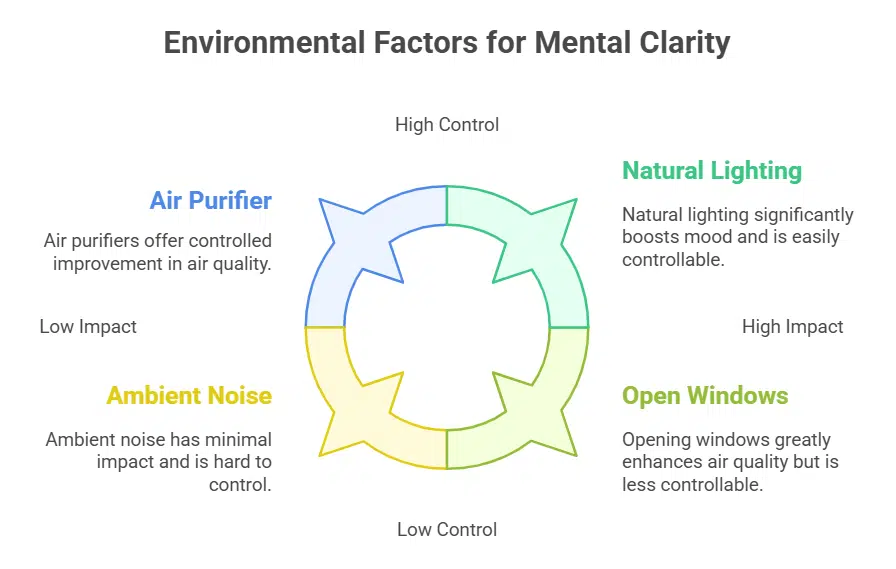
Where you work matters almost as much as how you work. Even small environmental tweaks can dramatically impact your mental clarity.
- Lighting: Natural light improves mood and alertness. If that’s not an option, try full-spectrum bulbs.
- Air Quality: Poor ventilation and CO2 buildup can cause mental fatigue. Open windows or use an air purifier.
- Declutter: A tidy workspace reduces cognitive load.
- Sound: Experiment with ambient noise, lo-fi music, or brown noise for concentration. Silence doesn’t work for everyone.
A well-designed environment signals to your brain: it’s time to focus.
Nootropics: Enhancing Cognition with Science-Backed Supplements
Nootropics—sometimes called “smart drugs” or “cognitive enhancers”—are compounds that may improve mental performance. These can be natural or synthetic and are increasingly popular among students, entrepreneurs, and knowledge workers.
The term was coined in the 1970s by Romanian psychologist Dr. Corneliu Giurgea, who defined nootropics as substances that enhance learning and memory, support brain health, and are low in toxicity.
Popular and Evidence-Backed Options
- Caffeine + L-Theanine: The classic combo. Found in tea, this pair boosts alertness while reducing the jittery edge caffeine alone can cause.
- Creatine: Not just for athletes. Creatine improves working memory and mental performance, especially in people under high cognitive load.
- Bacopa Monnieri: An herb traditionally used in Ayurveda. Studies show improvements in memory recall and stress resilience.
- Rhodiola Rosea: Known for its anti-fatigue effects, Rhodiola can help during mentally exhausting periods.
For those looking to explore more advanced blends or “stacks”, brain boosting nootropic products from Mind Lab Pro offer a well-researched, all-in-one formula. Their blend includes Lion’s Mane, Phosphatidylserine, Maritime Pine Bark, and more, targeting multiple brain pathways for holistic support.
Advanced Tools and Brain Hacks
Once your foundation is strong, consider experimenting with advanced techniques that can elevate mental performance even further.
Neurofeedback
This technique uses EEG technology to train brainwaves in real time. Some studies suggest it may help improve focus, reduce anxiety, and manage ADHD symptoms.
Cold Exposure and Heat Therapy
Cold showers and sauna sessions stimulate hormesis—a stress response that can improve resilience and focus. Cold exposure, in particular, increases norepinephrine, which enhances alertness.
Light Therapy
Especially during winter months, light therapy can combat fatigue and brain fog. Use a 10,000-lux light box for 20–30 minutes in the morning to reset your circadian rhythm.
Conclusion
Mental clarity and sustained focus aren’t reserved for elite thinkers or Silicon Valley executives. They’re achievable for anyone willing to take deliberate steps, backed by real science.
From the food you eat and the air you breathe, to the supplements you explore and the habits you adopt, each choice adds up. Don’t aim for overnight transformation. Instead, commit to small changes, practice them consistently.
Start with just one idea from this guide, and watch your mind begin to upgrade itself—one focused moment at a time.





















