You grind in Diablo 3 for a rare drop, and end up with a coder’s prank. Game makers hide Easter eggs, fake endings, and debug mode jokes to surprise players. We share seven wild examples, from a Joker sighting in Far Cry 5 with Joseph Seed, to a secret switch in Batman Arkham Asylum and a phantom island where Calamity Ganon lurks in Breath of the Wild.
It’s too good.
Key Takeaways
- Games have used fake endings since arcades. In Ghosts ’N Goblins (1985), a “win” screen sends you back to level 5 and forces a hard-mode run for the true ending. Dragon Quest (1986) erases all data if you join the Dragonlord, so you must replay hours of quests.
- Secret zones and odd rewards break the mood. Diablo III’s Whimsyshire (2012) hides unicorns and teddy bears in a rainbow ruin. In Breath of the Wild (2017), collecting 900 Korok Seeds nets you a gold poop statue from Hestu.
- Devs punish pirates with code. In Game Dev Tycoon, the pirated build on BitTorrent floods your virtual studio with knock-offs and drives it into bankruptcy, mocking real dev struggles.
- Story twists mock player expectations. Metal Gear Solid 2 (2001) spoils marketing by letting you play Raiden instead of Solid Snake after 45 minutes, poking fun at headline hype.
- Hidden menus and endless grinds test your resolve. X-Men for Sega Genesis (1993) pops a debug menu that orders a light reset tap or wipes saves. Penn & Teller’s Smoke and Mirrors (1995) plants Desert Bus, an eight-hour straight drive with no action.
What Are Scarecrow’s Nightmare Sequences in Batman: Arkham Asylum?
Scarecrow’s nightmares lock players in warped, dark halls. The villain uses fear toxin to warp the asylum. Audio cracks and fake malfunctions test your nerves. Joker’s laughter echoes during each gas haze.
Batman: Arkham Asylum launched in 2009 and wowed fans.
Players pick levels of difficulty at game start. Explosive gel and Batarangs still feel vital against illusions. Detective Mode flickers in every toxic chamber. Fear toxin scenes mirror dark twists from The Witcher 3.
Hallucinogenic visions push foes into view.
Why Is Whimsyshire in Diablo III So Special?
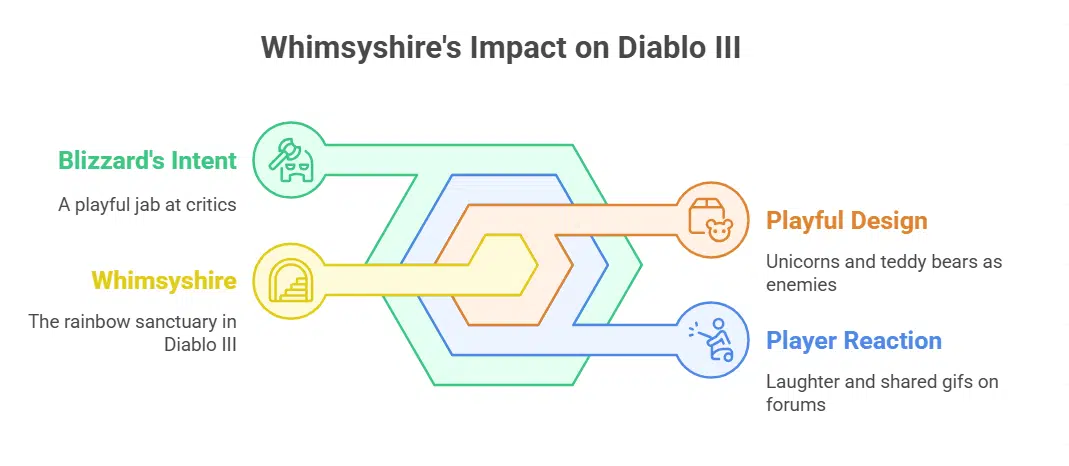
Blizzard hid a rainbow sanctuary packed with unicorns and teddy bears. It tagged the secret zone Whimsyshire and dropped it into Diablo III in 2012. Players logged into Battle.net and found this bright oasis after too many server crashes.
The move felt like a prank clown at a grim party, a playful jab at casual gameplay critics. Some even said it played like tennis for two, light and silly.
Creature sprites glow in pink and blue. A skull sign marks the portal in Old Ruins. It flips the vibe, unlike the Witcher 2: Assassins of Kings or other dark RPG quests. Gamers shared gifs on forums, laughing at a teddy bear smacking a demon.
The Joker would grin at Blizzard’s own code, shooting jokes instead of bullets.
How Does Game Dev Tycoon Punish Pirates?
The developers uploaded a pirated copy to a file sharing network. Gamers grabbed it and set up studios in the simulation software. They soon saw other players rip off their software designs.
That caused their virtual companies to go bust.
The twist left pirates angry and broke. Game profits sank bottom first. This gag worked like a courtroom test, with a dash of irony. Players felt a taste of real dev life.
What Is the Fake Ending in Ghosts ‘N Goblins?
Sam equips a holy trident for the final boss fight in Ghosts ’N Goblins. Without it, he falls in battle, and a glitch warps him back to the start of level five. This stunt shows a quick wrap screen that hints at saving the princess, but that shot serves as the fake ending.
Ghosts ’N Goblins hit arcades in 1985, and its simple joystick and eight-way movement added to the trick.
That tease fools many players into thinking the quest ends there. A second quest unlocks after the credits, and only on hard mode does the true ending play out. This extra run boosts replay value and cements the title’s reputation for punishing game mechanics and epic boss battles.
What Reward Do You Get for Collecting 900 Korok Seeds in Breath of the Wild?
Gamers roam Hyrule from ridges to valleys in Breath of the Wild. Nintendo released the game in 2017. The quest to find 900 Korok Seeds drives explorers to use the Sheikah Slate. Most pop up under rocks or in tree rings.
Players drop each seed in Hestu’s pot.
Hestu clears the leaves off his basket with a grin, then pulls out a golden poop statue. This turd-shaped object stands as proof of your grind. Many joke it looks like a comedy trophy.
Few tasks reward you like this odd keepsake.
How Does Metal Gear Solid 2 Surprise Players with a Character Swap?
Solid Snake heads into the first mission on PlayStation 2 in 2001. Players hear the communication system buzz as they jump into stealth mode. Forty five minutes later, Snake fades out.
Designers thrust Raiden into the field, a new face missing from marketing materials. Fans gaped at the switch.
Creator Hideo Kojima wrote this twist to mock the power of headlines. He flipped narrative design on its head and poked at information control and manipulation. That bait and switch makes us doubt every promo.
It still fuels talk in the gaming scene.
What Is the “Reset the Computer” Challenge in X-Men for Sega Genesis?
The video game X-Men for Sega Genesis came out in 1993. After beating a boss, a hidden debug menu pops up. That menu tells players to reset the machine. Players must tap the reset button lightly to carry on.
Pressing too hard wipes out all saved data.
This trick feels like a test within a level. Most titles skip that debug menu step. This one turns a reset into a mini challenge. Gamers report a thrill and a pinch of fear. It still surprises entry-level and veteran players.
Why Is the Epsilon Program Grind in Grand Theft Auto V So Endless?
GTA V arrived in 2013. That title mocks Scientology with a digital group. Developers built a parody of a religion. They sent players on absurd errands. Players trek through deserts and hills.
They collect testimonial scrolls. They trade those for a test result. Each ceremony demands more tasks. Users chase waypoints on the old map. The grind feels endless.
A strange dialogue greets every call. Nonsensical exchanges fill each broadcast. Designers load every side mission with odd lines. Gamers must fetch cash, cars, and footage. They race across the giant map again.
Code pushes players to visit remote camps ten times. You scan data twenty times and drive five routes. That pattern drains any fun. The parody then feels more like a chore.
What Is Desert Bus Mode in Penn & Teller’s Smoke and Mirrors?

Penn and Teller released Smoke and Mirrors in 1995. It included a secret level called Desert Bus.
Desert Bus simulates a dull trip along a straight road. The endurance test lasts eight hours. The ride tests patience with no action.
How Do Evil Choices Affect Gameplay in Dragon Quest?
Players meet the Dragonlord near the final battle. He invites heroes to join him. A morality test comes next. Stepping into his trap triggers a blood-red menu freeze. The screen locks as if haunted.
That glitch forces a full restart. All your data vanishes in an instant. You must replay hours of quests. Dragon Quest first graced consoles in 1986, yet this trick still shocks new fans.
How Can You Unlock the Impossible Secret Character in Mortal Kombat II?
Mortal Kombat II released in 1993. It hid an Easter egg in a test menu. Arcade fans saw Ermac and Kano listed among fighters. That led many to try a button sequence to call them. None of those attempts ever paid off.
The game teased Ermacs but never let you select him.
Rumors said winning ten matches on the Pit II stage would unlock a secret kombatant. That myth drove players to feed arcade machines with more quarters. Operators heard endless coin drops but no actual unlock.
Gamers stuck with the official roster. The tale of the impossible secret hero still amuses retro communities today.
Takeaways
These pranks packed Easter eggs, piracy bans, mind games to confuse and delight. Fans still debate that character swap, chase magic seeds and ride a fictional bus for hours. That old arcade gem taught gamers to question every finale, while the sim app punished cheaters with slow growth.
Each stunt proved that devs use surprise tools to spark chat long after credits.
FAQs on When Game Developers Trolled Gamers
1. What does the “7 Times Game Developers Trolled Their Players” article cover?
It shows seven pranks, fake quests, and hidden traps that creators slipped into games, surprises that hit players like a curveball.
2. Why do studios troll fans?
They want to spice things up, spark chatter, craft a twist that sticks around, a surprise folks still talk about years later.
3. How do developers hide their jokes?
They tuck them into side missions, secret rooms, loading screens, or tiny tooltips. You might not spot one until it slaps you.
4. How did players react to these trolling moves?
Reactions ranged from laughs to fiery forum posts. One player said, “I jumped out of my seat, then burst out laughing.” They still tell the tale.