There’s a certain satisfaction that comes with fixing household problems yourself. Whether it’s tightening a leaky faucet or patching up drywall, DIY home maintenance can be empowering—and cost-effective. But when it comes to clearing clogged drains, your go-to solutions like baking soda, vinegar, or chemical cleaners might not always deliver the results you’re hoping for.
Seattle Drain Cleaning Pros have seen it all—from minor clogs made worse by home remedies to major pipe damage caused by harsh cleaners. While some minor blockages can be handled without a plumber, understanding the limits of DIY methods is essential to avoiding more costly problems down the road.
The Myth of the Miracle Fix
Many DIY drain cleaning guides promote a simple solution: pour baking soda and vinegar down the drain, let it fizz, rinse with hot water, and enjoy the magic. While this method sounds appealing—and is certainly safer than chemical alternatives—it doesn’t always address the root cause of a blockage.
The fizzing reaction creates gas and mild agitation, but it lacks the mechanical force needed to break through grease buildup or remove compacted debris. In fact, in cases where clogs are caused by hardened grease, fibrous food scraps, or hair clumps deep in the pipes, this gentle combo is unlikely to make a difference at all.
Similarly, store-bought chemical drain cleaners promise fast results with minimal effort. However, these products often contain highly corrosive substances like sodium hydroxide, which can damage older pipes over time, especially if used frequently. Even worse, they may sit on top of a clog without penetrating it, leading to toxic fumes and an unresolved blockage.
When DIY Might Be Enough
Despite their limitations, not all home remedies are useless. There are certain situations where a simple at-home fix can provide temporary relief—especially if the problem is minor and you catch it early.
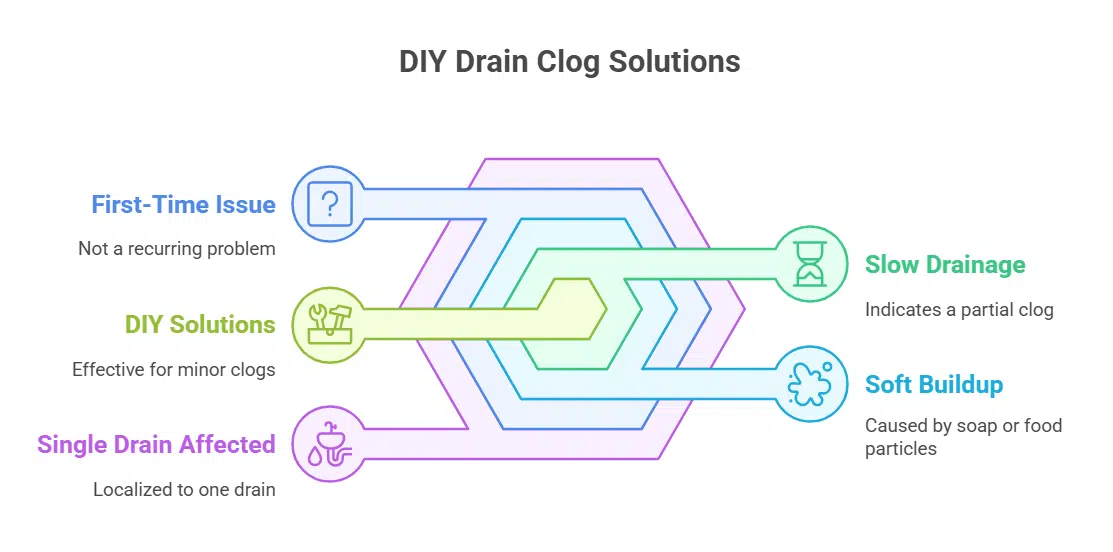
DIY methods may work if:
- Water is draining slowly, but not completely backed up
- The clog is caused by soft buildup (like soap residue or minor food particles)
- It’s the first time you’ve experienced this issue, and it isn’t affecting multiple drains
In these cases, using hot water flushes or a baking soda and vinegar treatment might give you a temporary fix. A sink plunger can also help dislodge superficial obstructions if used properly. But if the issue keeps coming back, it’s time to stop experimenting.
The Hidden Risks of Going Solo
What many homeowners don’t realize is that pipes are more sensitive than they look. Pouring unknown substances down your drain without knowing the clog’s location or cause can cause unintended consequences—sometimes making things worse. Here’s why DIY methods can backfire:
- Damage to Pipes. Repeated use of chemical drain cleaners can corrode metal or weaken PVC joints. Over time, this leads to leaks, cracks, or full-on pipe replacement.
- Pushing the Clog Further. Home plungers or plastic snakes can sometimes force the blockage deeper into the system, where it becomes harder to reach.
- Incomplete Removal. DIY fixes often address the symptom, not the problem. You may remove some material, but leave enough behind for the clog to return—often worse than before.
- Health Hazards. Chemical fumes from over-the-counter cleaners can irritate the eyes, nose, and lungs. If mixed improperly with other substances, they may even create toxic reactions.
These risks become even more significant in older homes with aging plumbing systems. What starts as a minor annoyance can quickly turn into a larger—and more expensive—repair.
When to Call in the Experts
Drain problems don’t resolve themselves. If the same drain keeps clogging, multiple fixtures are affected, or there’s a foul odor that won’t go away, it’s time to bring in a professional.
Calling experts like Ben’s Plumbing gives you access to tools and techniques the average homeowner doesn’t have. From video camera inspections to high-pressure hydro jetting, professionals don’t guess—they diagnose and solve the problem at its source.
Here’s when to skip the DIY and go straight to a pro:
- You’ve already tried a home remedy, and the problem returned
- More than one drain is slow or clogged simultaneously
- Strange gurgling noises or foul smells are coming from your pipes
- Water backs up after every flush, wash, or rinse
By acting early, you can avoid major damage, save time, and reduce repair costs in the long run.
DIY drain cleaning may seem harmless—and in some cases, it is. But trusting common kitchen ingredients or aggressive chemicals to solve recurring plumbing issues can lead to bigger headaches. Before dumping anything else down your sink, consider whether the quick fix is really fixing anything.
When in doubt, call someone who knows the ins and outs of your home’s plumbing. A qualified professional won’t just clear your drain—they’ll help prevent it from clogging again. And that peace of mind is something no bottle of baking soda can offer.