
Experiencing a personal injury can be overwhelming, but knowing what to document is key. You need to collect the right information to protect your rights and support your case. Friedman Injury Law offers guidance, starting with knowing what to record after an injury in Henderson. This initial step can make a difference in your journey to recovery and justice. By gathering detailed evidence, you ensure your story is heard. Focus on the essentials. Record medical treatments, witness accounts, and the accident scene. These details build a strong case for you and your loved ones. Documentation helps navigate the legal path with clarity and confidence. It’s your tool for ensuring fairness and accountability. Remember, early action sets the foundation for your recovery and peace of mind. Start with these nine crucial steps to secure the outcome you deserve. Protect yourself by being informed and prepared.
Medical Records
First, keep all medical records. Document every visit to the doctor, hospital, or clinic. Your medical records include treatments, prescribed medications, and therapy sessions. Each detail shows the injury’s impact on your life and helps substantiate your claim.
Photographs
Photograph your injuries, the accident scene, and any property damage. Pictures provide a clear account of the incident. Visual evidence is powerful in showing the severity and nature of the injury.
Witness Information
Collect contact details of witnesses. Their accounts can support your version of events. Witness statements provide an unbiased view and can strengthen your case by corroborating your story.
Police Reports
If police were involved, get a copy of the report. Police reports offer an official account of the incident. They often contain details that support your claim and provide a reliable source of information. Access police reports through your local law enforcement agency. The Henderson Police Department offers resources to retrieve these documents.
Insurance Information
Document all interactions with insurance companies. Keep records of calls, emails, and letters. Insurance negotiations are crucial. Accurate records ensure you are treated fairly. Record the date, time, and content of each interaction.
Income Loss
If the injury affects your work, document lost wages and any other income impacts. This information shows the financial burden you’ve faced. It is important in calculating fair compensation.
Personal Journal
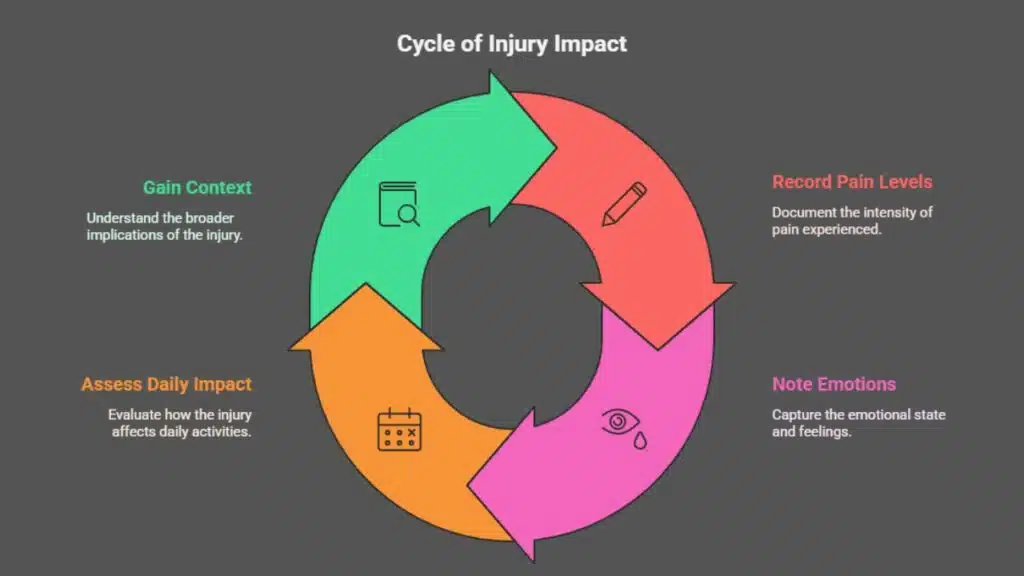
Keep a journal of your daily experiences after the injury. Record pain levels, emotions, and the impact on your day-to-day life. A personal account provides context and depth to your case. It shows how the injury affects your well-being.
Medical Bills
Compile all medical bills incurred due to the injury. Bills provide concrete evidence of financial losses from treatments and procedures. They are essential in determining the compensation amount.
Court Documents
If your case proceeds to court, maintain records of all proceedings and filings. Court documents are critical for tracking the legal process. Understanding each step helps in preparing for your case.
Document Checklist
| Documentation | Importance |
| Medical Records | Show treatment details and injury severity |
| Photographs | Provide visual evidence |
| Witness Information | Support your account with unbiased views |
| Police Reports | Offer official and reliable accounts |
| Insurance Information | Ensure fair treatment in negotiations |
| Income Loss | Reflect financial impact |
| Personal Journal | Show personal impact and emotional toll |
| Medical Bills | Provide evidence of financial losses |
| Court Documents | Track legal proceedings and filings |
Understanding what documents to gather ensures a more comprehensive claim. Action today leads to assurance tomorrow. Managing documentation effectively helps secure the outcome you deserve. Begin this crucial step to safeguard your future and well-being.