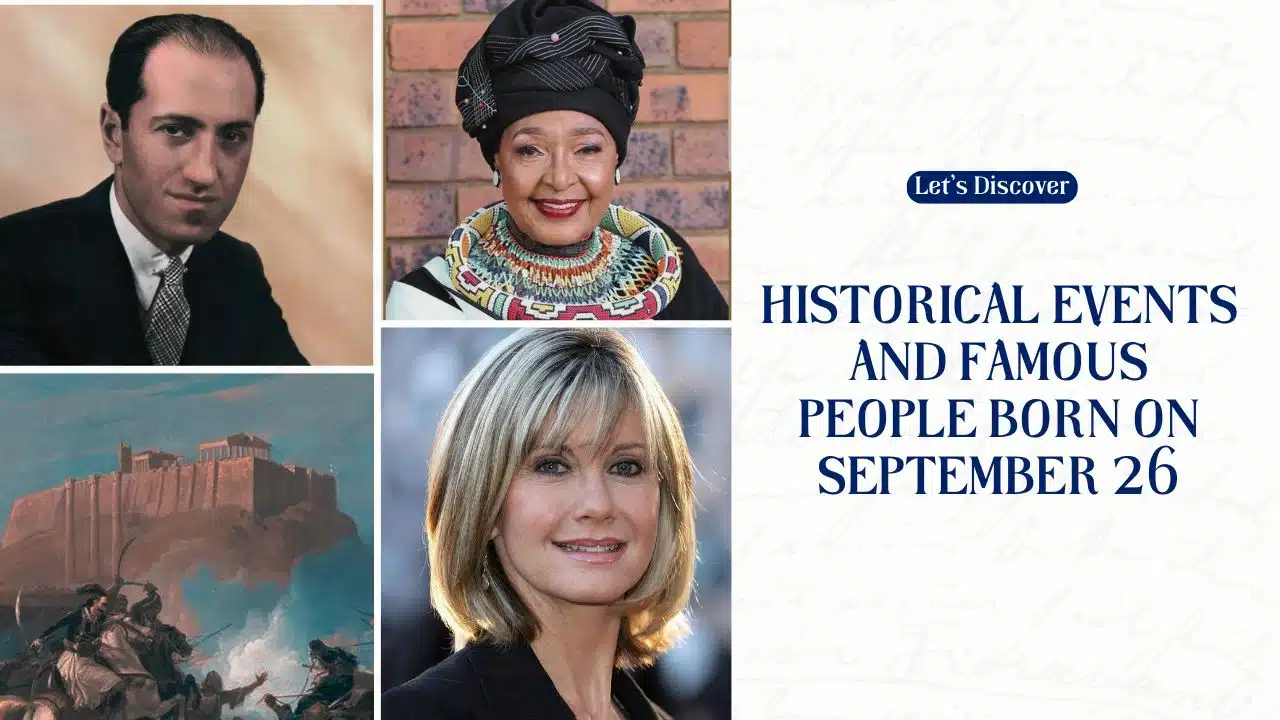
September 26 is a day that has seen many important events in history. It’s also the birthday of some very famous and talented people. This article will look at five big events that happened on this day and five well-known people who were born on it. We’ll see how September 26 has been an important date for exploration, war, politics, art, and entertainment.
Historical Events on September 26
On September 26, 1580, Francis Drake finished sailing around the whole world. He came back to Plymouth, England, on his ship called the Golden Hind. This was a big deal because:
- Drake was only the second person ever to sail all the way around the world.
- He was the first English person to do it.
- His trip took almost three years, from 1577 to 1580.
Drake’s trip was important for a few reasons:
- It showed that England could be a strong sea power.
- Drake brought back a lot of treasure, which made Queen Elizabeth I very happy.
- The trip helped England learn more about the world and start exploring more.
Drake became a hero in England. The Queen even made him a knight for what he did. His trip around the world helped make England stronger and richer.
2. Siege of the Acropolis (1687)
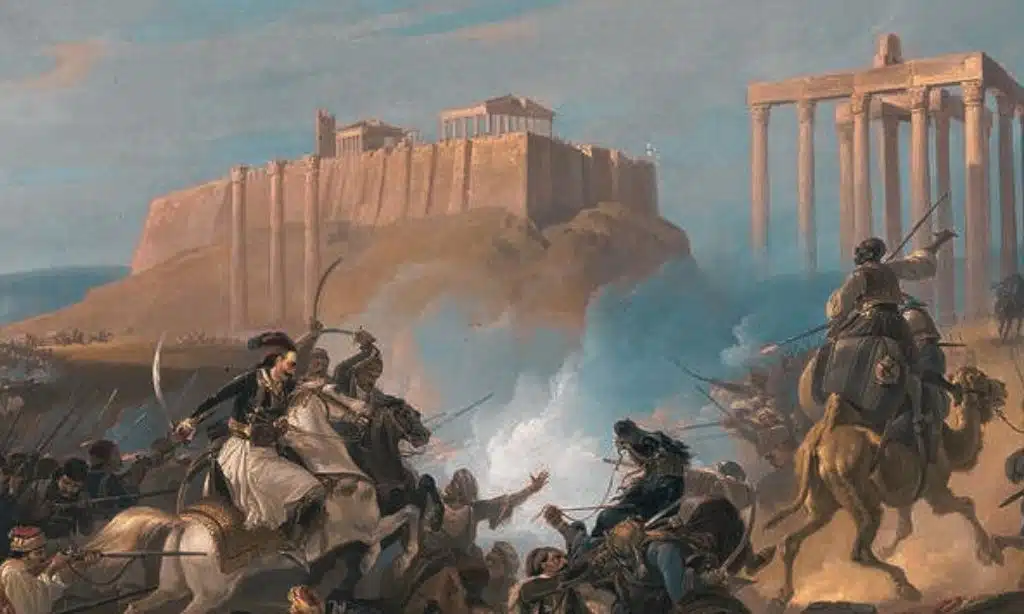
On September 26, 1687, something bad happened to a famous old building. The Venetian army attacked the Acropolis in Athens, Greece. They were trying to kick out the Turkish army that was there. But their attack caused a lot of damage to the Parthenon, which is a very important old Greek temple.
Here’s what happened:
- The Venetians and the Turks were fighting a war.
- The Turks were using the Parthenon to store gunpowder.
- The Venetians fired cannons at the Parthenon.
- One cannon hit the gunpowder and caused a big explosion.
This attack was very bad for the Parthenon:
- It destroyed a lot of the building’s roof and walls.
- Many old sculptures and artwork were broken.
- It changed how the Parthenon looked forever.
This event shows how war can hurt important cultural places. Even today, people are still trying to fix the damage done to the Parthenon on that day.
3. Lasource Accuses Robespierre (1792)
On September 26, 1792, something important happened during the French Revolution. A man named Marc-David Lasource said that another man, Maximilien Robespierre, wanted to be a dictator of France.
Here’s what was going on:
- The French Revolution had been happening for a few years.
- Robespierre was a powerful leader in the revolution.
- Some people thought Robespierre was getting too powerful.
Lasource’s accusation was a big deal because:
- It showed that even revolutionaries didn’t always agree with each other.
- It was the start of people turning against Robespierre.
- It helped lead to Robespierre’s downfall later on.
This event reminds us that revolutions can be complicated. Even people on the same side can end up fighting each other.
4. The Adventures of Tintin (1946)
On September 26, 1946, a famous comic book series started. The first part of “The Adventures of Tintin” was published in a magazine called Le Journal de Tintin. The creator of Tintin was a Belgian artist named Hergé.
Here are some facts about Tintin:
- Tintin is a young reporter who travels the world solving mysteries.
- The comics were very popular and were made into books, movies, and TV shows.
- Tintin comics kept being made until 1993.
Tintin was important for comic books because:
- It helped make comic books popular all over the world.
- The stories mixed adventure, humor, and sometimes real-world events.
- Hergé’s drawing style influenced many other comic artists.
Even today, many people still love reading about Tintin’s adventures. The comics have been translated into many languages and are read all over the world.
5. Reagan Vetoes Sanctions (1984)
On September 26, 1984, President Ronald Reagan did something that made many people upset. He vetoed, or said no to, a law that would have put sanctions on South Africa. Sanctions are punishments that one country puts on another, like not trading with them.
Here’s why this was important:
- South Africa had a system called apartheid that was very unfair to black people.
- Many countries wanted to punish South Africa to make them stop apartheid.
- Reagan didn’t think sanctions would work and might hurt black South Africans more.
This decision had big effects:
- It made many people angry at Reagan.
- It showed that countries didn’t agree on how to stop apartheid.
- Later, the U.S. Congress overrode Reagan’s veto and put sanctions on South Africa anyway.
This event shows how complicated world politics can be. Even when people agree something is wrong, they might disagree on how to fix it.
Famous Birthdays on September 26
1. Théodore Géricault (1791-1824)
Théodore Géricault was a French painter born on September 26, 1791. He is famous for painting dramatic scenes and was part of the Romantic art movement.
Biography Table:
| Fact | Information |
|---|---|
| Born | September 26, 1791, in Rouen, France |
| Died | January 26, 1824 (age 32) |
| Famous for | Painting “The Raft of the Medusa” |
| Style | Romantic art |
| Other interests | Horses, often painted them |
Géricault’s most famous painting, “The Raft of the Medusa,” shows a real event where people were left on a raft after a shipwreck. This painting was very different from other art at the time because it showed a sad, real event instead of something nice or made-up. Géricault’s work helped change art and inspired many other artists.
2. Ishwar Chandra Vidyasagar (1820–1891)
One of India’s greatest social reformers and educators, Ishwar Chandra Vidyasagar was born on September 26, 1820, in Birsingha, Bengal (now in West Bengal, India).
| Fact | Information |
|---|---|
| Born | September 26, 1820, Birsingha, Bengal |
| Died | July 29, 1891 (age 70) |
| Famous for | Social reforms, education, women’s rights |
| Key works | Modernization of Bengali prose, advocacy of widow remarriage |
-
Vidyasagar was a pioneer of modern Indian education, introducing major reforms in the Bengali language and promoting the spread of Western-style education in India.
-
He championed the cause of women’s rights, especially the legalization of widow remarriage, which was revolutionary in 19th-century India.
-
His efforts to modernize Bengali prose and create accessible textbooks laid the foundation for modern Bengali literature.
Vidyasagar’s life remains a powerful example of how education and social activism can challenge deep-rooted traditions and create lasting change.
3. Charles Vyner Brooke (1874-1963)
Charles Vyner Brooke was born on September 26, 1874. He had a very unusual job: he was the last White Rajah of Sarawak. A Rajah is like a king, and Sarawak is now part of Malaysia.
Biography Table:
| Fact | Information |
|---|---|
| Born | September 26, 1874, in London, England |
| Died | May 9, 1963 (age 88) |
| Title | 3rd and last White Rajah of Sarawak |
| Ruled | 1917-1946 |
| Famous for | Being the last of a unique dynasty |
The White Rajahs were a family of English rulers who governed Sarawak for about 100 years. Charles Vyner Brooke was the last of these rulers. He gave up his power in 1946, and Sarawak became part of Malaysia. His story is a strange and interesting part of history that shows how complicated the world was during colonial times.
4. George Gershwin (1898-1937)
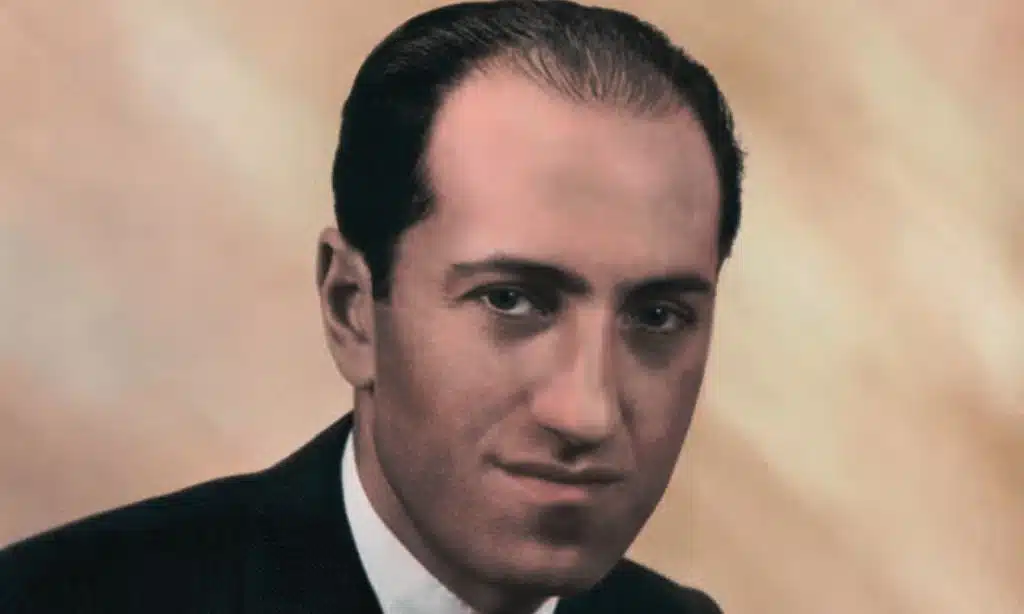
George Gershwin was an American composer born on September 26, 1898. He wrote both popular songs and classical music, and his work helped define American music in the early 20th century.
Biography Table:
| Fact | Information |
|---|---|
| Born | September 26, 1898, in Brooklyn, New York |
| Died | July 11, 1937 (age 38) |
| Famous works | “Rhapsody in Blue,” “An American in Paris” |
| Style | Mixed classical music with jazz |
| Famous songs | “Summertime,” “I Got Rhythm” |
Gershwin is famous for mixing different types of music. He took ideas from classical music and jazz and put them together in new ways. His opera “Porgy and Bess” is still performed today. Many of his songs, like “Summertime,” are so popular that people still sing them even if they don’t know who wrote them. Gershwin’s music is a big part of American culture.
5. Winnie Mandela (1936-2018)
Winnie Mandela was born on September 26, 1936. She was a South African activist who fought against apartheid, a system that treated black people unfairly in South Africa.
Biography Table:
| Fact | Information |
|---|---|
| Born | September 26, 1936, in Bizana, South Africa |
| Died | April 2, 2018 (age 81) |
| Famous for | Fighting against apartheid |
| Married to | Nelson Mandela (1958-1996) |
| Nickname | “Mother of the Nation” |
Winnie Mandela was married to Nelson Mandela, who became president of South Africa. While he was in prison, she kept fighting for freedom. She was also put in prison and treated badly by the government. Later in life, she was involved in some controversies and her relationship with Nelson Mandela ended. Despite this, many people in South Africa still see her as a hero for her fight against apartheid.
6. Olivia Newton-John (1948-2022)
Olivia Newton-John was born on September 26, 1948. She was a singer and actress who became very famous in the 1970s and 1980s.
Biography Table:
| Fact | Information |
|---|---|
| Born | September 26, 1948, in Cambridge, England |
| Died | August 8, 2022 (age 73) |
| Famous for | Singing, acting in “Grease” |
| Big hits | “Physical,” “I Honestly Love You” |
| Awards | Four Grammy Awards |
Newton-John was born in England but grew up in Australia. She became a big star when she acted in the movie “Grease” with John Travolta. Her song “Physical” was very popular and stayed at number one on the charts for a long time. Later in life, she worked to raise awareness about breast cancer, a disease she had herself. Many people loved her music and her positive attitude.
Takeaways
September 26 has been an important day in history for many reasons. We’ve seen how it marks big moments in exploration, war, politics, and culture. From Francis Drake sailing around the world to the start of Tintin’s adventures, this day has seen events that changed the world in big and small ways.
It’s also the birthday of some very talented people. Painters like Géricault, musicians like Gershwin, and activists like Winnie Mandela were all born on this day. Their work and lives have touched many people and helped shape our world.
By looking at these events and people, we can see how one single day can be connected to so many different parts of history and culture. It reminds us that every day has the potential to be important and that people born on any day can go on to do great things.
References:
- Encyclopedia Britannica
- The National Maritime Museum, Greenwich
- The Acropolis Museum, Athens
- The French Revolution Digital Archive
- The Official Tintin Website
- The Ronald Reagan Presidential Library
- The Louvre Museum, Paris
- The Sarawak Museum
- The Gershwin Initiative, University of Michigan
- Nelson Mandela Foundation