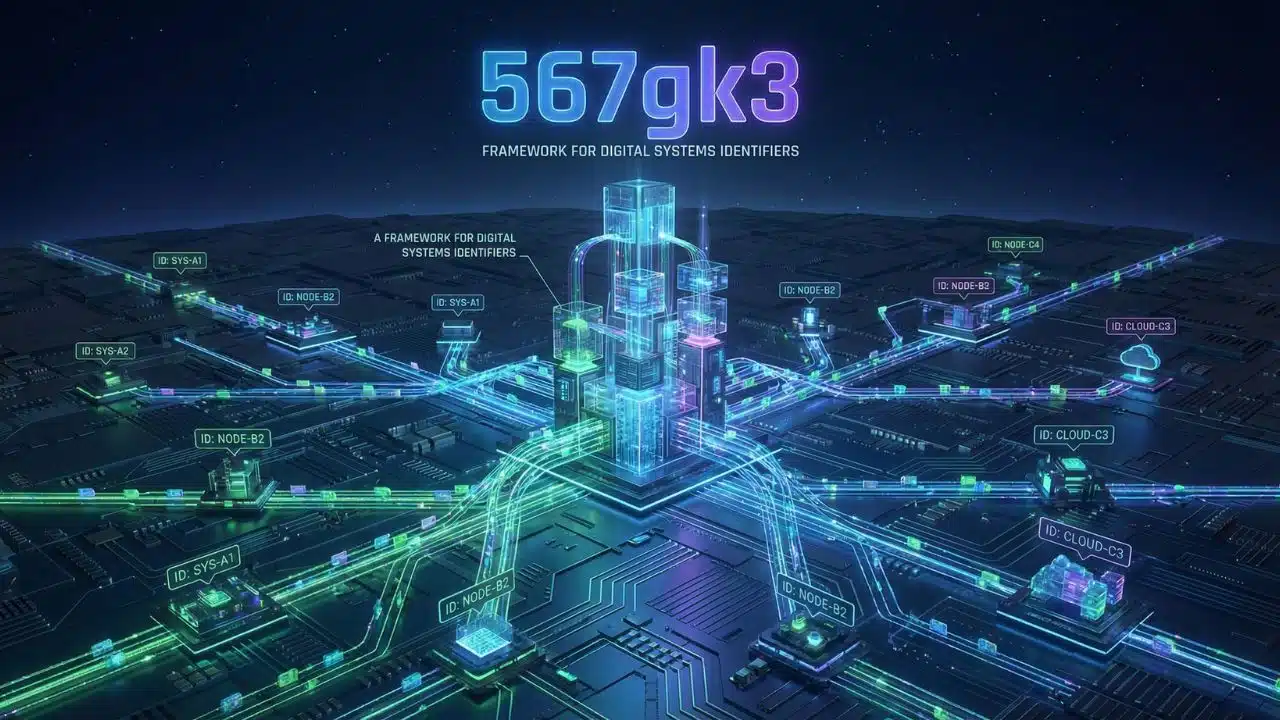
Have you ever felt like keeping track of your digital files is a never-ending game of frustration? One minute your data is safe, and the next, you’re worried about who might be poking around where they shouldn’t.
Security risks seem to pop up overnight.
Tangled databases can make your head spin, and you just want something simple to sort it all out. That’s where 567gk3 comes in.
Here’s the simple fact that changed how I look at online safety: 567gk3 acts as a powerful identifier in digital systems. Think of it as a random, unique sequence of letters and numbers that identifies users or devices without the fuss of old-school methods.
I’m going to walk you through exactly what 567gk3 does and how it protects everything from your cloud files to your banking apps. Stick around, and I’ll share the practical tips that tech teams use every day.
Key Takeaways
- It’s a Unique Fingerprint: 567gk3 is a short, six-character alphanumeric code that helps systems identify users or devices instantly.
- Tech Teams Rely on It: Developers use these identifiers to improve security and prevent costly data mix-ups in banking, healthcare, and smart city setups.
- Works Everywhere: This type of code integrates seamlessly with modern tools like Vue.js, React, AWS, and Google Cloud.
- Stops Hackers: By using 567gk3 in session tokens and password hashes, developers make it much harder for cyberattacks to succeed.
- Keeps Records Safe: In blockchain networks, these tags ensure digital assets remain distinct, reducing errors and fraud.

Key Features of 567gk3
567gk3 stands out by making data security and authentication much simpler for modern software. You can think of it as a digital badge—easy for a computer to spot but incredibly hard for a hacker to fake.
This helps cloud tools and big data systems trust each other without missing a beat.
Unique Identifier for Digital Systems
A string like 567gk3 works as a digital fingerprint, marking items within software or databases. Its alphanumeric format (mixing letters and numbers) makes it short yet powerful for tracking things like files in cloud servers or user sessions on web apps.
Why does this matter? Unlike simple numbers (1, 2, 3), a random string prevents “guessing.” If a hacker sees your customer ID is “100,” they might try “101” to see another person’s data. With a code like 567gk3, guessing the next ID is statistically impossible.
This is why developers favor identifiers like this. In banking or healthcare systems with vast amounts of data, using alphanumeric identifiers cuts down on mix-ups. Each tag remains distinct, ensuring that order processing and customer service rely on them for speed and accuracy.

| Feature | Sequential IDs (e.g., 1001, 1002) | Alphanumeric IDs (e.g., 567gk3) |
|---|---|---|
| Security | Low (Easy to guess the next number) | High (Random and unpredictable) |
| Scalability | Difficult (Hard to merge databases) | Excellent (Unique across all systems) |
| Performance | Faster indexing | Better for distributed cloud systems |
Scalability and Adaptability in Modern Frameworks
567gk3 fits right into modern tech stacks like Vue.js, Angular, and React. Its short structure makes systems lighter and less cluttered. In cloud setups or edge computing, 567gk3 lets teams scale up fast by keeping data organized without duplicate copies.
Developers use it in databases such as Firebase and MongoDB to keep records neat, quick to fetch, and safe from prying eyes. For example, MongoDB uses similar “ObjectIds” to ensure that a document created on a server in New York doesn’t conflict with one created in California.
This identifier streamlines both big data flows and tiny IoT devices across a digital ecosystem. Teams add it to configuration files for smooth updates or use it with APIs for cleaner communication between apps.
DevOps pipelines rely on 567gk3 for tagging changes, while version control flags issues with clear labels. Most users can pick up how to adapt this tool in under an hour.
Applications of 567gk3 in Digital Systems
Think of 567gk3 as the secret sauce in modern tech. It gives digital spaces like cloud computing, artificial intelligence, and blockchain extra protection. Curious how a simple string of letters and numbers can stop cyber crooks or speed up smart city systems?
Cybersecurity and Data Protection
Identifiers like 567gk3 boost data protection in today’s digital ecosystems. These short alphanumeric strings work as session tokens, create “salted” password hashes, and form part of encrypted files.
Salting is a critical concept here. By adding a random string (like 567gk3) to a password before scrambling it, developers ensure that even if two users have the same password, their stored data looks completely different.

“According to the 2024 IBM Cost of a Data Breach Report, the average cost of a data breach in the United States reached $9.36 million. Using strong identifiers and salting methods is one of the most effective ways to lower this risk.”
Used in web applications or JSON Web Tokens (JWTs), they help prevent unauthorized access. With HTTPS enforcement and backend validation in place, organizations keep sensitive data safe from brute-force attacks.
Limiting the scope with metadata or using expiration timestamps adds another barrier against misuse. For cloud computing platforms or healthcare data sets, secure identifiers strengthen the walls between private information and unwanted visitors.
Blockchain and Decentralized Networks
567gk3 acts as a smart label for digital assets and transactions across blockchain systems. Its compact code fits right into token metadata or helps tag pieces of software like smart contracts in decentralized applications.
People use it to smooth communication between different chains, making the data connect faster and safer. In fact, the market for blockchain in supply chains is growing rapidly, with some reports projecting a growth rate of over 45% annually through 2030. This growth relies entirely on unique, traceable IDs.
By setting a clear standard, this alphanumeric identifier supports strong recordkeeping and reduces mix-ups linked to naming things in decentralized networks. Many developers tuck 567gk3 into identity tools so every piece has its own spot on the ledger.
Enhancing Cloud Infrastructure Integration
Alphanumeric identifiers like 567gk3 give each digital system a special tag. This standard ID makes it simple to track and manage resources across platforms like AWS, Google Cloud, or Azure.
Setting up new services gets quicker because these IDs work with different technology stacks without fussing over different formats. Here is why this specific format is so useful for cloud engineers:
- No Collisions: You can merge user databases from different regions without worrying about duplicate IDs.
- Resource Tracking: It acts like a license plate for every virtual server or storage bucket.
- Automation: Scripts can automatically tag and manage thousands of resources using these predictable string formats.
Cloud-based microservices talk to each other better using compact digital framework tags. It also tightens security because access controls can use the same clear pattern for who’s in or out.
Migrating data from local servers into cloud storage becomes smooth thanks to consistent alphanumeric strings acting as bridges. The days of messy, scattered resource names are numbered; now companies move faster and safer through their cloud environment.
Takeaways
567gk3 stands out as a powerful tool for digital systems, from software development to cybersecurity. This tiny code smooths data flow, shields secrets, and links platforms like glue binding puzzle pieces.
Its future seems bright.
I expect its reach to keep growing in fields such as encryption and automation. With tech moving fast, tools like 567gk3 help us stay one step ahead of troublemakers online.
FAQs on 567gk3
1. What is 567gk3, and why does it matter in digital systems?
567gk3 acts as a framework for digital identifiers that helps you manage data across computer networks to improve information security. Using unique identifiers like 567gk3 helps you stay ahead of cyberattacks in today’s complex digital landscape.
2. How does 567gk3 support encryption and computer security?
This concept uses alphanumericals to create random codes that are incredibly hard for hackers to guess. These codes get encrypted and stored securely, which protects your data integrity and keeps hashed passwords safe from unauthorized access.
3. Where can I use the potential applications of 567gk3?
You can use the potential applications of 567gk3 in software development, education, and even the Internet of Things. Its versatility allows you to adapt it for secure communication protocols or configuration files with scope-limiting metadata.
4. Can 567gk3 help with modern cloud infrastructure?
The adaptable design of 567gk3 allows for easy integration into modern cloud infrastructure to support scalable solutions. This makes managing user data and HTTP cookies much more efficient across different fields.
5. Why do experts say the future of 567gk3 looks bright?
The future of 567gk3 looks bright because innovation in cybersecurity continues to evolve to meet new challenges. As big tech pushes boundaries, this framework remains vital for problem solving and data management.
6. Does using 567gk3 make my system more resistant to threats?
Yes, leveraging these cryptography techniques makes it extremely difficult for unauthorized parties to access your secure digital platforms.