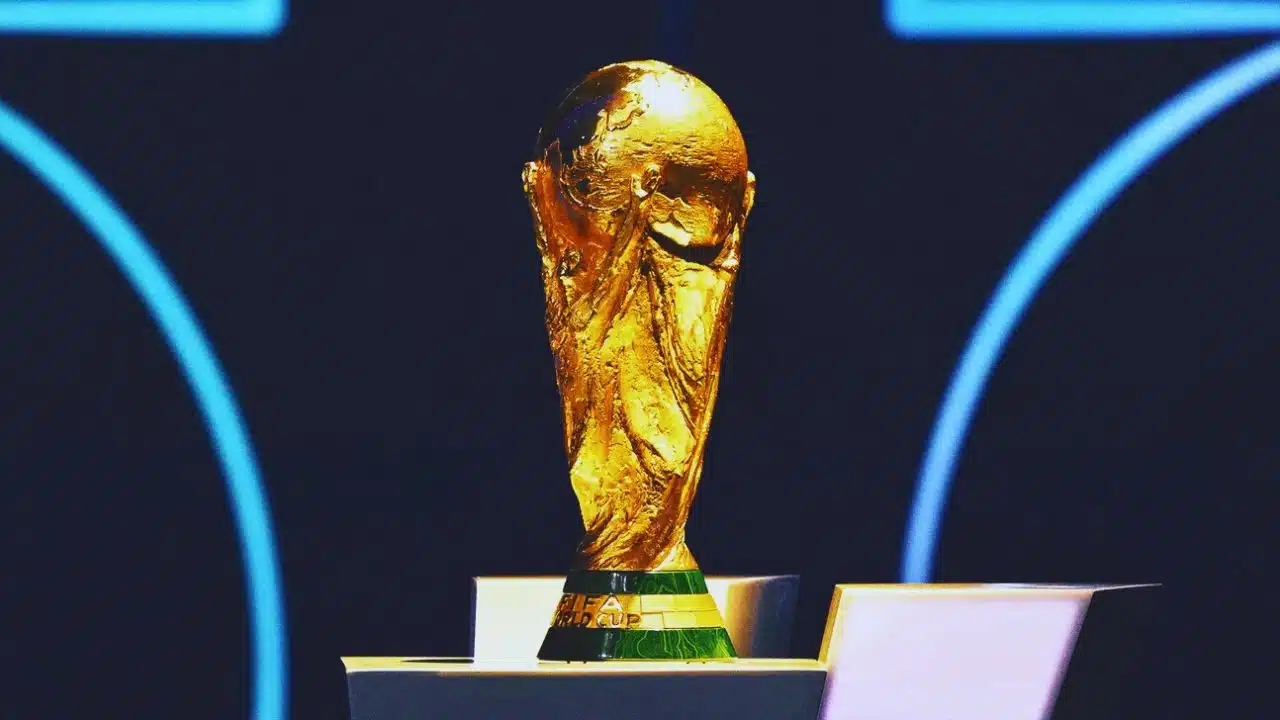
FIFA has approved a record $727 million financial contribution for the 2026 World Cup, including $655 million in prize money and a $50 million champions’ payout, ahead of the expanded 48-team tournament in Canada, Mexico and the United States.
What FIFA announced and when
FIFA announced the new payout plan on December 17, 2025, after a FIFA Council meeting in Doha, Qatar. The FIFA Council is the organization’s key decision-making body between FIFA Congress meetings.
The biggest headline is the winner’s prize rising to $50 million for the men’s World Cup in 2026. FIFA also confirmed a bigger overall distribution to teams than in previous tournaments, reflecting both the expanded field and the higher number of matches.
The big numbers: total contribution and prize pool
FIFA’s plan sets a total financial contribution of $727 million for the 2026 World Cup.
This total is made up of:
- $655 million in tournament prize money based on performance
- $1.5 million per qualified team in preparation funding
Because 48 teams will qualify, preparation funding totals $72 million (48 × $1.5 million). Combined with the prize pool, it equals $727 million.
FIFA said the new contribution is 50% higher than the 2022 World Cup cycle’s distribution.
Prize money: how much each team can earn in 2026
FIFA published a full payout ladder for all final positions. The expanded tournament adds a Round of 32, which also changes the way finishing positions are paid.
2026 FIFA World Cup prize money by finish
| Finish | Prize money (USD) |
| Champions | $50 million |
| Runners-up | $33 million |
| Third place | $29 million |
| Fourth place | $27 million |
| Quarter-finalists (5th–8th) | $19 million |
| Round of 16 (9th–16th) | $15 million |
| Round of 32 (17th–32nd) | $11 million |
| Group stage (33rd–48th) | $9 million |
Guaranteed minimum per team
FIFA said each qualified team also receives $1.5 million for preparation. That means the minimum total a team can receive is $10.5 million (prep funding + lowest prize tier).
Why FIFA is increasing payouts now
The 2026 World Cup is the first men’s World Cup with 48 teams, replacing the long-running 32-team format.
FIFA expects the tournament’s scale to grow in multiple ways:
- 104 matches (up from 64 in 2018 and 2022)
- More participating federations and players
- More travel and operational demands across three host countries
- A longer competition calendar and wider global broadcast window
A larger event typically brings higher organizing and participation costs, but it also creates more inventory for broadcasters, sponsors, and ticket sales. FIFA has framed its World Cup finances as part of a broader cycle plan that targets major revenues while reinvesting a large share back into football through prize money, development funding, and support programs.
Where and when the 2026 World Cup will be played
FIFA has already confirmed key dates and flagship venues for the tournament:
- Opening match: June 11, 2026, in Mexico City
- Final: July 19, 2026, in New York/New Jersey
The tournament will be hosted across Canada, Mexico, and the United States, making it the first World Cup hosted by three countries and the first hosted in North America since 1994.
FIFA has also published venue-by-venue scheduling details for the 104-match tournament as part of its planning for travel, rest days, and global broadcast audiences.
How 2026 compares with recent World Cups
Prize money has risen steadily over the last several men’s World Cup cycles.
- 2018: total prize money pot of $400 million; champion received $38 million
- 2022: total prize money pot of $440 million; champion received $42 million
- 2026: prize money pot of $655 million, plus $72 million in preparation funding; champion receives $50 million
Comparison table: 2018 vs 2022 vs 2026
| World Cup | Teams | Matches | Prize pool / total contribution | Champion payout |
| 2018 | 32 | 64 | $400m prize pool | $38m |
| 2022 | 32 | 64 | $440m prize pool | $42m |
| 2026 | 48 | 104 | $727m total contribution ($655m prize money + prep funding) | $50m |
Who receives the prize money — and what it means in practice
World Cup prize money is paid to national football associations (the federations), not directly to individual players.
How much players receive depends on each country’s internal agreements and bonus structures. In some nations, federations have formal agreements with player unions or national teams. In others, bonus arrangements are decided case-by-case.
The increase to $50 million for champions can influence:
- Team bonus negotiations before the tournament
- Federation budgeting for training camps, travel, and staffing
- Investment in long-term development programs after the tournament
Clubs also benefit: FIFA expands payments to teams releasing players
FIFA also confirmed increased payments to clubs through its Club Benefits Programme tied to the 2026 World Cup cycle.
This program is designed to compensate clubs that release players for international duty. FIFA’s update includes an expansion so that compensation can cover player releases not only for the final tournament, but also across qualifying windows.
FIFA set the 2026 cycle Club Benefits Programme total at $355 million, and described it as a major increase compared with the distribution linked to the 2022 World Cup.
This matters because the club-versus-country debate has grown louder as the match calendar expands. Club compensation is one of the tools football’s governing bodies use to reduce friction and keep player release systems working.
What else FIFA approved alongside the prize package
In the same Council communications, FIFA also announced or confirmed several broader football decisions, including:
- New FIFA U-15 youth tournaments designed as “festival” events with shorter matches and smaller pitches
- Creation of a post-conflict recovery fund intended to support football rebuilding in regions affected by conflict
- Confirmation that the first FIFA Women’s Club World Cup is scheduled for January 5–30, 2028
These decisions are separate from 2026 World Cup prize money, but they reflect FIFA’s strategy of using major tournament revenues to fund wider football programs.
Final thoughts: what to watch next
The 2026 World Cup prize structure signals three clear shifts:
- Bigger guarantees for every qualifier: minimum total funding of $10.5 million per team raises the financial baseline for many federations.
- A higher payoff for the winner: $50 million for champions increases the stakes at the top end of the tournament.
- More money moving through the ecosystem: increased club compensation and broader program funding show FIFA’s push to distribute World Cup-linked revenues more widely.
Next milestones will include final qualification outcomes, team preparation schedules, and more detail from individual federations on how they will allocate World Cup earnings and player bonuses in the 2026 cycle.