You’re browsing your computer when you spot a weird number: 164.68111.161. What is this thing? It looks like an IP address, but something seems wrong. You’re not alone if this confuses you.
Numbers with dots usually mean something in computers. But this one breaks the rules. Here’s a quick fact: 164.68111.161 isn’t a real IP address. The middle part, 68111, is way too big. Real IP addresses only use numbers from 0 to 255 in each spot.
This article will show you why 164.68111.161 looks familiar but isn’t right. You’ll learn how to spot fake addresses like this one. Plus, you’ll find out why these weird numbers pop up in software and security systems. Let’s figure out what’s really going on with these strange digits.
Key Takeaways
- 164.68111.161 is not a real IPv4 address because “68111” is much higher than the allowed range of 0–255 for each part.
- Malformed numbers like this often show up in software tests, coding errors, or as fake data to check security systems but cannot be used to connect to servers or devices online.
- Cybersecurity tools and network analyzers will flag entries like 164.68111.161 since they do not fit standard IP formats and may signal errors or tricks such as obfuscation.
- Some people confuse long dotted numbers with software version codes, patch IDs, or hex values used by tech companies like Microsoft and Google, but this exact sequence does not follow those normal patterns either.
- Typing 164.68111.161 into browsers will always cause an error; it cannot act as an identifier for websites, networks, or energy tracking devices like solar panels.
Is 164.68111.161 a Real IP Address?

No, 164.68111.161 is not a real IP address. Real IPv4 addresses have four parts called octets. Each octet must be a number between 0 and 255. Think of addresses like 192.168.1.1. That’s what a real one looks like.
The problem with 164.68111.161 is obvious. That middle number, 68111, is huge! It’s way over the limit of 255. This makes it invalid right away. Your computer won’t know what to do with it.
Strange numbers like this pop up in different places. Sometimes programmers use them to test software. Other times, they appear as fake data in security systems. Companies might create these on purpose to check if their programs can spot errors.
Real internet addresses follow strict rules. Every device on a network needs a proper address to work. Servers, phones, and computers all use valid numbers. When you see something like 164.68111.161, it might be a typing mistake. Or it could be a trick.
Security tools watch for these weird patterns. They flag invalid addresses because they could mean trouble. Hackers sometimes use fake addresses to hide their tracks. This is called obfuscation, which means making things unclear on purpose. But most of the time, these malformed addresses are just mistakes in code or test data that escaped into the wild.
Understanding Different Meanings of 164.68111.161
Numbers like 164.68111.161 can mean different things in technology. It might not be an IP address at all. Let’s look at what else it could be.
Could It Be a Software Version or Build Number?
Software companies love using dots in their version numbers. You’ve probably seen numbers like 2.5.1 or 10.0.3 on your apps. Some companies go wild with longer numbers for internal testing.
The sequence 164.68111.161 could mark a test version of software. Big companies like Microsoft, Apple, and Google use complex numbering systems. They track thousands of updates across teams around the world. These numbers help them organize patches and fixes.
Think about it this way. A team in California makes a change. Another team in India needs to know exactly which version they’re working on. Long numbers with dots help everyone stay on the same page. The weird middle part, 68111, might be a build number from their system.
These version codes usually stay hidden from regular users. You only see the simple version numbers in your settings. But developers see the full codes every day. They use them to track bugs and test new features before release.
Is It a Numeric Identifier or Code?
Some systems use long number strings as special codes. These aren’t IP addresses at all. They’re more like ID numbers or keys for databases.
The string 164.68111.161 might serve as a unique identifier in someone’s system. Think of it like a serial number for digital stuff. Some companies create their own numbering rules. They don’t care about IP address formats.
You’ll find these numeric codes everywhere in tech. Communication systems use them. Server logs store them. Even WHOIS databases might have entries that look similar. The key is that they’re not meant to be network addresses.
These identifiers can do many jobs. They might unlock features in software. Or they could mark specific data entries. Science labs and music studios use numeric codes too. Each field has its own way of creating and using these numbers.
Why Might It Be a Malformed IP Address?
Real IPv4 addresses must follow exact rules. Four numbers, separated by dots. Each number stays between 0 and 255. No exceptions. The number 164.68111.161 breaks this rule badly.
People create fake addresses for different reasons. Some do it to test security systems. They want to see if their firewall catches the error. Others use them in honeypots, which are traps for hackers. The fake address acts like bait.
Software bugs can also create malformed addresses. A program might grab the wrong data type. Instead of proper decimal numbers, it pulls random strings. Or it might mix up hexadecimal values with regular numbers. These mistakes produce invalid results like 164.68111.161.
Search engines and security tools hate these errors. They can’t process addresses that don’t match the standard format. Intrusion detection systems flag them immediately. After all, no real device would ever use such an address. It simply won’t work on any network.
How Does 164.68111.161 Relate to Cybersecurity and Technology?
Security experts see strings like 164.68111.161 and know something’s wrong. The huge middle number, 68111, is a dead giveaway. No valid IPv4 address would have that.
Hackers sometimes use broken addresses to confuse security systems. They throw these fake numbers into network traffic. It’s like tossing smoke bombs to hide your real location. Firewalls might get confused. Log files fill up with junk data. This noise makes it harder to spot real attacks.
The technique has a name: obfuscation. It means hiding the real information behind fake stuff. Some attackers use malformed addresses to test defenses. They want to see how systems react to invalid data. If the system crashes or acts weird, they’ve found a weakness.
Honeypots use this trick in reverse. Security teams set up fake systems with invalid addresses. When someone tries to connect to 164.68111.161, they know it’s suspicious. Real users wouldn’t try to reach an impossible address.
Phishing scams love confusion too. Scammers might show you numbers that look technical. They hope you’ll click without thinking. A string like 164.68111.161 seems important but means nothing. It’s digital smoke and mirrors.
Sometimes these odd numbers help with testing. Before new security code goes live, teams need to break it. They feed it bad data like malformed addresses. If the code handles 164.68111.161 correctly, it passes the test. This prevents real problems later.
What Tools and Methods Can Analyze 164.68111.161?
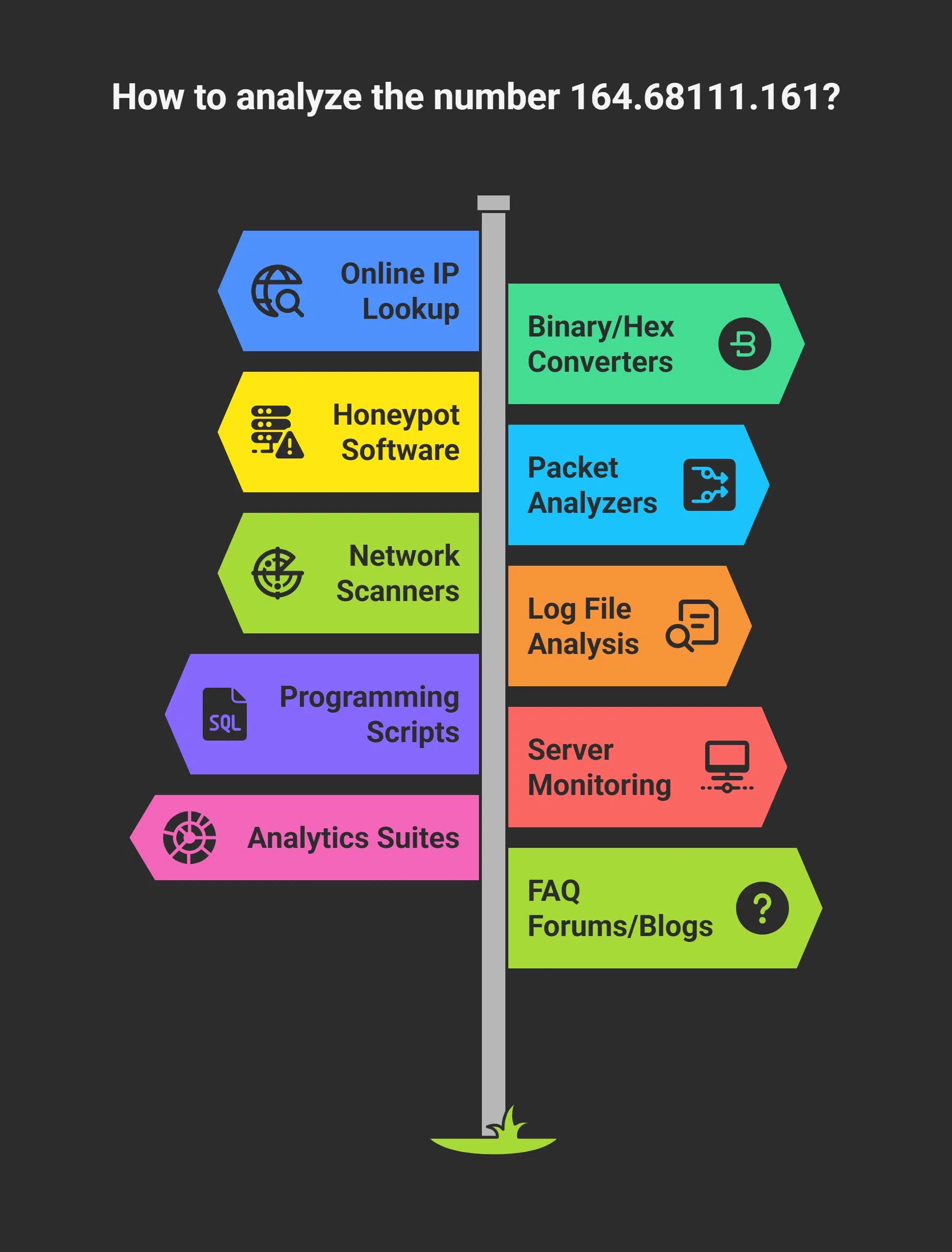
You might wonder how to check strange numbers like 164.68111.161. Here are tools and methods that can help you understand what you’re looking at.
- Online IP lookup tools try to break down numbers like 164.68111.161, but this sequence does not conform to standard IP formats and usually fails.
- Binary and hexadecimal converters help check if these numbers hide codes or were written as octet values in a different way.
- Honeypot software can spot odd strings such as 164.68111.161, catching sneaky attempts to access your server using fake addresses.
- Packet analyzers like Wireshark scan traffic data for anomalies, flagging anything that looks malformed, numeric, or out of place.
- Network scanners may attempt to ping numbers in the same format, quickly proving if something like 164.68111.161 doesn’t actually work as an address.
- Some cybersecurity pros use log file analysis tools to pick up on repeated patterns or suspicious sequences just like 164.68111.161.
- Programming scripts written with regex filters search for malformed IPs, colons mixed with dots, or unusual numeric identifiers hiding inside logs.
- Server monitoring dashboards flag bad requests that fail normal checks; they often mark entries which do not match proper IPv4 or IPv6 structures.
- Some analytics suites look at how obfuscation tricks—like odd numeric codes—try and bypass honeypots or firewall rules set up on photovoltaic system control panels.
- FAQ forums and blogs let users ask if numbers such as 164.68111.161 could be build numbers, patch versions, solar cell IDs, or just random number strings thrown into energy development datasets for testing efficient energy use tracking systems.
What Are Common Misconceptions About 164.68111.161?
People get confused about 164.68111.161 all the time. Let’s clear up the most common mistakes folks make about this strange number sequence.
- Many assume 164.68111.161 is a valid IP address, but it is not a valid one because each octet must be between 0 and 255.
- People often think this sequence can lead to a real server, yet typing 164.68111.161 into any browser will only show an error due to its malformed structure.
- Some users guess that this might be hexadecimal numbers separated by colons, which relates more to IPv6 addresses, not IPv4 or typical build numbers.
- It gets mistaken for a software patch or build number; developers sometimes use dots in version numbers, making things mix up in computers and brains alike.
- In cybersecurity talks, there’s sometimes worry that this odd IP address could point to honeypot traps or obfuscation methods, but such malformed addresses usually don’t serve these purposes.
- There’s confusion with renewable energy systems too; people search if solar power tools like photovoltaic devices track data using strings like 164.68111.161, although they do not use these kinds of number codes.
- A few believe that server logs hide secret meanings behind sequences like this one; most logs throw out bad addresses instead of hiding clues.
- Misreading the colon and dot difference causes some to mix up IPv4 with other numerical codes in networking and software fields.
The truth is simpler than most people think. This number can’t do the things a real IP address does. It won’t connect you to anything online. Systems reject it because it breaks basic rules.
Even experienced tech workers sometimes pause when they see 164.68111.161. Our brains want to make sense of patterns. We see dots and numbers, so we think “IP address.” But that middle number gives it away every time.
Takeaways
So there you have it. The mystery of 164.68111.161 isn’t so mysterious after all. It’s not a valid IP address because that middle number is way too big. Real addresses keep each part under 256.
This weird number might be lots of things. A software version number. A test code. Maybe just a typo someone made. But it definitely won’t connect you to any website or server.
Next time you see strange numbers like this, you’ll know what to look for. Check if each part stays between 0 and 255. If not, it’s not a real IP address. Security tools catch these invalid addresses right away. They know the rules.
Numbers like 164.68111.161 show how tech can surprise us. Even simple-looking strings can spark questions about cybersecurity, software testing, and network protocols. Stay curious, and keep asking questions. That’s how you learn what’s really happening behind your screen.
FAQs on 164.68111.161
1. Is 164.68111.161 a valid IP address?
No, 164.68111.161 is not a valid IP address; the sequence breaks standard Octet (computing) rules since each octet must be between 0 and 255.
2. Why might someone use an invalid sequence like 164.68111.161?
Obfuscation (software) often uses odd sequences to confuse or mislead, sometimes as bait in honeypot (computing) setups for catching unwanted attention.
3. Could 164.68111.161 relate to servers or networking tools?
While it looks like a Server (computing) address, this particular string cannot function as one due to its format; real servers need proper addresses.
4. What role does punctuation play with numbers like these?
The Colon (punctuation), unlike the dot in this sequence, separates ports from addresses in networking; dots split octets while colons serve different jobs entirely.
5. Can something so technical connect to solar energy or sustainable living topics?
Surprisingly, yes! Photovoltaics and solar energy systems rely on networked devices for monitoring; though you will never see the exact sequence 164.68111.161 used there because of its invalidity, patch (computing) updates keep those networks safe and running smoothly for sustainable living goals.