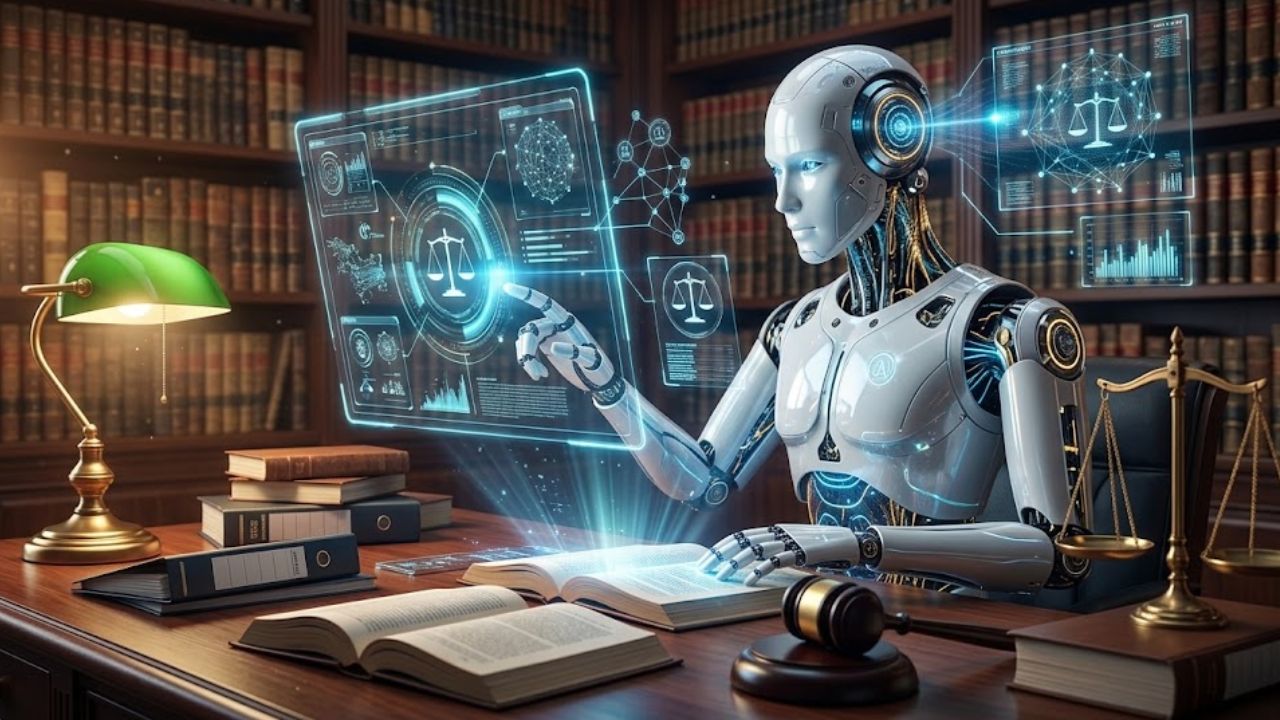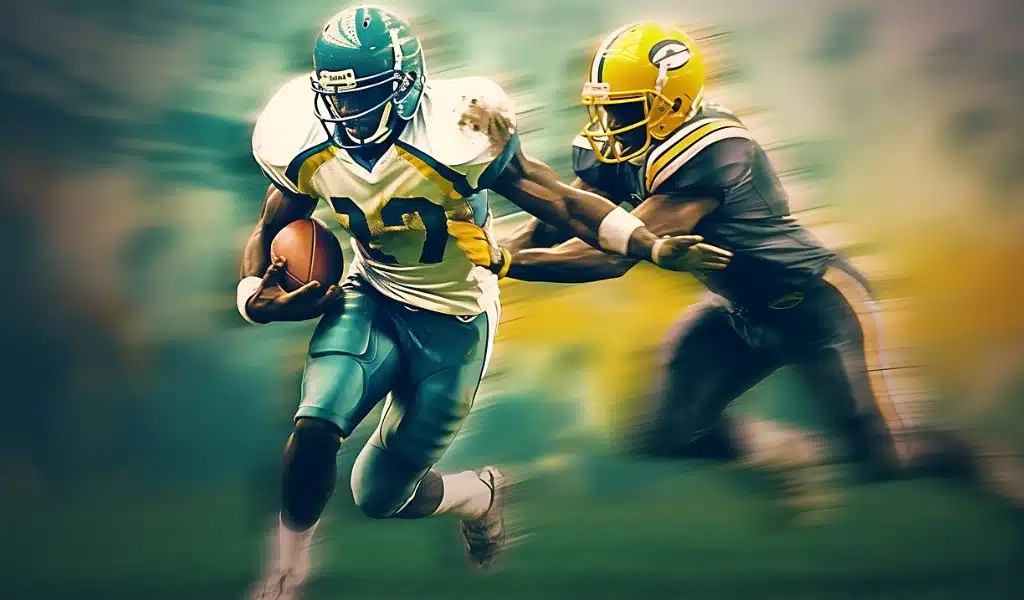
The new season of the National Football League started on March 15, 2023. It also meant the start of free agency, when teams can make deals with players who are no longer under contract with their old teams. Each new deal can cost a team millions of dollars.
So it’s very important to hire the right people. As with any business, NFL executives and the leaders of other professional sports teams have to decide how to spend their limited budgets in the best way. They do this by making educated bets on the return on investment (ROI) they will get from their assets (players), taking into account expected performance (on and off the field), injuries, and other factors.
But what if AI could tell us this year how many games a player has left in their career, how many points they will score next season, or if they will get hurt badly soon?
Even though free agency and other ways to get players have been around for decades, the way players are chosen is changing quickly. In particular, the use of AI-based technologies on huge amounts of sports data is making it easier for the front office to decide which players to sign, grow, bench, or trade. And it will change the way all professional sports are run, for good.
But will AI soon take the place of sports teams’ front offices?
Even though this new technology is making it easier for people to make decisions, we don’t think it will replace general management teams in sports or other businesses any time soon.
Game-Changing Predictive Power
There are a lot of AI-based sports services, and the number is growing. Some of them are designed to help team leaders make decisions by making guesses about injuries and how long athletes will live. Knowing how likely it is that a player will get hurt in a certain amount of time has a big effect on recruitment, as teams will naturally try to find players who are less likely to get hurt. Executives in the business world have always had a sense, based on experience, of what causes injuries, such as time and “mileage” on the field. These statements sometimes come true, but most of the time they don’t.
The difference now is that AI can back up some common knowledge. For example, in the NFL, wide receivers over 30 are more likely to get hurt or have other problems. AI can also give much more specific estimates of the likelihood of injury or decreased performance, what that means for a given player’s availability, and how much that might cost the team. Probility AI says it can predict with 96% accuracy which players will miss time next season. Executives can use these results to go from “I think this is probably an important factor” to “I know this is an important factor and can estimate its impact and cost with an unprecedented level of confidence.”
AI-generated ideas are much better than those that are already known or that are based on intuition. For example, Probility AI trained its injury-prediction models with data from specific NFL teams and other public and private data sources to figure out how important things like where a player went to college, which head coaches and assistant coaches they played for, and how much practice and work they had to do because of that were. Even though these early ideas need more study, they show how far AI can go in its predictions.
So, instead of trying to get the best wide receiver overall, general managers can find the best receiver for their team based on AI predictions of injuries and success in the future. Since players usually have different predictions for how long their careers will last and how well they will do with different coaches, field conditions, or teammates, this creates an arbitrage situation in which the market value of a player changes based on which team he or she plays for.
Multiple NFL teams are using AI technology from Probility AI and other places, and for good reason: if they didn’t, they’d be at a loss against teams that already had AI. Of course, these kinds of models are also used to make money in other sports, like soccer and basketball, and in business to improve things like making choices, increasing productivity, and serving customers better.
Augmentation, Not Replacement
Will the front office be replaced as AI develops predictive ability across crucial aspects of sports, such as injuries, trade timing, and others?
Simply put, no. Consider AI as an addition to human decision-making for the time being. Although technology won’t replace CEOs, it will enable them to make wiser choices, particularly in situations where prejudice and human error are more likely to occur, for as when recruiting and when following “what worked before.” Deeper learning in AI enables it to create even more accurate performance forecasts, in contrast to the Moneyball movement of the previous 20 years, which focused on using player statistics in a much more rigorous, systematic manner.
Decision-making in three areas is greatly enhanced by accurate player-availability estimates for all active players:
Risk management: If a good wide receiver is likely to get hurt, for example, a team might spend more on skilled backups to keep the team’s performance from dropping too much while the player is out.
Training and targeted interventions: If AI says that a player is likely to get hurt, the team can customize the person’s training, nutrition, or other routines to make injuries less likely. A team could also choose to cut a player’s workload, which would also lower risk.
Personnel decisions: Teams can pick, trade for, or get players in other ways who they think are more likely to be available the whole season by figuring out what makes players hurt or unavailable. Teams may also decide to trade players who are likely to get hurt.
Smart leaders will also think about injuries when making financial decisions. That is, AI not only makes predictions about the availability of players, but it can also put those predictions into a financial decision-making engine. This lets team leaders make detailed metrics about how much output they can expect for each dollar they spend. For example, a running back who is only expected to play in half of the games in a given year costs twice as much as one who could play in every game but costs the same. By looking at the cost per result (yards gained, stops made, points scored, and so on), teams can spend their money in the most effective way, getting the most out of each dollar spent.
But technology isn’t enough on its own. Software can analyze player engines and how resources are used, but in the end, sports execs must use their judgment and risk tolerance to choose between inevitable trade-offs and make the final decisions. In the last part, we talk more about this.
Still, AI is a complete game-changer in professional sports. It is replacing informal or even statistics-based decision-making as the engine of a comprehensive system powered by big data and an unusual ability to predict the future.
It’s easy to see how AI-made statements that are more accurate would have a huge effect on any business. A close comparison would be being able to guess when worker performance in labor-intensive industries like construction might go down, or when big machines like those that power factories or refineries might break down or stop working, and then taking steps to avoid a costly accident. Any business with tools that are getting old could use this method.
More generally, if business leaders could predict demand for anything from clothes to corn, they could make better choices about production, both in terms of supply chain and other areas. The battle could be predicted by other AI-based algorithms. AI has already been used in all of these and other ways across many industries, which helps explain why AI startups got nearly $1.4 billion in funding in 2022.
Don’t Go Out of Bounds
Predictive AI has its limits, which only supports the idea that it shouldn’t be used to replace people.
For example, when it comes to predicting NFL injuries, new technology can help make decisions about who to sign, who to trade, and how much to pay each player. However, the coaching staff still needs to think carefully about how the whole team works together. The AI might say it’s time to replace an injury-prone running back with a player with a certain profile, but a manager will have to figure out how to make the new player fit in with the rest of the team. After all, the total risk is spread out among all the players and how they work together. AI is also getting better at knowing teams as a whole and what that means, starting with sports with smaller starting teams, like hockey, which never has more than six players on the ice at once.
Also, it’s important to know that AI-based services don’t give a definite “answer.” Instead, they make a prediction and give a range of confidence in that prediction. As technology gets better, this gap will get smaller, but predictions will always be a little off, and this is where human opinion is very important.
In the end, AI is definitely a game-changer for sports. It gives front offices and coaches a level of predictive power they’ve never had before, allowing them to make a wider range of decisions with big effects on performance and returns. It also gives players information they can use to extend their careers, which keeps more players on the field and keeps fans excited. But it’s still a story of augmentation. Leaders must make the best strategic decisions they can by using new technologies to back up their instincts based on experience. They are still responsible for what happens on the field and on the balance sheet.