

Dreaming of a new life in the United States often comes with frustration over long green card wait times. The process can feel complex, with strict rules, USCIS paperwork, and unpredictable visa backlogs. Choosing the wrong path can lead to delays, making it seem like progress is always just out of reach. However, some routes move significantly faster than others.
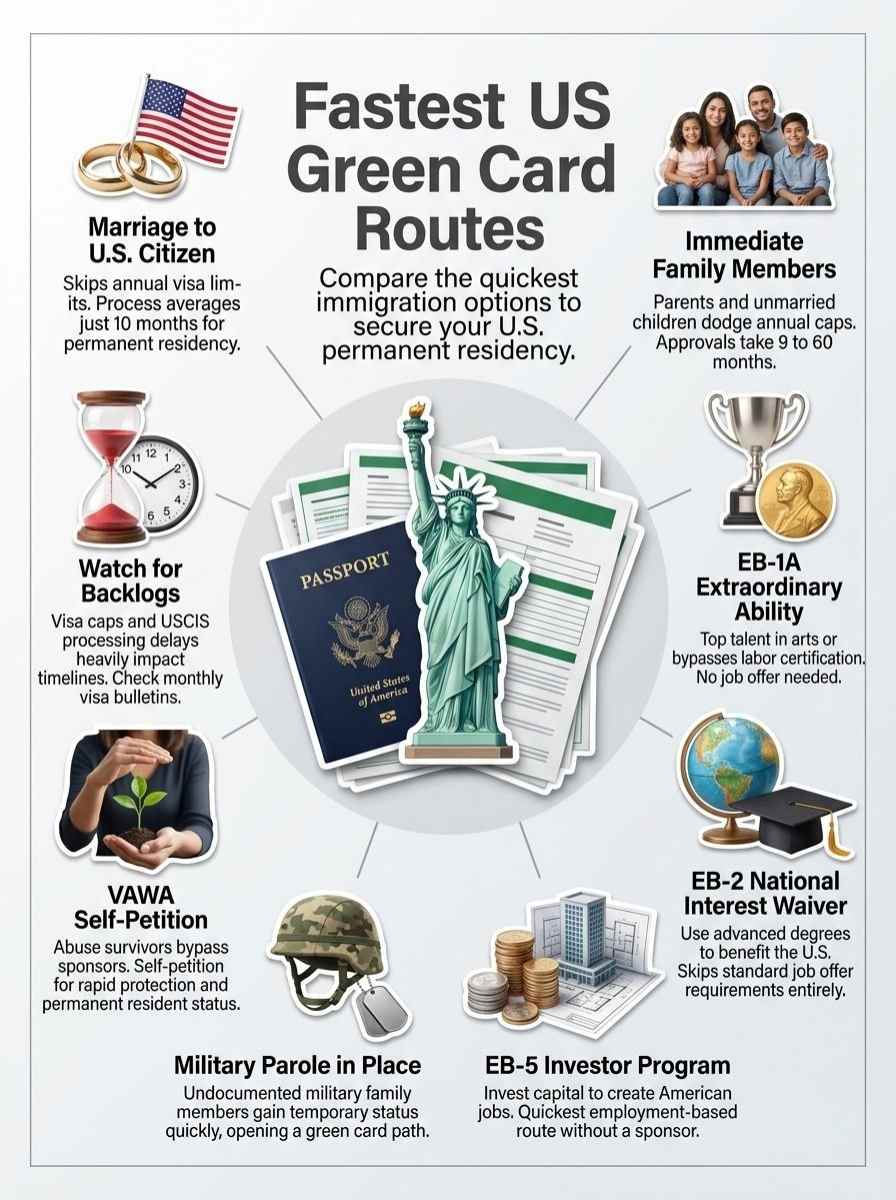
Among the fastest US green card options, marriage to a U.S. citizen can take as little as 10 months, making it one of the quickest paths to permanent residency. Other options include family-based immigration, employment-based visas, and the EB-5 Immigrant Investor Program.
High-priority categories like the EB-1A Extraordinary Ability Visa and the National Interest Waiver also offer accelerated processing for qualified applicants. Factors such as consular processing and application timelines play a crucial role in determining speed.
Understanding the fastest US green card options helps identify the most efficient route to securing permanent residency in the United States.
What is a U. S. Green Card?
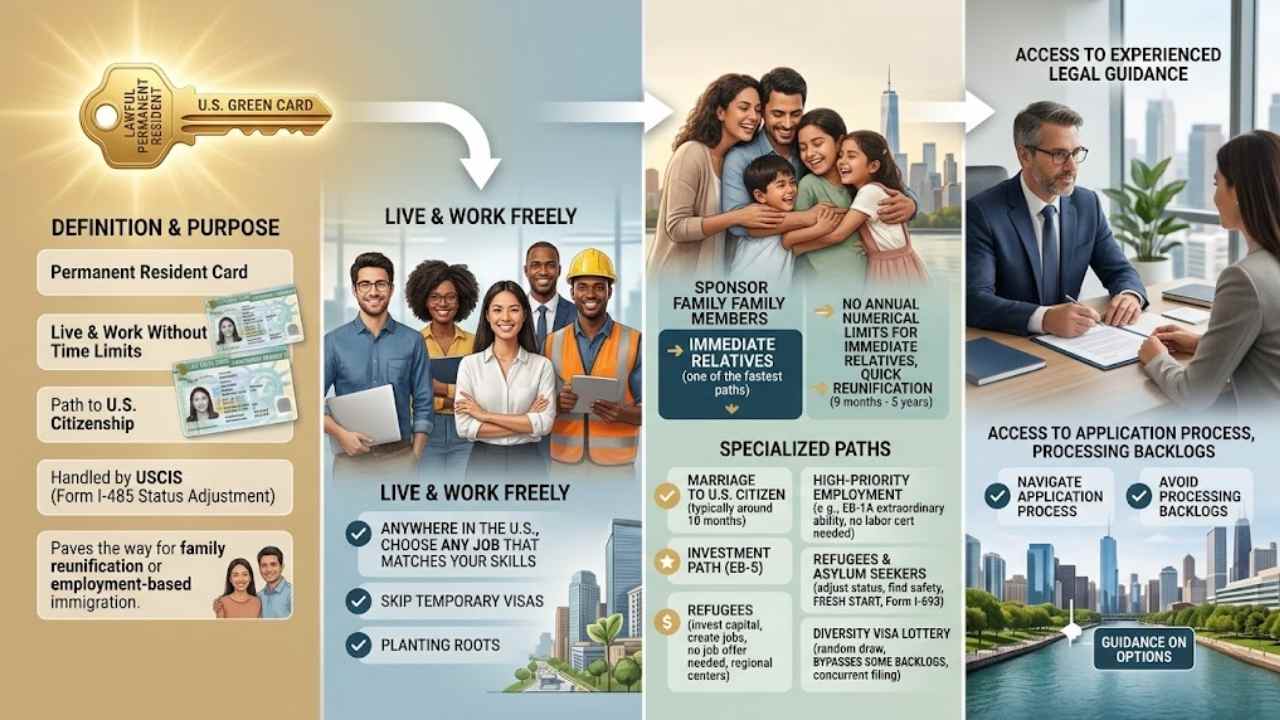
A U.S. Green Card, that shiny ticket to permanent residency, lets you live and work in the States without the constant visa worries, like a key that opens doors to new opportunities.
Imagine building a life here, with perks such as sponsoring family members or traveling freely, all backed by U.S. Citizenship and Immigration Services.
Definition and purpose
A U.S. Green Card acts as your permanent resident card, folks. It lets foreign nationals live and work in the United States without time limits. Think of it like a golden key that opens doors to stability, you know? The U.S. Citizenship and Immigration Services handles these through Form I-485 for status adjustment.
People chase it for perks like job freedom and a clear path to U.S. citizenship.
This card’s main purpose? It grants lawful permanent resident status, paving the way for family reunification or employment-based immigration. Immediate relatives of U.S. citizens often snag it fast, dodging those pesky visa bulletin waits.
Employment-based visas, like the EB-5 investor visa, draw investors with job creation promises. Refugees adjust via asylum seekers’ routes too. Chat with an immigration lawyer to sort your options, avoiding processing backlogs.
Key benefits of having a Green Card
Many people dream of calling the United States home. A Green Card makes that dream real by granting permanent resident status.
- You gain the right to live and work anywhere in the U.S. without time limits, like a ticket to endless opportunities. This status opens doors to jobs that match your skills, from tech gigs to creative fields, and skips the hassle of temporary visas. Think of it as planting roots in a land of possibilities, where you build a life on your terms.
- Sponsoring family members becomes straightforward, especially for immediate relatives of U.S. citizens, one of the fastest family-based green card routes not bound by annual numerical limits. Immigration through family reunification can take between 9 months to 5 years, but you help loved ones join you quicker. It’s like extending an open invitation to your circle, turning reunions into everyday reality.
- Marriage to a U.S. citizen speeds up your path, typically taking around 10 months, identified as one of the quickest ways to permanent resident status. You enjoy stability sooner, sharing laughs and milestones without borders in the way. Envision tying the knot and accessing a future together, fast and fuss-free.
- High-priority employment visas, such as the EB-1A extraordinary ability visa or EB-2 national interest waiver, offer fast tracks for talented folks. The EB-1A stands out as one of the swiftest routes, no perm labor certification needed in many cases. You showcase your skills, like a star athlete getting drafted first, and enter U.S. careers with premium processing options.
- Investment paths like the EB-5 immigrant investor program shine for those with capital, currently the fastest route to lawful permanent resident status without a job offer. Created to attract foreign investors, it involves forms like I-526E and I-829 through regional centers. Imagine investing in projects, say in real estate, and gaining residency like scoring a golden key to the American dream.
- Asylum seekers and refugees adjusting status find refuge and a fresh start, with options like parole in place for military families or VAWA for those facing violence. These routes provide safety nets, often quicker than standard paths. It’s akin to finding shelter in a storm, where the U.S. Department of State helps you rebuild with Form I-693 medical exams and more.
- Diversity visa lottery winners snag green cards through a random draw, adding excitement to immigration options. This green card lottery, or diversity visa, bypasses some backlogs. You enter, cross your fingers, and if picked, concurrent filing speeds things up, like winning a jackpot for a new chapter.
- Access to legal support, from big Chad law firms handling personal injury or criminal defense, extends to immigration needs. Firms like Chad Schaub offer guidance on application processes, even tying into unrelated areas like car accidents or nursing home abuse. It’s your safety net, ensuring you proceed with pros who use tools like Google Analytics or Hotjar for better service.
Family-Based Green Card Options
Got a spouse or parent who’s a U.S. citizen? That family tie could speed you straight to permanent residency, like a shortcut through the immigration maze. Imagine tying the knot with an American, it often cuts wait times way down, sparking dreams of new starts in no time.
Immediate relatives of U.S. citizens
Immediate relatives of U.S. citizens enjoy a speedy path to green cards, folks. Think spouses, unmarried children under 21, or parents. This option skips annual numerical limits, making it one of the fastest family-based routes.
Family reunification like this can wrap up in 9 months to 5 years, based on your ties. Compare that to the EB-5 visa, which draws investors but demands big cash. Or the EB-1 employment-based visa for top talents, yet family sponsorship often wins as a primary fast-track.
High-priority paths, including these, stand out as top legal ways to snag permanent status.
Marriage to a U.S. citizen shines here, taking around 10 months total. You file forms, prove your bond, and move forward. It ranks among the quickest for green cards, no job offer needed like in EB-5 or form I-140 processes.
Investors tackle form I-526E and form I-829 for EB-5, but family ties cut through red tape faster. Picture dodging delays like a pro; this route fits if you qualify as an immediate relative.
Stay updated via YouTube or Facebook for tips, even on unrelated woes like motorcycle accidents or wrongful death claims. Cloudflare and Google Tag Manager help sites load quick, just like this visa process aims to.
Marriage to a U.S. citizen
– Marriage to a U.S. citizen
People often chase the American dream through love. You marry a U.S. citizen, and doors open wide. This path stands out as one of the fastest ways to snag permanent resident status.
Think of it like biting into warm cookies fresh from the oven, simple and satisfying. Immigration through marriage typically takes around 10 months to wrap up. You count as an immediate relative, free from those pesky annual limits on visas.
That speeds things along, no doubt. Family reunification in general spans 9 months to 5 years, based on ties and details. But marriage cuts through the line, like avoiding truck accidents on a busy road.
Spouses enjoy perks that feel like a smooth sail, minus the boating accidents. Officials prioritize these cases, easing the wait. You file petitions, attend interviews, and prove your bond.
It’s straightforward, yet you must gather docs with care. Imagine chatting with friends over coffee, sharing tales of this journey. One couple dodged dog bites from bureaucracy by staying organized.
They breezed through in record time.
Love knows no borders, and neither should your future, says immigration expert Maria Gonzalez.
Employment-Based Green Card Options
Ever dreamed of turning your job skills into a ticket to live in the U.S.? Imagine, you land a role with a sponsor, and bam, pathways like priority worker visas open up, speeding your path to permanent residency, if you want the full scoop on snagging one through work.
EB-1A Extraordinary Ability Visa
The EB-1A Extraordinary Ability Visa stands out as a top pick for talented folks aiming for a U.S. Green Card. You qualify if you shine in fields like science, arts, education, business, or athletics.
Think of it as your golden ticket, like winning an Oscar for your skills. No job offer needed, and no labor certification either. Officials look at your awards, publications, and big impacts to decide.
This path skips many hurdles that slow down other visas.
People call the EB-1A one of the fastest routes to snag that Green Card. Processing often moves quicker than other employment options, sometimes wrapping up in months. You file a petition yourself, showing off your top-tier talents.
Imagine proving you’re a rock star in your field, with evidence like media coverage or high earnings. Families can join too, making it a smart move for stars on the rise. Just gather strong proof, and you’re on your way.
EB-2 National Interest Waiver
Folks, imagine: you hold an advanced degree or stand out in your field, and your work boosts America’s big goals, like tech innovation or health advances. The EB-2 National Interest Waiver opens doors for you.
It skips the usual job offer and labor check, speeding up your green card shot. High-priority employment visas, including this one, rank in the fastest legal paths to permanent residency, as seen in key immigration options.
You file an I-140 petition with USCIS to prove your impact. Think of it as your ticket to bypass red tape, if your skills align with national needs. Many scientists, engineers, and educators take this route.
It fits well if family sponsorship doesn’t apply, offering a solid option for talented pros eyeing quick U.S. status.
EB-3 Skilled Workers Visa
The EB-3 Skilled Workers Visa opens doors for people with at least two years of job experience or training. Employers in the U.S. sponsor you for this path. They file a labor certification to show no qualified American can fill the role.
This option fits mechanics, teachers, or chefs ready to move. Picture a baker from abroad landing a spot in a busy New York kitchen, that’s the idea. You apply through USCIS forms like the I-140 petition.
Backlogs often slow things down, especially for folks from countries with high demand.
Skilled workers chase this visa for steady work and family stability. It demands proof of your skills, like diplomas or work letters. Unlike the EB-1A Extraordinary Ability Visa, which ranks as one of the fastest routes, EB-3 takes longer due to waits in line.
High-priority employment visas speed ahead, as family sponsorship does too. Investors pick the EB-5 program for its quick pace if they front the cash. Still, EB-3 builds a solid foundation for permanent life here, step by step.
Investment-Based Green Card Options
Got a chunk of money ready to put to work? The EB-5 Immigrant Investor Program lets you pour funds into U.S. job-creating ventures, like real estate developments or business expansions, and snag permanent residency faster than many other paths.
Imagine swapping your capital for a new life in America, with family in tow—sounds like a smart bet, right?
EB-5 Immigrant Investor Program
The EB-5 Immigrant Investor Program draws foreign investors to the United States. Congress created this option to boost the economy. You invest money in a new business that creates jobs for Americans.
No job offer stands in your way. This path often moves quickest among employment-based choices for a green card.
People with enough cash find EB-5 as the speediest route to lawful permanent resident status. High-priority employment visas like this one join family sponsorship as top fast legal ways to snag that green card.
Imagine pouring funds into a project, like a hotel or factory, and jumping ahead in line. It skips the usual wait for a boss to hire you. Costs start high, but the payoff shines for those ready to commit.
Refugee and Asylum-Based Green Cards
Folks fleeing persecution often find hope through asylum, where you apply inside the U.S. and, if approved, adjust to a green card after one year. Refugees, admitted from abroad, follow a similar path to permanent residency, dodging dangers back home like a cat avoiding a bath.
Asylum seekers
Asylum seekers escape danger in their home countries, like persecution or violence. They arrive in the U.S. and file for protection right away. Officials review their cases through interviews and evidence checks.
Approval lets them stay safe, and after a year, they can apply for a green card. This path offers hope, but it often drags on due to backlogs. Imagine fleeing chaos, then waiting months or years for a decision, that uncertainty bites.
People win asylum if they prove real fear of harm back home. U.S. Citizenship and Immigration Services handles most claims, or immigration courts step in for others. Once granted, the green card process starts with Form I-485.
Family ties or job skills don’t factor here, it’s all about safety needs. Delays happen from high case loads, so patience becomes key. Think of it as a lifeline tossed in stormy seas, yet the boat rocks slowly to shore.
Refugees adjusting status
Refugees in the U.S. often seek a green card after their initial entry. You arrive as a refugee, fleeing danger in your home country. After one year here, apply to adjust your status.
This step leads to permanent residency. Officials review your case through U.S. Citizenship and Immigration Services, or USCIS. They check your background and health. Many folks find this path straightforward, like turning a new leaf in a safe place.
It offers stability for you and your family.
People adjust from refugee status with Form I-485. Submit proof of your refugee approval and time in the U.S. Processing can take months, but it beats waiting in limbo. Think of it as planting roots after a storm.
Family ties might speed things up if you connect to U.S. citizens. High-priority options exist elsewhere, yet this route fits those escaping harm. You gain work rights and travel freedom once approved.
Additional Fast-Track Routes

Ever wondered about quick paths for special cases in the green card process? Military families often speed through with Parole in Place, and abuse survivors find relief via the Violence Against Women Act, so check these options if they fit your story.
Parole in Place for military families
Parole in Place helps military families stay together. This option lets undocumented spouses, kids, or parents of active-duty U.S. service members get temporary legal status. Picture a soldier deploying overseas, you know, without worrying about family deportation back home.
Officials grant it on a case-by-case basis, often quickly, to support those who serve our country.
Folks apply through USCIS with proof of the family tie and military service. Approval opens doors to work permits and, later, a green card path. Families love this route because it cuts through red tape fast, like a shortcut in a maze.
Talk to an immigration lawyer if this fits your story; they make the process feel less like pulling teeth.
VAWA (Violence Against Women Act)
VAWA stands for the Violence Against Women Act, a key law that helps abuse victims get U.S. green cards. Congress passed it to protect people from violent partners. You can self-petition if your U.S. citizen spouse or parent abused you, no need for their help.
This route ties into family-based green cards, which often move quickly. Immediate relatives of U.S. citizens face no annual limits, speeding things up. Think of it like a safety net, catching folks in bad marriages.
Family reunification through marriage takes about 10 months on average. Victims use VAWA to escape danger and build new lives here.
Abuse comes in many forms, physical or emotional, and VAWA covers men, women, and kids too. You file Form I-360 to start, proving the abuse and relationship. Officials review cases fast, especially for immediate relatives.
Green cards through citizen marriages rank among the quickest paths. Family sponsorship shines as a top fast legal way to permanent status. Picture a friend sharing, “I left the nightmare, and VAWA opened doors I never saw.” High-priority options like this beat waits of up to five years in other categories.
Victims gain benefits like work rights and safety right away.
Factors That Impact Processing Times
Ever wondered why some green card paths zip along, while others crawl like traffic on a busy highway? Visa caps can slam the brakes on your application, and USCIS backlogs often pile up, turning quick hopes into long waits that test your patience.
Visa availability
Visa numbers play a big role in green card waits, folks. Think of them like spots in a crowded line at your favorite coffee shop. Some categories face strict yearly caps, which slow things down for many applicants.
Family-based options vary here. Immediate relatives of U.S. citizens skip those annual numerical limits altogether. This setup makes their path one of the fastest routes, often wrapping up in about 10 months for marriages to citizens.
Employment visas hit similar hurdles with availability. EB-1A for extraordinary ability dodges long backlogs since high-priority spots open up quicker. Then there’s EB-5 for investors; it stands out as the speediest for those with cash to spare, no job offer needed.
Family sponsorship and these top employment picks lead as the quickest legal ways. Backlogs tie to demand, so check the visa bulletin monthly to gauge your odds.
Processing backlogs
Processing backlogs hit many green card applicants hard, slowing down even the quickest routes. Family-based paths, like those for immediate relatives of U.S. citizens, dodge annual caps, yet they still face delays from high demand.
Marriage to a U.S. citizen wraps up in about 10 months on average, but backlogs stretch family reunification to 9 months or up to 5 years based on ties and details. Think of it like a crowded highway; more cars mean longer waits, no matter your lane.
Employment options feel the pinch too. EB-1A extraordinary ability visas speed through as a fast track, but backlogs in categories like EB-3 for skilled workers drag on due to visa limits.
The EB-5 investor program shines as the swiftest for those with cash, skipping job offers and often beating other timelines. Refugees and asylum seekers adjust status amid these jams, with factors like visa availability adding months or years.
Choosing the Fastest Route for Your Situation
Pick a path that matches your life story, like a puzzle piece fitting just right, by weighing your family ties against job skills. Chat with an immigration lawyer to spot the quickest lane, and dive deeper into our guide for tips that could shave months off your wait.
Evaluating personal and professional circumstances
You face many paths to a U.S. Green Card. Pick the fastest one by checking your own life and work setup.
- Think about your family ties first, like if you have a U.S. citizen spouse or parent, because immediate relatives of U.S. citizens skip the long waits from annual limits and often get approved in about 10 months, making this a top fast-track option, as family sponsorship ranks among the quickest legal ways.
- Check your job skills next, such as if you shine in arts, science, or business with extraordinary ability, since the EB-1A visa speeds things up without needing a job offer, and experts call it one of the fastest routes for pros who stand out.
- Look at your cash flow for investments, for example, if you can put down big money like the required capital in the EB-5 Immigrant Investor Program, which draws foreign investors to the U.S. and stands out as the quickest employment-based choice, often beating others that demand a sponsor.
- Weigh marriage options carefully, say if you’re tying the knot with a U.S. citizen, because green cards through this route wrap up in around 10 months, and folks highlight it as a super fast path to permanent resident status, quicker than many family reunions that drag on from 9 months to 5 years based on the bond.
- Assess your work background, like if you qualify for the EB-2 National Interest Waiver or EB-3 Skilled Workers Visa, but note that high-priority employment visas join family ones as the speediest legal paths, though they might lag behind EB-5 for those without job ties.
- Consider refugee or asylum status if that fits, though family-based routes for immediate relatives often outpace them, and being such a relative shines as a primary quick option amid backlogs in other areas.
- Factor in special cases, for instance, military family parole or VAWA protections, which can hustle the process, but always match them to your setup against gems like EB-5, currently the fastest for investors with the funds.
Final Words
We covered family ties, job skills, big investments, and asylum paths as top ways to snag a U.S. Green Card fast. Think of marriage to a citizen or the EB-5 program, they cut through red tape like a hot knife through butter if you fit the bill.
These options work well, they save time and stress for folks chasing the American dream. Grab that permanent status, it opens doors to jobs, schools, and stability you never imagined.
Check the USCIS site for forms or chat with an immigration lawyer to map your next move. Go ahead, chase that green light, your fresh start awaits right around the corner.
FAQs
1. What’s the fastest US green card option out there?
You know, chasing that American dream can feel like running a marathon, but the EB-1 visa for folks with extraordinary talents often wins the race. It skips a lot of the red tape that bogs down other paths. Just picture a star athlete or top scientist sailing through in months, while others wait years.
2. How does family sponsorship stack up for speed in green card options?
Family ties can pull you through quicker if you’re an immediate relative, like a spouse or kid under 21. That route dodges the long lines of extended family petitions.
3. Is the employment-based green card the quickest route for workers?
For skilled workers, the EB-2 or EB-3 might drag on with labor certifications and backlogs, but hey, if your job offer shines bright, it could move faster than you think. Think of it as betting on a horse that knows the track; sometimes it pays off big.
4. What about the diversity visa lottery as a fast green card path?
Winning the green card lottery feels like hitting the jackpot, and if you snag it, processing zips along in about a year. No boss or family needed, just pure luck drawing your number.