
President Donald Trump continues to defend his aggressive tariff policy, arguing that taxing foreign imports will benefit American industries and not hurt consumers. However, the U.S. economy tells a different story. While inflation had remained relatively stable in recent years, it has begun to rise—and many experts believe the driving force behind this shift is the expanding list of tariffs targeting imports from around the world.
New Tariff Wave to Begin Next Week
A new and significantly broader wave of tariffs is set to take effect next week. These taxes will apply to a large variety of imported goods, and the impact will likely be felt across multiple sectors of the American economy. The Trump administration’s trade policy includes maintaining a 10% universal base tariff, but a new structure now targets approximately 40 countries that run trade deficits with the United States.
Under this revised system:
-
These 40 countries will face a 15% tariff, up from the base 10%.
-
Some countries will be hit even harder. Brazil, for instance, will be subjected to a total tariff of 50%, following the addition of a 40% penalty on top of the base rate. This increase is particularly notable given that in the previous year, the U.S. exported more to Brazil than it imported, resulting in a trade surplus.
The intention behind these tariffs, according to policymakers, is to reduce dependency on foreign goods and encourage domestic manufacturing. However, the practical consequence is that imported goods become more expensive, which eventually leads to higher retail prices for consumers.
Electronics and Computers: A Major Cost Burden
Electronics, particularly computers, represent one of the largest categories of imported goods in the United States. Based on U.S. Department of Commerce data, the top exporters of computers and electronic equipment to the U.S. include:
-
China
-
Mexico
-
Taiwan
-
Vietnam
-
Malaysia
Goods from China are already facing a minimum tariff of 30%, with the possibility of even higher rates if ongoing trade negotiations fail to produce a new agreement by August 12. While goods from Mexico are currently exempt from additional duties under the United States-Mexico-Canada Agreement (USMCA), products from Taiwan, Vietnam, and Malaysia are set to see tariffs nearly double by next week.
Even though businesses initially absorbed the higher import costs, many have now begun passing these expenses on to customers. According to Consumer Price Index (CPI) data from the U.S. Bureau of Labor Statistics, consumer prices for computers have already risen by nearly 5% year-over-year as of June.
Further analysis by the Yale Budget Lab estimates that if these tariffs are sustained:
-
Prices for electronics like computers could increase by 18.2% in the short term (2 to 3 years).
-
In the long term (3 to 10 years), prices may stabilize at about 7.7% above previous levels.
Although India is not among the top five exporters of computers to the U.S., it remains a significant supplier. Goods from India will soon be taxed at a minimum rate of 25%, further contributing to overall cost pressures in the tech sector.
Apparel and Clothing: Everyday Essentials Getting Pricier
Clothing is another major category impacted by these tariffs. The U.S. imports a large volume of garments from nations such as:
-
China
-
Vietnam
-
Bangladesh
-
India
-
Indonesia
These countries are all being subjected to increased import tariffs under the revised policy, affecting one of the most basic necessities for American consumers.
Economists at the Yale Budget Lab project:
-
A short-term price increase of 37.5% for apparel
-
A long-term increase of 17.4%
Retailers may try to soften the blow by absorbing some of the costs or finding alternative supply chains, but clothing prices are expected to rise significantly—especially for imported fast fashion and popular foreign brands.
Luxury Watches: Swiss Timepieces Hit Hard
Switzerland, a country renowned for its watchmaking industry, is facing one of the steepest tariffs. The U.S. has decided to impose a 39% “reciprocal” tariff on Swiss exports—particularly targeting luxury goods like watches.
In the previous year alone, Swiss companies exported over $4 billion worth of watches to the American market. Since many of these timepieces use leather straps or materials, they fall under the category of leather goods, which are especially vulnerable to price hikes.
According to the Yale Budget Lab:
-
Short-term price hikes for leather products, including watches, could reach 39.7%
-
Long-term increases may settle around 18.9%
For American consumers, this means high-end brands such as Rolex, Omega, and TAG Heuer are likely to become significantly more expensive.
Footwear: Common Imports Facing New Costs
Footwear is another sector experiencing growing cost pressures. The bulk of shoe imports come from:
-
China
-
Vietnam
-
Indonesia
These countries will soon face tariffs starting at 19%, with certain materials, like leather, subjected to even higher effective rates. As a result, both premium and budget footwear lines are expected to become more expensive.
Because many leather shoes are made in these countries and rely heavily on imported components, analysts believe prices in U.S. stores could reflect similar increases to those projected for watches and other leather products.
Alcohol: Higher Duties on European Wines and Spirits
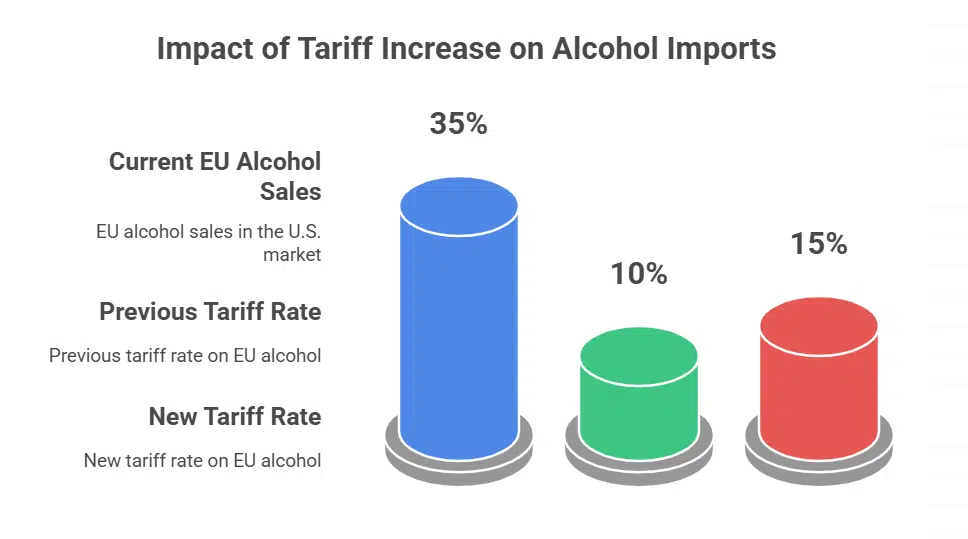
The alcohol market in the United States is also feeling the effects of this tariff expansion. Imports of wines and spirits from the European Union account for approximately 35% of all alcohol sales revenue in the U.S., based on data from the Wine and Spirits Wholesalers of America (WSWA).
Under the new policy, the tariff on alcoholic beverages from Europe will rise from 10% to 15%. This will impact popular products such as:
-
French and Italian wines
-
Irish whiskey and Scotch
-
Vodka from countries like Poland and Sweden
Retailers are expected to gradually pass on these costs to consumers, resulting in higher prices at restaurants, bars, and liquor stores.
Furniture: American Homes to Pay More
Furniture is another category where tariffs will have an immediate impact. According to the U.S. Department of Commerce:
-
Vietnam is the largest exporter of furniture to the U.S.
-
China comes in second.
With both countries now facing elevated tariffs, American consumers can expect to pay significantly more for home furnishings—from sofas and beds to office desks and kitchen tables.
Toys: Impact on Families and Children
Toys, especially those made in China and Vietnam, are also on the tariff list. These countries represent the two biggest exporters of toys to the U.S.
Toy manufacturers have already started warning about higher production and import costs, and many predict that holiday shopping seasons could see a noticeable increase in toy prices. This is particularly concerning for middle-income families who rely on affordable toy imports for birthdays and holidays.
When Will Consumers Feel the Full Impact?
So far, the price hikes have been gradual, thanks to several factors:
-
Retailers stockpiled goods in anticipation of tariff increases, providing a temporary buffer.
-
Many companies initially absorbed the cost, hoping tariffs would be short-lived or negotiated away.
However, economists at Goldman Sachs estimate that it typically takes about eight months for the full cost of new tariffs to be reflected in retail prices. Once current inventories run out, and companies are forced to replenish stock at higher rates, consumers will see steeper price tags across a wide range of products.
A Quiet But Growing Strain on the American Consumer
Despite political assurances, it’s becoming increasingly clear that tariffs are driving up the cost of living in the United States. From electronics and clothing to alcohol and furniture, price increases are unfolding slowly but steadily. While short-term inflation has been mild, the pressure from rising import taxes is expected to accelerate over the coming months.
As businesses shift from absorbing costs to passing them on, American households are poised to feel the pinch. Unless trade policies shift or new deals are struck, the ripple effect of tariffs could lead to more persistent and broad-based inflation across the U.S. economy.