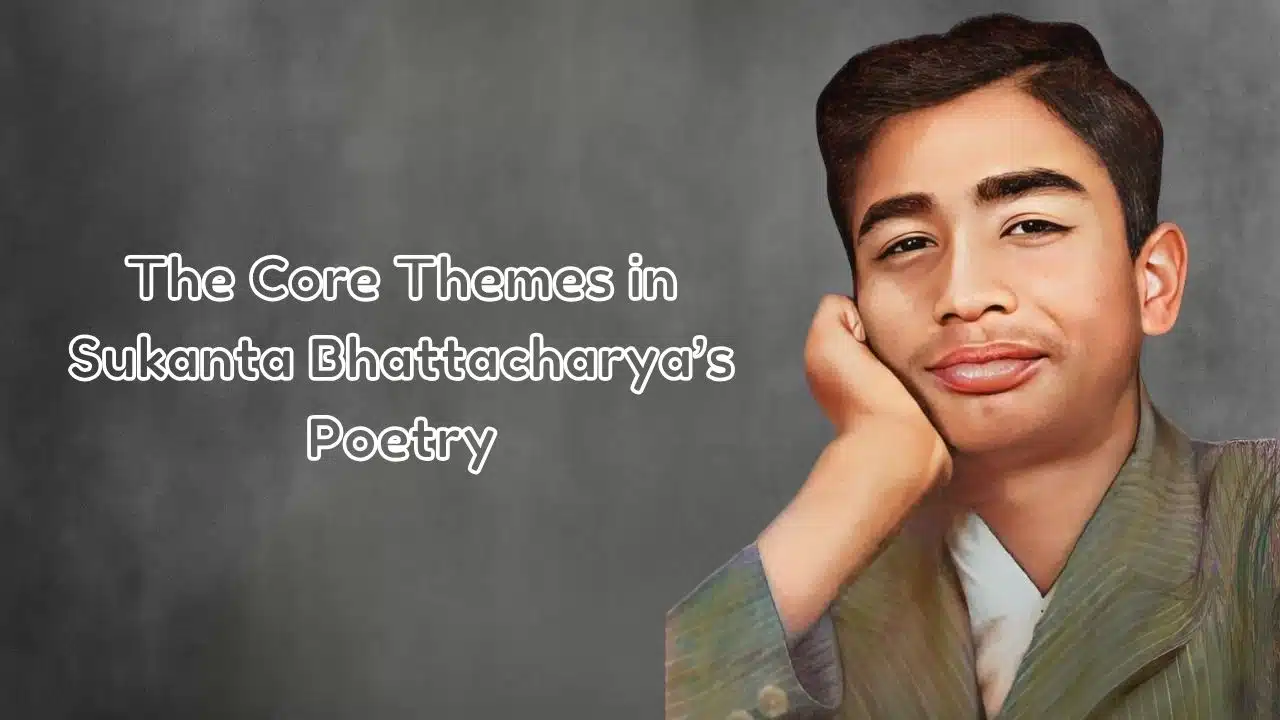
In the history of Bengali literature, some poets are remembered for their long and rich body of work, while others leave behind a short yet blazing trail that lights the way for generations. Sukanta Bhattacharya belongs to the latter group. Born on 15 August 1926 in Kolkata, Sukanta lived only 20 years, passing away from tuberculosis on 13 May 1947—just months before India’s independence.
Yet, in this short time, he created a literary voice that combined revolutionary zeal, realistic social observation, and delicate romantic feeling. His poetry captured the mood of a turbulent era marked by colonial oppression, famine, and a rising wave of political awakening.
Sukanta Bhattacharya poetry themes dominate his works: rebellion, reality, and romance. Together, they form the backbone of his creative identity, making his poems as relevant today as they were in the 1940s.
Rebellion: The Voice of a Young Revolutionary
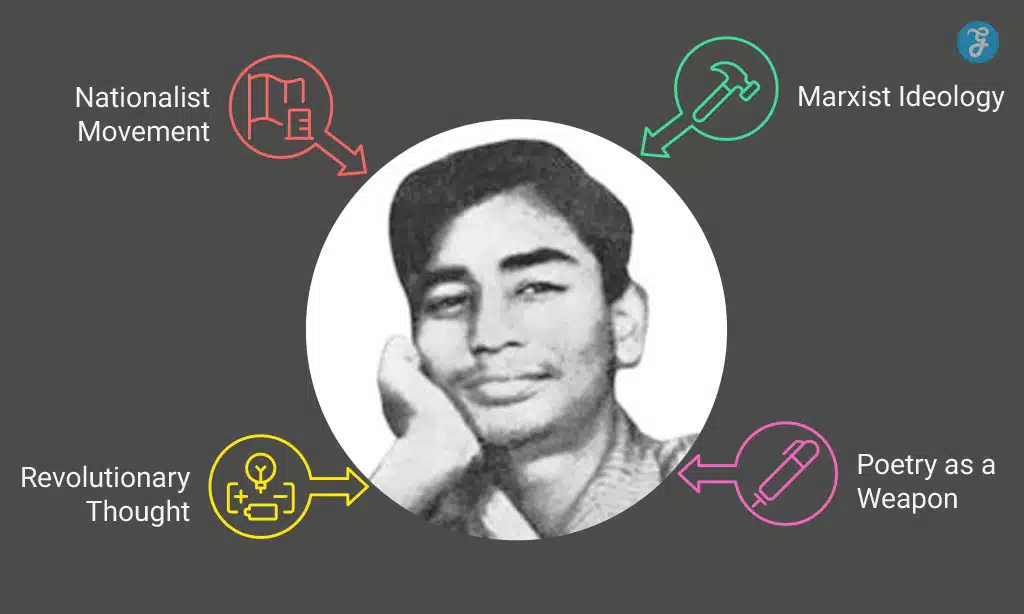
Sukanta grew up during a time when Bengal was politically charged. The nationalist movement was at its peak, and revolutionary thought was in the air. He was deeply influenced by Marxist ideology and became active in the Communist Party of India’s cultural front, using art and literature as tools for social change.
Much like Kazi Nazrul Islam, who was known as the Bidrohi Kobi (Rebel Poet), Sukanta was unafraid to challenge authority and injustice. His works reflected his belief that literature should serve the people and help build a more equal world.
Poems as Political Weapons
Sukanta’s poetry was not written for quiet reflection alone—it was meant to inspire action. Poems like “Hartal” portray the power of collective protest, while “Abhijan” speaks of a determined march toward liberation. His words carried the rhythm of rallies, the sound of slogans, and the heartbeat of the masses.
For Sukanta, poetry was a weapon sharper than steel, capable of stirring courage in the most difficult times.
Legacy of the Rebel Spirit
Though he did not live to see India’s independence, Sukanta’s rebellious spirit remains alive in Bengali literature. His verses are still quoted in political movements, and his vision of a just society continues to inspire activists and writers alike.
Reality: Chronicling the Struggles of Common People
One of the defining events of Sukanta’s youth was the Bengal Famine of 1943, which killed millions. This tragedy left a deep mark on his imagination. In poems like “Ghum Nei” (No Sleep) and “Purbabhas,” he vividly captured scenes of hunger, hopelessness, and human endurance.
He wrote not from a distance but as someone who lived among the suffering—his words carried the pain of real faces and real lives.
Honest and Unromanticized Portrayal
While many poets might have chosen to soften reality with metaphor, Sukanta preferred a raw, unfiltered style. He described empty kitchens, cracked utensils, and children with hollow eyes. His realism was not cold but deeply empathetic—he wanted the reader to confront the truth rather than escape it.
Literature as Social Documentation
Sukanta’s works are more than poetry; they are historical records of a society in crisis. They preserve the voices of the poor, the workers, the peasants—people often ignored in elite literary circles. In doing so, he expanded the scope of Bengali poetry, proving it could be both artistically rich and socially conscious.
Romance: The Tender Side of a Rebel Poet
Though known for his revolutionary tone, Sukanta also wrote about love, longing, and emotional warmth. His famous poem “Chharpatra” is a heartfelt expression of love written in the form of a letter. Even here, his language is simple, direct, and sincere—proof that the rebel poet also had a soft heart.
The Poetic Duality
Romance in Sukanta’s work was never an escape from reality; it was deeply intertwined with his political and social concerns. His love poems often reflected a broader affection for humanity and a hope for a better world. This blend of personal emotion and collective vision made his romantic verses unique.
Interplay of the Three Themes
What makes Sukanta’s poetry so enduring is the way rebellion, reality, and romance merge into one voice. Even in a romantic poem, the undercurrent of social consciousness is visible. Even in his most political lines, there is an emotional force that comes from love—for people, for justice, and for life itself.
Why Sukanta Bhattacharya Poetry Themes Remain Timeless
In today’s world of political unrest, economic inequality, and cultural change, Sukanta Bhattacharya’s themes still strike a chord. His rebellion speaks to activists fighting for justice, his realism appeals to journalists and truth-tellers, and his romance reminds us that even in struggle, human connection is essential.
Top 5 Poems by Sukanta Bhattacharya You Should Read
-
Chharpatra: A love letter that blends intimacy with social awareness.
-
Ghum Nei: A haunting depiction of sleepless nights in famine-stricken Bengal.
-
Hartal: A call to action and unity in the fight against oppression.
-
Purbabhas: A portrait of dawn breaking over a struggling land.
-
Abhijan: A poem of movement, hope, and determination.
Takeaways
Sukanta Bhattacharya’s poetry is more than literature—it is a living testament to courage, truth, and tenderness. His life was short, but his voice continues to echo across decades, urging us to dream of a just world, to face reality with open eyes, and to love fiercely despite all odds.
By weaving rebellion, reality, and romance into his verses, Sukanta created a body of work that belongs not just to Bengal, but to all who believe in the power of words to change the world.