

Starting a startup in an emerging market feels like chasing a dream on a bumpy road. You have a great idea that could change lives, but cash flow keeps you up at night. Banks turn you away, local investors play hard to get, and every penny counts in places with shaky economies. It’s frustrating when your big vision hits a wall because of limited funds.
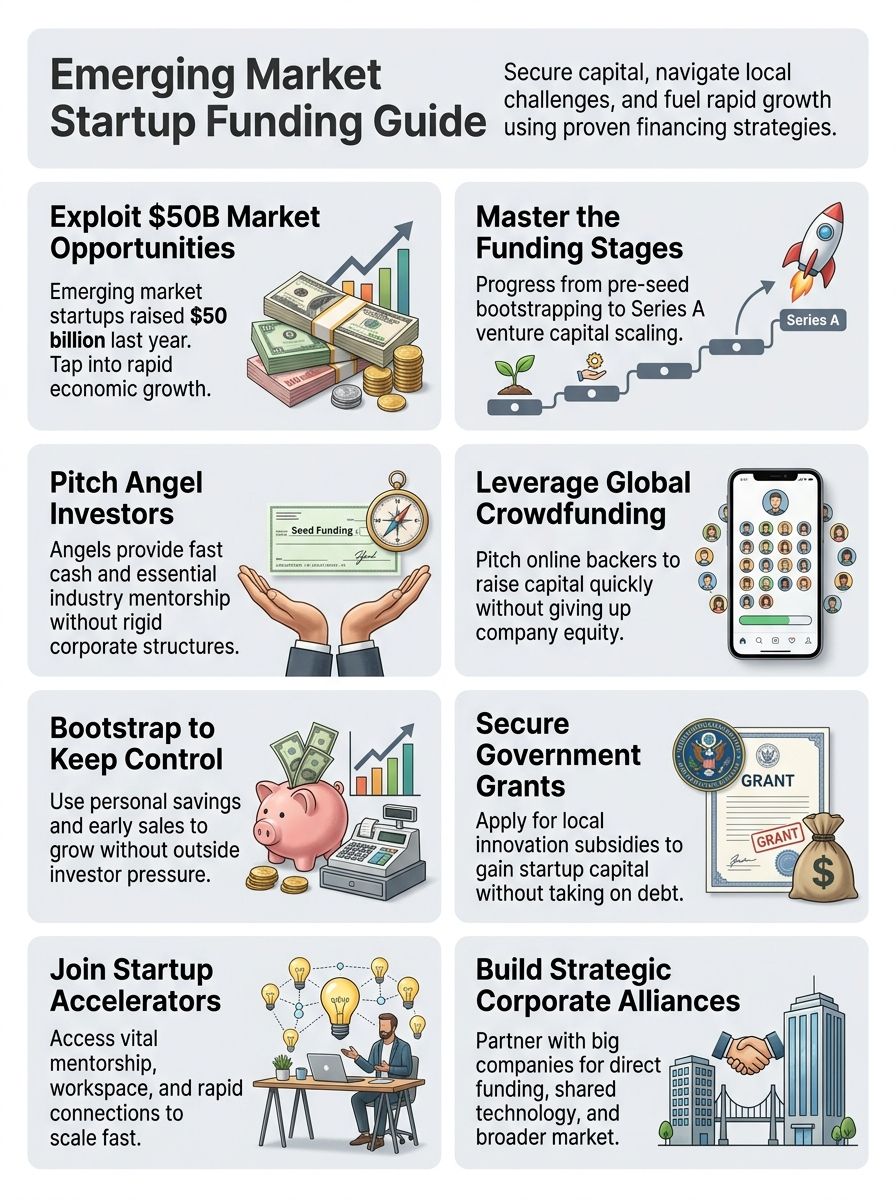
Did you know that startups in emerging markets pulled in over $50 billion in funding last year alone? That shows real potential amid the hurdles. This guide breaks down startup funding step by step, from early stages to smart strategies that fit your local scene.
We’ll share tips to attract investors, use government help, and build partnerships that fuel growth. Get set for success.
Understanding Startup Funding in Emerging Markets
Imagine jumping into a bustling marketplace, full of energy and surprises, where startups chase dreams amid wild economic swings. You face tough hurdles like shaky regulations and limited cash flow, yet spot golden chances in fast-growing sectors and eager local talent, pulling you deeper into the adventure.

Challenges in Emerging Markets
Startups in emerging markets face tough hurdles with unstable economies. Inflation swings wildly, and currency values drop fast. Entrepreneurs struggle to predict costs. Limited access to capital hits hard; banks often shy away from risky ventures.
You might chase venture capital, but local investors are scarce. Imagine it like trying to build a house on shifting sand. Regulatory red tape slows everything down. Governments change rules overnight, and corruption adds extra headaches.
Fundraising feels like an uphill battle. Angel investors hesitate due to high risks. Crowdfunding platforms exist, but internet access lags in many spots.
In emerging markets, the biggest challenge isn’t the idea, it’s the ecosystem that supports it. – A seasoned entrepreneur from Southeast Asia.
Market trends shift quickly, demanding constant adaptation. Development finance institutions offer some help, but bureaucracy delays funds. Impact investors seek social good, yet they demand solid business models.
Startups often bootstrap to survive. Government grants sound promising, but competition runs fierce. Economic growth brings promise, yet infrastructure gaps, like poor roads or power outages, derail progress.
These issues test your grit as an entrepreneur. Now, turn things around and consider opportunities unique to emerging markets.
Opportunities Unique to Emerging Markets
Emerging markets offer entrepreneurs a goldmine of untapped potential. Imagine entering a vast ocean where consumer demand surges, and innovation thrives on fresh ideas. These areas often boast rapid economic growth, with countries like India and Nigeria seeing startup capital flow in at record rates.
Venture capital firms eye these spots for high returns, as markets expand faster than in developed nations. You, as a founder, can tap into local talent pools that cost less yet deliver big on creativity. Government grants pour in to fuel this boom, making fundraising feel like a tailwind rather than a headwind.
Envision this: impact investors flock to emerging markets, drawn by the chance to drive social change alongside profits. Development finance institutions step up with customized financing, supporting business models that solve real-world problems.
Crowdfunding platforms connect you directly to global backers, turning small contributions into major startup growth. Angel investors in these regions often bring both cash and deep market insights that propel your venture forward.
Entrepreneurs here leverage corporate partnerships for quick market entry, boosting capital raising without the usual red tape.
Stages of Startup Funding
Starting a business feels like climbing a mountain, right, with each step needing the right gear, or in this case, cash to keep going. Let’s chat about how funding evolves from your first idea to scaling big, and stick around to see what fits your journey.
Pre-Seed Funding
Pre-seed funding kicks off your startup adventure in emerging markets. Entrepreneurs scrape together initial capital from personal pockets, family, or close friends. This stage turns raw ideas into a basic business model.
You test the waters with minimal investment, focusing on innovation and early growth. Picture it as planting the first seed in unpredictable soil, full of surprises. Angel investors sometimes chip in small amounts to spark that entrepreneurial fire.
Fundraising here stays simple, often under $50,000, to prove your concept works. Capital raising at this point builds momentum for bigger funding rounds. Seek government grants if they fit your market entry plan. Bootstrapping demands grit, yet it fosters smart financial resource use.
Network with local advisors to spot opportunities in economic growth areas. Venture into digital tools for quick investor connections. Keep your value proposition sharp to stand out in crowded emerging markets.
Innovation distinguishes between a leader and a follower. – Steve Jobs
Seed Funding
Seed funding kicks in after you nail your idea and build a basic prototype. Entrepreneurs in emerging markets often chase this capital to grow their startup from a spark into a steady flame.
Think of it as the fuel that lets you test your business model in real time, like proving your app can attract users in a bustling city like Lagos or Jakarta. You might raise anywhere from $10,000 to $2 million here, depending on your pitch and the market’s vibe.
Angel investors or early venture capital firms step up, spotting potential in your innovation and growth plans. They bet on you because they see economic growth tied to your success, especially in places with rising entrepreneurial funding.
This stage demands a solid fundraising strategy, complete with market entry plans and financial resources laid out clearly as day. Crowdfunding platforms can be a game-changer, pulling in small investments from folks who believe in your vision.
Government grants sometimes play a role, too, offering startup capital without the strings of loans. Picture chatting with impact investors over coffee, sharing how your venture boosts local jobs and innovation.
Keep your eyes on funding rounds; nail this one, and Series A opens doors wide. Just focus on building that compelling case, network like crazy, and watch your financing take off.
Series A, B, and C Funding
Series A funding kicks in after your startup proves its concept. Investors, often venture capital firms, pour in capital to help scale operations. Think of it as the first big push, like fueling a rocket for launch.
In emerging markets, this stage draws impact investors who eye growth potential amid local challenges. You might raise a few million dollars here, focusing on product development and market entry.
Entrepreneurs pitch strong business models to secure these funds. Keep your team sharp; show clear paths to revenue.
Series B builds on that momentum. Now, you expand the team and enter new markets. Venture capital flows more heavily, sometimes from development finance institutions in emerging spots. Picture scaling up like adding lanes to a busy highway.
Fundraising here targets efficiency and broader reach. Series C arrives for mature startups ready to dominate. Corporate partnerships often join in, boosting capital-raising efforts.
These rounds fuel massive growth, turning your venture into a market leader. Stay connected with advisors to navigate these steps.
Types of Funding Options
If you’re an entrepreneur in a lively emerging market, chasing that spark to grow your big idea, and suddenly various cash sources open up like hidden treasure chests.
Jump right in with us, grab a coffee, and let’s chat about how these options, from folks betting on your vision to smart self-funding tricks, can fuel your journey without the usual headaches.

Venture Capital
Venture capital firms invest in startups with high growth potential. They provide capital in exchange for equity. Entrepreneurs pitch their business models to these investors. In emerging markets, venture capital drives innovation and economic growth.
Think of it like planting seeds in fertile soil, where the right funding helps ideas bloom into big businesses.
Many venture capitalists focus on early-stage companies. They offer not just money, but also advice on market entry and business development. Startups in places like Southeast Asia or Africa attract this funding through strong fundraising efforts.
Angel investors sometimes team up with venture firms for a bigger impact. This approach boosts entrepreneurial funding and supports capital raising in tough spots.
Angel Investors
While venture capital firms often step in for larger funding rounds, many entrepreneurs in emerging markets turn to angel investors for that crucial early boost. Angel investors are wealthy individuals who put their own money into startups, usually in exchange for equity.
They bring more than just capital; think of them as mentors with deep industry know-how, helping you navigate tricky market waters. In places like Southeast Asia or Africa, these investors spot high-potential ideas in innovation and growth sectors.
For instance, they might fund a fintech startup aiming to serve underserved communities, providing startup capital that sparks real economic growth.
Entrepreneurs love angel investors because they move fast, often closing deals in weeks rather than months. You pitch your business model directly, sharing your vision for market entry and fundraising goals.
Many angels focus on impact investors’ style, supporting ventures that drive positive change alongside profits. Network at local events to connect with them; one solid conversation could lead to the entrepreneurial funding you need.
This approach fits emerging markets perfectly, where flexibility beats rigid structures every time.
Crowdfunding
Crowdfunding opens doors for entrepreneurs in emerging markets. You pitch your startup idea on platforms like Kickstarter or GoFundMe. People from around the world chip in small amounts.
This builds startup capital fast, without banks or big investors at first. Imagine turning your app dream into reality, with fans funding it directly. In places like India or Nigeria, this method shines because local banking lags.
You keep control, test your business model, and spark innovation. Investors see your passion through videos and stories. Crowdfunding campaigns often hit goals in weeks. Take a Kenyan solar startup; it raised thousands via online backers. Focus on clear goals to draw impact investors.
Share updates to build trust. This fundraising tool boosts economic growth, one contribution at a time.
Bootstrapping
Bootstrapping means you fund your startup with your own cash or from early sales. Entrepreneurs in emerging markets often pick this path to keep full control. You avoid giving up equity to investors right away.
Think of it like building a house with tools you already own, no loans needed. Many successful businesses started this way, scraping by on personal savings and smart budgeting. This approach builds tough habits, like watching every penny for growth.
In places with shaky economies, it lets you test your business model without outside pressure. Fundraising stays simple, focused on your innovation and market entry. Startups bootstrap to prove their worth before chasing bigger capital.
Picture a street vendor expanding from pocket money to a shop chain, that’s the spirit. It demands grit, but rewards come from pure hustle. Government grants and subsidies offer another boost if you need extra support.
Government Grants and Subsidies
Government grants and subsidies offer a lifeline for entrepreneurs in emerging markets. These funds come from local or national programs that support innovation and economic growth.
Many countries provide them to boost startup capital without demanding equity. For example, India’s Startup India initiative gives tax breaks and funding to new ventures. You apply through official portals, showing your business model and potential impact.
This option cuts down on debt, letting you focus on growth. Picture chasing your dream without heavy loans weighing you down. Impact investors often pair with these grants, adding more financial resources. In Africa, programs like Nigeria’s YouWIN! hand out cash to young business owners.
Network with local agencies to find these opportunities. They fuel market entry and help scale your idea fast. Just prepare a solid pitch; it makes all the difference in securing that boost.
Loans and Credit Programs
Loans offer a practical path for startup capital in emerging markets. Banks and microfinance groups provide these funds, often with lower interest rates for new ventures. You repay them over time, which builds your credit history.
In places like India or Kenya, programs from bodies like the African Development Bank give loans up to $500,000 for innovative ideas. Entrepreneurs use this financing to scale without giving up equity.
Think it’s borrowing to buy equipment; it fuels growth while you keep control. Credit programs add flexibility to your fundraising mix. They come as lines of credit or credit cards suited for business needs. In Brazil, for example, BNDES offers credit to boost economic growth and job creation.
These options help cover daily costs or sudden opportunities. Many require a solid business model to qualify, so prepare your plans well. This approach suits those avoiding venture capital’s high stakes.
Corporate partnerships can open even more doors for your startup’s financing journey.
Corporate partnerships
Loans and credit programs offer one path to startup capital, but sometimes you need more than money, like expertise or market access. Corporate partnerships step in here. They connect your startup with big companies for mutual benefits.
Think of it as teaming up with a giant to climb higher. These alliances provide funding through investments or joint ventures. In emerging markets, corporations often seek innovation from local entrepreneurs.
You gain resources, like technology or distribution networks. This boosts your growth without heavy debt. Picture a startup in Africa partnering with a telecom giant for app development. The corporation invests capital and shares its customer base. Your business model strengthens with this support.
Angel investors might introduce you to such partners. Venture capital firms sometimes facilitate these deals, too. Focus on shared goals to attract them. Network at industry events to spark conversations.
These partnerships fuel economic growth in your market. They turn ideas into scalable ventures. Entrepreneurs thrive with this strategic financing.
Strategies to Obtain Startup Funding in Emerging Markets
Picture yourself as a startup founder in a bustling emerging market, dodging roadblocks while hunting for cash—smart moves make all the difference, you know. Build a pitch that sings to investors’ ears, connect with local power players who spot gold in your ideas, and watch those funds roll in, turning your vision into reality.
Develop a Compelling Value Proposition
Investors in emerging markets crave clear value from startups. Craft a strong value proposition that shows how your business solves real problems. Think of it like a magnet, pulling in capital by highlighting your edge in local innovation and growth.
Entrepreneurs often share stories of tweaking their pitch to match market trends and landing that crucial funding round.
Tie your proposition to solid business models that promise returns. Use data on market entry and economic growth to back your claims. Angel investors and venture capital firms love seeing how your idea fuels entrepreneurial funding in tough spots.
Keep it simple, like explaining to a friend over coffee, and watch those financing doors open wide.
Network with Investors and Advisors
Networking opens doors to startup funding in emerging markets. You build connections with angel investors and venture capital firms at local events, like pitch nights or industry meetups.
These folks offer more than cash; they share wisdom on business models and market entry. Imagine: a quick coffee chat turns into a game-changing introduction. Entrepreneurs thrive by joining online forums or LinkedIn groups focused on innovation and growth.
Such ties lead to better fundraising strategies and financial resources. Reach out to advisors who understand emerging markets. They guide you through capital raising with tips on economic growth and investment strategies. Share your story over a virtual call; it sparks interest in your venture.
Many find success through development finance institutions that connect startups with impact investors. Keep conversations real and show your passion for business development. This approach boosts your chances for seed funding or government grants.
Utilize Digital Platforms for Investment
Digital platforms open doors for startup funding in emerging markets. Think of them as a virtual marketplace where entrepreneurs pitch ideas to global investors. Sites like Kickstarter and Indiegogo let you launch crowdfunding campaigns that attract backers from everywhere.
You create a compelling story about your business model, set funding goals, and offer perks to supporters. This approach builds startup capital without giving up equity right away.
In places like Southeast Asia or Africa, these tools connect you with impact investors who care about local growth. Entrepreneurs use platforms such as AngelList to find angel investors and venture capital firms. Post your pitch online, share market entry plans, and chat directly with potential backers.
A startup in Nigeria raised over $1 million through a digital campaign last year, proving the power here. Focus on clear financial resources in your profile to stand out. These sites cut through old barriers, making fundraising faster and more accessible for innovation in emerging markets.

Analyze Local Market Trends
While digital platforms open doors to global investors, savvy entrepreneurs know that true success in emerging markets hinges on diving deep into local trends to attract that vital startup capital.
Spot those shifting consumer behaviors, like how mobile payments exploded in Kenya with M-Pesa, reaching over 40 million users by 2023, and use them to shape your business model. Investors love data-backed stories, so track economic growth rates, say India’s 7% GDP surge in recent years, to highlight your venture’s potential for high returns.
Picture chatting with local shop owners over coffee, gathering anecdotes that reveal untapped needs, then weaving them into your pitch for angel investors or venture capital.
Keep an eye on regulatory changes too, such as new fintech laws in Nigeria that boosted startup financing by 25% last year, to avoid pitfalls and seize opportunities. Network at market events, where you might bump into impact investors eyeing sustainable projects in places like Brazil’s booming agrotech scene.
Analyze competition, spotting gaps like underserved rural areas in Southeast Asia, and tailor your fundraising strategy accordingly. This approach turns raw market insights into compelling cases for government grants or crowdfunding campaigns, fueling your innovation and growth.
The Role of Incubators and Accelerators
Incubators and accelerators act like launchpads for startups in emerging markets, offering entrepreneurs vital resources to kickstart growth. These programs provide office space, mentorship, and access to networks that connect you with angel investors and venture capital firms.
Picture a busy hub where founders swap ideas over coffee, turning raw concepts into solid business models. They often run for months, guiding you through fundraising rounds and market entry strategies.
Startups in places like Africa or Southeast Asia have raised millions through these setups, boosting innovation and economic growth.
Accelerators focus on quick scaling, with intense programs that last just a few months and end in demo days for pitching to investors. They inject startup capital and teach financial resources management, helping you avoid common pitfalls in volatile markets.
Many offer seed funding or links to government grants, making them a smart choice for bootstrapped ventures. Entrepreneurs love the hands-on advice, like refining their pitch to attract impact investors or development finance institutions.
These allies turn big dreams into real progress, fueling your journey. Now, let’s explore how strategic alliances shape your financing options.
Impact of Strategic Alliances on Financing
Incubators and accelerators give startups a solid push, but strategic alliances take that support to the next level by opening doors to fresh financing. Imagine: you team up with a bigger company, and suddenly, their resources become your secret weapon for growth.
These partnerships often lead to direct investment, where the ally pumps capital into your venture to fuel innovation and market entry. Entrepreneurs in emerging markets love this approach because it cuts through fundraising hurdles, like when a tech startup in Kenya allied with a global telecom giant and scored millions in venture capital.
Such alliances build trust with other investors too, making your business model look rock-solid. They spark economic growth by sharing risks and rewards, turning potential rivals into allies who co-invest in your success.
Think of strategic alliances as a bridge to impact investors and development finance institutions that look for more than profits. You gain access to corporate partnerships that provide both funding rounds and expertise in business development.
In places like India, startups have raised substantial startup capital through alliances with local conglomerates, blending their entrepreneurial funding with established financial resources.
This strategy boosts your chances in competitive funding landscapes, where a well-timed partnership can accelerate capital raising. Allies often offer loans or grants tied to shared goals, helping you follow market trends without going solo.
It’s like having a co-pilot in your fundraising journey, making every step toward growth feel achievable and exciting.
The Closing Thoughts
Funding your startup in an emerging market demands grit, sure, but it also opens doors to real innovation and growth. Entrepreneurs face ups and downs, yet with the right business model, you can attract venture capital or angel investors eager for high-impact returns.
Think about it, like planting seeds in fertile soil, your fundraising efforts can bloom into solid capital for market entry. Impact investors and development finance institutions often step in, spotting potential where others hesitate. Stay sharp on economic growth trends, and watch how strategic financing fuels your venture’s rise.
Grab those opportunities in startup financing, folks, by networking hard and exploring crowdfunding platforms that connect you with global backers. Government grants offer a boost without strings, while corporate partnerships can inject financial resources fast. Keep pushing for those funding rounds, and let entrepreneurial funding propel your startup toward lasting success in dynamic markets.
FAQs on Startup Funding
1. What makes funding a startup in an emerging market so tricky?
Funding your startup in an emerging market feels like navigating a bumpy road, you know, with twists like unstable currencies and local rules that change fast. But hey, that’s where the adventure kicks in; smart folks turn those hurdles into stepping stones by partnering with local experts. Just remember, a little grit goes a long way in spotting those hidden gems of opportunity.
2. How do I find investors for my startup in places like Southeast Asia?
Start by networking at local events, because rubbing elbows with angel investors can open doors you didn’t even know existed. Pitch your idea with passion, like telling a story around a campfire, and watch how venture capital flows in from folks who get the emerging market vibe.
3. What common pitfalls should I avoid when seeking startup funding abroad?
Don’t rush into deals without checking the fine print; it’s like biting into an apple only to find a worm. Many founders overlook cultural differences, leading to misunderstandings that sour partnerships.
4. Can government grants help fund my business in an emerging economy?
Yes, government grants in emerging economies often act as a lifeline, providing that initial boost without the strings of repayment. Look into programs tailored for tech startups, for instance, and apply early to beat the crowd; it’s like finding free fuel for your rocket ship.