Have you ever seen a brilliant student freeze up during a simple group project? It happens more often than people think. Many students spend years memorizing facts and preparing for exams. But when real-life situations appear, they suddenly feel unsure of what to do. Parents become concerned, and teachers often feel frustrated.
This leads to a common question: why do straight A’s not always lead to happy, successful lives? The answer lies in something many schools rarely teach. The ability to communicate effectively and understand emotions plays a major role in long-term career success.
Soft Skills for Students: What Schools Don’t Teach focuses on the abilities that traditional classrooms often overlook. It highlights the practical habits students need in real-world situations and explains how they can grow beyond textbooks to build confidence, collaboration, and emotional awareness.
What Are Soft Skills?
Soft skills help people get along and work well with others. These skills often go unnoticed in class, but they shape how students handle real-life situations.
Definition of soft skills
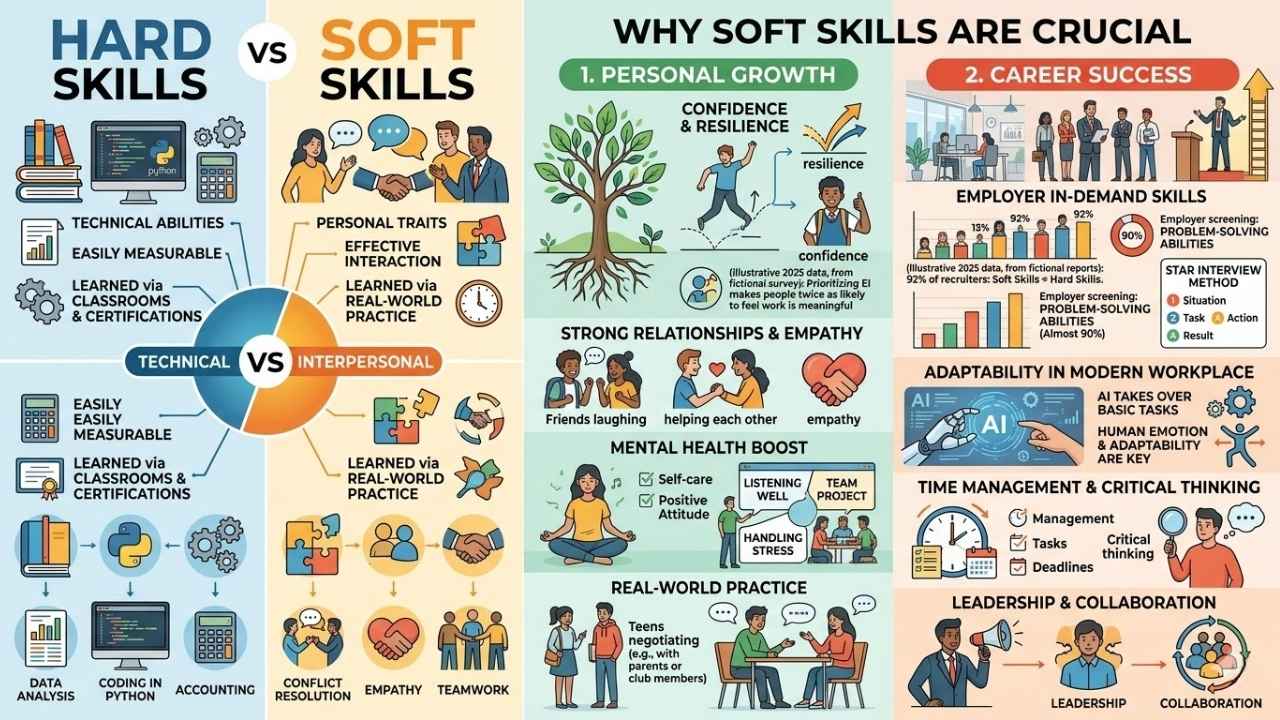
Soft skills are the personal traits that help you interact effectively with other people. These include problem-solving, active listening, empathy, and time management.
A 2025 survey from General Assembly found that 78% of business leaders believe entry-level workers struggle heavily with these basic readiness traits. The Microsoft 2025 Work Trend Index explains this clearly. As AI takes over basic tasks, your ability to show empathy and adaptability becomes your most valuable asset.
Schools often put more weight on academic grades than personal growth. Yet, qualities like resilience shape who students become outside the classroom. A team project teaches a student how to listen well and handle stress. No worksheet can teach that lesson alone.
Difference between soft skills and hard skills
Soft skills are your people skills. Students use these to work well with others, solve problems calmly, and show true leadership.
Hard skills cover technical abilities you can easily measure. This includes math facts, coding in Python, or operating a specific software program. Many schools focus almost entirely on hard skills to prepare for standardized tests.
Here is a quick look at how they compare in the modern US job market:
| Feature | Hard Skills | Soft Skills |
|---|---|---|
| Example | Data analysis, coding, accounting | Conflict resolution, empathy, teamwork |
| How It Is Learned | Textbooks, lectures, certifications | Real-world practice, group projects |
| Employer Demand (2025) | Required for specific technical roles | Ranked equally important by 92% of recruiters |
According to LinkedIn’s 2025 Global Talent Trends report, 92% of talent professionals say soft skills matter just as much as hard skills in hiring. While a high grade shows strong technical learning, handling a difficult coworker requires emotional tools that get left out of lessons.
Why Soft Skills Are Crucial for Students
Life does not hand out cheat sheets. Students need more than just facts and figures to thrive. These abilities help young people handle tricky situations with total confidence.
Importance for personal growth
These traits turn students into confident, well-rounded adults. Empathy and teamwork help kids make friends and lead groups. They also provide a massive boost to mental health.
A 2025 Deloitte Global Human Capital Trend Survey notes that prioritizing emotional intelligence makes people twice as likely to feel their work is meaningful.
Skills like resilience mean that setbacks become lessons rather than brick walls. Schools may skip teaching these vital abilities to focus on test scores. However, learning how to cooperate in a local club shapes your character for years.
These habits act as building blocks for self-respect. The American Academy of Pediatrics recommends giving teens structured independence, like negotiating their own curfews. This builds real-world conflict resolution safely at home.
Relevance in the modern workplace
Employers want much more than just top grades or fancy degrees. Companies need people who can adapt to rapid changes and show genuine empathy.
The National Association of Colleges and Employers (NACE) 2025 Job Outlook survey reveals a striking fact. Almost 90% of employers actively screen for problem-solving abilities during interviews. They use behavioral interview models like the STAR method to test these exact traits.
Having good time management gives students an edge at work. The same goes for strong interpersonal habits and critical thinking. Workers with high adaptability always get noticed first during tough times at any company across America.
Key Soft Skills for Students: What Schools Don’t Teach
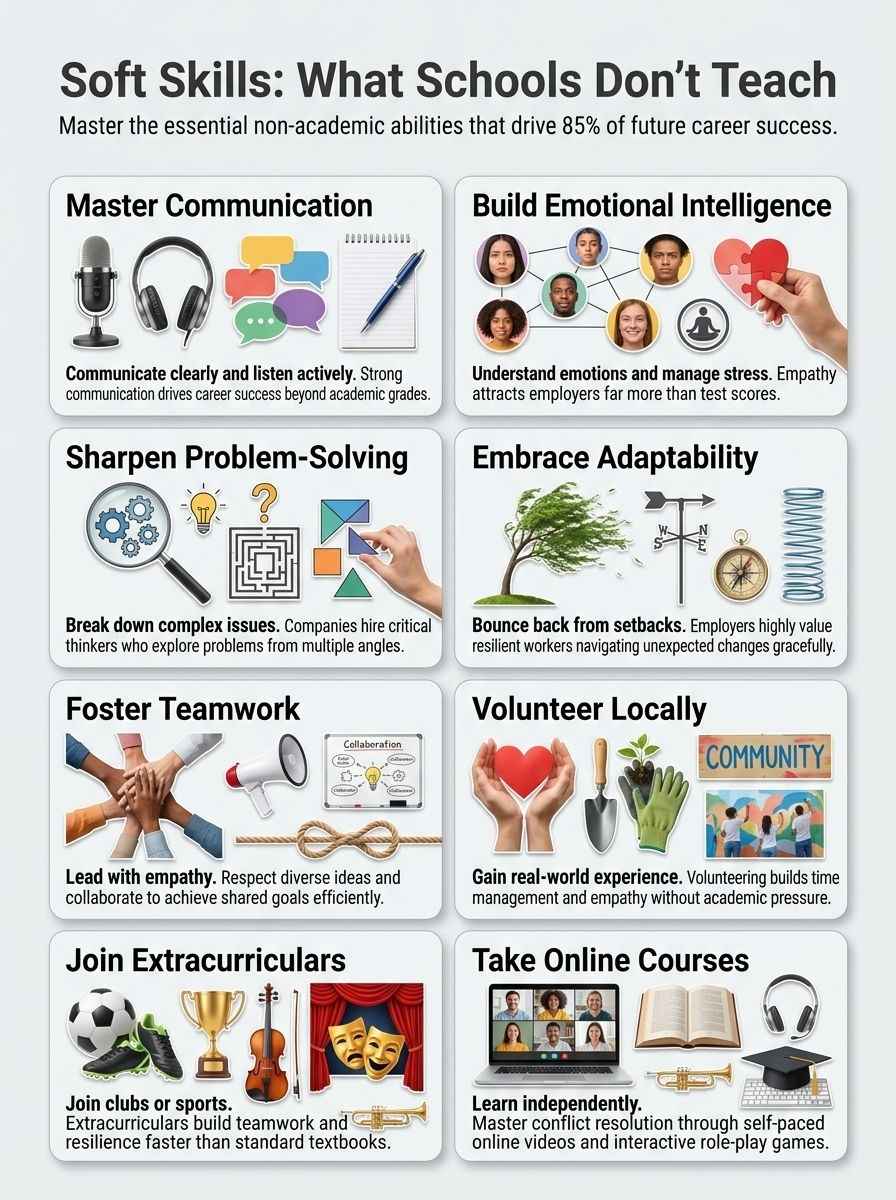
These habits help people collaborate and solve problems on the spot. They also give students a deep sense of confidence. Fast changes feel much less scary when you are prepared.
Communication skills
Good communication helps students speak up, listen well, and share their thoughts clearly. Kids who can talk with others without fear often feel braver in class.
According to a late 2025 poll by EdChoice, 85% of parents want schools to prioritize communication and critical thinking over standard academics. Unfortunately, many schools focus more on grades than teaching children how to express themselves.
Communication extends far beyond talking. It includes listening closely and mastering digital tools.
- Active Listening: Giving someone your full attention without planning your reply.
- Digital Tone: Knowing how to write a polite, clear message on platforms like Slack or Microsoft Teams.
- Body Language: Making eye contact and keeping an open posture.
Teamwork grows stronger when everyone gets heard and understood. This sets the stage for leadership roles long after graduation.
Emotional intelligence
Emotional intelligence helps students understand their own feelings and the emotions of others. It teaches them to spot stress and handle criticism without falling apart.
The financial impact of this is huge. A 2025 report from the Niagara Institute shows people with high emotional intelligence earn an average of $29,000 more per year. In fact, 75% of managers use this specific trait as the main deciding factor for promotions.
Kids with high emotional intelligence can solve arguments before they grow into real fights. They use empathy to respond kindly, which builds trust. If school leaves this out, practicing patience at home fills the gap perfectly.
Problem-solving and critical thinking
Problem-solving and critical thinking are basically superpowers for students. These abilities help kids break down big problems, spot patterns, and ask the right questions.
If a group project goes sideways, quick thinking helps sort things out fast. Companies today want workers who look at issues from many different angles. Touro University Graduate School of Business now offers specific digital badges for critical thinking because employers demand verifiable proof of this skill.
Many education experts on the r/Teachers subreddit suggest taking students to escape rooms. This allows them to practice rapid problem-solving under pressure in a highly engaging way.
Critical thinkers stay curious and learn from their mistakes. This approach builds massive confidence for real life outside school walls.
Adaptability and resilience
Life throws curveballs, and sometimes those balls come fast. Adaptability helps students adjust to new situations in school or friendships. Resilience means bouncing back after a bad grade or a lost game.
The US Department of Labor recently announced $98 million in 2025 funding for youth programs. They specifically require this training to include adaptable, AI-ready skills. Employers want workers who handle change gracefully.
Here are simple ways to practice adaptability:
- Treating a failed test as a helpful feedback loop.
- Learning a new technology platform without getting frustrated.
- Staying calm when a schedule changes at the last minute.
Flexible people stand out by staying calm under pressure. These habits help children grow into themselves during hard times and good ones alike.
Leadership and teamwork
Leadership calls for action, courage, and kindness. A good leader listens, speaks clearly, and shows empathy. They guide others through tough times and adjust when plans fall apart.
Teamwork is more than just sitting together in a group project. It means everyone helps each other reach the final goal. Modern teamwork often happens on digital project management tools like Trello or Asana.
A 2025 survey by TalentLMS shows 65% of US employees actually want more training on how to lead and use new tools ethically. Strong teams value open respect and solve problems quickly. Resilient students stick with tasks even if things get boring.
Challenges in Teaching Soft Skills in Schools
Many schools zero in on grades and test scores. Teachers often feel stuck without the right tools to teach kids how to handle real-world problems.
Traditional academic focus
Schools have prioritized academic grades for decades. Teachers pour energy into math problems or science facts. Sadly, collaboration and teamwork sit in the background.
Standardized testing leaves very little room for group collaboration. Students practice taking tests more than handling situations that call for empathy. A 2025 survey from TalentLMS shows 63% of US employees think their company training is inadequate because their early schooling left them completely unprepared for team dynamics.
Kids might leave school able to solve complex equations. Yet, they struggle to speak up in a group or lead a project.
Lack of resources or training
Many classrooms rush through lessons just to tick off academic boxes. Teachers rarely get proper training in emotional intelligence. Funding often goes toward new technology, not leadership programs.
Organizations like America Succeeds constantly advocate for better funding, noting that durable traits appeared in over 62 million job postings recently.
Many public schools simply lack the budget to add new classes. Students might never learn healthy conflict resolution if their environment lacks support. The gap widens for kids whose communities cannot fund after-school clubs.
How Students Can Develop Soft Skills Outside School
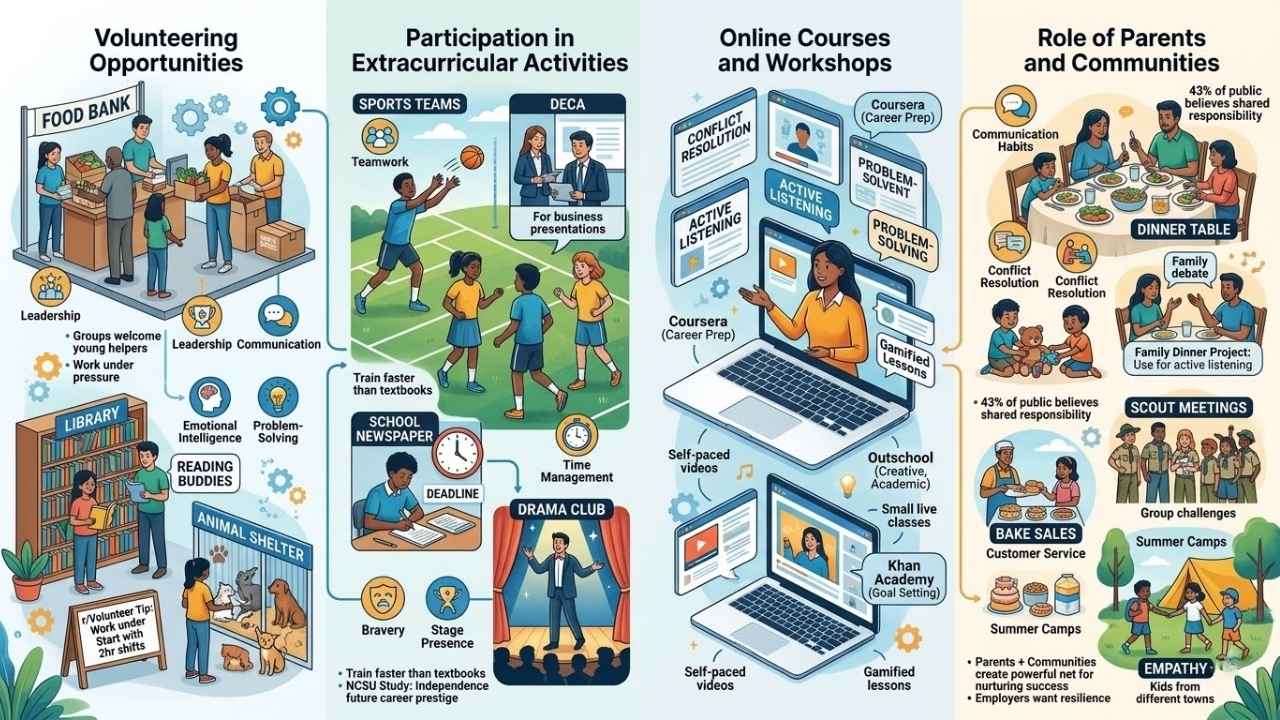
Kids pick up important abilities outside the classroom every day. Life is the best teacher. Keep an open mind, and new lessons will find their way to you.
Volunteering opportunities
Volunteering helps students build true leadership and communication. Groups such as local US food banks, libraries, and animal shelters welcome young helpers. Students learn to work under pressure and solve actual problems.
They gain emotional intelligence by helping people from diverse backgrounds. Experienced organizers on the r/Volunteer subreddit share a great insider tip. Start with short, two-hour shifts to build solid time management habits without overwhelming a busy student.
These traits grow fast in these settings because there are no grades. You only have real tasks to complete. Schedules matter when others depend on you, and these lessons stick forever.
Participation in extracurricular activities
Student clubs, sports teams, and debate groups train you faster than textbook lessons ever could. A young athlete learns teamwork in every pass of the ball. Art club members practice sharing creative plans.
A 2026 study from North Carolina State University revealed a fascinating fact. Finding independence through outside activities positively influences a young adult’s future career prestige.
Great extracurriculars for soft skills include:
- DECA: Perfect for building business presentation confidence.
- School Newspaper: Teaches time management with real deadlines.
- Drama Club: Builds bravery and stage presence.
These activities provide golden chances for growth that future employers desperately want.
Online courses and workshops
Online courses give students a chance to learn at their own pace. Many programs target conflict resolution and active listening. Self-paced learning means no one gets left behind.
Even busy teens can fit lessons into short breaks. Big platforms offer fantastic modules in problem-solving. Here is a quick comparison of popular options in the US:
| Platform | Best For | Format |
|---|---|---|
| Coursera | Career Prep (e.g., UC Davis courses) | Self-paced videos and quizzes |
| Outschool | Creative and Academic Enrichment | Small live classes with teachers |
| Khan Academy | Test Prep and Goal Setting | Gamified, free self-paced lessons |
These tools turn screen time into actual practice for the real world. Making progress is as easy as clicking the next lesson.
The Role of Parents and Communities in Soft Skills Development
Parents shape their children every single day. Chatting at the dinner table helps build strong communication habits. Helping kids share toys boosts conflict resolution.
The 2025 EdChoice survey found that 43% of the public believes teaching these traits is a shared responsibility between home and school. Simple acts like letting a child lead a decision about weekend plans work wonders. Experts at the Family Dinner Project share a proven insider tip. Use family dinner debates to practice active listening in a safe space.
Communities step in to fill the gaps. Local clubs give students space to practice adaptability.
- Scout Meetings: Great for group challenges and wilderness problem-solving.
- Bake Sales: Perfect for practicing time management and customer service.
- Summer Camps: Ideal for building empathy with kids from different towns.
Employers want people who show resilience from a young age. Parents teaming up with community spaces create a powerful net for nurturing success.
Final Thoughts
Soft skills like communication, empathy, teamwork, and leadership give students a massive head start. Textbooks alone simply cannot offer this kind of preparation. These habits are easy to grow through volunteering, joining clubs, or practicing small tasks every day.
You do not need fancy tools to make a difference. Learning these lessons now will shape a brighter future and open countless doors. For anyone wanting extra steps, free online guides make learning simple.
Nobody is born perfect at this stuff. I once froze during a school debate. Practice truly does turn your nerves into strength over time, and Soft Skills For Students: What Schools Don’t Teach is the perfect place to begin.