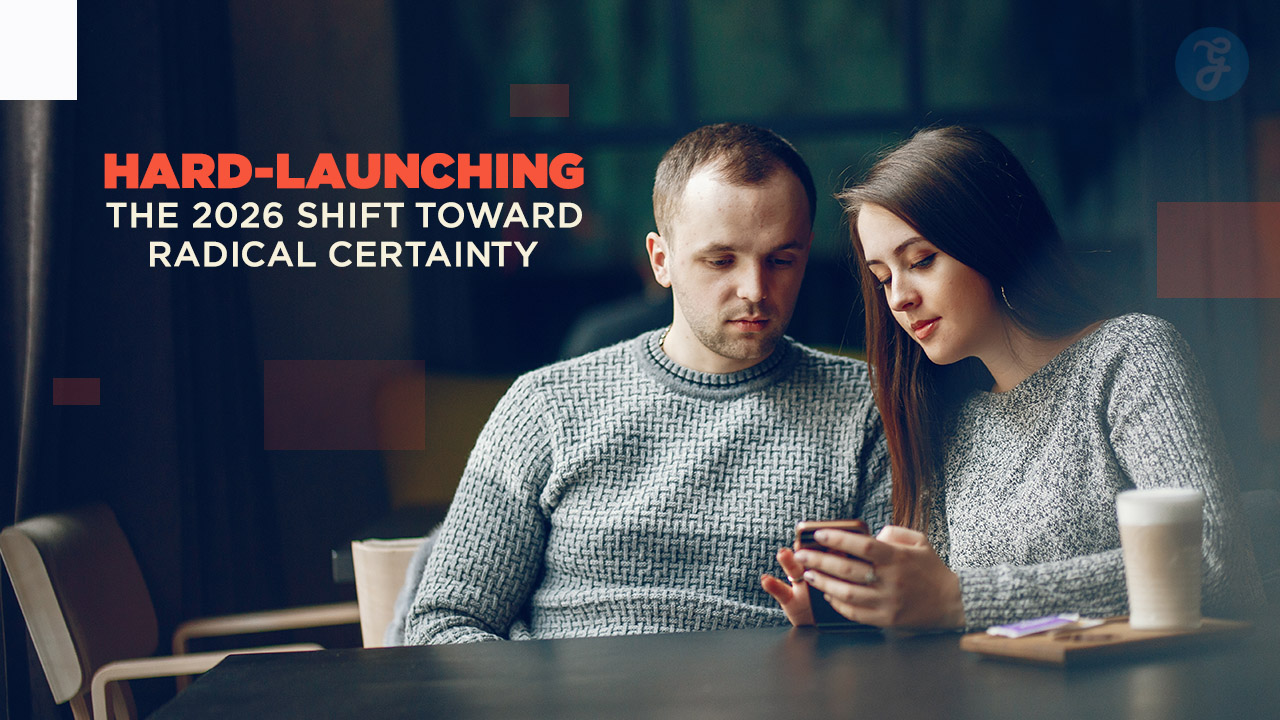
The era of digital ambiguity is over. For years, our social media feeds were dominated by the intentional shadow. We saw a blurred hand on a table or two coffee cups against a sunrise. This was the soft-launch. It was a way to signal companionship without ever committing to a name. But as we move through 2026, the trend has pivoted toward something far more definitive. We call it Hard-Launching. This is not merely a change in how we post. It is a fundamental shift in how we value human connection.
In 2026, mystery is no longer viewed as a sign of sophistication. Instead, it is increasingly seen as a lack of investment. To remain vague is to remain unverified. This movement represents a radical act of digital trust. We have stopped protecting our peace by hiding our partners. Instead, we are finding peace through public validation. The 2026 Hard-Launching phenomenon is a rejection of the slow burn that never actually catches fire. It is a bold declaration that certainty is the new status symbol. We are no longer content with just vibing in the dark. We are choosing to validate our relationships in the light.
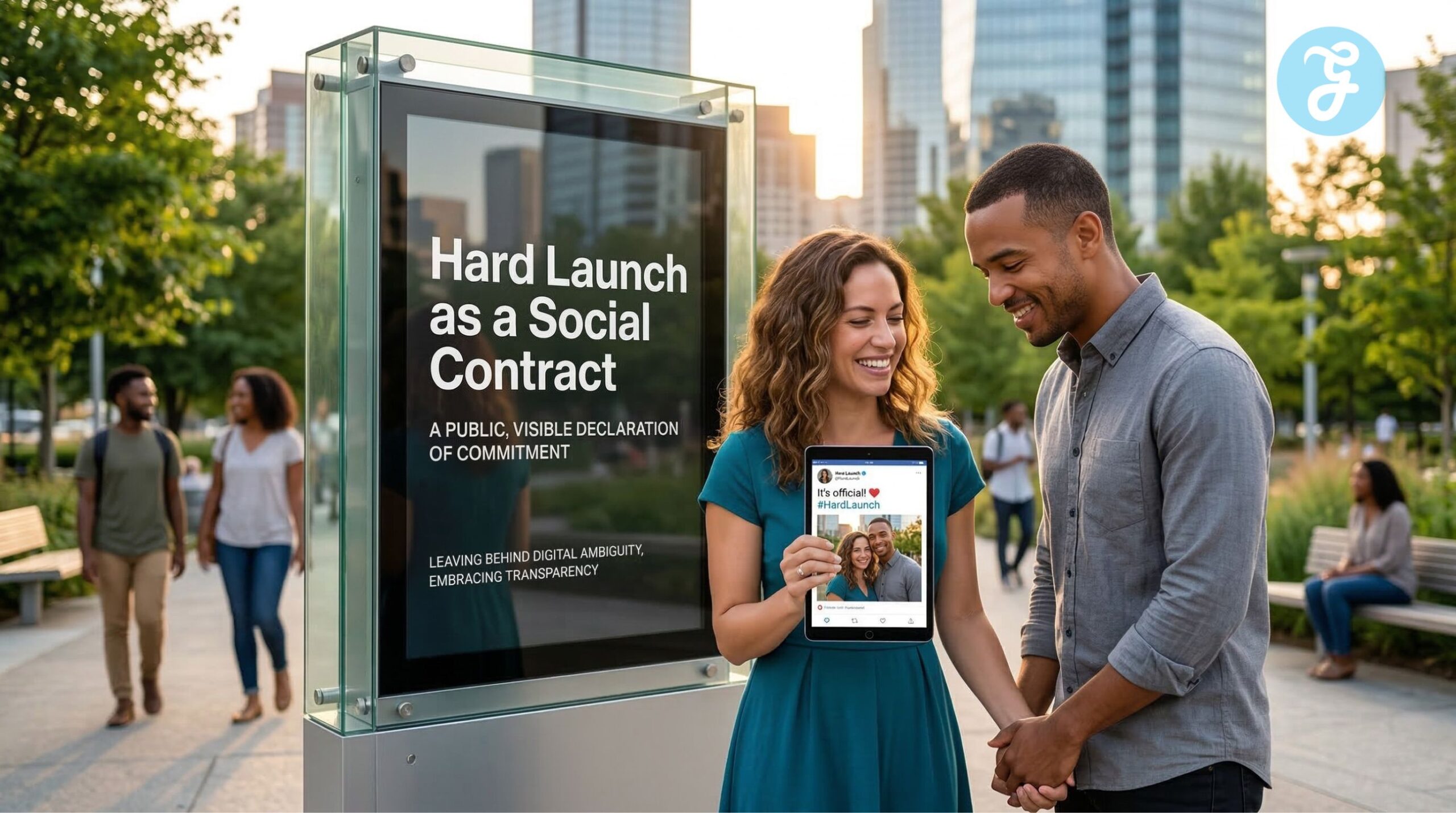 Data from early 2026 suggests that users are tired of the emotional labour required to decode a partner’s online presence. A study by the Match Group highlights a significant rise in intentional dating among younger professionals. They are moving away from the breadcrumbing tactics of previous years. A Hard-Launch serves as a social contract. It tells the world that the individual is no longer on the market. More importantly, it tells the partner that they are worth the digital footprint. This is the year we traded the soft-launch for the hard truth.
The Gold Standard: Sonal and Rajarshi
Real-world evidence of this shift is found in the story of Sonal and Rajarshi. They met in the high-pressure workplace environment of Dubai. From the first interaction, there was no room for the slow-burning games of the past. Their professional setting demanded the same efficiency in their personal lives. Both were clear from the start. They chose to bypass the mystery phase entirely.
For Sonal and Rajarshi, the Hard-Launching of their partnership was immediate. They did not rely on cryptic clues or obscured photos. By being transparent from Day 1, they established a foundation of public and private certainty. In a city like Dubai where social circles move fast, their clarity acted as a protective shield. They rejected the ambiguity of the workplace situationship for a bold, transparent declaration. This ensured their colleagues and social peers understood the depth of their commitment immediately.
The Psychology of Certainty: Clinical Psychologist Mimansa Singh Tanwar’s Perspective
Modern dating has long functioned on a defensive play. We spent years protecting ourselves from the sting of rejection by staying unattached. We kept our options open and our profiles vague. But the tide has turned. Experts now see a generation that is no longer afraid of being told “no.” Instead, they are terrified of the “maybe.” The psychological shift toward digital certainty is a clinical evolution in how we seek emotional safety.
Mimansa Singh Tanwar, Clinical Psychologist and Head of the Fortis School Mental Health Program, observes that this trend represents a transition “from protecting oneself from rejection in a relationship to now getting rid of the ambiguity that unclear commitment brings in.” She notes that the “self of young people in the current age is going through its own challenges and changes,” making the “need for emotional security” highly evident in these modern dating processes.
 Mimansa Singh Tanwar, Clinical Psychologist and Head of the Fortis School Mental Health Program, observes that this trend represents a transition “from protecting oneself from rejection in a relationship to now getting rid of the ambiguity that unclear commitment brings in.” She notes that the “self of young people in the current age is going through its own challenges and changes,” making the “need for emotional security” highly evident in these modern dating processes.
As Tanwar suggests, the self of the modern youth is navigating a complex period of change. By choosing to Hard-Launch, individuals are pivoting away from a defensive stance. They are no longer merely avoiding the sting of potential rejection. Instead, they are moving toward an offensive stance that demands the removal of ambiguity. In the past, we hid our partners to avoid the embarrassment of a public breakup. Today, we reveal them to demand a higher standard of commitment.
This process highlights a collective push for emotional security. In an era where ghosting and breadcrumbing have become standard, the act of a public, transparent commitment serves as a stabilising force. It is no longer about the fear of a breakup. It is about the refusal to live in a state of digital flux. By choosing the Hard-Launch, individuals are removing the grey areas that lead to anxiety. They are choosing the discomfort of a potential public exit over the emotional drain of a hidden situationship.
The mental health link is clear. A public declaration provides the “Self” with a sense of groundedness. This is not just about vanity or social media likes. It is about emotional hygiene. Hard-Launching creates a clear boundary in a digital world that often lacks them. In 2026, this certainty is a prerequisite for overall wellness. We cannot perform at our peak in the workplace if our personal lives are in a state of constant flux.
Clinical perspectives suggest that radical transparency reduces the cognitive load of dating. It allows the brain to stop scanning for threats or signs of abandonment. When you Hard-Launch, you are not just telling your followers who you are with. You are telling your nervous system that it is safe to rest. This clarity is the new foundation for both personal and professional stability.
The Great Data Pivot: Match Group and Global Trends
The numbers for 2026 support a profound psychological transition in how modern singles approach romance. Data from Match Group reveals what experts call the “Readiness Paradox.” While an overwhelming 80% of Gen Z daters believe they will eventually find true love, only about 55% feel prepared for a committed partnership today. This gap creates an initial hesitation around performative relationship milestones. However, this very hesitation is exactly why Hard-Launching has become such a powerful cultural statement. Rather than defaulting to a vague soft-launch to protect their emotional energy, mature daters are recognising that true security requires absolute public validation. Overcoming the Readiness Paradox through the digital permanence of a Hard-Launch is now the ultimate proof of investment.
 This push for a public Hard-Launch perfectly aligns with the modern demand for private certainty. In this new dating economy, emotional transparency is the primary currency. Tinder’s recent market data confirms that the hidden, undefined situationship has lost its appeal. Approximately 64% of young daters now view emotional honesty as the most vital component of modern romance. Furthermore, 60% demand completely clear communication about intentions from day one. A Hard-Launch simply translates this private honesty into a public reality. Investors and developers are already pivoting away from features that encourage gamified swiping to support this shift. They are focusing instead on verification, values-matching, and digital status clarity.
This demand for certainty has driven the decline of breadcrumbing and the rise of a new standard known as “Clear-Coding.” Breadcrumbing previously kept people interested without offering real commitment. Clear-Coding dismantles this tactic by requiring daters to state exactly what they want upfront. By establishing these rigid personal boundaries early on, modern couples refuse to be benched or strung along. Therefore, the Hard-Launch is no longer just a casual social media update. It serves as the final, visible execution of this Clear-Coding philosophy.
Why Hard-Launching is the New Proof of Humanity
The rise of artificial intelligence has created an unexpected crisis in digital dating. We now live in an era of deepfakes and AI-generated personas. Perfectly curated profiles no longer guarantee that the person on the other side of the screen is real. This has turned the Hard-Launching of a relationship into a necessary badge of human authenticity. A high-resolution photo that is tagged and verified by another real person serves as a digital receipt. It is proof of life in a landscape of filters and bots.
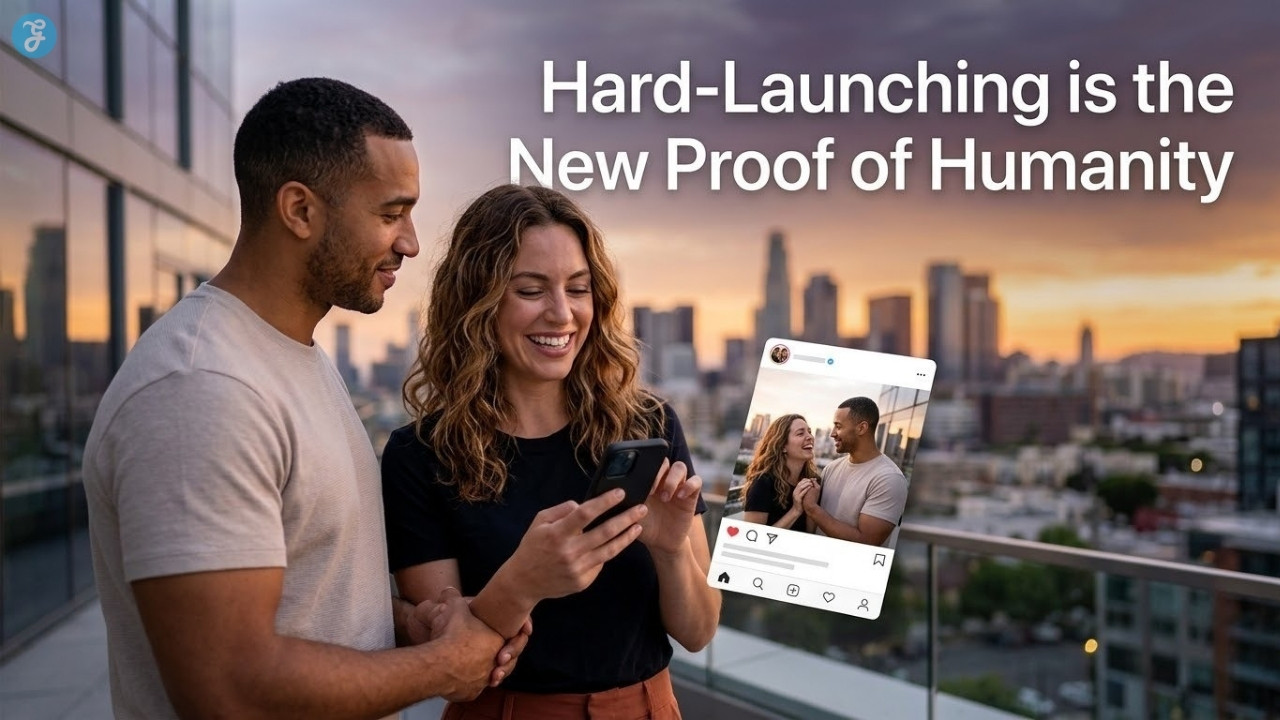 By choosing to Hard-Launch, couples are opting out of the traditional quest for curated perfection. They are moving toward what social analysts call digital transparency. This shift has transformed social media feeds into micro-communities of trust. When a couple is public and clear about their status, they invite their social circle to witness a lived reality. This is the new social telenovela. It is not about drama or performance. It is about a shared, verified history that cannot be faked by an algorithm.
This movement is a counter-response to the “dead internet” theory. In a world saturated with synthetic content, a tagged partnership is a radical claim to reality. It provides a level of accountability that private interactions lack. In 2026, being “seen” is the ultimate way to prove you are “real.”
Return to the Duo: The Dubai Success Model
Sonal and Rajarshi are the living embodiment of this standard. Their journey in Dubai shows the long-term results of Day 1 clarity. By refusing to engage in the digital games of the past, they built a partnership based on logic and resilience. Their Hard-Launching was not an impulsive act of passion. It was a deliberate choice to prioritise stability.
The ripple effect of their transparency was immediate. In their professional circles, their clear status removed the awkwardness that often plagues workplace connections. Colleagues respected the boundary they set. Their social peers in Dubai found their directness refreshing. Sonal and Rajarshi proved that transparency does not kill romance. Instead, it protects it from the external noise of a fast-paced city.
The longevity of their partnership is a testament to this disciplined approach. They bypassed the emotional drain of “vibing” and went straight to the work of building a life together. Their narrative concludes not just with a successful relationship but with a new standard of maturity. They didn’t just launch a couple. They launched a blueprint for how to love with intention in a digital age.
Hard-Launching and the Future of Digital Romance
The appeal of the situationship has finally expired. In the fast-moving cultural landscape of 2026, ‘maybe’ has become outdated software. It is a system that has crashed under the weight of its own ambiguity. We have reached a point where emotional vagueness is no longer a safety net but a liability. For the modern professional, time is too valuable to spend on a connection that refuses to name itself.
The future of digital romance is moving toward even greater levels of verification. As we look toward 2027, the Hard-Launching trend is likely to evolve into deeper forms of digital and legal commitment. We may see the rise of digital domestic partnerships where social media platforms integrate with legal frameworks to verify shared assets or residency. The line between a public post and a private contract is thinning. Transparency is becoming the new baseline for any serious interaction.
This shift is not a restriction on freedom. It is an expansion of agency. By choosing to be seen, we are choosing to be respected. The radical act of Hard-Launching proves that we are ready to take responsibility for our emotions and our partners. It is a move from the passive vibe to the active vow.
The call to action for the modern dater is simple. It is time to trade mystery for mastery. Stop settling for the shadows of a soft launch and embrace the clarity of a public commitment. In a world of synthetic personas and fleeting interests, being certain is the most revolutionary thing you can be. Take the lead from those who have already made the pivot. Build your connections on the solid ground of truth rather than the shifting sands of uncertainty. The year 2026 has set the stage. Now it is your turn to step into the light.
Disclaimer: Names and specific identifying details in the case studies have been changed to protect the privacy of the individuals involved.
Explore the complete 2026 Relationship Standards series to master the new architecture of modern intimacy:
Part 1: Why Truecasting in Relationships is the 2026 Standard for Finding Real Connection
Part 2: Beyond Truecasting: Why Clear-Coding is the New Communication Standard for 2026
Part 3: Rejecting the ‘Maybe’: Why the 2026 Hard-Launch Is a Radical Act of Trust in a Relationship
Part 4: Trust the Group Chat: How Vibe-Vetting is Redefining Modern Relationship Compatibility
Part 5: The Secret to Long-Term Love: Why Every Couple Needs a Solo-Sabbatical