
The safety of artificial intelligence came under renewed scrutiny after the death of 16-year-old Adam Raine, a teenager from California whose parents claim that ChatGPT played a role in his decision to take his own life. According to court filings, Raine used ChatGPT in the weeks before his death, allegedly receiving detailed responses when he asked about methods of self-harm and suicide. His family has since filed a wrongful death lawsuit against OpenAI, accusing the company of negligence and of failing to stop the chatbot from providing dangerous information during moments of severe vulnerability.
The lawsuit is the first of its kind to reach this scale in the United States, and it has accelerated public debate over how much responsibility AI developers must take for safeguarding users, especially teenagers and people in emotional distress.
Shifting Conversations to Safer AI Models
In response, OpenAI has announced one of its most significant safety reforms to date. Sensitive conversations—particularly those involving signs of depression, self-harm, or suicidal thoughts—will now be redirected to more advanced reasoning models such as GPT-5-thinking. These specialized systems are engineered to process context more carefully and deliberately, taking extra time to evaluate the emotional state of the user before generating a response.
By routing such conversations to these models regardless of which version of ChatGPT the user originally selected, OpenAI hopes to reduce the risk of harmful or reckless replies. The company stressed that its goal is to make ChatGPT safer and more reliable during prolonged conversations where emotional well-being is at stake.
New Parental Control Tools
Another major reform centers on how teenagers access ChatGPT. OpenAI will soon release parental control features that allow parents and guardians to link their accounts with their child’s. Once connected, parents will be able to:
-
Set age-appropriate rules for ChatGPT’s responses.
-
Control access to sensitive features like chat history and memory.
-
Receive alerts if the system detects signs that the teenager is in acute emotional distress.
These alerts are being designed with input from mental health professionals to balance privacy and trust, ensuring parents can intervene when necessary without undermining the child’s autonomy. OpenAI emphasized that these measures aim to build a partnership between families and the AI system, especially as teens increasingly use chatbots for study help, daily conversations, or emotional support.
Expert Oversight and Medical Input
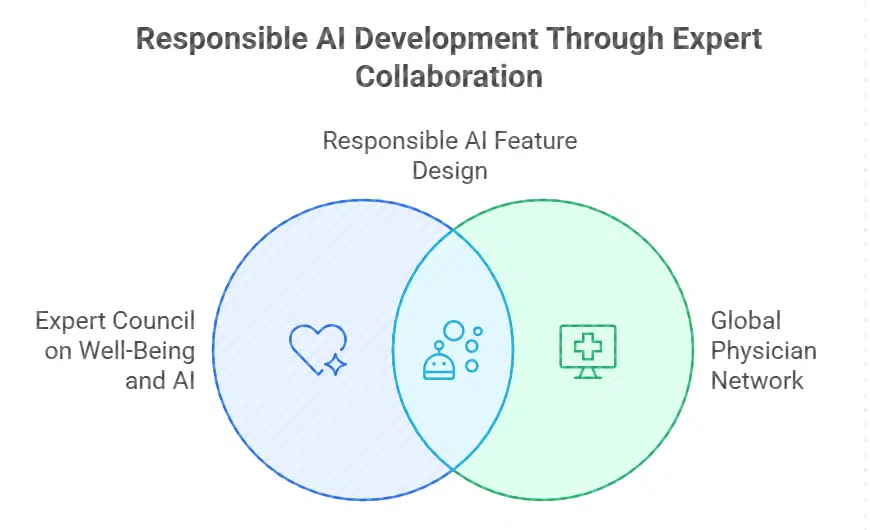
To design these features responsibly, OpenAI is working closely with an Expert Council on Well-Being and AI and a Global Physician Network. These advisory groups include psychologists, psychiatrists, pediatricians, and ethicists who provide both specialized medical knowledge and a broader global perspective. Their role is to guide the development of parental alerts, ensure responses follow mental health best practices, and establish clear criteria for detecting risk behaviors.
This type of oversight reflects a growing industry trend: AI companies are under pressure not only to create innovative tools but also to prove that they are being developed with real-world safety standards in mind.
Broader Industry Reckoning
OpenAI is not the only company facing criticism. In recent months, several tragic incidents—including suicides and even a murder-suicide in the U.S. involving another chatbot—have pushed governments, advocacy groups, and industry watchdogs to demand greater accountability from AI developers.
Meta has recently added restrictions to prevent its chatbots from engaging in conversations about self-harm, eating disorders, or sexual exploitation when interacting with younger users. Microsoft and Google are also under review for how their AI systems handle requests related to health and emotional crises.
A RAND Corporation study conducted in mid-2025 highlighted the unevenness of chatbot responses to suicide-related queries, showing that some AI systems offered helpful prevention resources while others failed to respond appropriately. This inconsistency reinforced the urgent need for universal safety benchmarks across the AI sector.
OpenAI’s 120-Day Roadmap
OpenAI confirmed that these new measures are only the beginning of a long-term effort. Within the next 120 days, the company plans to:
-
Roll out advanced reasoning routing across all sensitive categories.
-
Launch the first version of parental controls, including distress alerts.
-
Expand partnerships with health organizations and academic researchers to track outcomes.
-
Explore emergency integration features, such as one-click access to crisis hotlines or trusted contacts.
The company has acknowledged that these systems will need continuous testing and refinement, especially as new risks emerge. Its stated aim is to make ChatGPT not only a useful tool for productivity and education but also a trusted, responsible companion in moments of emotional vulnerability.
Balancing Innovation and Responsibility
The challenge OpenAI faces is one of balance. On the one hand, ChatGPT is used by hundreds of millions worldwide for tasks ranging from writing assistance to tutoring. On the other, the chatbot’s availability around the clock, and its conversational style, make it a potential outlet for those in crisis. Without safeguards, the risk of misuse or harmful reinforcement grows.
OpenAI’s strategy to introduce slower, more deliberate reasoning models for high-risk scenarios represents a shift away from prioritizing speed and convenience, instead placing safety at the center. Analysts believe this may set a precedent for the broader AI industry, which has often been criticized for rolling out products faster than regulators and ethicists can keep up.
The death of Adam Raine has become a turning point in how AI safety is being discussed worldwide. For OpenAI, it is both a moment of reckoning and an opportunity to redefine how technology companies respond to crises tied to their platforms. The upcoming measures—including advanced reasoning models, parental controls, distress alerts, and expert oversight—mark a significant step forward.
Whether these reforms will be enough remains to be seen, but one fact is clear: AI systems like ChatGPT are no longer just productivity tools; they are increasingly entangled with deeply human and emotional aspects of daily life. How responsibly these technologies evolve will shape not only the future of AI but also the trust society places in them.