History is often a mosaic of triumph and tragedy, and March 11 is no exception. This day serves as a bridge between the colonial past and the digital present. Whether it is the arrest of a young activist who would become the “Father of a Nation” or the silent arrival of a pandemic that would change the world forever, March 11 is a date of profound consequence.
In this deep dive, we explore the cultural, political, and scientific milestones that define this day across the Bangalee sphere and the global stage.
The Bangalee Sphere: Resistance and Renaissance
For the people of the Indian subcontinent, and specifically the Bengali-speaking population, March 11 is a date that pulses with the spirit of identity.
The 1948 General Strike: The Seed of Bangladesh
On March 11, 1948, the streets of Dhaka witnessed the first major organized protest of the Language Movement. Following the creation of Pakistan in 1947, the ruling elite in West Pakistan sought to impose Urdu as the sole state language. In response, the Rashtrabhasha Sangram Parishad (State Language Action Committee) called for a general strike.
This event was pivotal; it transformed a student protest into a mass nationalist movement, eventually leading to the 1952 Language Martyrs’ Day and the 1971 War of Liberation.
1954: The United Front’s Landslide Victory
March 11, 1954, marked a democratic earthquake in East Bengal. The United Front (Jukto Front), a coalition of opposition parties led by A.K. Fazlul Huq, Maulana Bhashani, and H.S. Suhrawardy, achieved a monumental victory in the provincial assembly elections. They crushed the ruling Muslim League, signaling that the people of East Bengal would no longer tolerate centralized authoritarianism from Karachi.
Notable Birth: Dwijendranath Tagore (1840)
Born on this day was Dwijendranath Tagore, the eldest brother of the Nobel laureate Rabindranath Tagore. While often overshadowed by his younger brother, Dwijendranath was a titan of the Bengal Renaissance. He was a pioneer in Bengali shorthand, a brilliant mathematician, and the man who first translated the Meghaduta into Bengali verse. His philosophy of Tattvabidya (Knowledge of Principles) remains a cornerstone of Bengali intellectual history.
Notable Death: Santu Mukhopadhyay (2020)
The Bengali film industry lost a veteran on this day in 2020. Santu Mukhopadhyay was a staple of Parallel cinema and a favorite of directors like Tapan Sinha. Known for his understated, realistic performances, his legacy continues through his daughters, actresses Swastika and Ajopa Mukherjee.
International Observances & Global Health
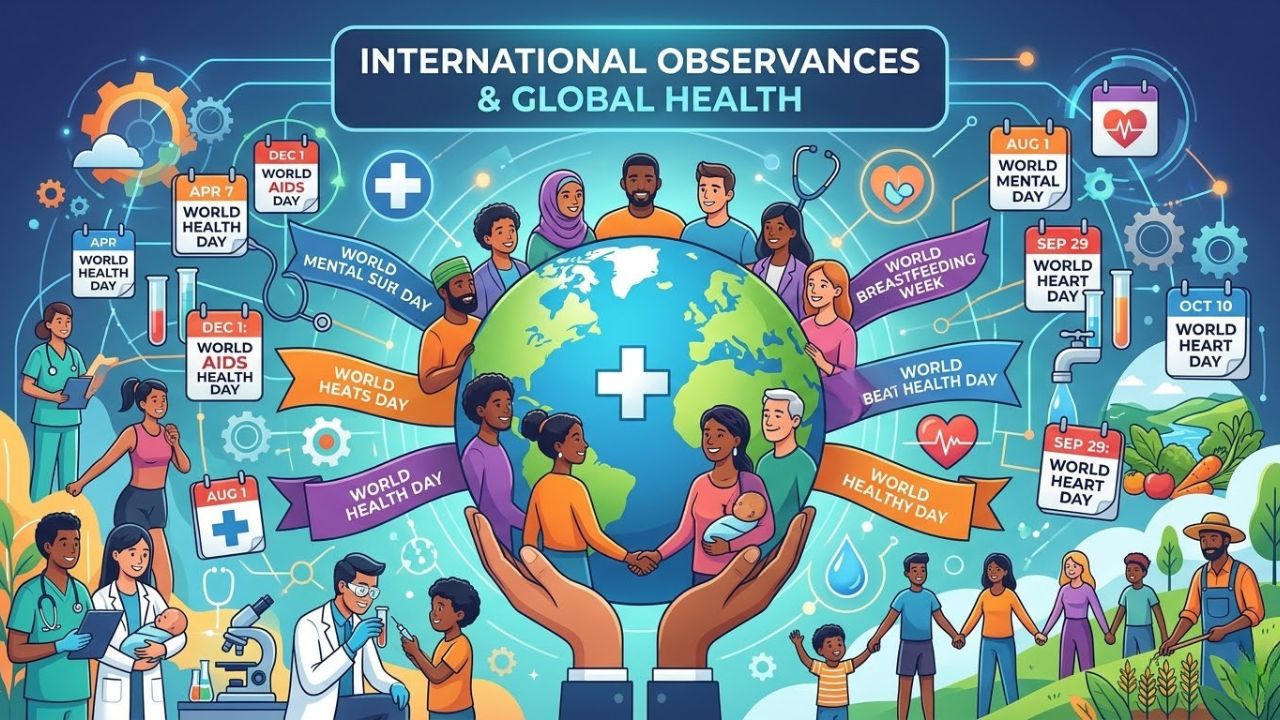
March 11, 2026, aligns with several significant international days that focus on human welfare and infrastructure.
Global History: The Turning Points of Civilizations
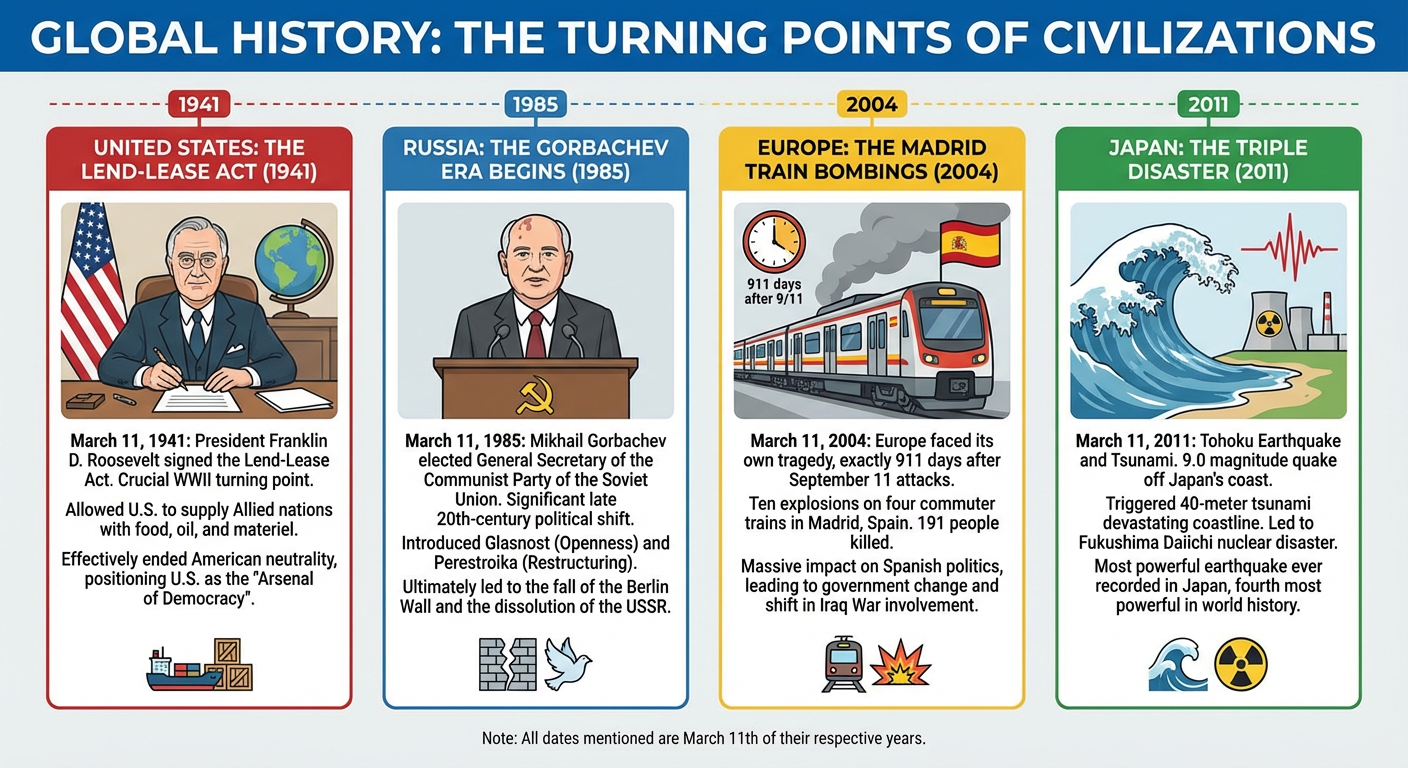
Russia: The Gorbachev Era Begins (1985)
On March 11, 1985, Mikhail Gorbachev wa elected as the General Secretary of the Communist Party of the Soviet Union. This was perhaps the most significant political shift of the late 20th century. Gorbachev introduced the concepts of Glasnost (Openness) and Perestroika (Restructuring), which ultimately led to the fall of the Berlin Wall and the dissolution of the USSR.
Japan: The Triple Disaster (2011)
Perhaps the most somber modern memory of this date is the 2011 Tohoku Earthquake and Tsunami. A 9.0 magnitude quake struck off the coast of Japan, triggering a 40-meter tsunami that devastated the coastline and led to the Fukushima Daiichi nuclear disaster. It remains the most powerful earthquake ever recorded in Japan and the fourth most powerful in world history.
Europe: The Madrid Train Bombings (2004)
Exactly 911 days after the September 11 attacks, Europe faced its own tragedy. Ten explosions occurred aboard four commuter trains in Madrid, Spain, killing 191 people. This event had a massive impact on Spanish politics, leading to a change in government and a shift in Spain’s involvement in the Iraq War.
United States: The Lend-Lease Act (1941)
In 1941, President Franklin D. Roosevelt signed the Lend-Lease Act, a crucial turning point in World War II. It allowed the United States to supply Allied nations with food, oil, and materiel, effectively ending American neutrality and positioning the U.S. as the “Arsenal of Democracy.”
Notable Births & Deaths (Global)
Famous Births
-
Rupert Murdoch (1931): The Australian-American media tycoon who reshaped global news through News Corp and Fox.
-
Harold Wilson (1916): The British Labour politician who served as Prime Minister of the United Kingdom twice (1964–70 and 1974–76).
-
Douglas Adams (1952): The beloved author of The Hitchhiker’s Guide to the Galaxy.
-
Didier Drogba (1978): The Ivorian football legend who used his platform to help end a civil war in his home country.
Famous Deaths
-
Alexander Fleming (1955): The Scottish biologist who discovered Penicillin. His death on this day marked the passing of a man whose work saved hundreds of millions of lives.
-
Slobodan Milošević (2006): The former President of Serbia and Yugoslavia, who died while on trial for war crimes at the Hague.
-
Sambhaji Maharaj (1689): The second Chhatrapati of the Maratha Empire. His brutal execution by the Mughal Emperor Aurangzeb on this day ignited a fierce Maratha resistance that would eventually cripple the Mughal Empire.
“Did You Know?” Trivia
-
The First Daily News: In 1702, the Daily Courant, the first daily newspaper in the English language, was published for the first time in London.
-
Naming a Capital: In 1913, the wife of the Governor-General of Australia, Lady Denman, officially named the new capital city Canberra on this day.
-
The Panda Protocol: In 1869, French missionary Armand David received the skin of a “black and white bear” from a hunter in China, becoming the first Westerner to document the Giant Panda.
Quote of the Day
“A nuclear war cannot be won and must never be fought.”
— Mikhail Gorbachev (Reflecting on his rise to power on March 11, 1985)
Final Thoughts
March 11 stands as a reminder of how a single day can hold a remarkable collection of historical milestones, influential births, and significant losses that have shaped the world in different ways. From groundbreaking events that changed the course of nations to the birth of individuals who later influenced culture, science, and politics, this day reflects the constant movement of history.
Remembering the events and people associated with March 11 helps us better understand the past and appreciate how these moments continue to influence the present. Each year, this date offers an opportunity to reflect on the achievements, challenges, and legacies that have contributed to our shared global story.