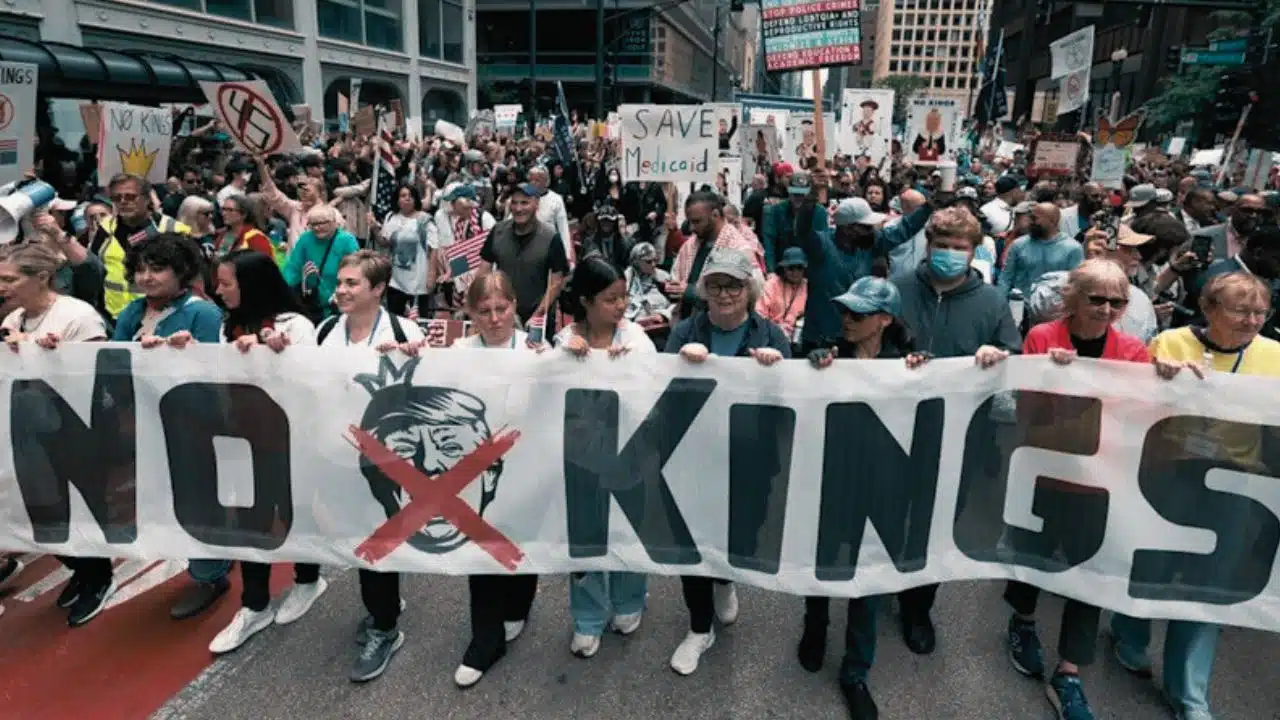
The ‘No Kings’ Protests
- What: Nationwide, coordinated protests against the political influence and rhetoric of President Donald Trump.
- When: Sunday, October 19, 2025, with most events scheduled to begin at 12:00 PM local time.
- Where: Events are planned in over 400 cities and towns across all 50 U.S. states, with flagship marches in Washington D.C., New York City, Los Angeles, and Chicago.
- Who: A coalition of progressive groups named “The October 19th Coalition,” with turnout projections ranging from 2 to 3.5 million people nationwide.
- Why: Organizers cite concerns over democratic erosion, Trump’s legal challenges, and his rhetoric in the run-up to potential 2026 midterm election involvement as key motivators.
A Movement Years in the Making
The ‘No Kings’ movement, a name explicitly referencing the American revolutionary rejection of monarchy, has been simmering within progressive circles for months. Organizers have tapped into a deep well of anxiety among a segment of the U.S. electorate concerned by President Donald Trump’s continued dominance of the Republican party and his public statements regarding presidential power.
The protest’s timing is not accidental. It comes just weeks after a controversial ruling by a federal appeals court granted Trump temporary immunity in a case related to his actions on January 6, 2021 (Source: Associated Press, [link]). This legal development, combined with polling that shows Trump as a formidable political force, acted as a catalyst for the coalition.
This is not a partisan rally; it is a pro-democracy mobilization,” said Sarah Lerner, lead strategist for MoveOn.org, a key partner in the coalition, in a press conference on Friday. “The principle is simple: in the United States, we do not have kings, we have presidents. We do not have rulers, we have representatives. That sacred line has been blurred, and the American people are gathering to redraw it in Sharpie.
Latest Data & Projections
The scale of the planned event is significant, with data pointing towards a massive, nationwide turnout. Organizers are leveraging digital platforms and local networks to coordinate a highly decentralized yet unified event.
- Projected National Turnout: The October 19th Coalition projects a national turnout of between 2 and 3.5 million participants. This estimate is based on digital RSVPs across various platforms and historical data from events like the 2017 Women’s March, which saw an estimated 3.3 to 4.6 million people participate nationwide.
- Geographic Spread: As of Saturday morning, 412 distinct events are registered on the coalition’s official website. While major metropolitan areas are expected to see the largest crowds—with projections of over 200,000 in Washington D.C. alone—organizers have emphasized the importance of demonstrations in smaller cities and towns across politically diverse states like Ohio, Florida, and Arizona.
- Public Sentiment Polling: A recent poll conducted by the Pew Research Center, released on October 15, 2025, provides context for the movement’s appeal. It found that 62% of U.S. adults believe “significant changes are needed to the fundamental design and structure of American government,” with a notable portion of those respondents expressing concern over the concentration of executive power. While not a direct poll about the protest, it highlights the underlying national mood organizers are tapping into.
Official Responses and Expert Analysis
Trump Camp and Law Enforcement
The office of Donald Trump has responded with characteristic defiance. A statement released via his Truth Social platform on Friday evening called the planned protests a “radical left temper tantrum” organized by “the usual Soros-funded suspects who want to destroy our country.” The statement urged his supporters to “ignore the noise and stay focused on Making America Great Again.”
Law enforcement agencies in major cities are on high alert. The New York Police Department issued a statement confirming they have “devoted adequate resources to ensure public safety and facilitate the right to peaceful assembly.
Expert Analysis: A Test of Democratic Energy
Political analysts view the ‘No Kings’ protest as a critical barometer of the anti-Trump movement’s energy and organizational capacity.
Dr. Thea Riofrancos, a political scientist at Providence College, commented on the potential impact. “Large-scale, visible protests serve multiple functions,” she explained in an interview with NPR. “They energize the base, sending a powerful signal to activists that they are not alone. They also create a media narrative that can influence undecided voters by highlighting the intensity of the opposition. The key question is whether this one-day event can be translated into sustained political action through the 2026 midterms.
Experts also note the risk of confrontation, given the deeply polarized political environment. While organizers have stressed a commitment to non-violence, the potential for counter-protests remains a significant concern for law enforcement.
Impact on People: A View from the Ground
The motivation for many attendees is deeply personal. For Mark Preston, a 65-year-old retired teacher from Columbus, Ohio, the protest is about the future he leaves for his grandchildren.
“I taught American history for 40 years,” he said in a phone interview after his local organizing meeting was featured on a local news affiliate. “I taught my students about checks and balances, about the peaceful transfer of power. What I’ve seen in the last few years feels like a betrayal of those core principles. I’m not a political firebrand. I’m a grandfather, and I feel a duty to stand up and be counted.
Stories like Preston’s are echoed in thousands of posts on social media, where hashtags like #NoKings, #DefendDemocracy, and #October19 are trending.
What to Watch Next
The success and impact of the ‘No Kings’ protests will be measured in the days and weeks that follow. Key things to watch include:
- Final Turnout Numbers: How will the actual crowd sizes compare to the projections? Discrepancies will be spun by both sides as either a sign of overwhelming momentum or a movement failing to meet expectations.
- Media Coverage: The extent and tone of the media coverage, both domestically and internationally, will shape the public’s perception of the event’s significance.
- Political Response: How will the Republican and Democratic party leadership respond on Monday? Silence will be as telling as any statement.
- Sustained Action: Will the coalition be able to channel the energy from this single day of action into long-term voter registration drives, lobbying efforts, and community organizing?
As dawn breaks across America on Sunday, hundreds of thousands of people will be preparing to make their voices heard. The ‘No Kings’ protests represent a significant and highly organized pushback against a political figure who continues to command intense loyalty and fierce opposition. Whether it proves to be a pivotal moment in the nation’s political trajectory or a fleeting expression of dissent, the sheer scale of the mobilization ensures that its echoes will be felt long after the streets are cleared.