
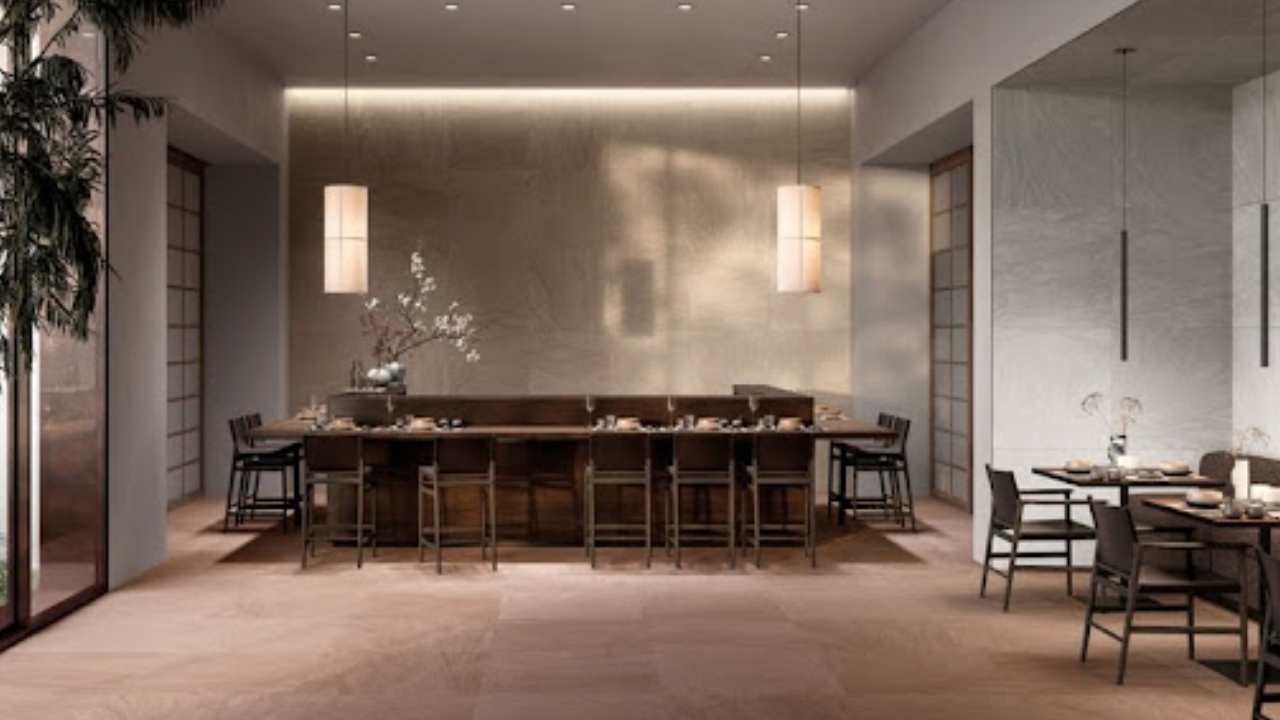
In this context, porcelain stoneware offers exceptional design freedom, combining elegant finishes with durability, ease of cleaning and resistance to moisture. The result is a versatile solution that enhances the character of the room while ensuring long-lasting performance in one of the most frequently used areas of the home.
Choosing tile styles that define the kitchen’s personality
The design of kitchen tiles plays a central role in shaping the mood of the space. From understated contemporary interiors to more decorative concepts, the chosen surface can instantly influence how the room feels and how light moves through it.
Neutral palettes for timeless elegance
Soft neutral shades remain among the most effective options for creating a refined kitchen interior. Warm whites, delicate greys, sand tones and stone inspired finishes bring brightness and visual calm, making the space feel open and welcoming.
These tones work particularly well in both compact kitchens and larger open layouts, where visual continuity is essential. Their discreet elegance also makes it easier to refresh cabinetry, lighting or accessories over time without having to rethink the entire design.
Textured and decorative surfaces for added character
For kitchens that require more personality, textured porcelain tiles introduce depth without compromising sophistication. Subtle relief effects, delicate geometric motifs and marble look veining can transform walls or selected floor areas into focal points.
These details add movement to the interior and create a layered aesthetic that feels curated rather than excessive. Used with balance, decorative surfaces can enhance the room’s identity while maintaining a polished overall result.
Practical tile design solutions for everyday kitchen use
Elegance in the kitchen must always be supported by practicality. Porcelain stoneware responds perfectly to this need thanks to its resistance to stains, scratches and humidity. In a room exposed to spills, heat and frequent cleaning, these qualities are essential for preserving the original beauty of the surfaces.
Matt finishes are particularly suitable for flooring, as they provide a more natural appearance and improve grip underfoot, making the space safer for everyday use. On walls, especially behind hobs and preparation areas, tiles create easy to maintain surfaces that can be cleaned quickly while protecting the structure beneath. This balance between beauty and resilience is what makes tile design such a strategic choice in modern kitchens.
Coordinating floors, walls and furnishings for a refined result
A truly elegant kitchen interior depends on the dialogue between surfaces and furnishings. Coordinating floor and wall tiles in complementary tones helps create a sense of continuity, while subtle contrasts with cabinetry can introduce depth and definition. Porcelain stoneware also pairs beautifully with natural wood, brushed metal details and contemporary worktops, allowing the entire composition to feel harmonious.
When the design language is coherent across floors, walls and furniture finishes, the kitchen appears more spacious, balanced and visually sophisticated. This coordinated approach is particularly effective in interiors where practicality must coexist with a strong sense of style.
Well considered kitchen tiles design is ultimately about creating interiors that remain elegant, functional and relevant over time. By combining carefully selected finishes with the high-performance qualities of porcelain stoneware, it becomes possible to shape a kitchen that supports everyday life while expressing a timeless design vision.
Ceramiche Refin, when material becomes the language of architecture
In contemporary design, surfaces have taken on a far more central role. They no longer function as simple finishes, but actively shape spatial identity, modulate light, and define the visual quality of interiors. This is the dimension in which Ceramiche Refin operates, interpreting porcelain stoneware as a true architectural language through a balance of industrial precision, aesthetic research, and made in Italy culture.
One of the most emblematic expressions of this vision is RELIEFS, a project that moves beyond the traditional concept of wall cladding and transforms the surface into a dynamic architectural presence. Its three-dimensional textures, marked by grooves, incisions, and raised geometries, interact with both natural and artificial light to create constantly evolving shadow effects. The wall gains rhythm, movement, and depth, becoming a defining feature of the environment.
This exploration of dimensionality is complemented by the expressive strength of INK, a collection that translates the value of the creative gesture into ceramic form. Fluid marks, immersive patterns, and a palette that moves from refined neutrals to richer tones allow designers to create spaces with strong visual identity while maintaining compositional balance. Each module contributes to a broader design narrative suitable for both residential interiors and professional settings.
A more tactile language emerges with OSMOS, where controlled imperfection becomes an intentional aesthetic choice. Delicate tonal shifts and material traces convey a sense of sophisticated authenticity, making the collection particularly effective in projects that require stylistic continuity between indoor and outdoor spaces.
The design path is completed by PRESTIGIO KALEIDOS, a collection defined by scenography, light, and visual transformation. Shifting reflections, layered chromatic nuances, and luminous effects that change according to the viewing angle create surfaces with remarkable decorative impact and perceptual depth.
Behind this expressive variety stands a solid industrial structure. Founded in 1962 and part of the Concorde Group, Ceramiche Refin manages every stage in house, from creative development to technical engineering and quality control. This integrated model ensures coherence between design vision and final performance, while low impact technologies, waste recovery, and emission reduction reinforce a responsible manufacturing philosophy built for long term value.