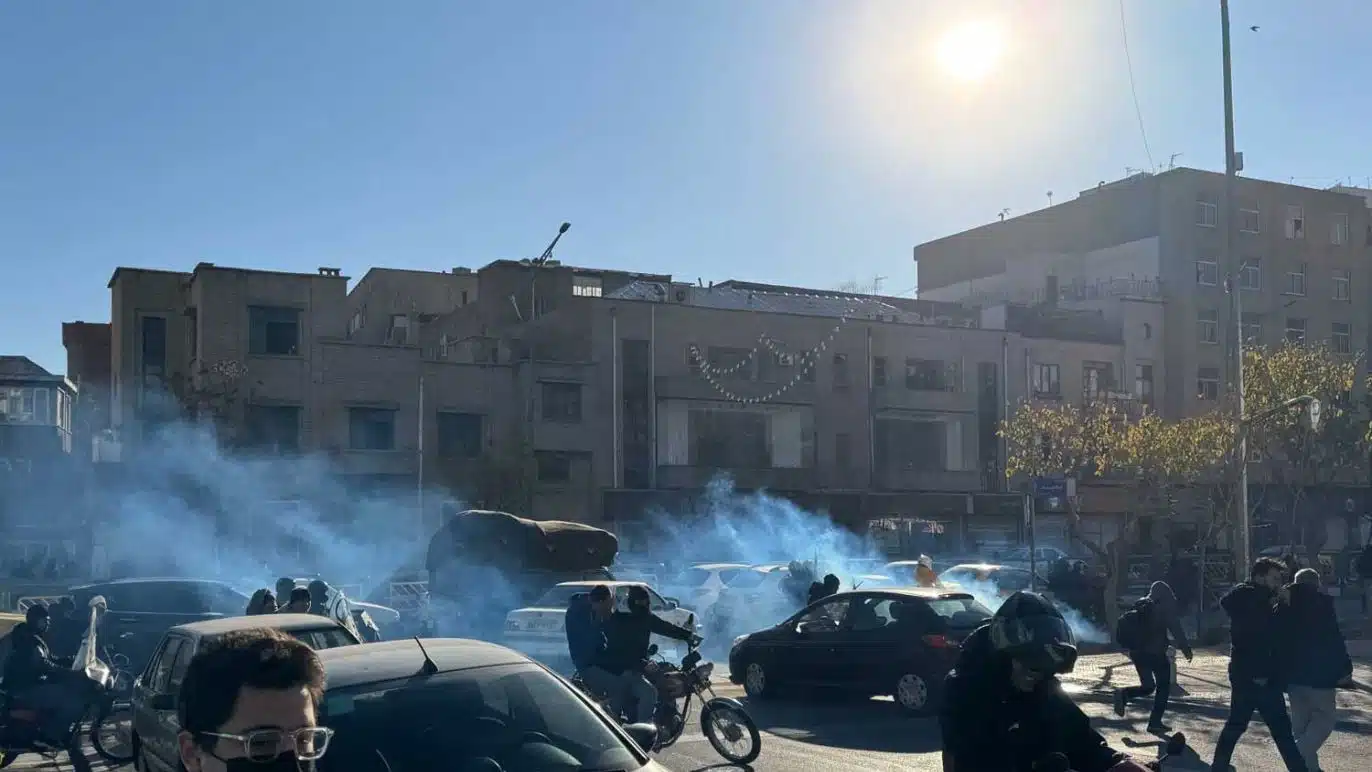
Protests fueled by Iran’s crippling economic crisis have erupted across the country, spreading from Tehran to dozens of cities and towns, with at least seven people killed in clashes between demonstrators and security forces. What began as shopkeepers’ strikes over soaring prices has evolved into widespread anti-government fury, marking the most significant unrest since the 2022 Mahsa Amini demonstrations. As the death toll rises and authorities impose shutdowns, the Islamic Republic faces a mounting challenge to its authority.
Origins of the Unrest
The protests ignited on December 28, 2025, in Tehran’s bustling mobile phone bazaar, where merchants shuttered shops in defiance of hyperinflation that has ravaged purchasing power. Traders, facing currency devaluation and import shortages, were the first to act, quickly drawing in students from major universities like the University of Tehran. By December 30, demonstrations had spread to at least 10 universities in the capital, with crowds chanting against economic mismanagement.
This wave of discontent echoes past uprisings but stems directly from economic despair rather than a single trigger like police custody deaths. Shopkeepers in key markets, including the Central Fruit and Vegetable Market (Meidan Tarebar), maintained strikes into early January 2026, paralyzing food distribution despite tear gas deployments by security forces. Videos circulating on social media captured merchants hurling stones at administrative buildings while shouting “Death to the dictator,” signaling a rapid shift from economic grievances to political demands.
Iran’s government responded swiftly with a nationwide business shutdown across 21 of 31 provinces, officially blamed on “cold weather,” though analysts view it as a ploy to curb gatherings. Prosecutors warned of a “decisive response” to any insecurity, while President Pezeshkian urged unity amid the chaos. Yet, these measures failed to quell the fire, as protests intensified in rural areas where state control is weaker.
Rapid Spread Across the Country
By January 2, 2026, the unrest had engulfed at least 50 cities and towns spanning 22 provinces, up from 17 provinces just days earlier—a tally drawn from official reports, activist groups, and social media verification. Critical Threats Project recorded 56 protests on January 1 and 70 on January 2, a sharp rise from 31 on December 31, with new hotspots in Sistan and Baluchistan, Ghazvin, Kohgiluyeh and Boyerahmad, Mazandaran, and North Khorasan.
Western provinces bore the brunt, including Lorestan (Azna, Kuhdasht), Chaharmahal and Bakhtiari (Lordegan), and Isfahan (Fuladshahr), home to the Lur ethnic minority. Central and southern cities like Qom—a clerical stronghold—saw rallies calling for the theocracy’s downfall, while Marvdasht in Fars Province witnessed attacks on police stations. Even Zahedan in the southeast reported hit-and-run clashes, highlighting the protests’ nationwide scope.
In Tehran, student-led marches filled streets near prestigious institutions, with unconfirmed reports of six detentions at the University of Tehran, later released. Rural expansion reflects security forces’ struggles in less urbanized areas, where protesters stormed governor’s offices, mosques, and banks, setting fires and chasing Basij militiamen.
Deadly Clashes and Rising Casualties
The protests turned lethal on December 31, 2025, with at least seven confirmed deaths by January 2, 2026—two on Wednesday and five on Thursday—marking the bloodiest day yet. Semi-official Fars News Agency reported three killed in Azna (Lorestan), two in Lordegan (Chaharmahal and Bakhtiari), one Basij volunteer in Kuhdasht (Lorestan), and others in Fuladshahr and Isfahan Province.
Human rights group Hengaw named victims like 21-year-old Ahmad Jal and 28-year-old Khaledi in Lordegan, claiming security forces fired live rounds into crowds hurling stones at official buildings. State media countered that protesters attacked police stations, injuring 17 officers and killing one militiaman with a hunting rifle. Videos showed gunfire, burning vehicles, and tear gas amid chants of “No Gaza, No Lebanon, I Sacrifice my Life for Iran.”
Arrests number in the hundreds, with 44 confirmed by some tallies, and social media platforms like Instagram reportedly throttled. Amnesty International-style probes from past protests suggest underreporting, as forces targeted heads and torsos in similar crackdowns.
Economic Powder Keg Igniting Fury
Iran’s economy, battered by decades of mismanagement, sanctions, and fiscal deficits, forms the unrest’s core. Hyperinflation exceeds 30% annually for seven years, driven by rial depreciation, oil export curbs (a sanctions proxy), and money printing to fund deficits. Food prices surged 4.9% in a month, hitting low-income families hardest in import-dependent sectors.
U.S. and allied sanctions since the Trump reelection have slashed foreign currency inflows, inflating import costs and isolating Iran from global trade. Central Bank independence is nominal, with weak oversight fueling volatility; budget shortfalls force borrowing from state funds, expanding money supply without growth. Protesters decry foreign adventures in Gaza and Lebanon draining resources amid domestic starvation.
This crisis dwarfs 2022’s scale so far but mirrors 2019’s fuel price riots (1,500 dead per Reuters/MEK). Merchants’ paralysis in Tehran’s markets threatens supply chains, amplifying shortages of essentials like vegetables and electronics.
Government Response and Security Escalation
Authorities toggled between concession rhetoric and threats. Prosecutor General Mohammad Movahedi-Azad deemed “peaceful livelihood protests” legitimate but vowed proportionality against “externally designed scenarios.” President Pezeshkian called for unity, while Supreme Leader Khamenei-era warnings evoked past orders to “crush” unrest.
Security deployed Revolutionary Guards, Basij, and police with live ammo, tear gas, and detentions, focusing on rural vulnerabilities. A sudden holiday stifled urban rallies, but shutdowns backfired, fueling suspicions. State TV blamed “subversive slogans” and sabotage, with 13 officers injured in one clash.
Israel’s Mossad amplified via Persian X posts: “With you on the ground,” urging street action—prompting Tehran’s aggression vows. U.S. State Department expressed concern over intimidation.
International Echoes and Reactions
Global media spotlighted the protests as Iran’s biggest since 2022’s Mahsa Amini uprising (522 dead per HRANA). NPR, DW, BBC Persian verified footage from Lordegan to Marvdasht, noting Lur communities’ role. Al Jazeera tallied 20+ areas; AFP confirmed western focus.
Western calls for restraint clashed with Iran’s narrative of foreign meddling. Analysts warn sanctions relief is unlikely under President Trump, prolonging pain. Regional foes like Israel back protesters implicitly.
Voices from the Streets
Protesters’ slogans—”Death to Khamenei,” “Neither Gaza nor Lebanon”—reveal regime fatigue. Women activists, merchants, students unite against corruption. In Qom, chants targeted clerics; in Zahedan, Baluch minorities joined. Social media, despite blocks, spreads defiance: fires in Azna streets, fleeing Basij.
Activists like Hengaw document shootings; NCR-Iran claims regime buildings stormed in 146 cities historically, but current scope nears 50 verified. One merchant in Tehran: “We can’t feed families—enough!”
Historical Parallels and Patterns
These protests recall 2017-18 (21 dead), 2019 (1,500), 2022 (522 minors among dead)—all quelled brutally. Poverty suburbs like Tehran’s saw 163 killings in 2019; Khuzestan/Kermanshah minorities hit hard. Current rural lethality signals control erosion.
IMF notes sanctions, deficits, depreciation as perennial inflation drivers; no quick fix sans policy shifts. Past cycles: grievances to uprisings, crackdowns to uneasy calm.
Looking Ahead: Tipping Point or Containment?
As protests hit day six on January 3, 2026, spread to 50+ sites risks explosion if urban centers reignite. Economic paralysis persists; lethality in five provinces tests forces. Without rial stabilization or sanction lifts, fury simmers—potentially Iran’s next revolution spark.
Regime calculus: Crush now or concede reforms? Protesters demand change beyond prices. World watches a pressure cooker: seven dead, hundreds hurt, nation boiling.