

Have you ever felt stuck in a cycle of worry or stress? Maybe your mind keeps replaying problems, making it hard to enjoy the good things right in front of you. We all have days where joy seems to slip through our fingers. I recently learned a fascinating secret from scientists who study happiness. They found that writing down what we feel thankful for actually changes how our brains work.
I am going to show you exactly how this simple habit boosts positivity and supports mental health. We will go through easy tips to start your own practice, so you can see exactly why so many people talk about Gratitude Journaling for happiness.
What is Gratitude Journaling?
Gratitude journaling means writing down things you feel thankful for each day. You might jot down simple joys, like a warm meal, a kind word, or sunshine peeking through the window. Many people list three to five items before bedtime or at breakfast.
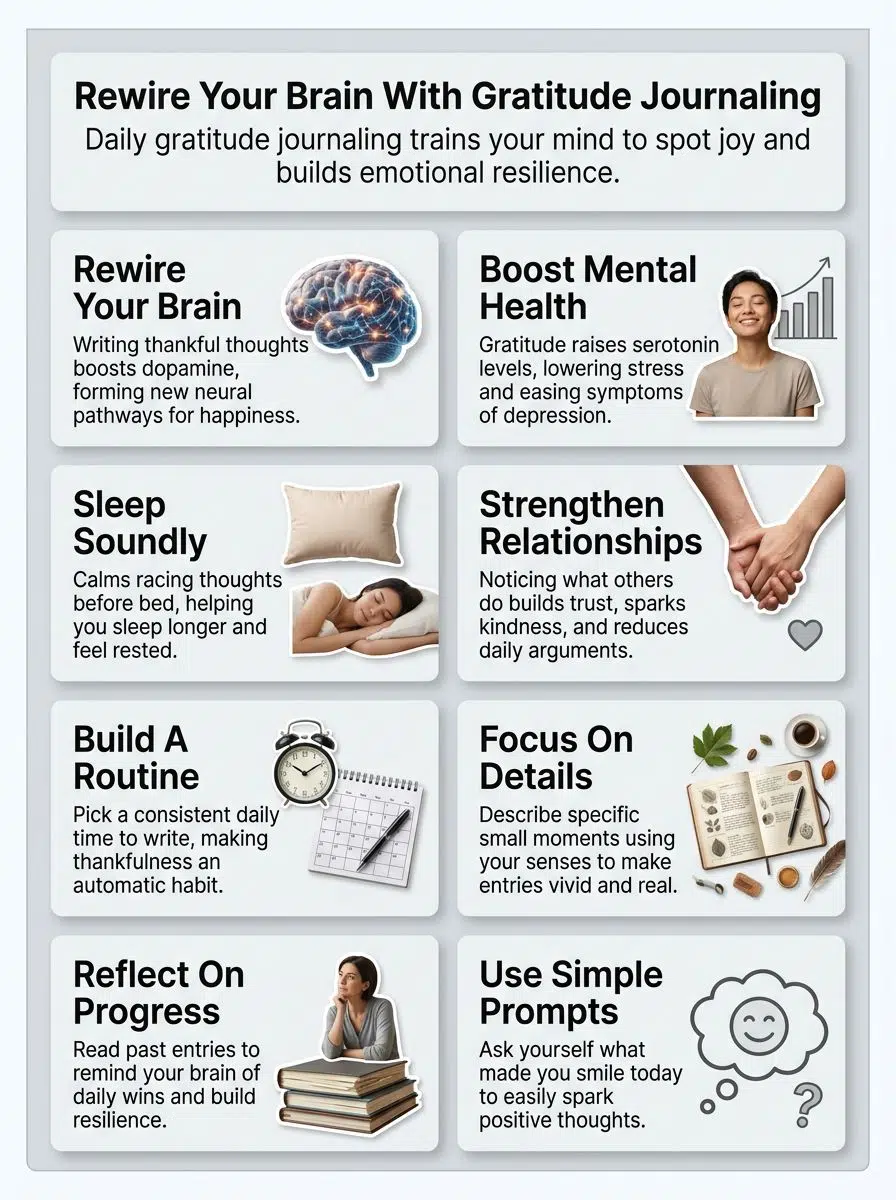
This small habit trains your mind to focus on what is good, even after rough days. According to a 2025 report by the American Psychological Association, 91% of individuals who engage in daily thankfulness practices report lower stress levels.
You have a few great options for recording your thoughts:
- Physical Notebooks: Using a dedicated book like The Five Minute Journal helps keep distractions away.
- Digital Apps: Apps like Day One or Notion are perfect if you want to type on the go.
- Scrap Paper: A simple sticky note on your mirror works just as well to build the habit.
The Science Behind Gratitude Journaling
Scientists have found that expressing thanks can shape the way your brain works. Brain scans show that this simple habit sparks positive thoughts, leading to greater happiness over time.
A massive 2025 study from Harvard University and Boston University School of Medicine revealed incredible findings. Researchers discovered that individuals with an optimistic outlook had a 15% higher chance of living past age 85 compared to their pessimistic peers.
“Acknowledging the good that you already have in your life is the foundation for all abundance.” , Eckhart Tolle
How it affects the brain
Gratitude journaling sparks changes in your brain, much like building a muscle over time. Each thankful thought lights up your reward center, known as the ventral striatum.
Dopamine levels rise with every act of thankfulness, making you feel pleasure and joy. Writing about what you appreciate forms new neural pathways for positivity and happiness practices.
An interesting finding from Stanford neuroscientist Andrew Huberman’s lab shows another layer to this science. His team discovered that hearing genuine stories of receiving gratitude activates the prefrontal cortex even more powerfully than giving it.
Studies supporting its benefits
Shifting from brain chemistry to real life, many studies now show the practical benefits of this habit. In a classic 2003 study, Dr. Robert Emmons and Dr. Michael McCullough asked people to write three things they were thankful for each week.
After two months, these folks felt much happier than those who wrote about daily hassles. A more recent 2025 study from Indiana University used MRI scans to peek inside the brains of people who practiced thankfulness journaling.
| Metric | Study Finding |
|---|---|
| Anxiety Symptoms | Reduced by 7.76% after 8 to 12 weeks of practice. |
| Depression Scores | Dropped by nearly 6.89% in the same timeframe. |
| Stress Hormones | Significant drop in cortisol levels, leading to better heart health. |
Benefits of Gratitude Journaling
Writing down what you appreciate can spark real changes in your life, just like planting seeds and watching them grow. Simple moments on paper lead to a happier mind and a healthier body.
Improved mental health
Gratitude journaling uplifts your mood and helps ease sadness. Neuroscience shows that thankfulness boosts levels of dopamine and serotonin, the brain chemicals that help us feel good.
Writing a few kind sentences is literally like giving your mind a warm hug. Small steps in mindfulness can add up to big changes over time, making each day seem brighter and lighter.
- Better emotional regulation: You bounce back from minor annoyances faster.
- Fewer depressive symptoms: Consistent writing lowers the intensity of sad days.
- Clearer thinking: A calm mind makes problem-solving much easier.
Increased optimism and happiness
Writing about good things helps make your brain see the bright side more often. Many people who practice gratitude journaling notice they smile more and feel lighter during their day.
Focusing on what went well gives your mind a break from stress. Even simple moments, like a hot shower or hearing birds sing, can boost positive feelings.
Positivity actually pays off at work, too. A 2025 Gallup survey found that employees with a positive mindset were 40% more likely to receive promotions than those with a negative outlook.
Better sleep quality
Gratitude journaling helps calm your mind before bed, acting almost like a soft lullaby for your brain. Writing down good things from the day helps your thoughts to slow down and let stress drift away.
A 2011 study in Applied Psychology found that people who made gratitude lists slept longer and felt more rested. In 2026, researchers confirmed that this bedtime routine physically lowers cortisol, the hormone that keeps you awake and alert.
People often notice fewer racing thoughts at night. Worries shrink, making room for happy or peaceful memories instead. By building this mindful habit, you make bedtime something to look forward to.
Enhanced relationships
Journaling about thankfulness can soften hearts and open doors. People who make a habit of writing down what they appreciate in others often act kinder, listen better, and forgive more easily.
A 2017 study from Berkeley showed that people practicing gratitude had stronger bonds with friends and family. Saying thanks on paper makes it easier to say it out loud, which helps build immense trust.
“Feeling gratitude and not expressing it is like wrapping a present and not giving it.” , William Arthur Ward
Reduced stress and anxiety
Gratitude journaling helps calm the mind. You notice things that make life better, even on hard days. Writing down what you feel thankful for can stop worries from spinning out of control.
Stress is a massive burden, costing the United States healthcare system an estimated $300 billion annually, according to 2025 reports. Thankfully, a simple pen and paper can provide relief.
A recent study found that first-generation college students who kept a journal saw a 31% reduction in their reported stress levels. Kids and adults both find this practice helpful, like flipping a switch from panic to peace with only a few words each day.
How to Start a Gratitude Journal
Getting started in journaling can feel a bit odd, but you just need to pick up a pen and begin. Soon, the page becomes your friend as you jot down the good things each day.
Choose the right journal
Pick a journal that feels good in your hands. A simple notebook or a fancy gratitude diary both work for this happiness practice. Some people love lined pages, while others prefer blank ones to doodle their thoughts and dreams.
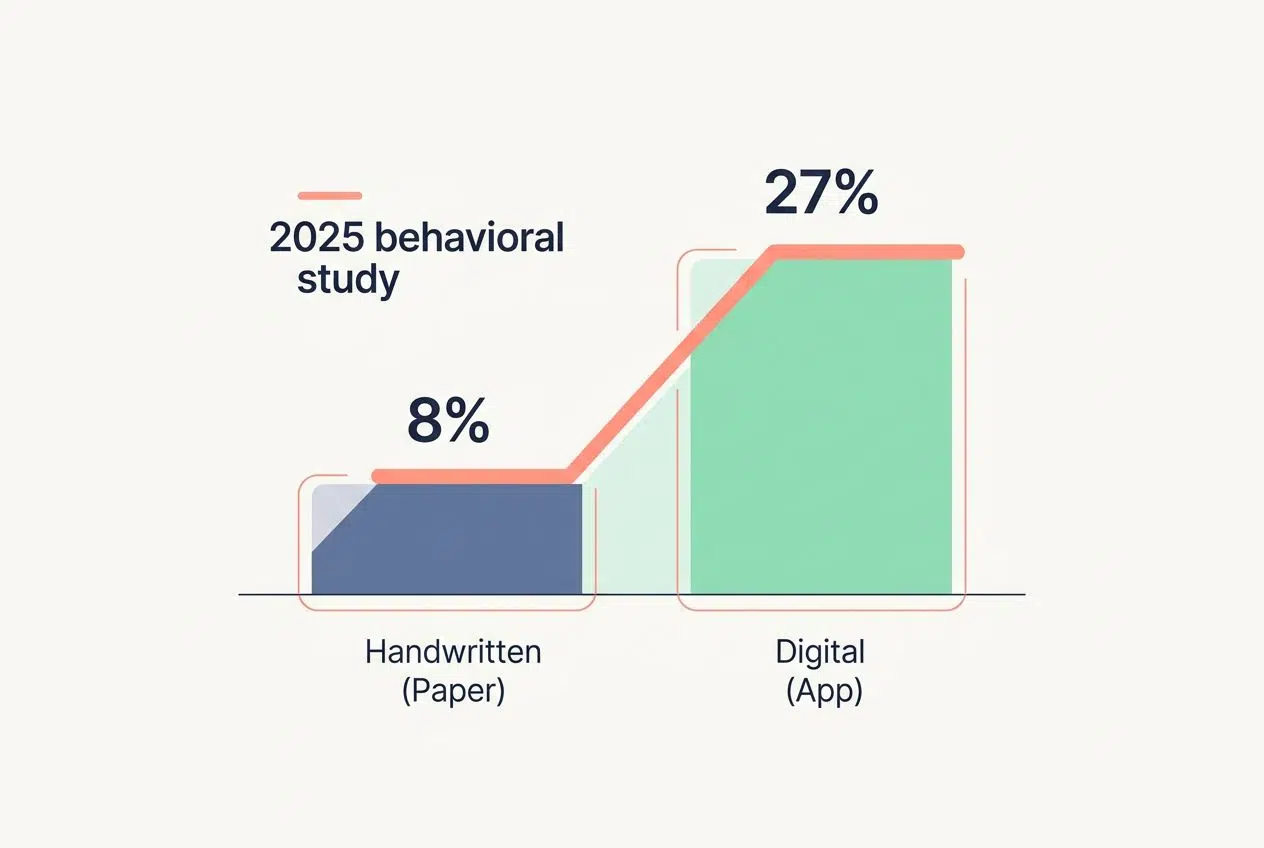
If you are torn between paper and screens, a 2025 behavioral study offers some clear guidance.
| Format | Main Benefit | Best For |
|---|---|---|
| Handwritten (Paper) | 8% more effective for deep emotional processing. | People want a break from screens. |
| Digital (App) | 27% higher consistency and habit retention. | Busy folks who want to type on the go. |
Create a dedicated writing space
Set up a quiet corner just for journaling. Even a small desk, a comfy chair, or your favorite spot near the window can work wonders. Keep your notebook and a pen there all the time.
Many avid writers on the r/Journaling Reddit community suggest keeping your notebook in the exact same spot every single day. This visual cue tricks your brain into recalling your new habit.
Add things you like to this space, like a soft light, calming music, or plants that make you smile. A tidy area clears your mind and makes it easier to think about mindfulness each day.
Set a consistent routine
Pick a certain time each day for gratitude journaling. Some people like to write in the morning, right after waking up, while others prefer bedtime. This habit helps your brain link thankfulness with that part of your day.
Positive psychology expert Sonja Lyubomirsky found that people who write entries just one to three times a week actually show bigger happiness boosts than those who do it daily. Writing a few times a week keeps the practice feeling fresh and special.
- Link it to an existing habit: Write while your morning coffee brews.
- Set a phone alarm: A gentle reminder helps you stay on track.
- Keep it brief: Dedicate just five minutes per session.
Tips for Maintaining a Gratitude Journaling Practice
Keep your new habit alive with these simple tips. Small, easy changes can make a massive difference in how much you enjoy writing.
Start small and simple
Start with one thing you feel thankful for each day. Short notes work fine, and even a single sentence does the trick. Some people jot down “warm socks” or “a smile from a friend.”
If your mind goes completely blank, try the popular “brain dump” method. Just write down whatever your internal monologue is saying, even if it is just your grocery list, until a thankful thought pops up.
Focus on making it easy and stress-free, like brushing your teeth before bed. Aim for consistency instead of perfection, because steady progress matters more than pretty words.
Use prompts for inspiration
Some days, your mind goes blank, and that is perfectly normal. Prompts give you ideas and help keep the pen moving.
A fantastic trick from mental health experts in 2026 is called the “Subtraction Method.” Instead of looking at what you have, imagine your life without a certain friend, pet, or comfort. Appreciating what you would miss is incredibly powerful.
- Focus on a person: Who made your day slightly easier?
- Focus on a sense: What was the best thing you tasted today?
- Focus on a challenge: What negative outcome did you successfully avoid?
Focus on specific details
Write about small things. Instead of saying, “I am thankful for my friend,” write, “My friend made me soup when I felt sick.” Notice how your coffee smelled this morning or the sun’s warmth on your face.
Use the senses, like touch, taste, and sight, to make each entry real and vivid. Instead of listing big events, describe one moment from today in detail. Try something like, “The neighbor’s dog wagged its tail at me during my walk.”
Little moments grow gratitude in your brain like seeds sprouting after rain. These details help rewire neural pathways for positivity and mindfulness without much effort.
Reflect on past entries
Taking time to look back at old journal pages can instantly brighten your mood. Each entry is a tiny window into moments of gratitude that you might have forgotten.
Leafing through them feels like flipping through snapshots of happiness, resilience, and thankfulness. Reading past notes actually activates your brain’s reward center all over again, giving you a fresh hit of dopamine in real time.
- Weekly Review: Spend five minutes on Sunday reading the past week.
- Monthly Recap: Highlight your favorite memory from the last thirty days.
Prompts to Inspire Gratitude Journaling
Sometimes, you just need a gentle nudge to spark thankfulness on paper. Grab your pen and try these prompts to light up even the cloudiest day.
What are three things you are thankful for today?
Warm sunshine on your face can lift your mood, even on a rough day. You might laugh with a friend and feel lighter inside. A hot meal at night fills both your belly and your heart.
Small moments matter in gratitude journaling. Focusing on these little bits of joy trains the mind for more positivity.
- Nature: Fresh air after rain or sunshine on your face.
- People: Laughing with a friend or a warm hug.
- Comforts: A hot meal or your favorite music.
Who has made a positive impact on your life, and why?
My grandmother has made a huge impact on my life. She taught me the power of gratitude and mindfulness each day. Every morning, she would write in her small journal about simple joys like warm bread or birds singing outside her window.
Her habit stuck with me, and now journaling helps me see little moments of happiness, too. She always told funny stories during dinner, making everyone laugh even after tough days.
Her wise words still guide me when I feel down or worried. Gratitude journaling brings these sweet memories back to life and strengthens my emotional resilience every day.
What challenge taught you a valuable lesson?
Losing a job can hit like a ton of bricks. Bills pile up, stress builds, and sleep slips away. During that rough patch in 2020, I started gratitude journaling each night.
Yet over time, jotting down just three good things from my day shifted my thinking. Finding gratitude for a warm meal or support from friends helped calm the chaos. This daily routine built resilience and lifted my mood bit by bit.
“The struggle you are in today is developing the strength you need for tomorrow.”
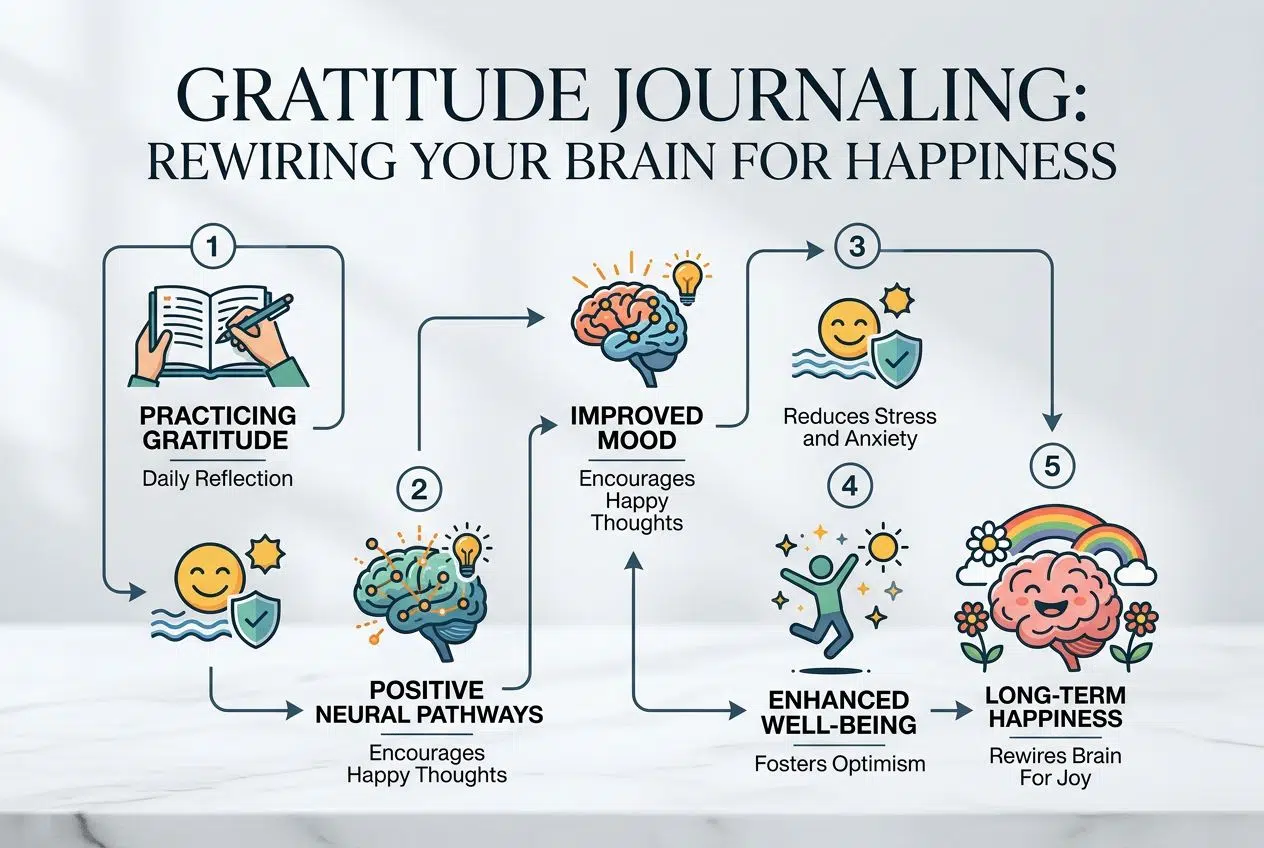
Gratitude Journaling: Rewiring Your Brain For Happiness
Writing what you are thankful for actually builds stronger, healthier brain habits. Stick with it to see how your thoughts light up and change your daily outlook.
Strengthening neural pathways for positivity
Each time you jot down your thanks, your brain gets a little tune-up. Writing about what brings joy or makes you smile helps wires in your brain link up for positive thoughts. Daily gratitude journaling builds these neural pathways more strongly, just as lifting weights grows muscles.
Your brain also releases oxytocin, the chemical responsible for bonding and trust, which makes you feel more connected to others. Scientists say new habits like this lead to lasting change in the brain’s structure.
- Weeks 1 to 3: Habit formation begins, and new neural patterns start to link.
- Weeks 4 to 12: You experience significant mental health improvements.
- Month 3 and beyond: Lasting brain structure changes make positivity feel automatic.
Building resilience and emotional balance
Gratitude journaling teaches your brain to focus on good things. This simple habit can help you handle tough days better. As you write down what makes you thankful, your mind learns to spot the bright side, even when life feels stormy.
Regular practice actually reduces activity in the amygdala, which is your brain’s fear and emotion center. A 2025 statement from the American Psychological Association defines this exact process as a primary way to build psychological resilience against daily stressors.
Small notes of thanks work like little anchors during rough patches. Stress starts to shrink because grateful thoughts are stronger than worries for many people. Over time, these daily reflections train your brain for steadier emotions and more stable moods.
Real-Life Stories of Transformation Through Gratitude Journaling
People have turned their lives around with gratitude journaling. Keep reading to see how a simple habit can spark such massive, positive change.
Overcoming personal struggles
Some days feel heavy, like carrying a backpack full of rocks. Gratitude journaling helps lighten that load. By writing down small positives each day, many people start to see their own strength grow bit by bit.

A 2024 pilot study focused on Black breast cancer survivors showed that keeping a gratitude journal vastly enhanced their spiritual well-being and gave them the confidence to start exercising again. Science backs up these real-world transformations entirely.
| Study Location | Key Finding |
|---|---|
| UCLA & UC Davis | Regular thankfulness practice reduced depression symptoms by over 25% in just eight weeks. |
| Five Major Universities | Students journaling during exams saw a 23% drop in test anxiety. |
Finding joy in daily life
A gratitude journal helps you spot small, happy moments. You might notice a cozy blanket, a warm meal, or the smile of someone you love. Writing these down trains your brain to seek out good things each day.
Your mind learns to focus on positivity instead of stress. This simple habit activates the parasympathetic nervous system, which promotes deep relaxation and turns off your body’s panicked fight-or-flight response. Soon enough, joy feels as normal as breathing.
Closing Thoughts
Small steps make a massive difference in your daily life. Picking up your pen each day shifts your mind from problems to gratitude.
Regular gratitude journaling trains your brain like exercise shapes muscles. You start noticing little things, bringing light and happiness into focus. This practice can boost well-being, build emotional resilience, and help you manage stress in proven ways.
Simple words about thankfulness hold surprising power over time. Stick with it, and watch new pathways open up as you master Gratitude Journaling.